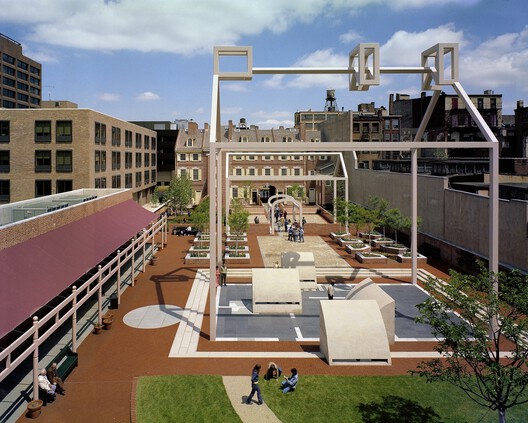
Postmodernism in the United States turned architecture into a stage for cultural memory, irony, and heritage at a moment when the built environment was becoming less civic and more commercial and curated. By the late twentieth century, architectural investment no longer centered on monumental public institutions or shared federal commitment to civic space. Private development, corporate expansion, and consumer environments increasingly shaped cities across the country. Buildings took on a new role as cultural images, expected to communicate identity and meaning as much as they provided function.
Postmodernism began as a critique of modernism's exhausted promises. By the late 1960s and early 1970s, many designers no longer treated modernism as radical or socially redemptive. Urban renewal projects accelerated the demolition of historic neighborhoods, and landmark preservation battles raised urgent questions about what the United States valued and, ultimately, protected. The loss of major civic icons, including New York's Penn Station, sharpened public awareness that progress often arrives through erasure. In Chicago, architect and provocateur Stanley Tigerman captured this sense of rupture in his 1978 photomontage The Titanic, which depicts Mies van der Rohe's Crown Hall sinking into Lake Michigan, a blunt image of modernism's symbolic collapse. Postmodern architects worked inside this turbulence, shaped by economic shocks, corporate excess, shifting cultural production, and a growing skepticism toward grand architectural solutions.


In architectural theory, Postmodernism marked a turning point away from modernism's claims of universality and abstraction. Architects like Denise Scott Brown and Robert Venturi argued that architecture always operates as a form of language, saturated with symbolism and context. Published in 1966, Complexity and Contradiction in Architecture called for "richness of meaning" over purity, and the now-famous phrase "Less is a bore" condensed a broader rejection of modernist restraint as cultural neutrality. In 1972, Venturi, Scott Brown, and Steven Izenour published Learning from Las Vegas, developing the terms "duck" and "decorated shed" while insisting that signage, popular imagery, and everyday commercial space formed a serious architectural vocabulary. Postmodern design embraced historical reference, ornament, and irony as tools for legibility and cultural connection, especially in a country where national identity circulates through imagery and mediated memory.
Related Article
What Is Postmodernism?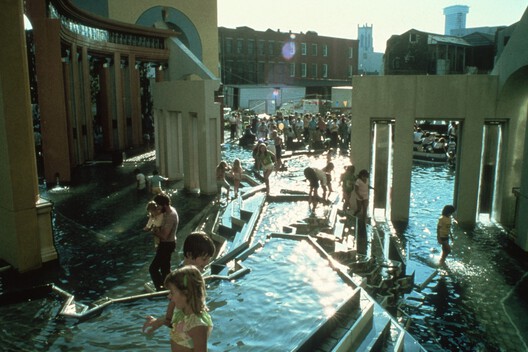
Reading Postmodernism: Plurality and Parody
This shift from modernism to postmodernism carried political and spatial consequences. As civic investment declined, museums, campuses, commercial developments, and corporate institutions increasingly hosted the architecture of public meaning. Postmodernism thrived in these spaces because it offered recognizable narratives and historical texture within market-driven environments. The movement, therefore, held an ambivalent position as it reintroduced cultural memory into architecture and demonstrated how easily heritage could become aestheticized and commodified. A useful framework comes from the Victoria and Albert Museum's later identification of common Postmodern strategies: quotation, metaphor, plurality, and parody. These tactics helped architects rebuild meaning, even as the spaces where shared civic life once gathered continued to recede.
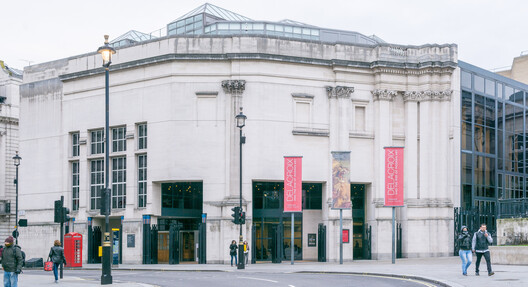
Despite its diversity, Postmodernism in architecture shares a recognizable set of strategies. Rather than inventing entirely new forms, Postmodern buildings cite historical, vernacular, and popular sources, often layering them into complex compositions that invite multiple readings. This communicative approach is described as "double coding," in which architecture speaks simultaneously to experts fluent in architectural history and to a broader public through familiar images, symbols, and cultural references. These strategies allow architects to reintroduce meaning into the built environment at a moment when civic authority was weakening and architecture increasingly operated through visual and symbolic representation.
Denise Scott Brown and Robert Venturi: The Ordinary Monument
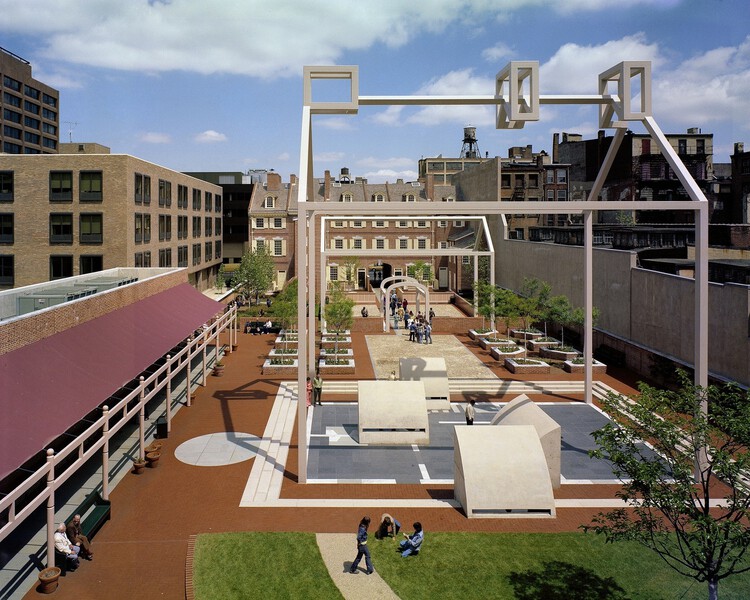
Denise Scott Brown and Robert Venturi occupy a foundational position in the development of Postmodernism in the United States, shaping the movement as architectural practice and cultural critique. Working across houses, campuses, civic buildings, and commercial landscapes, they challenged high modernism's austerity by insisting that architecture must engage the complexity of everyday life. Their contributions extended beyond form into theory, particularly through their writing on symbolism, popular culture, and the communicative role of buildings. Venturi and Scott Brown defined Postmodernism as an architectural language capable of irony and cultural legibility.
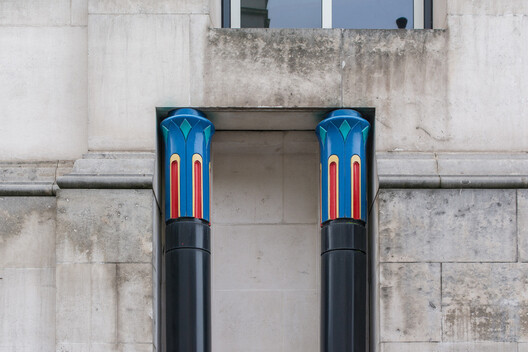
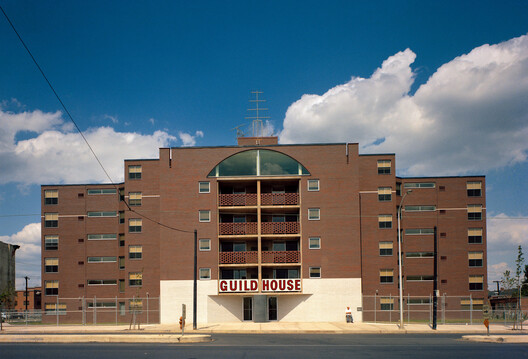
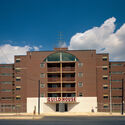
One of their well-known projects, the Vanna Venturi House, introduced a new attitude toward history and domestic form. Familiar elements like gables, symmetry, and façade composition became sites of reinterpretation that signaled a break with modernism's rejection of ornament and memory. Yet across their portfolio of work, their practice often shows the full scope of their argument more clearly because it operates inside the ordinary civic and institutional environments they wanted architects to take seriously. Projects such as Guild House in Philadelphia tested how symbolism and everyday convention could shape housing without retreating into abstract purity, while works like Gordon Wu Hall at Princeton demonstrated how Postmodern ideas could enter academic architecture through recognizable forms and coded references.
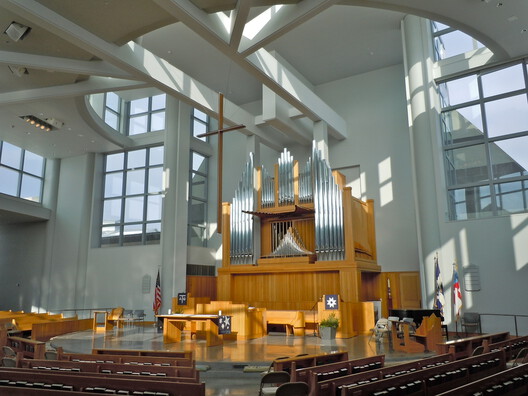
By embracing popular symbolism, Scott Brown and Venturi established Postmodernism as an architecture of plurality, treating everyday environments as legitimate sources of cultural meaning rather than as aesthetic compromises.
Michael Graves: Civic Symbols
Michael Graves emerged as one of the most visible and polarizing figures of Postmodernism, operating at the intersection of architecture, public institutions, and popular culture. Trained in a modernist tradition, Graves turned toward historical reference and figurative form in the late 1970s, helping bring Postmodern ideas into the architectural mainstream. His work addressed civic buildings, educational campuses, and large public commissions, where he used color, symmetry, and classical motifs to restore legibility to institutional architecture.
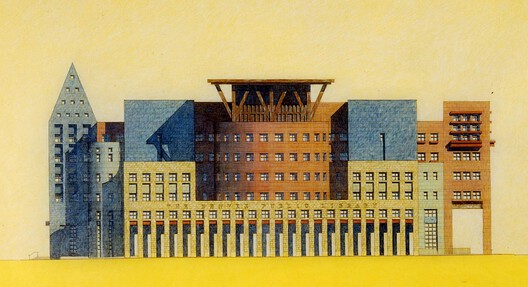
His most recognized projects, including the Portland Building and the Humana Building, established a new visual language for civic and corporate architecture in the United States, making symbolism unavoidable. Yet Graves's broader legacy comes into focus through additional institutional work that shows Postmodernism operating as public communication over time. The Denver Public Library extension, for example, demonstrates how a major civic building could carry historical signals and monumental presence while remaining contemporary in function. His Team Disney Building in Burbank makes the relationship between architecture and cultural image explicit, showing how Postmodern form could become part of institutional identity and brand performance. Graves's work illustrates Postmodernism's power and its risk: it could make public architecture readable again, and it could push architecture toward a graphic clarity that invited criticism of superficiality.
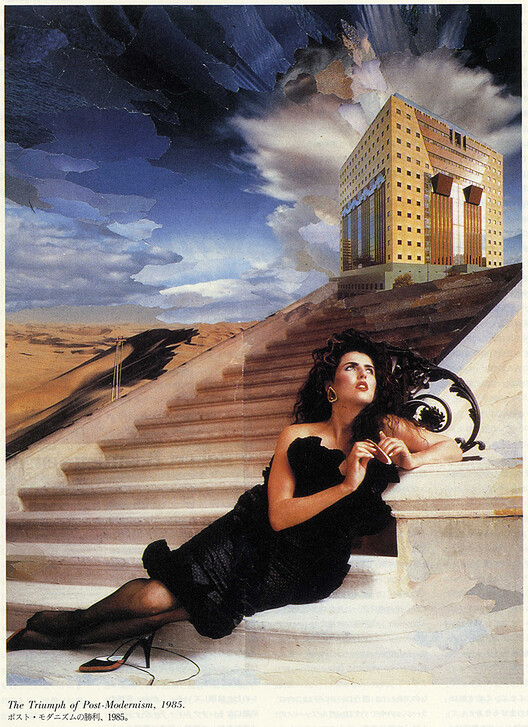
Graves's work exemplifies Postmodernism's use of metaphor and double coding, translating architectural history into clear civic symbols that communicated institutional identity to a mass public while retaining layered references for architectural insiders.
Charles Moore: Playful Theaters of Public Space
Charles Moore advanced Postmodernism in the United States through architecture grounded in collective memory. Working across housing, public space, academic campuses, and various cultural projects, Moore rejected late modernism's distance from everyday life and treated architecture as a social act. He wanted buildings and public spaces to invite pleasure, movement, and emotional connection. Moore drew freely from vernacular traditions, classical references, and popular imagery, positioning Postmodernism as a tool for shared ritual and civic feeling, even as the city itself became increasingly fragmented.
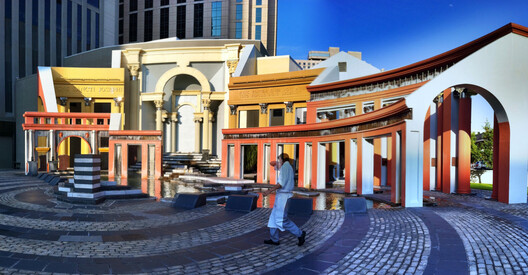
Moore's renowned project, Piazza d'Italia in New Orleans, embraced theatricality and overt symbolism, turning the public space into a playful site of spectacle. His lesser-known campus and civic projects reveal how he extended this sensibility beyond monumental and iconic gestures. At Kresge College in UC Santa Cruz, Moore explored how architectural variety and spatial sequence can define identity in daily life.

Moore pushed Postmodernism toward parody and experiential plurality, using theatrical form and historical reference as tools for participation, playfulness, memory, and collective identification.
Robert A.M. Stern: The Market for Heritage
Robert A.M. Stern represents a distinct strand of Postmodernism shaped by institutional continuity, urban tradition, and the politics of taste. Working across residential architecture, academic campuses, and large civic commissions, Stern embraced historical reference with a seriousness that shifted Postmodernism toward curated heritage. He positioned architecture as a disciplined form of cultural memory, drawing from classical and vernacular precedents to construct environments that felt familiar and enduring. Stern's work made Postmodernism persuasive to institutions seeking stability and identity during decades of rapid urban and economic change.
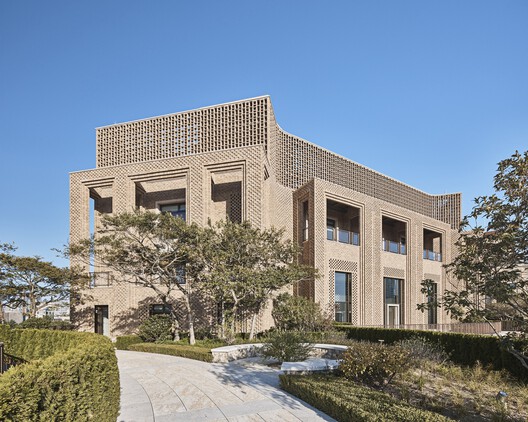
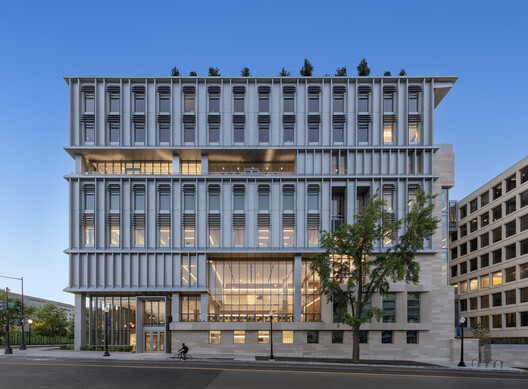
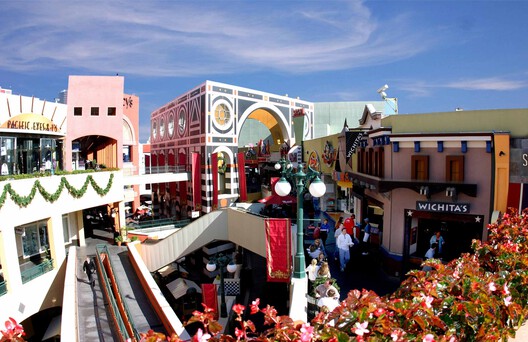
His most visible projects, including major university buildings and high-profile residential developments, demonstrate how Postmodern architecture could project reassurance through carefully composed historical language. Yet Stern's relationship to Postmodernism becomes clearer in projects that show heritage operating as an economic and cultural instrument. Corporate and commercial commissions such as Point West Place in Framingham, Massachusetts, reveal how historical cues could add prestige and legibility to contemporary office environments. His later work in entertainment and hospitality contexts, including projects associated with Walt Disney's resort urbanism, demonstrates how Postmodern historicism could become a powerful tool for producing atmosphere and selling tradition.
Stern's work reveals how historical quotation shifts from critique to commodity, transforming Postmodernism into a disciplined language of heritage that aligns architectural memory with institutional branding and market value.
After Irony: The Civic Legacy of Postmodernism
What began as a critique of modernism's silence ultimately revealed how architecture could communicate meaning even as the spaces of civic life are increasingly replaced by curated, commercial experiences.
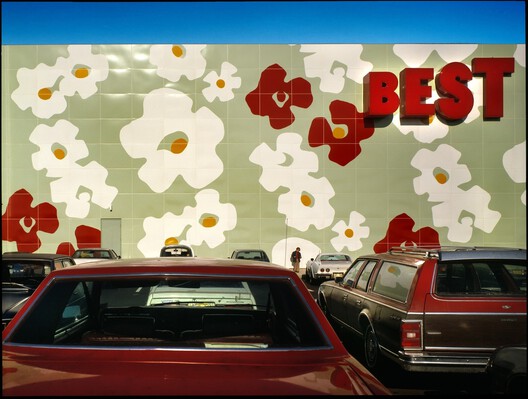
Taken together, these architects illustrate how Postmodernism in the United States functioned less as a unified style and more as a cultural strategy for architecture in an era of shifting public life. As civic investment receded and commercial development expanded, Postmodernism offered architects a way to reintroduce and critically redefine memory, symbolism, and historical reference in a built environment increasingly shaped by image and commodity. Through irony and a playful influence of heritage, these buildings construct legibility and identity at a moment when architecture increasingly performs public meaning without relying on robust infrastructure. Postmodernism made cultural memory visible and accessible by exposing how easily heritage could be staged, branded, and absorbed into commercial space. In doing so, it captured a turning point in architecture in the United States, when buildings began to perform public life precisely as the conditions for shared civic space were disappearing.
This article is part of the ArchDaily Topic: Rethinking Heritage: How Today's Architecture Shapes Tomorrow's Memory. Every month we explore a topic in-depth through articles, interviews, news, and architecture projects. We invite you to learn more about our ArchDaily Topics. And, as always, at ArchDaily we welcome the contributions of our readers; if you want to submit an article or project, contact us.


