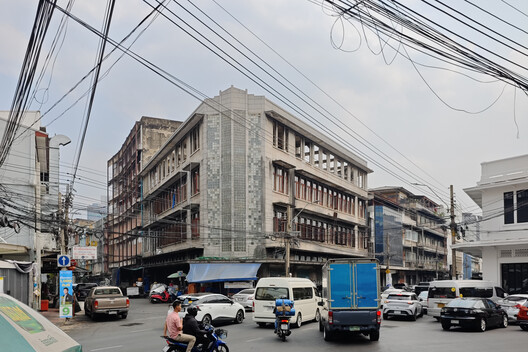
Architectural heritage is not only what a building was, but what it continues to become: a long process of building, rebuilding, and re-occupying over time. Where opportunities allow, this continuity produces a layered condition—one in which visitors can witness, experience, and feel the gradual shifting of a building's fabric, materiality, spatial order, and patterns of use, and occasionally even participate in that transformation.
Yet many projects—particularly those driven primarily by commercial imperatives—do not choose to value, or even to recognize, this slower work of adaptive reuse and heritage continuation. Developments governed by a numbers-only logic often opt for the easier path of demolition and rebuild: maximizing plot ratio, GFA, and rentable area with the efficiency of a clean slate. And still, every now and then, an opportunity surfaces that allows us to see—and to enjoy—the city's process of architectural "heritaging" in real time.
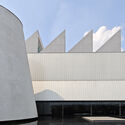
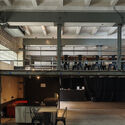
Adaptive reuse is perhaps more widely publicized in Europe, but across Asia, there are also numerous deliberate examples that preserve heritage fabric and extend its dialogue through carefully staged transformations. Particularly noteworthy are museum and gallery projects—not only because their program requirements can be comparatively flexible (even if top-tier institutions often demand rigorous standards for dimensions, lighting, and temperature/humidity control), but because many emerging or community-scale museums can operate with a more casual tolerance. More importantly, museums are inherently public-facing and community-oriented, inviting sustained visitation and repeated return. This creates a distinct opportunity to encounter heritage as building fabric: depending on a structure's former life, these spaces may once have been inaccessible, restricted, or privately held. By reopening them as museums or galleries, adaptive reuse does more than stage a conversation between art, culture, and history—it offers rare access to spatial worlds that might otherwise remain closed, allowing heritage to be experienced not as an image, but as an inhabitable and evolving condition.
Related Article
Forum, Depot, Maze: Toward a Plural Ecology of Museums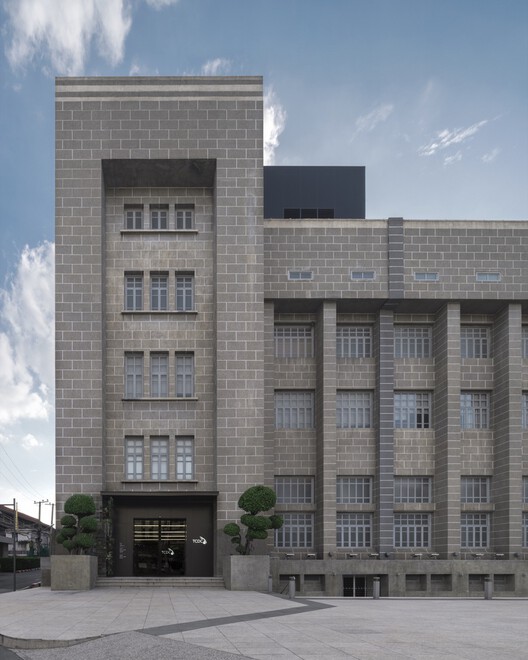
From Demolition to Continuation: Extending Bangkok's Urban Fabric
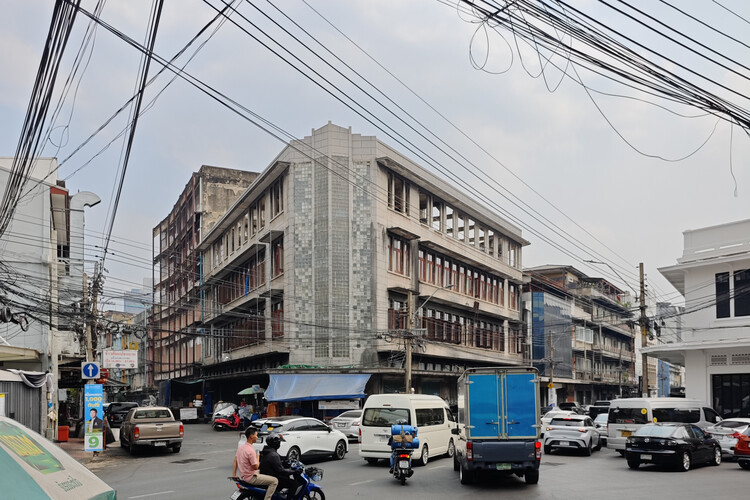
In Bangkok, Thailand, adaptive reuse has increasingly become a bigger, more relevant way of celebrating art and museums. Both public and private initiatives have decided to find ways to keep original structures in tact, some projects being more brutally honest about what remains, some employ a bigger hand and gesture to overhaul more of the existing fabric—nonetheless, they have been celebrating and continuing the city's urban fabric heritage through the use of museums and galleries—and extending the life of building typologies that may otherwise have been demolished.
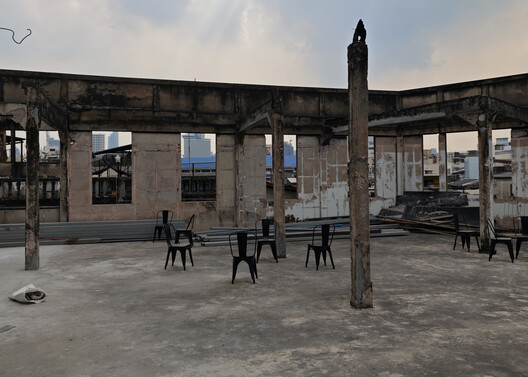
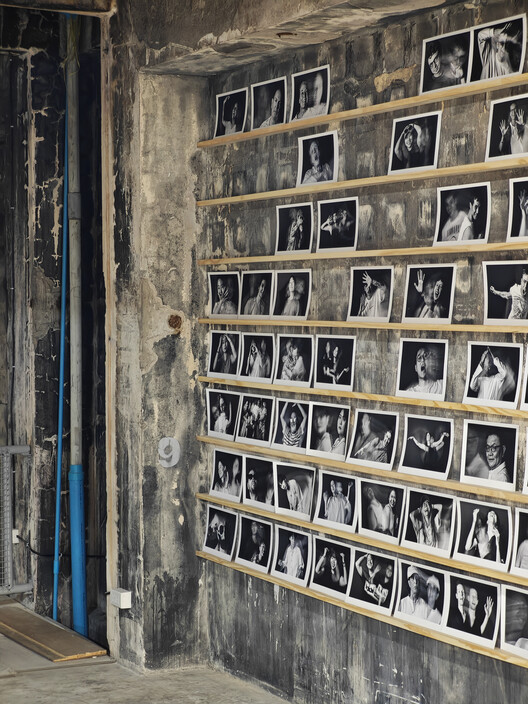
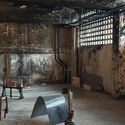
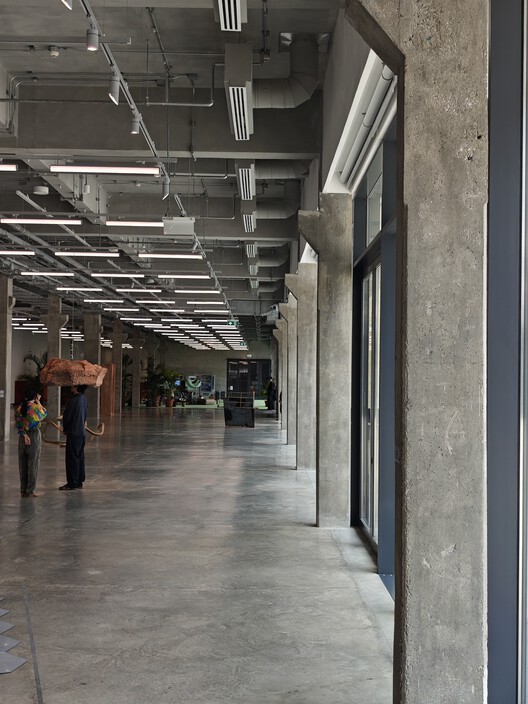
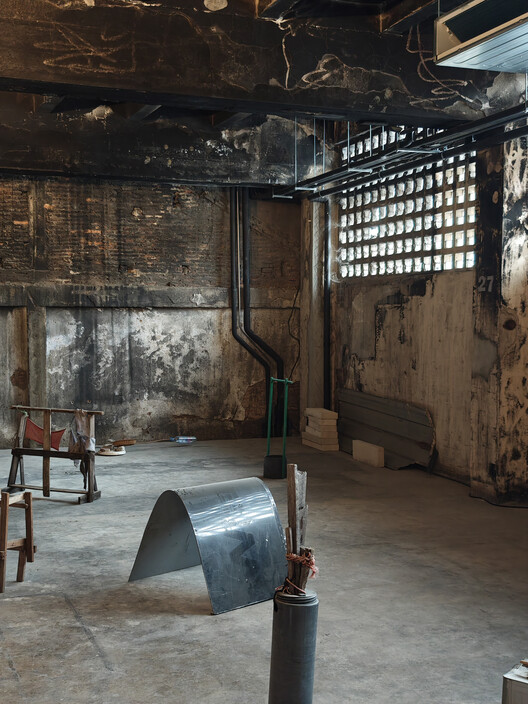
One stark execution is that of Bangkok Kunsthalle—a cultural hub for art, cinema, music, science, dance, literature, architecture, and creativity, which opened in 2024. The project, created by philanthropist Marisa Chearavanont, repurposes the abandoned Thai Wattana Panich Printing House following a fire in 2001. Bangkok Kunsthalle is spread across three connected buildings and spans over 60,000 square feet. With a brutalist-like, almost uncompromising honesty in its readaptation, the building has been left in an extremely raw material state: nearly all hints of decoration, extra ornament, or noise have been deliberately stripped away. The museum space thus becomes an unflinching register of structure and architecture—of material, proportion, and scale. Furthermore, the structure—still left incomplete on some of its upper floors, and bearing visible traces of burned material within it—stands as a form of heritage archive: not only preserving a historically compelling architecture, but also retaining a structural and material patina that documents events, accidents, and the building's own lived history. Now repurposed as a museum, it opens up what was once a private and enclosed print-house interior, allowing visitors to immerse themselves in these volumes—encountering contemporary art while simultaneously imagining what the print house may once have been.
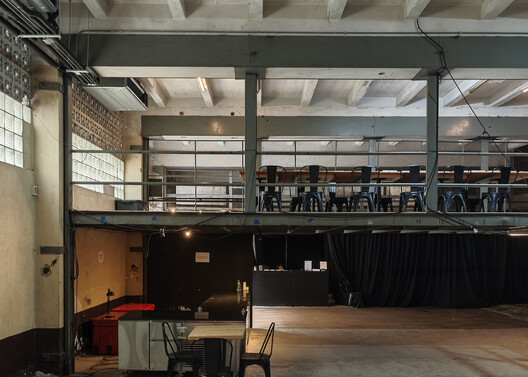
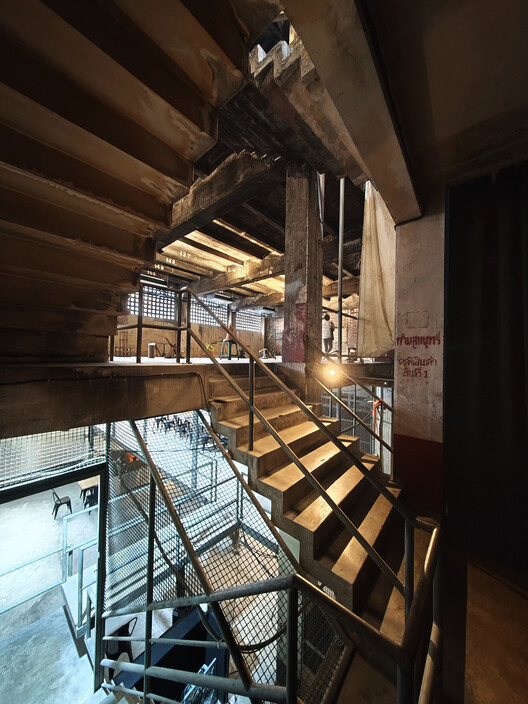
Another recent example is Dib Bangkok, a contemporary art museum in Bangkok that opened in December 2025. Dib Bangkok takes its name from the Thai word for "raw" or "authentic," and positions itself as Thailand's first major museum dedicated to international contemporary art. Designed by Kulapat Yantrasast and WHY Architecture, the project transforms a 1980s warehouse in downtown Bangkok into a three-story institution of over 6,600 square meters. Taking a very different approach from Bangkok Kunsthalle, this act of heritage re-use does not preserve the building as an archive of its past life, but instead decisively reworks it—breathing a second life into the original through a calibrated, almost corrective transformation. The attitude toward heritage here is less about retaining traces as evidence and more about strategic improvement.
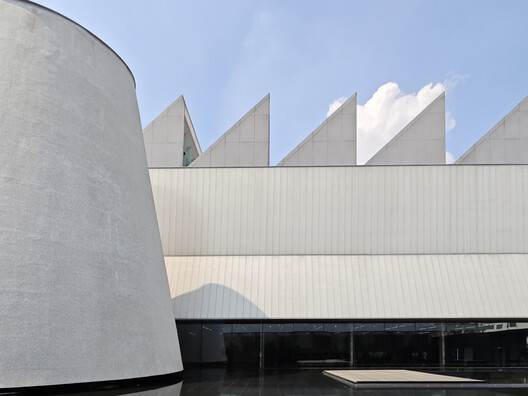
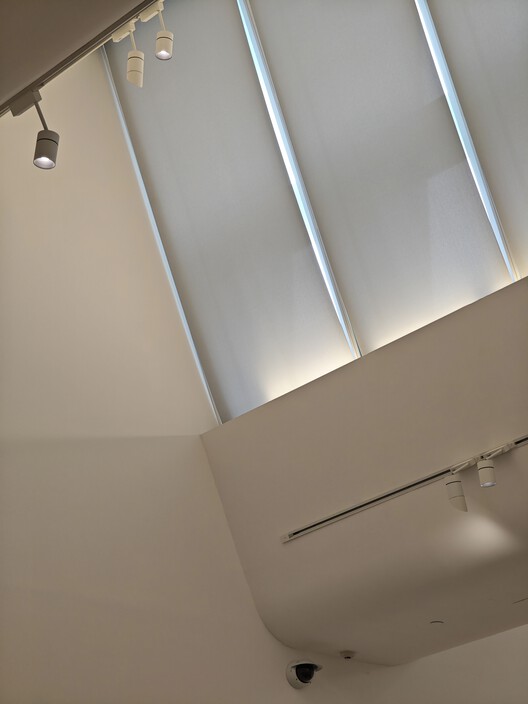
One of the clearest design moves lies in the reworking of the first-story slab. Dib, likely in order to accommodate larger-scale artworks while also creating a more generous and comfortable ground-floor experience, readjusts the first-floor height by removing the original slab and resetting the datum. As visitors circulate through the galleries, the old structural line remains legible: the former slab level is subtly "inscribed" through column palimpsests and becomes especially apparent at moments of stair reconfiguration, where the new circulation stitches across the old logic. This allows the before-and-after to be sensed as a spatial overlay rather than presented as a literal didactic display. In this way, the adaptive reuse fully reimagines the former warehouse while still taking advantage of its large spans—introducing newly designed skylights calibrated to the light sensitivity of artworks, and instilling a quiet, steady calm across the museum as a whole.
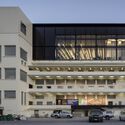
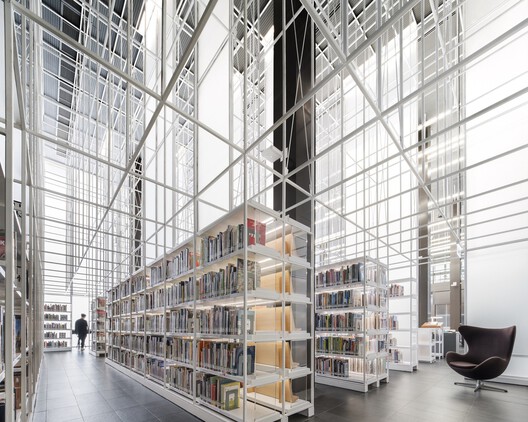
Beyond private initiatives, Bangkok also offers a public example of heritage continuity through adaptive reuse in the Thailand Creative and Design Center by Department of Architecture (TCDC)—a multidisciplinary institution completed in 2017 that houses a design library, a materials library, co-working spaces, and more. The project repurposes the side and rear wings of the historic Grand Postal Building. Neither a brutalist-style "honest" exposure of raw fabric, nor a total reimagination of the original, TCDC instead stages a measured dialogue between old and new—working selectively, almost like acupuncture, to reconfigure key spatial sequences while preserving the building's underlying identity.
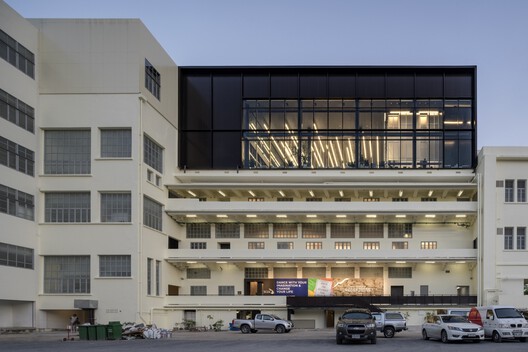
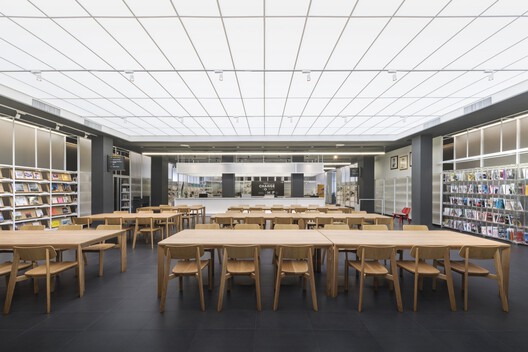
This approach is especially apparent across its co-working environments and workshop areas, where targeted interventions introduce new spatial logics, atmospheres, and modes of occupation. Conversely, areas that are not reworked are left largely intact and untouched, allowing the historical traces of function, use, and urban heritage presence to remain legible. In this way, the building's inherited civic image, particularly its façade and recognizable institutional character, is not erased but held in tension with its new purposes, letting contrast become the project's primary architectural effect.
Heritage as Becoming
A city's richest urban fabric is rarely the product of a single moment. It is the result of accumulation—layers laid over layers—where traces remain readable enough to let history be felt, events be remembered, and continuities be tracked across time. In this sense, heritage is not merely an object to be frozen, but a lived condition: a way the city continues, richly, through the persistence of material, spatial logics, and the residue of prior use. Demolition and rebuild can certainly enable new innovation, new typologies, and new opportunities; yet when the slate is wiped clean too often, the city also loses its textures of memory—its evidence, its markers, its small and ordinary references that make place legible and specific.
This is why adaptive reuse matters most when it reopens what was once enclosed, private, or restricted—when a former print house, warehouse, or civic infrastructure gains a second life and reveals itself to the public. The museum and gallery are powerful vehicles for this shift: they expand access to spatial typologies most people would otherwise never enter, and they stage a productive clash between program and structure. In these reoccupations, visitors are invited to read the tectonic beauty of old and new together—the transitions of material, the reworked datums, the calibrations for light and climate, or, at times, a raw and unapologetic honesty that refuses to erase scars. What emerges is not nostalgia, but a broadened cultural experience: art encountered alongside the building's own biography.
Of course, debates about what is "important" enough to preserve will persist, and they should. But the more consequential question may be whether an existing building can amplify the proposition of the new program—whether what remains can deepen the experience rather than merely survive as a token. Not every structure discussed here is a canonical monument, yet everyday buildings also carry a form of urban heritage that can be more essential than the spectacular: they record the ordinary workings of the city, its labor, its logistics, its institutional life. When such buildings are repurposed with intelligence—neither totally erased nor delicately embalmed—they generate a third condition: layered continuity. This is a heritage of becoming, where the city does not simply preserve its past, but builds with it—producing new publics, new uses, and new forms of memory without surrendering the depth that makes urban life enduring.
This article is part of the ArchDaily Topic: Rethinking Heritage: How Today's Architecture Shapes Tomorrow's Memory. Every month we explore a topic in-depth through articles, interviews, news, and architecture projects. We invite you to learn more about our ArchDaily Topics. And, as always, at ArchDaily we welcome the contributions of our readers; if you want to submit an article or project, contact us.


