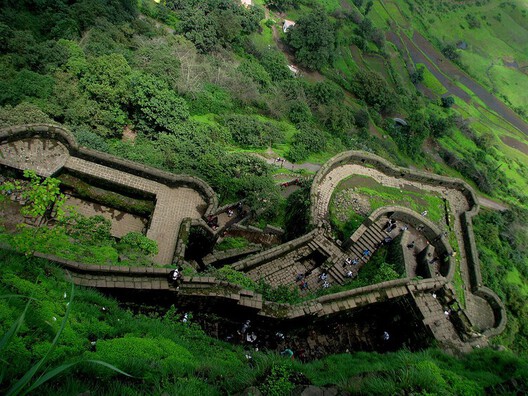
A building still being adjusted, repaired, and debated is declared World Heritage. Another, equally influential, must survive five centuries before anyone considers protecting it. This is not an anomaly in the heritage system; it is the system. Across the world, architecture does not age at the same pace because time itself is not neutral. It is cultural, political, and deeply uneven. What we call "heritage" is not simply old architecture; it is architecture that has reached the right moment in a particular place.



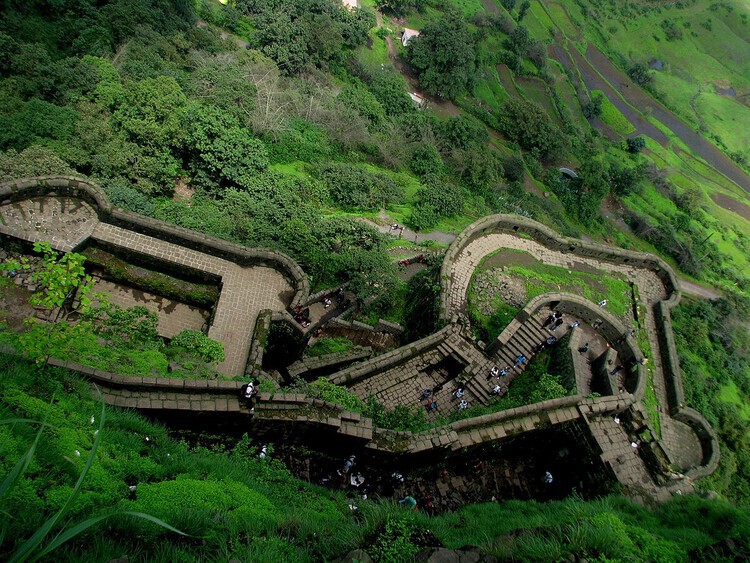
Most global preservation frameworks were shaped in Europe, where cities grew slowly, and monuments were built to last. Stone walls, heavy masonry, and incremental change produced an idea of heritage as something that emerges over centuries. Time, in this model, is cumulative: buildings gather value as they endure. This assumption still underpins international criteria today, from UNESCO's emphasis on material authenticity to conservation doctrines that prioritize original fabric. Longevity is treated not as a cultural preference but as a universal standard.
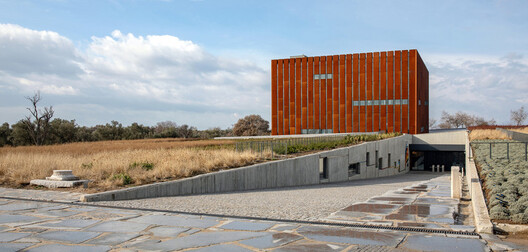
Yet this model quietly embeds a worldview. It assumes relative political stability, modest urban growth, and a continuity between past and present. In much of the world, those conditions never existed, or no longer do. Applying the same timelines globally creates friction, not because other regions lack history, but because history there moves differently.
Related Article
UNESCO Adds 26 New World Heritage Sites Highlighting African Heritage and Shared PrehistoryThat difference becomes most visible in fast-growing cities. Across Asia, Africa, and parts of Latin America, urbanization has compressed centuries of spatial change into a few decades. Entire neighborhoods are transformed within a generation. In this context, waiting for buildings to "age" before recognizing their value often means losing them entirely. Heritage, here, is not something discovered retrospectively; it is something identified under pressure.
This acceleration changes how value operates. Preservation becomes a preventative act rather than a commemorative one. Decisions are made not because a building is ancient, but because it is vulnerable. A civic structure from the 1960s may already be at risk of demolition, not due to neglect, but because the city around it is expanding at unprecedented speed. Time is no longer an abstract measure; it becomes a planning constraint.
Nowhere is this clearer than in the treatment of modernist architecture in postcolonial contexts. In Europe, modernism often competes with much older architectural layers. Elsewhere, it frequently marks the beginning of national self-definition. Buildings from the mid-twentieth century are not simply stylistic experiments; they embody independence, rupture, and new political identities. As a result, they acquire heritage value far earlier.
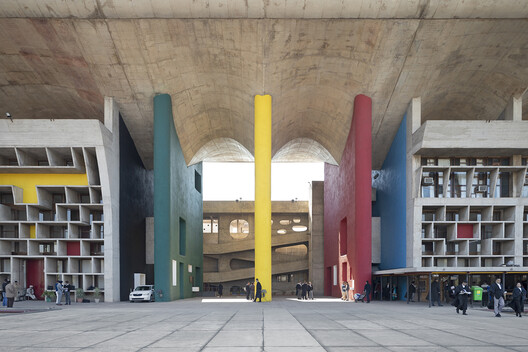
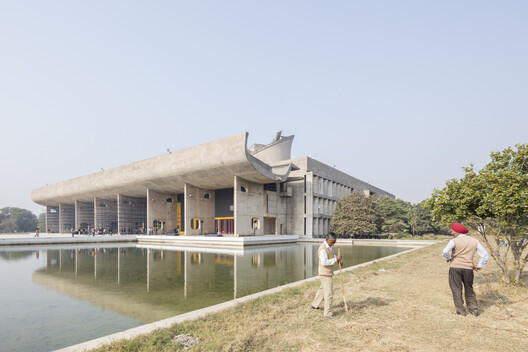
The Chandigarh Capitol Complex illustrates this shift. Conceived as a symbol of a newly independent India, its monumental concrete forms were never meant to blend into historical continuity. They announced a break. Within a single lifetime, the complex was absorbed into national identity and later recognized by UNESCO. Its preservation is not based on age alone, but on what it represents: a moment when architecture was used to imagine a future rather than extend a past. This early recognition challenges the idea that heritage must wait patiently. In Chandigarh, waiting would have meant misunderstanding the building's purpose. Its value was immediate, not accumulated. Time, here, functioned symbolically rather than chronologically.
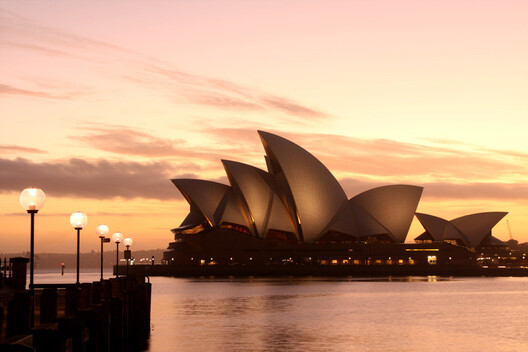
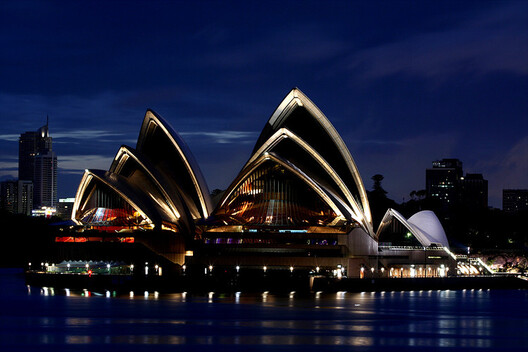
Even within Western contexts, cracks appear in the myth of slow heritage. The Sydney Opera House was inscribed as World Heritage while parts of its design remained unresolved and its construction history unfinished. It was still operationally evolving, still being adapted, still debated. Yet its cultural significance was already undeniable. The decision acknowledged that meaning can outrun material completion, that a building can be historically decisive long before it feels settled. This moment exposed an uncomfortable truth: heritage timelines are already flexible, but only selectively so. When symbolic weight becomes global, the rules bend. When it does not, they harden.
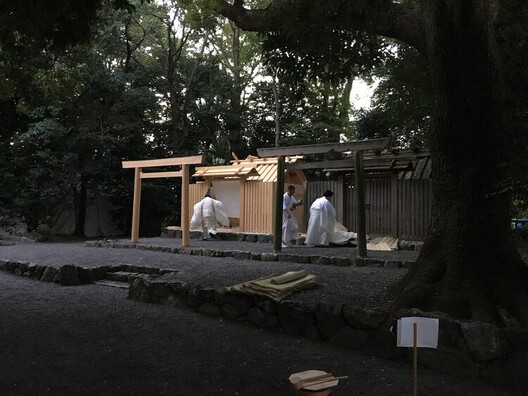
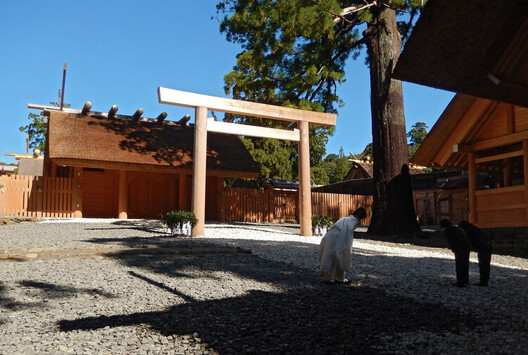
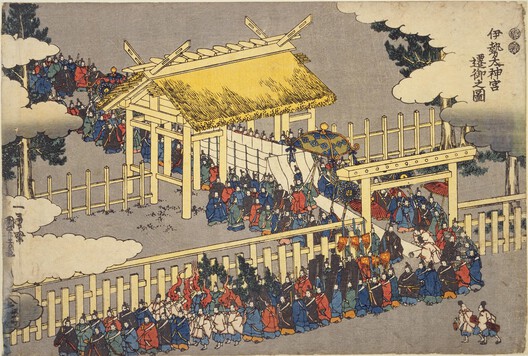
If these examples stretch Western frameworks, other traditions overturn them entirely. In Japan, the Ise Grand Shrine has been ritually dismantled and rebuilt every twenty years for over a millennium. None of its materials are ancient. Its heritage lies instead in continuity of craft, ritual, and spatial memory. Preservation here is not about resisting time, but choreographing it. This approach reveals a radically different understanding of authenticity. Value is located in transmission rather than endurance. Techniques are preserved by repetition, not by freezing matter in place. The shrine's architecture survives precisely because it accepts impermanence. From a conventional Western perspective, this appears paradoxical. From within its own logic, it is coherent and profoundly sustainable.
Placed side by side, these cases make one thing clear: there is no single tempo at which architecture becomes heritage. Time stretches, contracts, and loops depending on climate, politics, belief systems, and development pressure. Treating heritage age as a fixed threshold ignores how buildings actually operate within their societies. The consequence is not just theoretical. When preservation criteria fail to account for cultural velocity, entire architectural histories fall through the cracks, especially in the Global South. Buildings that shape collective memory can disappear simply because they have not waited long enough. Others are preserved too late, once their urban context has already been erased.
Rethinking preservation timelines does not mean abandoning rigor. It means shifting the question. Instead of asking how old is this building?, we might ask how quickly is it becoming irreplaceable? Instead of measuring years, we might measure pressure, meaning, and vulnerability. Heritage, then, becomes less about age and more about urgency. For architects and planners, this shift has design implications. Buildings may be evaluated within decades, not centuries. Materials, adaptability, and civic presence gain new weight.
Architecture, in this sense, is no longer working toward distant recognition; it is operating in real time, within accelerated cultural cycles. For institutions, the challenge is to formalize what is already happening informally. Heritage criteria must become contextual, capable of recognizing early significance without defaulting to Western chronologies. This is not a call for lower standards, but for more precise ones. Ultimately, heritage is not about how long buildings last. It is about what societies choose to carry forward and when. Time, in architecture, is never just passing: it is being negotiated.
This article is part of the ArchDaily Topic: Rethinking Heritage: How Today's Architecture Shapes Tomorrow's Memory. Every month we explore a topic in-depth through articles, interviews, news, and architecture projects. We invite you to learn more about our ArchDaily Topics. And, as always, at ArchDaily we welcome the contributions of our readers; if you want to submit an article or project, contact us.