


Beyond being a source of life, the power of the sun in architecture has long been tied to humanity's need to harness and control it as a vital resource. Since ancient times, solar energy has been used to measure time, support planting and harvesting, and provide protection from heat and cold. Today, solar radiation plays a significant role in global energy consumption. Architectural solutions based on materials, technologies, and environmental analysis are developed with an understanding of solar energy's capacity to transform the interior environment of buildings. But how can buildings be transformed into sources of clean energy?


As energy costs rise and the impacts of climate change intensify, the demand for renewable energy continues to grow. Photovoltaic (PV) solar energy represents a modular technology that can be manufactured in large-scale facilities, generating economies of scale, while also being adaptable to small-scale applications. From residential rooftop systems to large-scale power generation installations, photovoltaic solar energy has established itself as a cost-effective option for electricity production in many countries around the world.
According to the International Energy Agency's Renewables 2025 annual report, global renewable energy capacity is expected to double between now and 2030, increasing by 4,600 gigawatts (GW). The report also highlights that photovoltaic solar energy accounts for nearly 80% of this global growth, followed by wind, hydropower, bioenergy, and geothermal energy. Distributed photovoltaic solar applications—including residential, commercial, industrial, and off-grid projects—represent 42% of the total expansion of solar energy. Low module costs, relatively efficient permitting processes, and broad social acceptance are driving the accelerated adoption.
Related Article
On the International Day for Clean Energy: How Local Initiatives Respond to the Spatial Impacts of Energy Production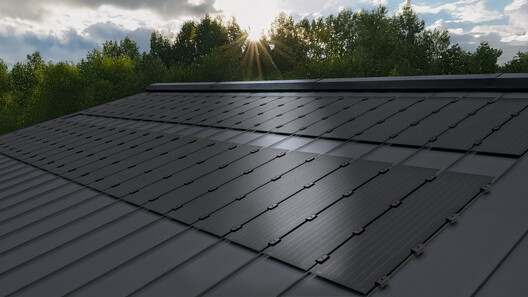
By combining form and function through independence and environmental responsibility, RHEINZINK-PV offers an aesthetic and efficient solution for transforming buildings into sources of clean energy. Integrating architecture with energy generation, this photovoltaic system is designed specifically for double standing-seam roofs—not as an add-on, but as an inherent part of the building envelope. Unlike other systems that restrict longitudinal and transverse expansion, RHEINZINK-PV is designed as a flexible system thanks to the development of the special PV clamp. Modules can be freely positioned and attached directly to the double standing seams, regardless of the position of the clips that fix the seams. Thermal expansion is unaffected thanks to the patented seam clamp.
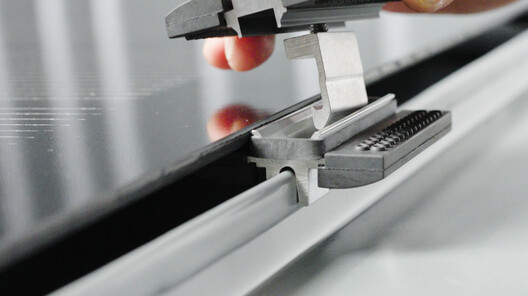
At the heart of the system is this clamp. Based on a patented mounting system for photovoltaic modules, it delivers maximum performance with minimal installation effort, requiring only a single hex-head screw (tightened to 6 Nm) per clamp. A vertical clamp mounted directly on the standing seam ensures a firm hold and secure attachment of frameless photovoltaic modules, while allowing the zinc roof to expand naturally. The module clamp adapts to each specific requirement, and the installation meets wind load regulations. With at least four clamps per module side and always adapted to the wind load of the building, the system maintains stability even under extreme conditions.
Photovoltaic systems reach their optimal size depending on several factors, particularly electricity consumption. The more available rooftop space, the greater the potential for module installation. Cost savings, energy independence, and climate protection all influence system design. Below are some considerations to take into account:
Light Meets Solar Cells
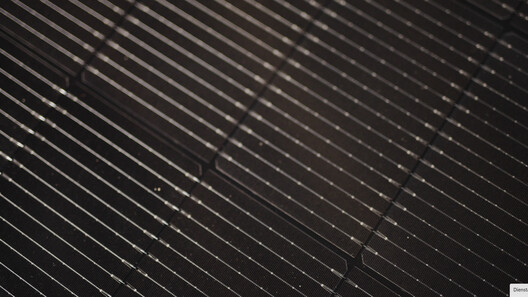
Sunlight is composed of photons—tiny packets of energy that strike the surface of a solar cell. By using N-type TOPCon cell technology, RHEINZINK modules combine efficiency, thermal stability, and heat resistance to enhance the performance and extend service life. Their glass-glass technology and their thermal edge sealing provides resistance to environmental influences and aging. Compared to glass-foil modules, these systems provide greater protection against moisture and mechanical stress, enable bifacial power gain, and ensure long-term durability.
Electron Release and the Impact of External Factors
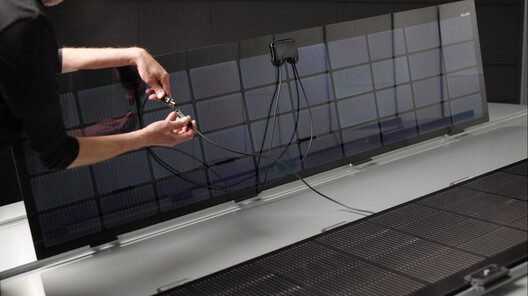
The formation of an electric field forces the electrons released within the solar cell to move in a specific direction, generating direct current (DC). In this way, light energy is converted into electrical energy. Depending on the number of modules, system components, and site conditions, each project produces a specific amount of electricity. But how do external factors influence performance? For example, what role does wind play, and how does it impact their operation?
The calculation of wind loads for installing the RHEINZINK-PV system on double standing-seam roofs directly involves the seams clip clamps. Each seam clip has a design resistance of 600 N, with a minimum of four photovoltaic clamps required along the longitudinal side of the module (1.90 m). According to RHEINZINK's installation guidelines, the spacing between clamps (center to center) should be approximately half the distance used at the edges (center to edge).
A Power Made Usable
The direct current (DC) generated is typically converted into alternating current (AC) by an inverter, which is used in homes and electrical grids. The electricity can be used directly, stored in batteries, or fed into the public power grid. The use of photovoltaic systems on rooftops generates clean electricity, but not always when it is needed. While production is typically high and consumption low in the summer, the opposite occurs in the winter. According to RHEINZINK, between 20% and 30% of the electricity generated can be used directly without an energy storage unit. However, with a storage system, self-consumption increases to approximately 60% to 80%, allowing stored solar energy to be used in the afternoon or at night. In this way, the surplus energy can be injected into the public grid and receive compensation for it.
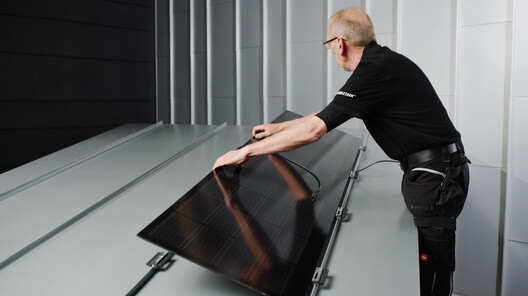
When applied in practice, and upon examining its installation methodology, a series of instructions defines each step of the process:
- Securing the lower clamp components, ensuring uniform clamp distribution, complying with wind load requirements, and achieving precise alignment with the standing-seam geometry.
- Placing the solar modules securely and with anti-slip protection.
- Fastening the upper clamp components, ensuring that the clamp hook fully covers the seam, that the hex socket head screw secures both the clamp hook and the module, and that it is tightened to 6 Nm.
- Positioning, connecting, and securing additional photovoltaic modules.
By combining design, functionality, aesthetics, and energy efficiency, RHEINZINK offers a visually integrated solution that requires neither additional mounting profiles nor visible module frames. From system compatibility to installation practicality, RHEINZINK-PV meets relevant standards (IEC 61215 / 61730) and achieves Class 3 hail resistance. Alongside solutions for façades, roof drainage systems, and other products, the RHEINZINK catalog expands opportunities to create architecture that is conscious of its environmental impact and responsive to contemporary demands.


