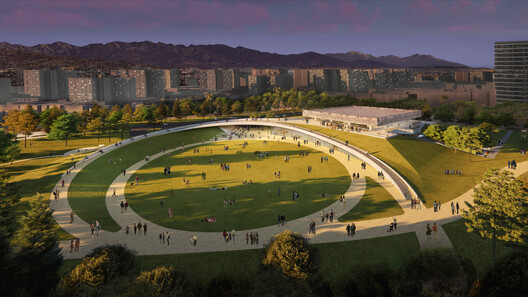
New renderings released by WEISS/MANFREDI reveal updated plans for the ongoing transformation of the La Brea Tar Pits in Los Angeles, a comprehensive redesign that integrates the museum, landscape, and active excavation areas into a continuous public and research-oriented campus. Alongside the design update, the Natural History Museums of Los Angeles County (NHM) has announced the creation of the Samuel Oschin Global Center for Ice Age Research, a new initiative supported by the Samuel Oschin Family Foundation, which advances the site's long-term redevelopment. The transformation project is led by WEISS/MANFREDI as design lead for the museum and park, with Gruen Associates serving as executive architect and landscape architect, and Kossmanndejong (KDJ) responsible for exhibition design. Fundraising efforts are ongoing, with the project positioned for completion ahead of the 2028 Olympic Games in Los Angeles.
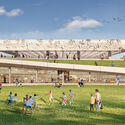
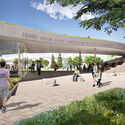

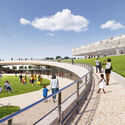
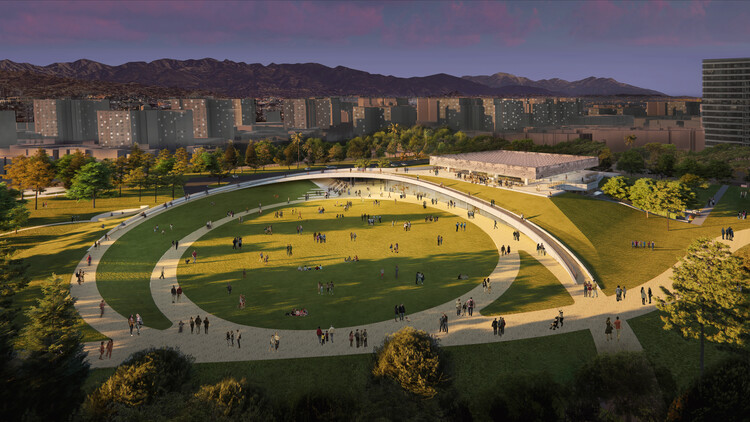
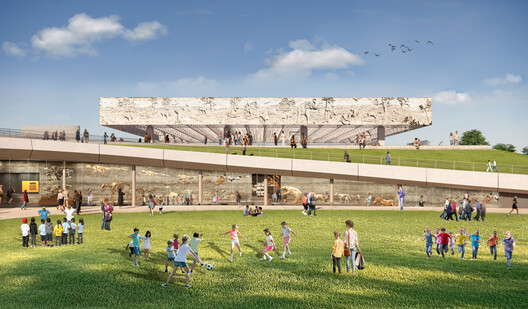
Selected through an international competition, WEISS/MANFREDI's proposal reimagines the Tar Pits and Hancock Park as a unified "inside-outside" museum environment that brings scientific research closer to public space. The design strategy, known as "Loops and Lenses," connects existing structures with new circulation routes and framed views, allowing visitors to move continuously between excavation sites, laboratories, exhibition spaces, and landscaped areas. At the center of the plan is a 1-kilometer accessible pedestrian loop that links the museum, active dig sites, and the park's central green. The loop is conceived as both a circulation device and an interpretive framework, connecting scientific work with the visitor experience while reinforcing the Tar Pits' identity as an active research environment.
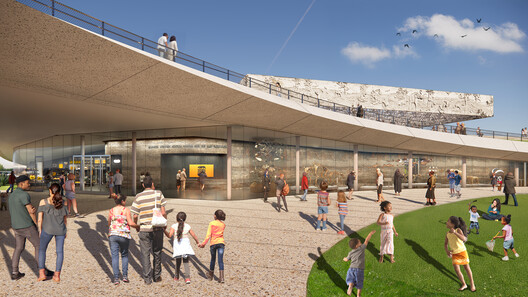
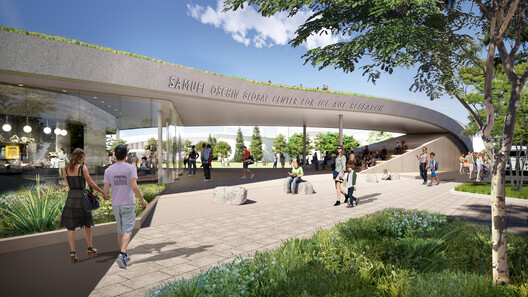
The redesign includes a full renovation and expansion of the George C. Page Museum, originally designed by Los Angeles architects Frank Thornton and Willis Fagan and opened in 1977. The updated scheme introduces a new entrance facing Wilshire Boulevard to improve visibility and access, alongside reconfigured interior galleries, visible fossil preparation laboratories, and centralized collections storage. A tapered gallery window establishes visual connections between the central lawn and interior exhibition spaces, while reorganized research and education facilities are intended to bring scientific activity into public view.
Related Article
Weiss/Manfredi Selected to Lead La Brea Tar Pits Master Plan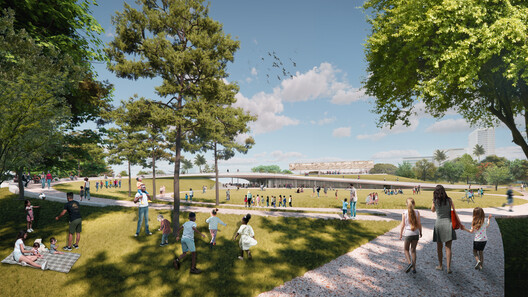
Public circulation is further expanded through an ascending sequence of accessible walkways and terraces that provide routes to the museum's signature grass-covered slopes and a rooftop promenade overlooking the campus. The project doubles accessible outdoor areas, introduces a 28,000-square-foot civic lawn for events and recreation, and adds shaded seating, gathering areas, and an amphitheater designed to function as free public space independent of museum admission. Landscape interventions extend across the reimagined Hancock Park, integrating excavation zones with new Pleistocene gardens planted with native and adaptive species. These landscape strategies aim to reconnect the site's ecological character with its Ice Age history while preserving familiar features, including the historic frieze encircling the museum and the mammoth family installation at the Lake Pit. Sustainability measures include the use of low-embodied-carbon materials, all-electric building systems, bird-safe glazing, and on-site stormwater biofiltration.
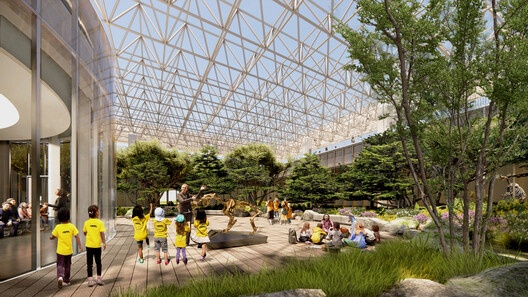
Exhibition design for the renewed museum and outdoor environments is being led by Amsterdam-based studio Kossmanndejong (KDJ), which is developing immersive installations and interpretive experiences that trace more than 60,000 years of environmental change in the Los Angeles basin. New indoor and outdoor learning spaces, including an expanded immersive theater and classrooms, are planned to support school programs and community use.
La Brea Tar Pits is the richest known Ice Age fossil site and the only active paleontological excavation located within a major urban area. Situated within Hancock Park in Los Angeles's Miracle Mile district, the campus, which includes ongoing open-air excavations, a Pleistocene landscape, and public green space, has evolved into a hybrid environment where research, education, and recreation occur simultaneously. The newly announced Samuel Oschin Global Center for Ice Age Research is conceived as a distributed research entity embedded throughout the campus rather than a single, standalone building. Through upgraded laboratories, public-facing workstations, and expanded partnerships, the center is intended to strengthen the integration of ongoing paleontological research with exhibition and education programs.
In related developments across Los Angeles's cultural landscape, the Lucas Museum of Narrative Art is scheduled to open to the public on September 22, 2026, introducing a new cultural institution within Exposition Park. The museum is designed by Ma Yansong of MAD Architects, with landscape architecture by Mia Lehrer of Studio-MLA and Stantec serving as executive architect. Meanwhile, the David Geffen Galleries at the Los Angeles County Museum of Art (LACMA), designed by Pritzker Prize–winning architect Peter Zumthor in collaboration with Skidmore, Owings & Merrill (SOM), are expected to officially open in April 2026, further expanding the city's network of major cultural destinations.