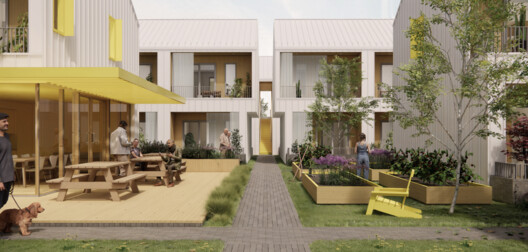
Buildner, in collaboration with the City and County of Denver and AIA Colorado, has announced the winners of the Denver Affordable Housing Challenge, an international ideas competition exploring how affordability and design excellence can reinforce one another within the specific urban, social, and environmental context of Denver.
As the nineteenth edition in Buildner's Affordable Housing Challenge series, the competition invited architects and designers from around the world to respond to Denver's housing crisis through proposals operating at architectural, urban, and systemic scales. The brief did not prescribe a single site or typology but, rather, encouraged flexible strategies capable of addressing affordability, climate resilience, and community impact while contributing positively to Denver's urban identity.
The winning projects reflect a wide range of approaches united by a shared ambition to elevate affordable housing beyond minimum compliance and toward long-term civic value. From carefully calibrated, gentle-density infill and courtyard-based missing-middle housing to ambitious modular frameworks that treat incremental growth as a form of urban repair, the awarded proposals demonstrate that affordability, adaptability, and architectural quality are not mutually exclusive.
Several winning entries engage directly with existing neighborhoods, transforming single-family lots and underutilized urban spaces into shared, community-oriented environments without erasing local character. Others operate at a broader urban scale, proposing expandable systems and 15-minute neighborhood frameworks that challenge conventional development models while remaining conceptually rigorous and visually precise. Together, the winners illustrate the range of architectural thinking required to address Denver's housing challenges, from immediately deployable building strategies to long-term urban systems.
The results of the Denver Affordable Housing Challenge were officially announced at a public event in Denver, where leaders and stakeholders gathered to recognize the winning proposals. The announcement was made in the presence of Denver Mayor Mike Johnston, alongside representatives from the City of Denver and AIA Colorado.
Buildner's other ongoing competitions include The Unbuilt Award 2026, celebrating visionary unbuilt projects across three scales, with a 100,000 EUR prize fund; The Architect's Stair Edition #3, a conceptual exploration of one of architecture's most symbolic elements; and The Next House: USA, which invites innovative ideas for a new American suburban prototype: a home that is compact yet generous, adaptable yet grounded, replicable yet sensitive to place.
Projects:
First Prize Winner
Project title: X-MU-X
Author: Damian John Madigan, from Australia
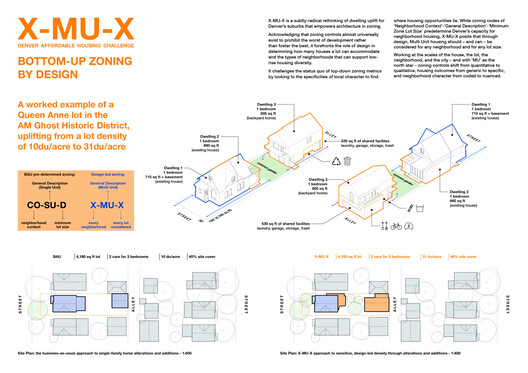
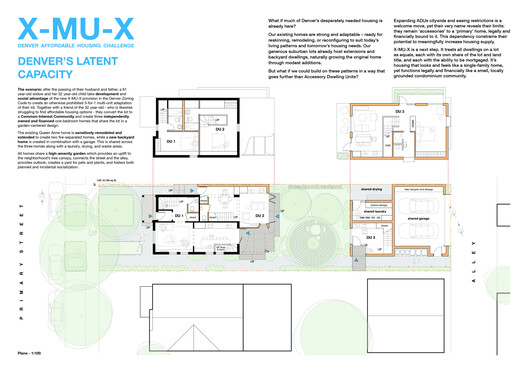
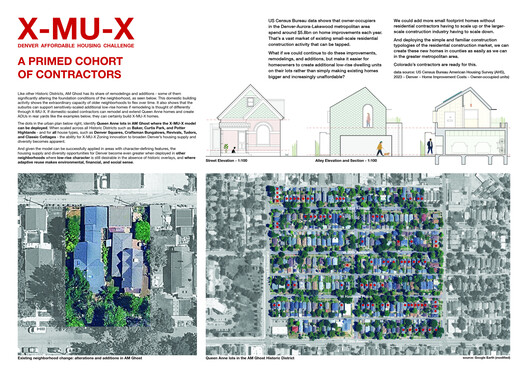
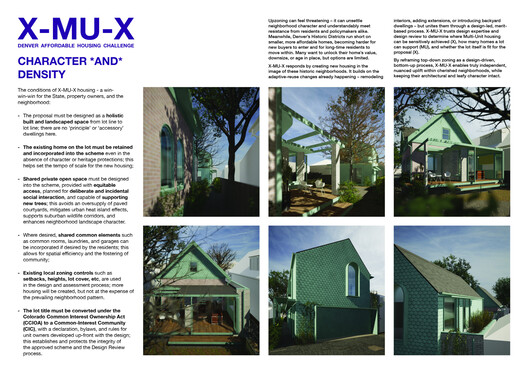
This project proposes X‑MU‑X, a design-led zoning framework that enables incremental density within Denver's historic single-family neighborhoods, by working at the scale of the individual lot. Rather than introducing new building types or wholesale redevelopment, the proposal retrofits existing Queen Anne houses through modest additions, backyard dwellings, and shared amenities accessed primarily from alleys. By reframing zoning as an architectural and spatial question, X‑MU‑X shifts regulatory logic from abstract metrics toward qualitative, context-sensitive design outcomes. The system allows multiple independently owned dwellings to coexist on a single parcel while preserving neighborhood character, leveraging Denver's existing housing stock, local construction practices, and small-contractor capacity. The result is a bottom-up model for affordability that aligns policy, architecture, and lived experience without erasing historic fabric.
Second Prize Winner + Buildner Sustainability Award
Project title: reFRAME
Authors: Meghan Helena Kress, Margaret Rose Krantz, and Sean Edward Pike, from the United States
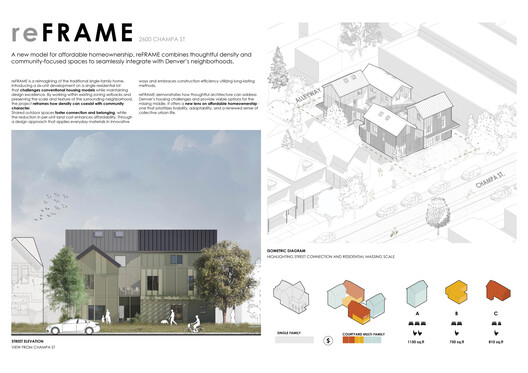
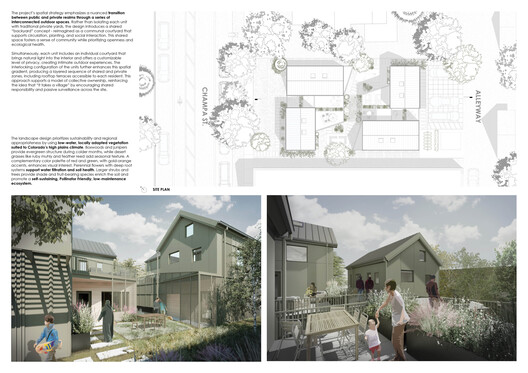
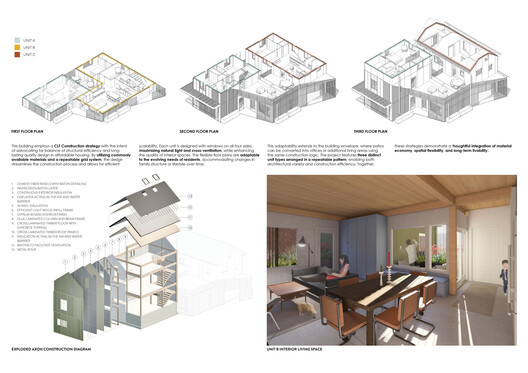
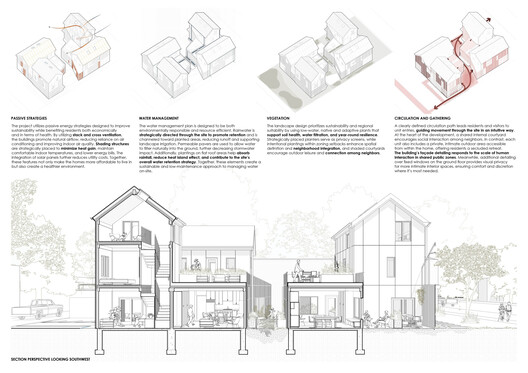
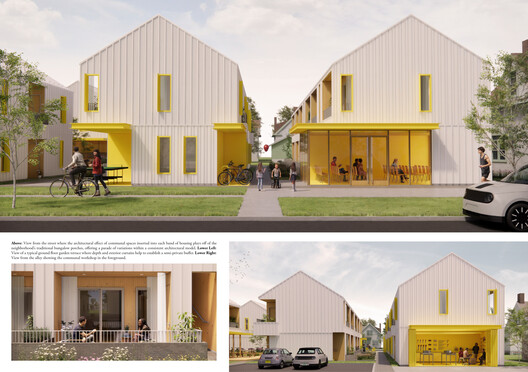
reFRAME proposes a six-unit housing prototype that reframes the conventional single-family lot as a shared, courtyard-oriented living environment. Set within Denver's established residential fabric, the project organizes two- and three-bedroom units around a central communal garden, balancing gentle density with a familiar domestic scale. The massing strategy carefully preserves neighborhood character while introducing shared outdoor spaces, individual patios, and clear unit identities through separate entries. Architecturally, the project emphasizes sustainability and long-term livability through CLT and glulam construction, passive climate strategies, photovoltaic integration, water management, and low-water native planting.
Third Prize Winner
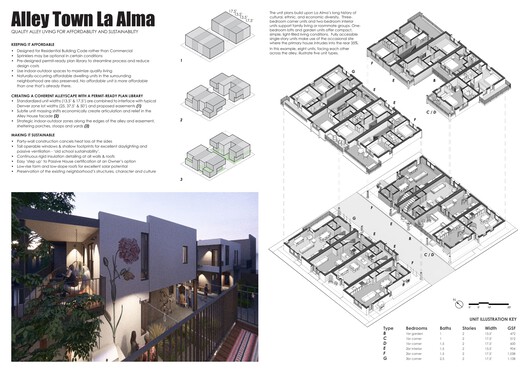
Project title: Alley Town La Alma
Authors: Ozi Friedrich, Alexander Phillip St Angelo, Archer Lee Squire, of Radix Design, from the United States
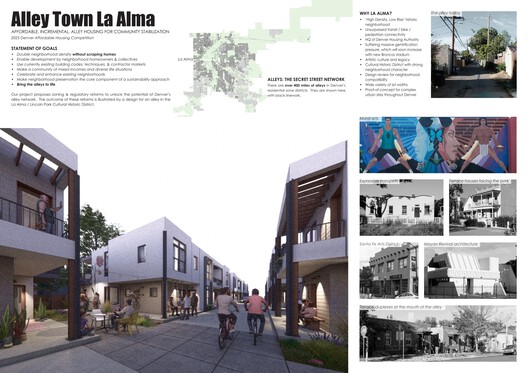
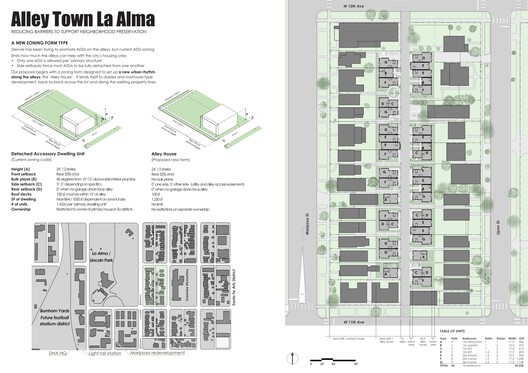
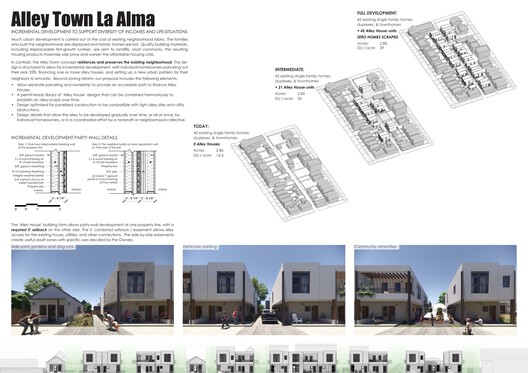
This project proposes Alley Town La Alma, a housing framework that reimagines Denver's alley network as the basis for incremental, anti-displacement urbanism. Working within the existing scale and fabric of the La Alma neighborhood, the proposal introduces a modular rowhouse typology aligned along the alley, allowing multiple families to co-inhabit formerly single-family lots. Rather than replacing homes, the scheme retains historic structures while adding units and shared amenities in the rear, transforming the alley from a service corridor into a lived and social space. The architectural approach emphasizes affordability through modular design, permit-ready construction, and IRC code use, while policy tools such as shared equity models and streamlined permitting support access and community stability. At once strategic and site-specific, the project offers a replicable model for sustainable infill rooted in cultural preservation and spatial dignity.
Buildner Student Award
Project title: Can Denver afford us?
Authors: Thiên Trí Võ, Gia Bảo Lương, đức Tuệ Nguyễn, Phương Uyên Phạm, from Ho Chi Minh City Architecture University, Vietnam
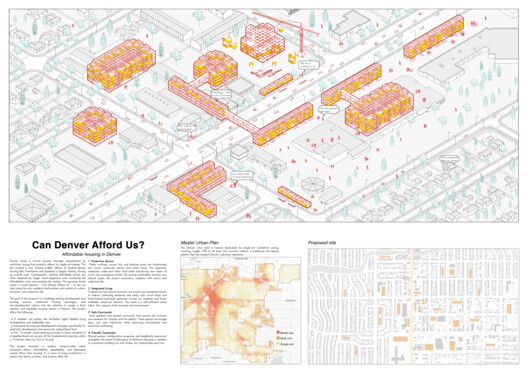
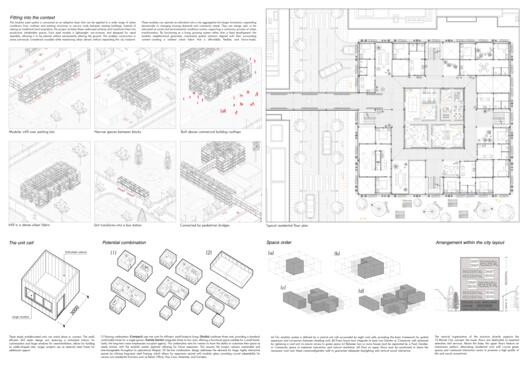
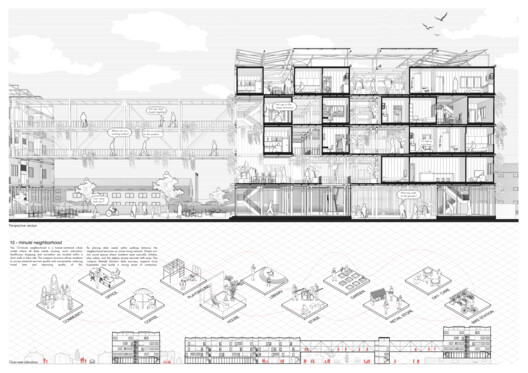
This proposal advances a new vision for Denver's future housing by framing incremental modular construction as a form of urban repair. Rather than operating at the scale of a single site, the project establishes a repeatable, expandable system capable of occupying residual urban land, spanning infrastructure, and stitching together fragmented neighborhoods. Modular unit cells aggregate into larger residential clusters connected by elevated walkways, shared amenities, and civic programs, aligning with the principles of the 15-minute city and net-zero operation. The scheme positions adaptability as its core strength, allowing housing, services, and public space to evolve over time in response to social, economic, and environmental pressures. While speculative in scale and execution, the project integrates urban strategy, architectural systems, and socioeconomic intent into a coherent framework aimed at affordability, density, and long-term resilience.
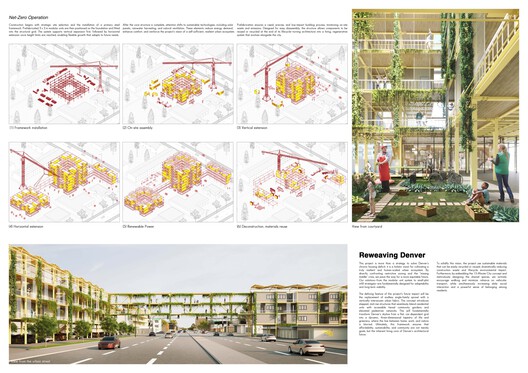
Highlighted Submissions
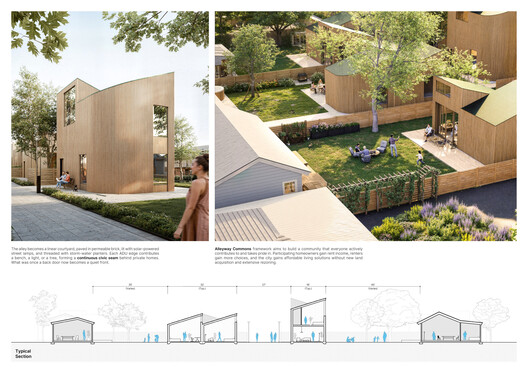
Project title: Alleyway Commons
Author: Tian Ouyang and Yibin Yang, from the United States
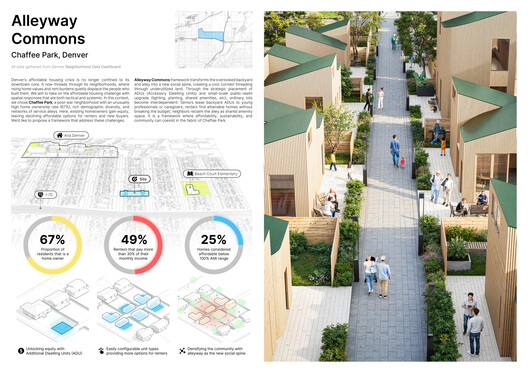
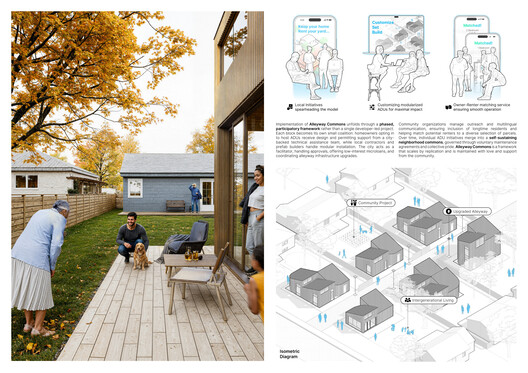
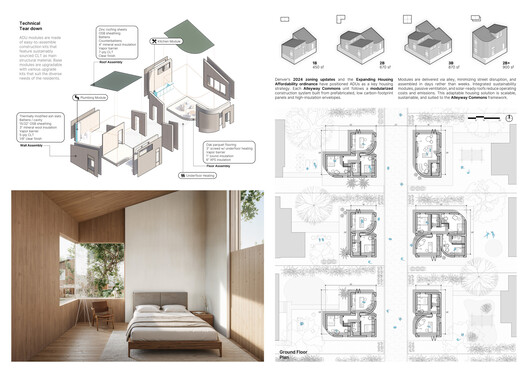
Alleyway Commons is an affordable housing framework that transforms Denver's underutilized service alleys into shared civic infrastructure supporting incremental densification through Accessory Dwelling Units (ADUs). Developed for Chaffee Park, the project operates as a block-by-block, opt-in system in which homeowners host modular ADUs while collectively upgrading the alley with lighting, planting, permeable paving, and shared amenities. The strategy aligns private parcels into an interdependent spatial network, accommodating diverse household types while allowing homeowners to retain ownership and generate rental income. Architecturally, the ADUs use a modular, prefabricated construction system with low-carbon, high-performance envelopes, delivered and assembled via alley access to reduce disruption and comply with Denver's 2024 zoning updates and Expanding Housing Affordability ordinance.
Project title: Wellness
Author: Taylor Rhodes Lowe, from the United States
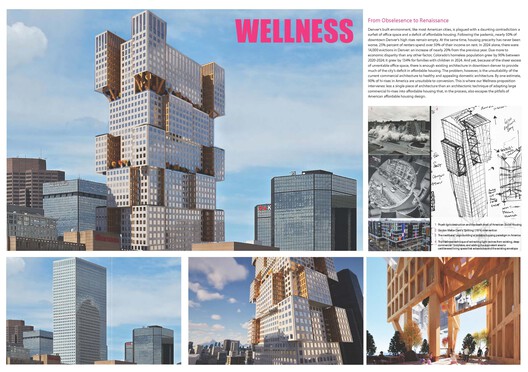
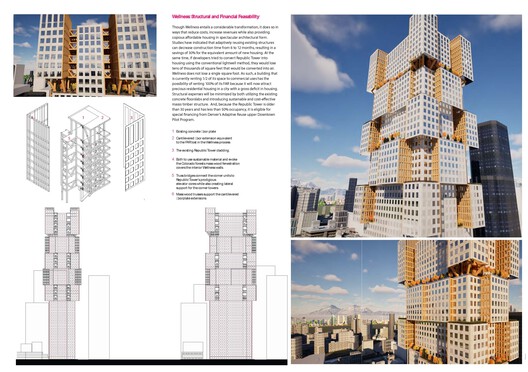
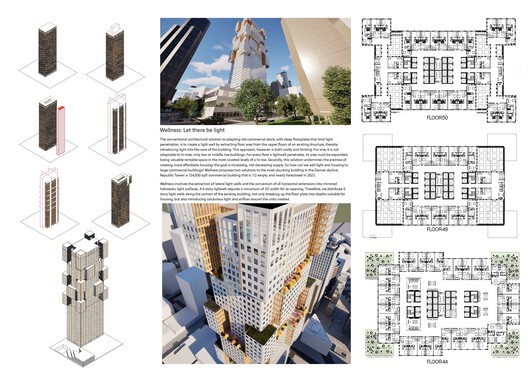
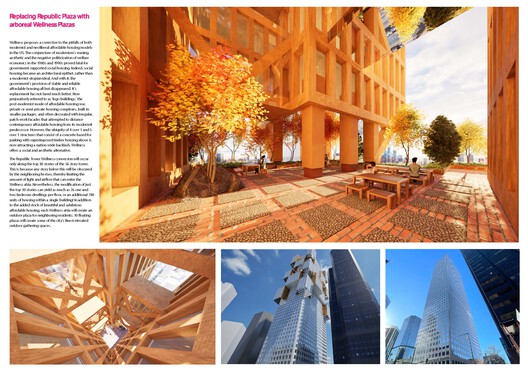
Wellness is an adaptive reuse strategy that converts underutilized commercial high-rises into affordable housing by reconfiguring light, structure, and floor-plate depth without sacrificing rentable area. Developed for Republic Tower in downtown Denver, the project responds to deep office floor plates by introducing lateral light wells carved from the building perimeter rather than subtracting central floor area, allowing residential units to receive daylight and ventilation while maintaining full FAR. These vertical light voids are paired with horizontal extensions that act as heliostatic, light-reflecting surfaces, redistributing daylight into the building core. The intervention leverages the existing concrete structure while introducing mass timber elements to support cantilevered volumes and reduce embodied carbon. Applied to the upper 30 floors of the 56-story tower, the system enables the conversion of a partially vacant office building into 780 residential units and a series of elevated outdoor plazas, operating within Denver's Adaptive Reuse Upper Downtown Pilot Program.
Project title: Reclaiming Denver @Valverde
Authors: Ritu Saheb and Nidgel F D Souza, from the United States
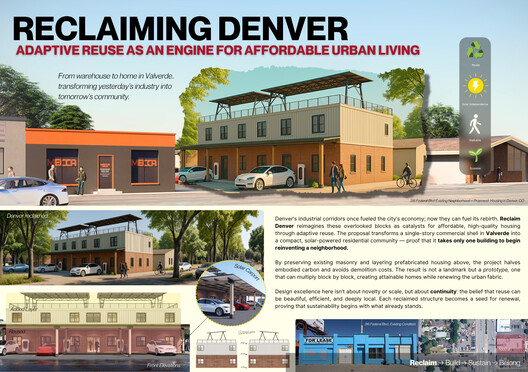
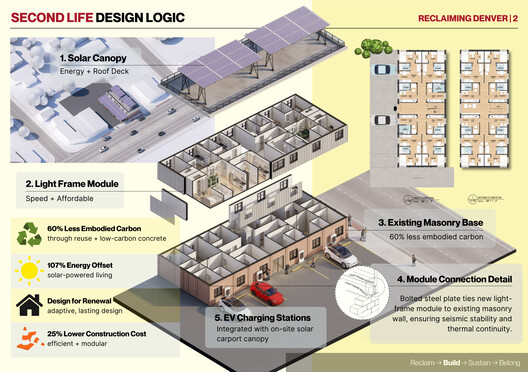
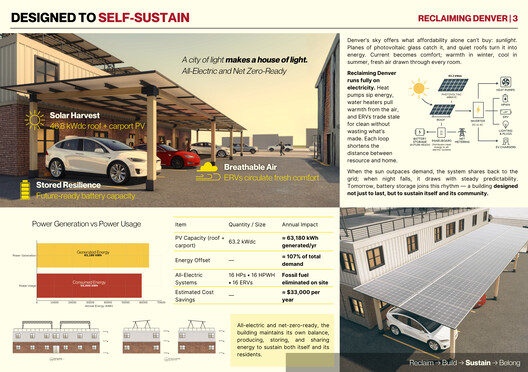
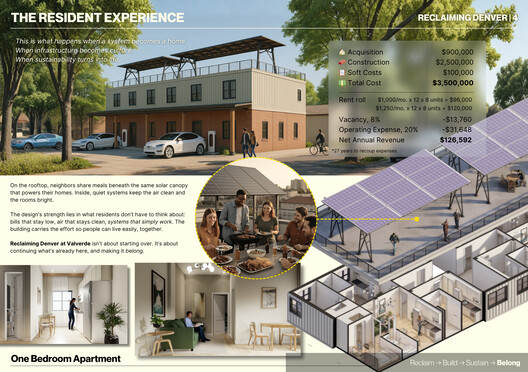
Reclaiming Denver explores how adaptive reuse can reposition aging commercial infrastructure as a viable, affordable housing prototype rooted in continuity rather than replacement. The project retains the existing masonry base and layers lightweight prefabricated residential modules above, reducing embodied carbon, construction time, and cost while preserving the site's material history. All-electric systems powered by rooftop and carport photovoltaics enable the building to generate and manage its own energy, while shared rooftop amenities and integrated EV infrastructure reinforce a community-oriented living model. Through modular construction, restrained material choices, and a clear emphasis on reuse over demolition, the proposal demonstrates how affordability, sustainability, and architectural quality can be aligned within a $3.5 million development framework that achieves a 60% reduction in embodied carbon and a projected 27-year payback period.
Project title: Re-Ground: Toward a Regenerative Housing Typology
Authors: Kexuan Shang and Shenglu Qiu, from the United States
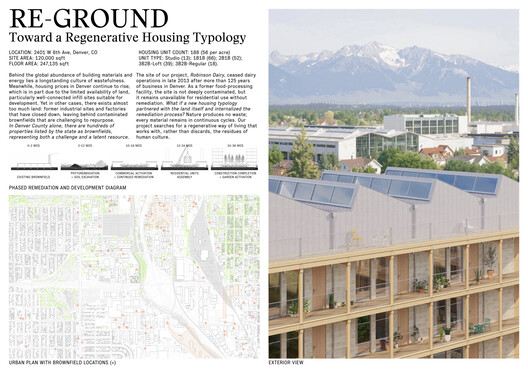
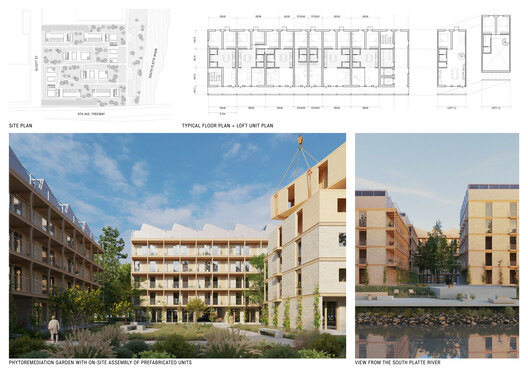
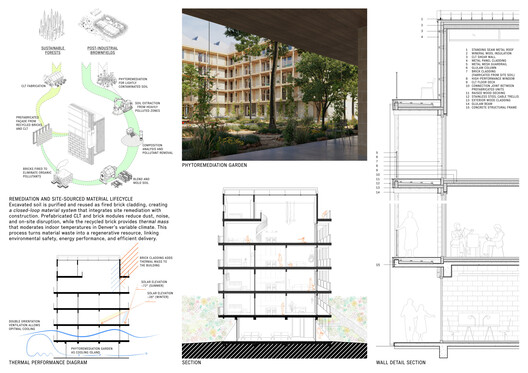
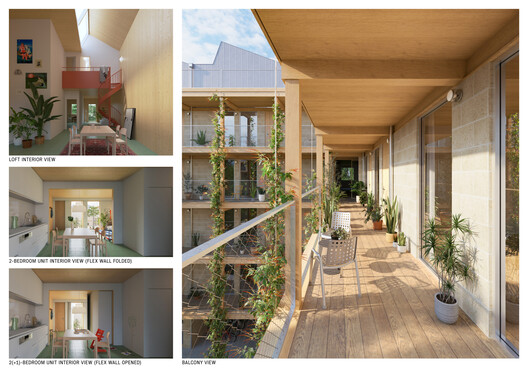
Re-Ground proposes a regenerative housing typology that reclaims post-industrial brownfields in Denver by pairing residential development with on-site environmental remediation. Located on a former dairy processing site along the South Platte River, the project integrates phytoremediation gardens that actively cleanse lightly contaminated soil while shaping shared courtyards and microclimates for daily life. Housing is delivered through prefabricated CLT and brick modules assembled on site, minimizing disruption and transforming excavated soil into fired brick cladding to establish a closed-loop material system. Organized around double-loaded exterior galleries and flexible loft units, the scheme balances density with daylight, cross-ventilation, and communal outdoor space. By phasing remediation, construction, and landscape activation together, Re-Ground reframes contaminated land not as a liability, but as a catalyst for affordable, climate-responsive housing that aligns ecological repair with long-term urban living.
Project title: Common Spaces
Authors: Matthew Lewis Scarlett, from the United States
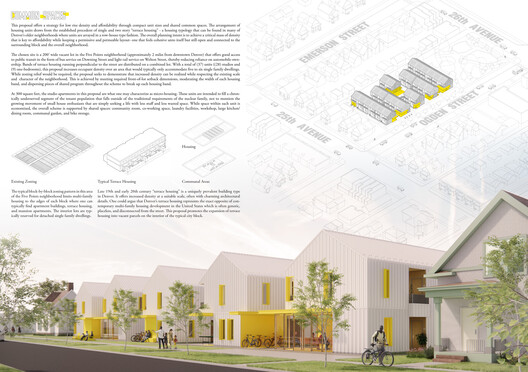
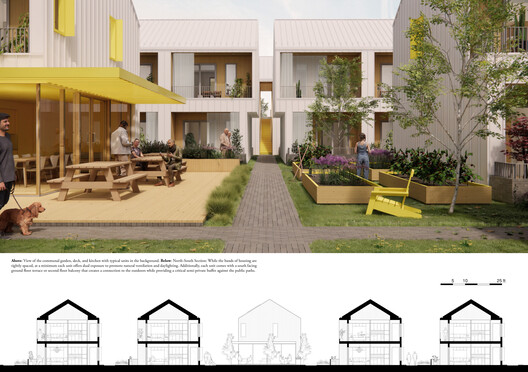
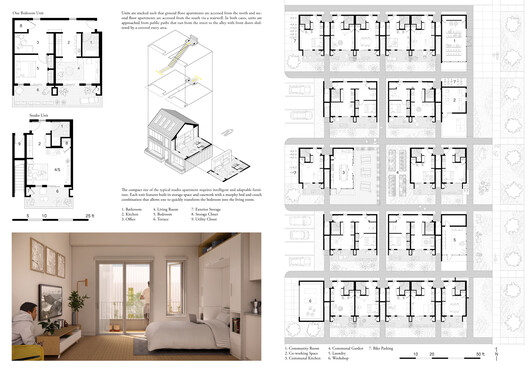
Common Spaces explores a low-rise, high-density housing model that reinterprets Denver's terrace housing tradition to deliver affordability through compact units and generous shared spaces. Small-footprint studio and one-bedroom units are organized in narrow housing bands, accessed from public paths that thread between street and interior courtyards, balancing density with daylight, cross-ventilation, and privacy. Individual units are intentionally compact yet highly adaptable, with built-in storage and flexible furniture to support multiple living arrangements. Shared amenities—community kitchen, co-working space, laundry, workshop, gardens, and bike storage—extend daily life beyond the unit itself. Communal courtyards and semi-private terraces act as social condensers and environmental buffers, reinforcing a strong relationship between dwelling and neighborhood. By combining modest private space with robust collective infrastructure, the project demonstrates how affordability, livability, and community can be achieved without sacrificing architectural clarity or urban integration.
Readers interested in participating in future design competitions related to housing are encouraged to visit The Next House: USA, which invites innovative ideas for a new American suburban prototype, and register before 20 May 2026.


