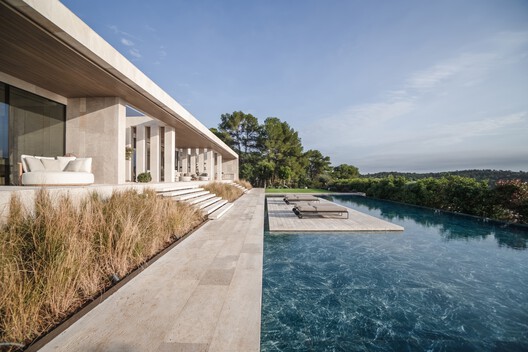
The single-family house remains one of the most complex territories in contemporary architecture. At once intimate and technical, everyday and symbolic, it concentrates debates around comfort, sustainability, landscape, and ways of living, while also serving as an instrument for projecting the identity of its inhabitants. It is within this field that ARK Architects operates. Based in Marbella and Sotogrande, the studio's work, under the creative direction of co-founder Manuel Ruiz Moriche, develops from a direct relationship between architecture, natural light, and environmental context.
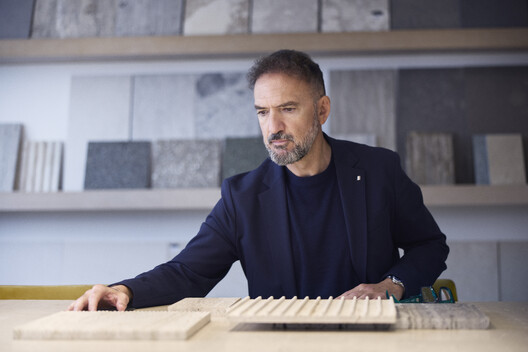
With over 26 years of experience in residential design, the studio works across diverse contexts, from southern Spain to projects in the Middle East, North America, and Australia, engaging with distinct climatic, cultural, and construction realities. Rather than relying on a repeated formal language, each project begins with a careful reading of the site, orientation, and intended mode of inhabitation, understanding the house as a sensitive system of relationships rather than an isolated object.
This approach is also reflected in the studio's working structure. Architecture, construction, and interior design are developed as a continuous sequence of spatial, technical, and material decisions. Rather than an exercise in control, this integrated process aims at coherence, ensuring that initial intentions are carried through to the built experience. "A unique hallmark of ARK Architects is that we are both architects and builders, specializing in creating bespoke single-family homes," says Manuel Ruiz Moriche.
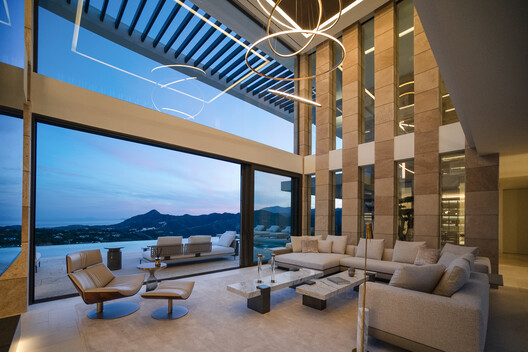
ARK's work is grounded in principles of bioarchitecture incorporated from the earliest stages of the design process. Bioclimatic strategies, the use of natural materials, and a direct relationship with the landscape operate as foundational elements of the architectural design, guiding both form and environmental performance.
The studio's architecture aims to be deliberately quiet and restrained. Without resorting to spectacular gestures, it incorporates monumentality as a latent spatial quality, constructed through scale, materiality, and a direct relationship with its surroundings. Light, continuity between interior and exterior, and the control of proportions structure environments conceived for permanence, in which architecture operates as a mediator between the body, the landscape, and duration.
According to Ruiz Moriche, among the studio's projects, Villa NIWA occupies a central position for condensing, with particular clarity, the principles that guide ARK Architects' practice. Currently under construction in The Seven, at La Reserva de Sotogrande, the project functions as a synthesis of a way of thinking about residential architecture in direct relationship with the territory.
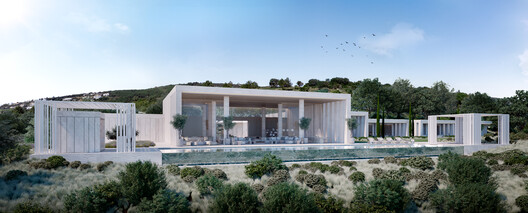
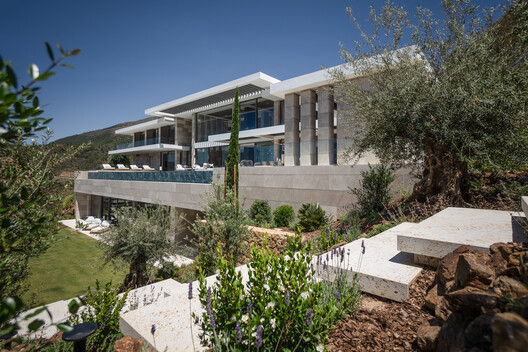
Set on a 10,126 m² plot, with 4,231 m² of built area, the residence was conceived through a careful reading of topography, orientation, and the surrounding landscape. Rather than asserting itself as an autonomous object, the architecture is organized as a continuous system in which building and nature are articulated through paths, voids, light, and material. The project prioritizes strategies of environmental adaptation and a sensory relationship with its surroundings, anchored in principles of bioarchitecture and operating more through spatial modulation and the control of transitions than through explicit formal gestures, allowing for a gradual integration between interior and landscape.
Architecture Framing the Landscape
Located in La Zagaleta, Villa Geneve is a built project that explores the relationship between architecture, landscape, and long-distance views through a restrained and precise composition. Architectural lines frame views of the Mediterranean Sea, Africa, and the Benahavís mountains, while orientation and natural light structure the transition between interior and exterior spaces.
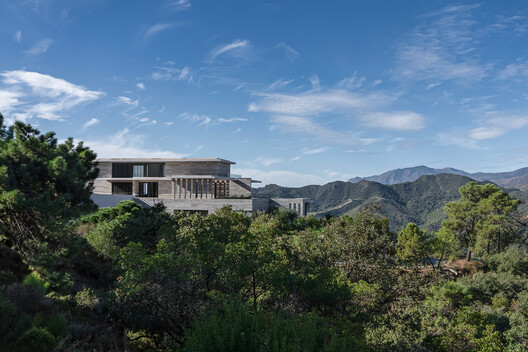
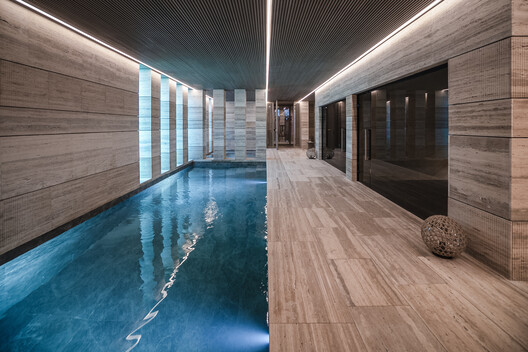
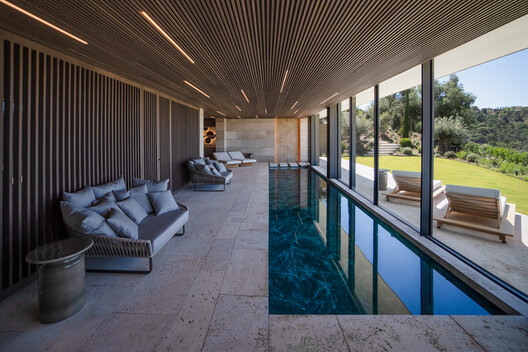
Architecture and interiors were conceived in an integrated manner, reinforcing the project's spatial and material continuity. Complementary areas such as a spa, indoor pool, sauna, Turkish bath, and wine cellar are incorporated as extensions of the domestic space, without asserting themselves as autonomous or scenographic elements.
Topography, Microclimate, and Spatial Continuity
Situated in La Reserva de Sotogrande, Villa TAI develops a direct relationship with the terrain and the adjacent golf course, articulating architecture and landscape through a system of planes, voids, and transparencies. The project constructs a microclimate in which light, vegetation, and materiality operate jointly.
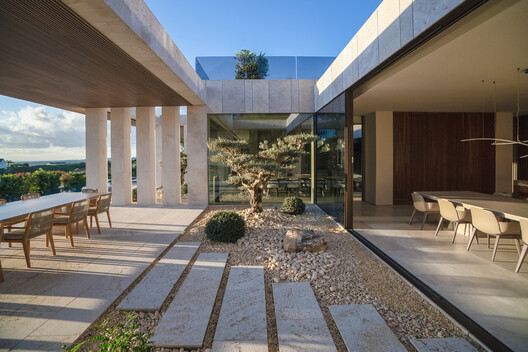
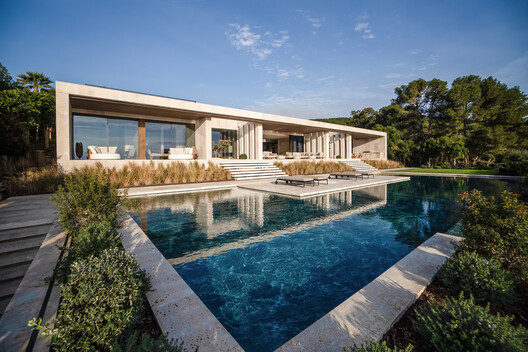
Designed around family life, the residence integrates bioclimatic strategies and energy-efficient systems as part of its architectural logic, including aerothermal solutions, heat-recovery ventilation, and photovoltaic energy. Distributed across three levels, the house employs large glazed surfaces to establish spatial continuity between interior spaces, the garden, and the horizon.
Between Openness and Shelter: Scales of Dwelling
Also located in La Zagaleta, Villa Kaizen explores the balance between privacy and openness. Living spaces gradually extend toward outdoor areas, allowing for different scales of use, from everyday domestic life to expanded moments of social gathering.
The residential program, which includes five suites and complementary spaces such as an indoor pool, spa, gym, and wine cellar, is organized to preserve spatial legibility and a constant relationship with the landscape. Gardens, terraces, and outdoor areas do not function as decorative additions, but as constitutive elements of the architectural experience.
The studio's practice explores the house as a field of mediation, positioning it at the intersection of the built environment and the landscape, stability and adaptation, spatial presence and formal restraint. This stance situates the work within a broader reflection on contemporary residential architecture, particularly in contexts where comfort, nature, and representation remain in delicate balance. Each project is conceived as an environment of permanence, in which architecture operates less as a finished form and more as a lived experience.


