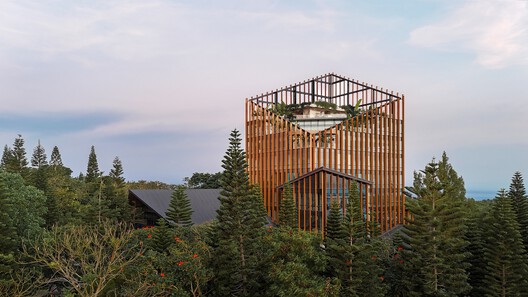
This week's architecture news brings together a series of announcements that reflect how the discipline is engaging with larger structural and institutional frameworks. The OBEL Foundation's introduction of Systems' Hack as the theme for its 2026 cycle foregrounds architecture's relationship to the systems that organize contemporary life, from infrastructure to resource flows. At the scale of the design industry, Salone del Mobile.Milano's outline of its 2026 framework, including OMA's involvement in the Salone Contract master plan, signals an evolving understanding of major fairs as long-term cultural and economic infrastructures rather than standalone events. Running alongside these agenda-setting developments, the final days of nominations for the 2026 ArchDaily Building of the Year Awards underscore the role of collective evaluation and public participation in shaping contemporary architectural discourse.

Architecture and Systems Thinking Shape Institutional Agendas and Industry Platforms
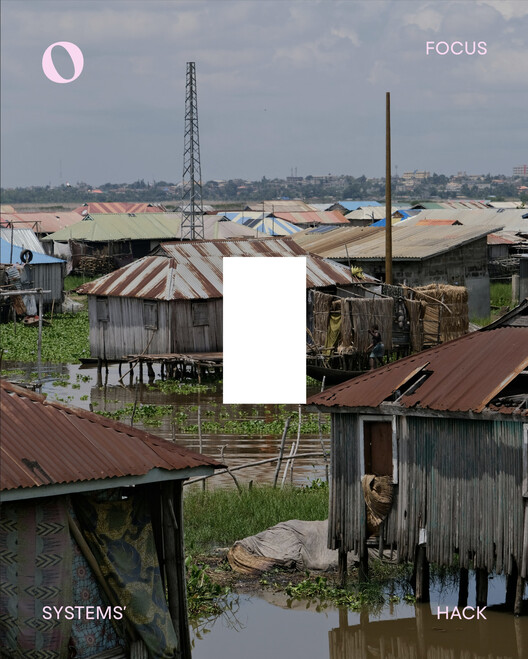
At the institutional level, the OBEL Foundation has announced Systems' Hack as the theme for its 2026 cycle, foregrounding architecture's relationship to interconnected societal systems, including energy, water, education, and information networks. Defined by an international jury chaired by Nathalie de Vries of MVRDV, the theme positions architecture as a strategic tool capable of intervening within systemic constraints rather than addressing isolated challenges. With nearly half of the buildings expected by 2050 yet to be constructed, the framework emphasizes the long-term ecological, social, and political consequences of design decisions, shifting attention from individual projects to the scale of networks and infrastructures.
Related Article
The ArchDaily 2026 Building of the Year Awards is Now Open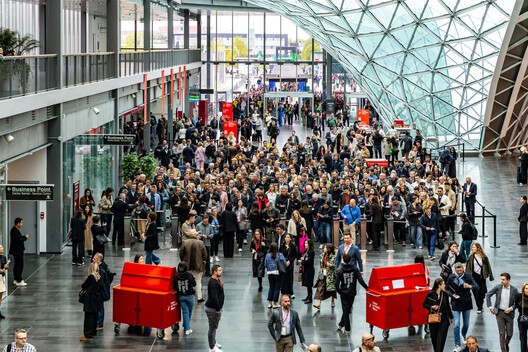
In parallel, Salone del Mobile.Milano has outlined its framework for 2026, signaling an evolving understanding of major design fairs as enduring cultural and industrial infrastructures. Central to this vision is Salone Contract, a multi-year initiative led by OMA that responds to the growing complexity of large-scale commissions in hospitality, workplace, and urban environments. Through thematic itineraries, public forums, and lectures, the program positions architectural research as a tool for strategic planning, while new curatorial formats and a reworked visitor experience emphasize materiality, accessibility, and the fair's role as an interconnected ecosystem rather than a standalone event.
Awards, Cultural Projects, and Collective Recognition
As the nomination period draws to a close, there is only one week left to submit projects for the 2026 ArchDaily Building of the Year Awards. The annual awards invite readers to recognize architecture from around the world across 15 categories, including housing, educational projects, offices, interiors, and more. This first stage determines which projects advance to the finalists round, with each registered user able to nominate one project per category. Nominations close at 18:00 EST on February 10, with the five most-nominated projects in each category to be announced on February 11, ahead of the final voting stage, which will remain open until February 18.
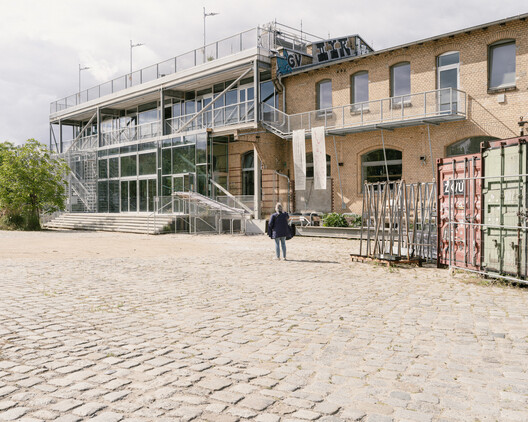
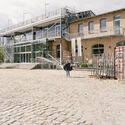
Alongside this collective selection process, the week also saw recognition of built work that foregrounds architecture's civic and cultural potential. Peter Grundmann Architekten received the DAM Preis 2026 for the ZK/U Center for Art and Urbanistics in Berlin, a transformation of a former freight warehouse into a cultural hub. The jury praised the project's restrained use of resources, manual craftsmanship, and sensitive approach to adaptive reuse, preserving the existing structure while introducing flexible spaces for exhibitions, performances, workshops, and public programs. The award reflects broader tendencies in contemporary architecture toward sustainable construction, reuse, and the creation of "third places" where cultural production and civic life intersect.
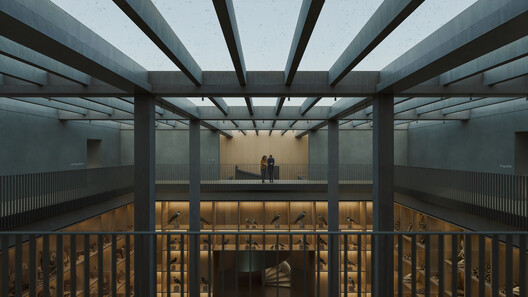
Complementing this, Sordo Madaleno, in collaboration with építész stúdió and Buro Happold, was selected to design the New Debrecen Collection Center for the Hungarian Museum of Natural History. Inspired by traditional Hungarian clay vessels, the 43,000-square-meter facility balances the functional demands of collection storage and research with environmental responsiveness. Stratified brick façades and carefully articulated internal courtyards support long-term preservation while shaping daily operations, positioning the Center as both a scientific infrastructure and an active presence within the surrounding urban landscape.
On The Radar
Shenzhen's Tallest Tower Under Construction by Woods Bagot Tops Out

Shenzhen's tallest under-construction tower, the Cloud of Innovation Center by Woods Bagot, has officially topped out, marking a milestone in the city's ongoing urban renewal of the Luohu district. Designed through a Global Studio approach that integrates master planning with architecture, the mixed-use complex spans 462,350 m² at the intersection of the Dawutong industry belt and Hongling financial hub. The supertall tower, featuring a curved elevation, anchors a civic center that combines offices, retail, residential, and community spaces, while its U-shaped circulation links surrounding towers and podiums to create a cohesive, accessible, and sustainable urban environment.
RAMSA and National Trust Reimagine Palmer Memorial Institute Campus
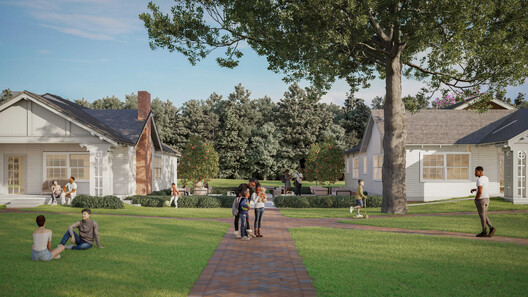
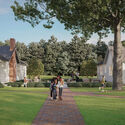
RAMSA (Robert A.M. Stern Architects), in collaboration with the National Trust for Historic Preservation's Where Women Made History initiative, has completed a pro bono campus plan for the historic Palmer Memorial Institute in Sedalia, North Carolina. Founded in 1902 by pioneering educator Dr. Charlotte Hawkins Brown, the 35-acre campus grew into a nationally recognized preparatory school for African American students before closing in 1971. The new plan re-envisions the site as a vibrant cultural and educational hub, introducing program-specific zones for artist- and scholar-in-residence housing, community and educational programs, maker spaces, and outdoor trails. Adaptive reuse strategies preserve key historic buildings, while accessibility upgrades and a new visitor center improve circulation and orientation.
Liverpool City Council Approves Single-Storey SEND School by Ridge and Partners
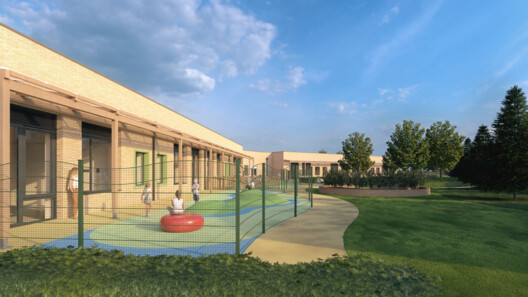
Liverpool City Council has approved plans for a new primary school designed by Ridge and Partners to consolidate 250 pupils with special educational needs and disabilities (SEND) from four existing sites. The 63,000 m² single-storey building adopts a "village" layout, with four wings of classrooms and breakout spaces radiating from a central core, allowing direct access to outdoor areas from each classroom. The design incorporates multi-sensory rooms, hydrotherapy pools, and two internal courtyards to support learning, socialization, and wellbeing, while also providing spaces that can be used by the wider community. Sustainability and accessibility are embedded in the plan, targeting BREEAM Very Good and net-zero operation, and the facility is intended to serve as a framework for future SEND provision in the city.
This article is part of our new This Week in Architecture series, bringing together featured articles this week and emerging stories shaping the conversation right now. Explore more architecture news, projects, and insights on ArchDaily.