
Architects can shape detailed buildings in minutes with Forma Building Design to easily test how different options work on their site.
For many architects, schematic design is defined by a familiar tension. It is the phase of open-ended exploration—where multiple ideas are tested, challenged, and refined for clients to define a project's direction. In essence, it's where the design magic happens. The challenge is rarely a lack of ideas, but the effort required to test and evaluate those ideas properly under time-, resource-, and budget constraints. It is an especially acute challenge for architects as early design work must balance creativity with client needs and commercial feasibility.
Many tools used at this stage either remain too abstract to support architectural intent, specialize in modelling intricate geometry, or are built for later design phases when more detail needs to be locked in. For small and mid-sized practices in particular, the time required to test alternatives can threaten the financial viability of early design work. Teams risk being forced to commit to a design direction without full confidence, increasing the likelihood of revisions later at a cost to the schedule, budget, and project momentum.
From Urban Volumes to Architectural Scale
Schematic design marks a critical shift. Massing volumes turn into buildings with spatial, environmental, and experiential qualities. At this scale, architects need to explore ideas quickly without losing precision. They need to work fluidly across volume, plan, and façade, while communicating design intent with increasing clarity. This phase is all about the "what ifs".
- What happens to daylight access if windows and balconies shift by a meter?
- Can unit density be increased without sacrificing interior quality?
- How does a courtyard's proportion affect afternoon sun, particularly in a dense urban neighborhood where liveability is crucial?
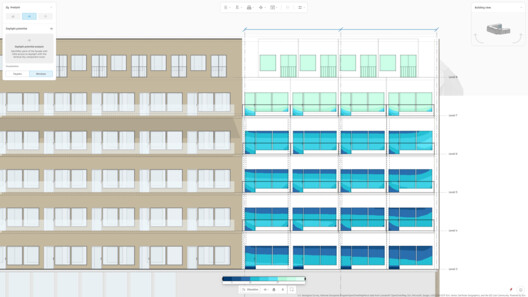
While schematic design is full of these questions, getting answers to them, however, often proves slow and cumbersome. BIM tools, while essential later, are built to support detailed design development after the project direction has been established. When used during early exploration, their workflows can feel heavy and repetitive at a point when ideas are still in flux and risk getting buried in too much detail. For example, exploring a massing variation may require time-consuming rebuilding of geometry with every option. The effort required to iterate discourages exploration precisely when it matters most.
See What's Possible Easier; Know What Works Earlier
Autodesk's Forma Building Design was created to bridge this gap between massing studies and detailed design development (sign up for the closed beta waitlist to get early access). Built as a continuation of Forma Site Design—which focuses on site massing in pre-design—Forma Building Design enables an exploratory environment for schematic design. It helps architects easily explore more design alternatives and convey architectural intent without assuming the complexity of a complete BIM model.

Multiple variations can be quickly tested and edited in parallel without complex modelling.
With design automations, they can shape detailed buildings complete with windows, doors, balconies, and unit layouts in minutes. They can work across volume, floor plan, and façade in a single environment, and create and iterate options without rebuilding models from scratch or losing sight of real constraints. Building geometry is always linked to quantifiable data such as floor area, density, and basic program distribution, allowing teams to evaluate the impact of decisions as they design, without complex setup or specialist expertise.

In this schematic design laboratory, multiple scenarios can be explored in parallel. Architects can compare design options side-by-side, assessing spatial organization, façade strategies, unit mixes, and environmental conditions. When project requirements shift—whether from clients, municipalities, or internal design reviews—teams can make changes quickly, and avoid costly redesigns or losing design momentum.
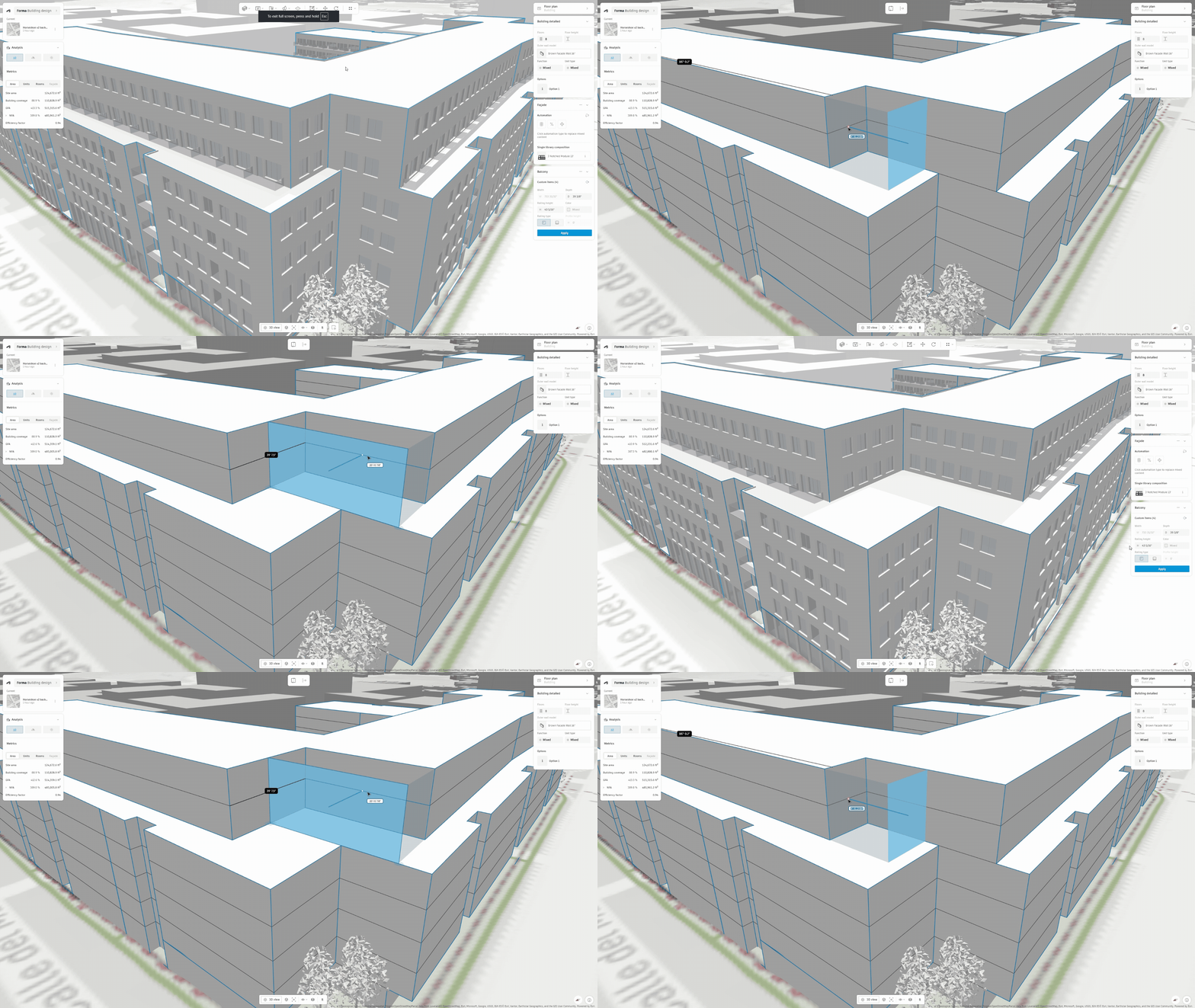
The massing and facade can be easily edited without remodelling.
Designing with context from the start
Crucially, Forma Building Design incorporates geolocation and surrounding context from the outset, grounding exploration in real site conditions. This removes hours of manual setup and ensures early decisions respond to actual urban, environmental, and regulatory constraints.
As options evolve, architects can evaluate performance while they're designing. Integrated analyses provide immediate feedback on daylight potential, sun hours, shading, and embodied carbon. Rather than treating performance analysis as a downstream task, Forma Building Design allows environmental criteria to become part of the exploratory design process itself. Constraints are reframed—not as limitations on creativity, but as drivers of more informed architectural decisions. This allows teams to commit to design directions with greater confidence and clarity.
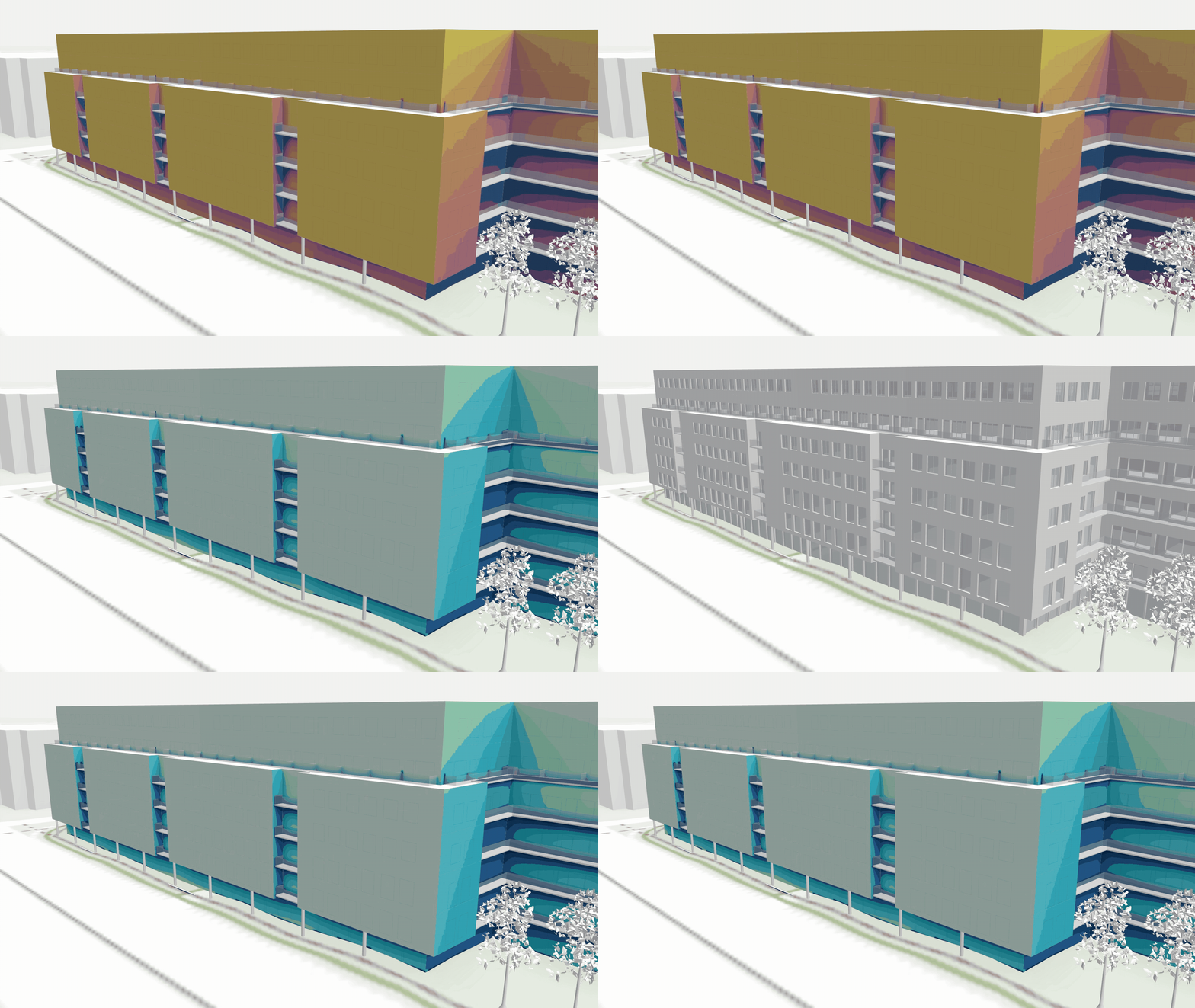
Switch between identifying sun hour hotspots for shade or warmth–depending on the region–and daylight to find optimal placements of windows.
Less effort, more creativity
By lowering the effort and time required to create, adjust, and compare options, Forma Building Design makes more exploration possible, to arrive at better outcomes without increasing workload and cost. It makes creative and financial sense to make changes while designs are still fluid, before major decisions are locked in and making revisions in later design phases becomes more costly.
Continuity is crucial to stay ahead of deadlines as schematic design progresses toward design development. Once a direction is established, architects can bring their projects directly into Revit as geolocated models. This is not a disconnected export, but part of a continuous workflow where geometry, location, and design intent carry forward. Teams can build on early testing without rework, enabling a smoother transition between phases and greater value gained from schematic design exploration.

A Platform Shaped by Practice
Forma Building Design develops in continuous dialogue with practicing architects, reflecting everyday workflows, constraints, and professional priorities. This practice-driven approach recognizes schematic design as a creative and strategic phase that demands flexibility and clarity. By treating schematic design as a space for structured, creative exploration, Forma Building Design aims to restore time and confidence to the most foundational—and fun—phase of architectural work.
Architects interested in early access to Forma Building Design can sign up for the closed beta waitlist, gaining the opportunity to test the platform firsthand and actively contribute to shaping its future development.

