
What matters more: looking to the past or to the future? Recognizing established trajectories or fostering paths still under construction? Perhaps this is not a question with a single answer. Traditionally, architecture awards have operated as devices of consecration, recognizing completed works, established careers, and already tested solutions, most often through a retrospective lens. But what would happen if recognition ceased to be an end in itself and instead began to operate as a catalytic agent, investing less in what has already been done and more in what is still yet to unfold?
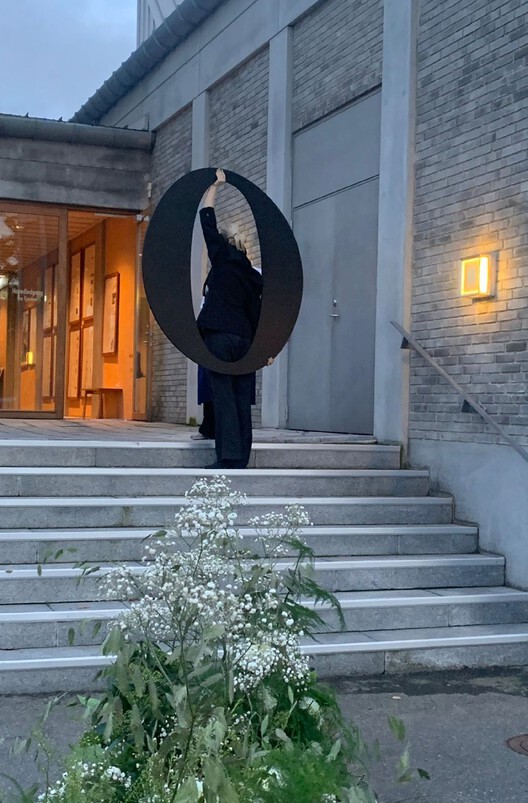
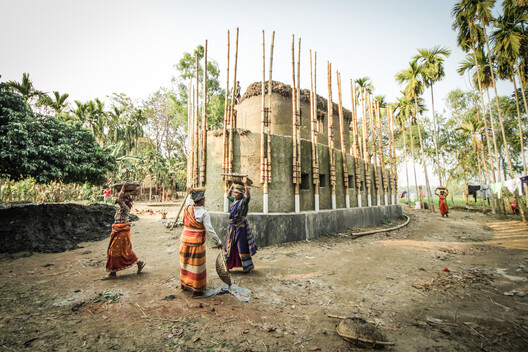
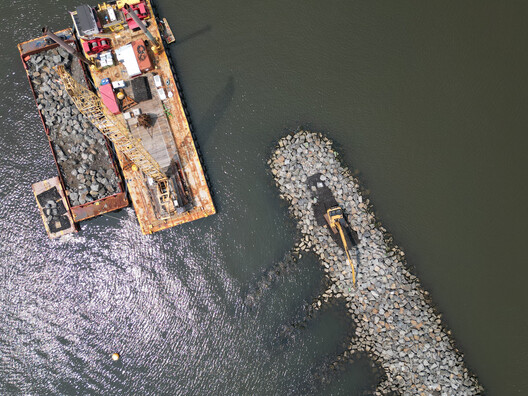
It is from this inflection point that OBEL has come to position itself not simply as an award, but as a foundation dedicated to fostering architecture. In its earlier editions, the OBEL Award played a crucial role in bringing visibility to practices that resist closure, including initiatives such as Power to Renovation (2025), which advocates systemic change in the reuse of existing buildings, 36×36 (2024), a series of public works developed under complex political, social, and material conditions, and Living Breakwaters (2023), which frames architecture as an evolving interface between ecological systems, communities, and time.
Building on the questions and approaches surfaced through the Award, OBEL is now expanding its focus toward other forms of recognition and support, investing in initiatives, platforms, and programs that operate beyond annual prizes and engage architecture as an ongoing process of learning, experimentation, and collective responsibility. This shift marks a broader change in attitude: from architecture understood as an object of distinction to architecture as a field of action, learning, and shared responsibility. In a world shaped by interconnected crises, the central question moves away from "Who deserves to be awarded?" and toward "What truly matters to support now?"
From Award to Ecosystem
Established through the legacy of Danish entrepreneur Henrik Frode Obel, the OBEL Foundation is an organization dedicated to supporting architecture as a force for social and environmental transformation. Based in Denmark and operating internationally, it works through an ecosystem that includes the OBEL Award, but also grant programs, teaching fellowships, and institutional partnerships. Its initiatives are guided by annual themes that reflect urgent contemporary challenges, strengthening practices, research, and approaches capable of generating real, scalable, and lasting impact within the built environment.
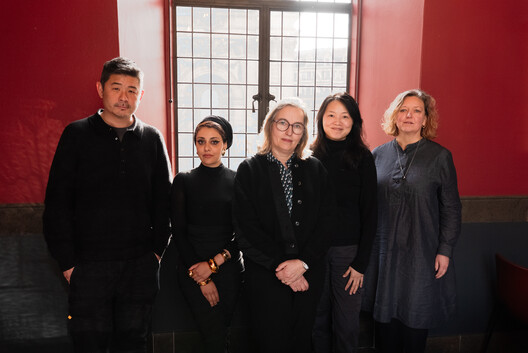
From the outset, OBEL has never understood itself solely as a conventional award. Still, its early years focused on consolidating the OBEL Award as a reference point, building the recognition necessary for it to hold relevance within international architectural discourse. As explained by the Executive Director of the OBEL Foundation, this initial strategy was deliberately focused:
The original scope also defined a travel grant program and the desire to support architecture and its development in general. But when introducing a new award into a world which, let's be frank, wasn't in dire need of yet another architecture award, we saw this as an opportunity to do things differently and create an awards ecosystem that we felt was right. — Jesper Eis Eriksen
The consolidation of the Award opened the way for this vision to expand. Through initiatives such as the Teaching Fellowships, the evolution of travel grants into the OBEL BUILD program, and an ongoing agenda of international partnerships and collaborations, OBEL now operates as an ecosystem of support rather than a single mark of excellence. This transition also responds to a clear need to amplify voices, learning, and networks of knowledge. As highlighted by Jamiee Ma Williams, Head of Program at the foundation:
The shift to mark OBEL as a foundation is also to ensure that we can more easily share the rich knowledge, network and stories of our winners and grantees and therefore increase the reach and impact of their work. — Jamiee Ma Williams
Architecture as an Agent of Change, Not a Closed Discipline
Avoiding any position as a normative authority on what architecture is or should be, the foundation defines itself as a platform for empowerment.
We believe in empowering those who are pushing the boundaries of architecture to address the world's most pressing challenges. We're not just awarding excellence; we're supporting potential, and we're excited to do so in a way that hopefully creates lasting, meaningful change. — Jesper Eis Eriksen
This stance deliberately expands the understanding of what constitutes architectural practice. The foundation is equally interested in architects, material scientists, activists, researchers, and professionals operating at the edges of, or even outside, traditional disciplinary boundaries. The central criterion is not prestige, but the ability to act in scalable, adaptable ways and within planetary limits. As Williams summarizes: "OBEL supports architecture not just as a discipline—we recognise and reward architecture's potential to act as agents of tangible change."
A Foundation That Enables, Rather Than Dictates
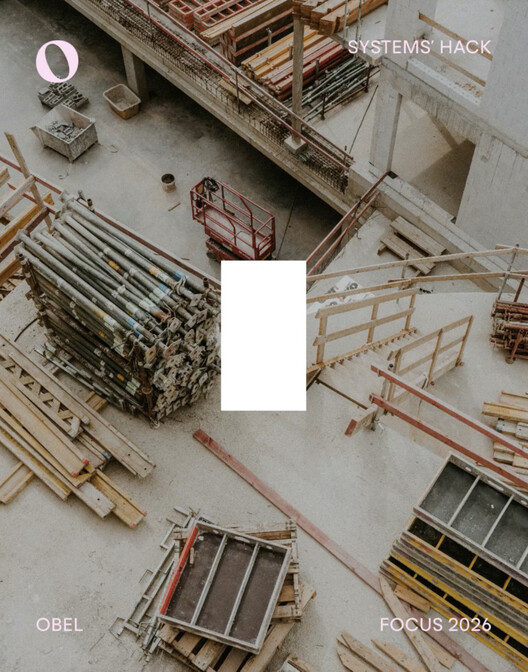
OBEL's positioning as an enabler becomes especially clear in its internal processes. The OBEL Award jury operates autonomously and collectively, creating space for more critical, experimental, and even activist positions to emerge. Each year, the jury defines a central theme, articulated through a manifesto-like text. For 2026, this theme is Systems' Hack. Beyond guiding the Award itself, the theme also conceptually structures all of the foundation's activities throughout the following year, functioning as a shared curatorial and intellectual framework.
In addition, OBEL operates through a global network of scouts, professionals, and organizations who identify relevant initiatives in response to the annual focus. This mechanism broadens the foundation's geographic, cultural, and methodological scope, reinforcing its plural reading of contemporary architecture.
It's a core value that we don't operate in a vacuum. Working together and sharing resources and experience is vital if we want to really act as an enabler. — Jamiee Ma Williams
Impact as a Seed, Not a Metric
When it comes to impact, OBEL deliberately avoids easy answers or rigid metrics. Rather than seeking immediate indicators or quantifiable results, the foundation understands impact as a long-term process, tied to the ability to seed ideas, shift debates, and influence future practices. It is less about measuring direct effects and more about creating the conditions in which transformations can mature over time. This logic is expressed in the way Jesper Eis Eriksen describes the foundation's role: "We endeavour for it in the future to have helped create a better (recent) past than would otherwise have been. That is the wonderfully non-quantifiable measure of impact."
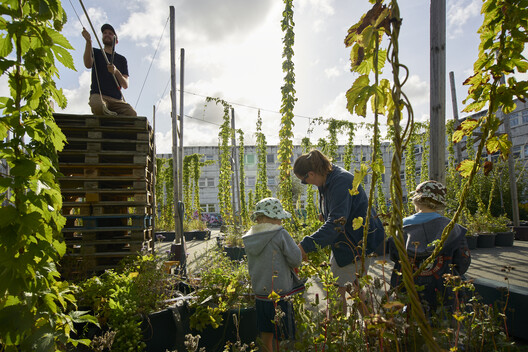
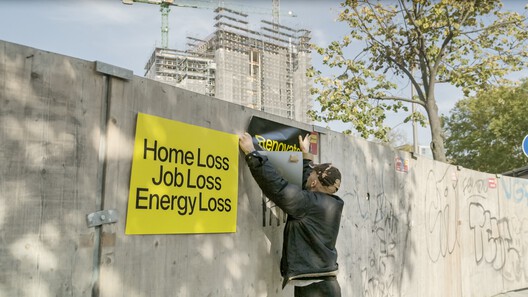
This perspective becomes even more relevant in the context of today's overlapping global crises, including housing shortages, environmental degradation, climate-driven migration, and growing social inequality. By acknowledging the historical responsibility of architecture and the industries surrounding it, Jamiee Ma Williams expands what is at stake:
A useful way to currently view the world is one in polycrisis. Architecture and the industries surrounding it have played a role and are still tied to many of these complex challenges. Looking ahead, it is time to untangle and increasingly empower those who raise awareness of architecture's transformative social and ecological value. — Jamiee Ma Williams
In this sense, OBEL's transformation into a foundation signals a broader shift in the role of cultural and architectural institutions. Rather than simply recognizing what has already been done, the focus turns toward investing in what may still become relevant, necessary, and transformative. In times of systemic uncertainty, perhaps the most radical gesture is not to reward ready-made answers, but to sustain difficult questions and support those willing to confront them.


