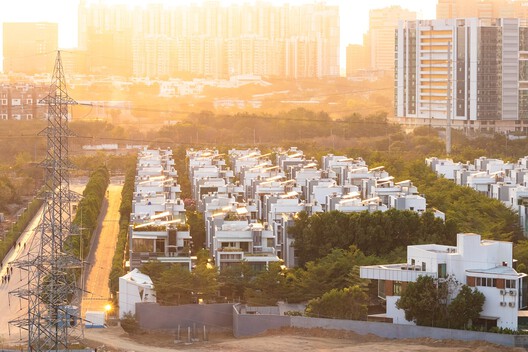
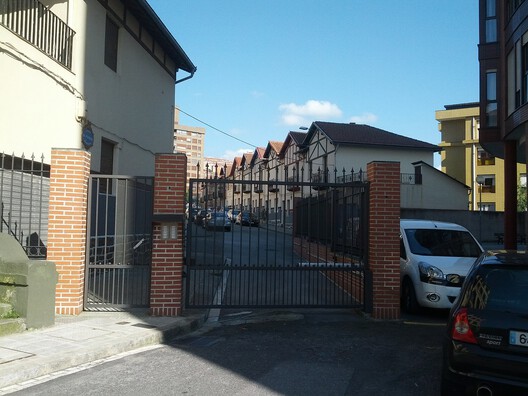
You learn how to behave long before you arrive home. At the gate, you slow down and wait. You are watched, then waved through. A badge is checked, a barrier lifts, a camera blinks. Nothing dramatic happens, and that is precisely the point. The most consequential work of gated communities is not done by their walls, but by the choreography of entry that quietly teaches residents what to expect, whom to trust, and where they belong.




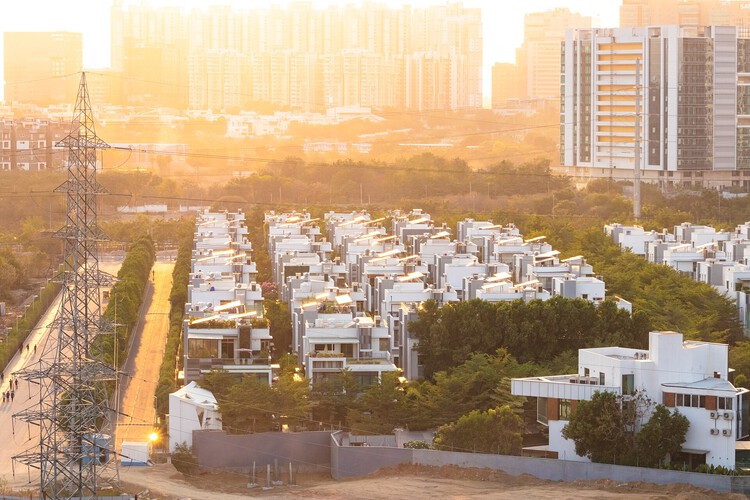
Gated communities are often discussed in moral terms as symbols of exclusion, privilege, or fear. Those readings are not wrong, but they rarely explain exactly how architecture performs this work. A more useful way to look at gated housing is as a form of behavioral architecture in environments that shape everyday conduct through repetition.
The gate is not a single object. It is a sequence. And sequences, rehearsed daily, are how architecture becomes instruction.
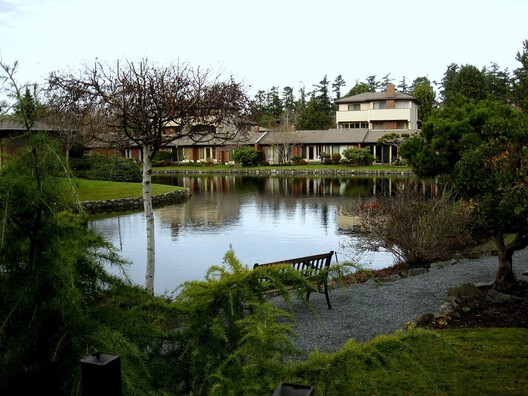
Entry Is a Lesson, Rehearsed Daily
Across different geographies, the entry ritual remains remarkably consistent. Slow down. Stop. Be identified and then—maybe—granted access. Controlled residential environments often show that these rituals do less to reduce crime than to stabilize a shared sense of order. Perceived safety rises quickly, even when actual risk remains unchanged.
That perception matters. Checkpoints normalize waiting and compliance; guardhouses establish authority. Cameras make observation feel routine rather than exceptional. Over time, residents internalize these cues. Outsiders become visitors. Movement becomes conditional. Safety is understood as something delivered by systems rather than negotiated socially. What makes this powerful is not intensity, but frequency: a one-time checkpoint is an inconvenience; a daily ritual becomes a worldview.
The Street Inside Is No Longer a Civic Space
Once inside, the logic continues. Streets in gated communities are rarely designed as places to linger. They are wide, smooth, and visually open, optimized for movement and oversight rather than encounter. International urban guidelines consistently describe streets as social infrastructure when they allow people to pause, meet, and overlap. Inside gated housing, those conditions are systematically thinned out.
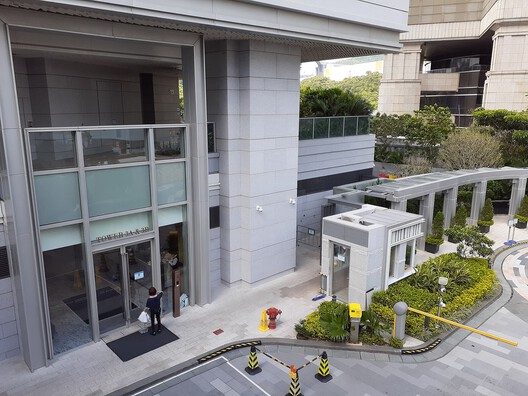
This is not accidental, as wide carriageways ease patrols and clear sightlines reduce uncertainty. Mixed-use edges, which introduce friction and unpredictability, are often excluded altogether. The result is a circulation network that moves bodies efficiently but discourages informal use. You arrive. You depart. You do not negotiate differences in between. In large private townships such as DLF Phase 5 in Gurgaon, India, access layers multiply: there are visitor gates, resident-only lanes, service entries with each narrowing who can move where, and how. The street becomes an extension of the gate, not a shared civic surface.
When Belonging Is Curated, Not Negotiated
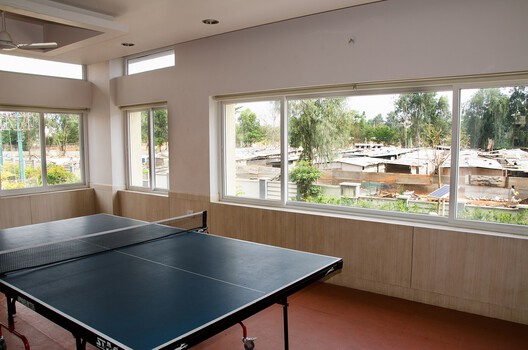
If the street no longer hosts social life, amenities take over. Clubhouses, jogging tracks, pools, and lawns are positioned as substitutes for public space, cleaner, safer, and better managed. But these spaces are rarely neutral. They come with booking systems, fees, time slots, and behavioral codes. Participation is no longer incidental; it is regulated.
Studies on social mixing and urban life repeatedly show that environments work best when interaction is unplanned and overlapping. When social life is scheduled and zoned, difference is filtered out. Children, elderly residents, and service workers often remain peripheral to amenity zones, even as they live within the same perimeter. Belonging becomes something you qualify for. Developments such as Magarpatta City make this tension visible. Internally, Magarpatta supports a dense calendar of shared activities and collective spaces, fostering strong bonds among residents. Yet this togetherness is sealed from its surroundings. Community is produced, but only inwardly.
When Security Becomes the Design Driver
Over time, security stops being a feature and becomes a framework. Cameras begin to dictate lighting. Guard cabins anchor intersections. Landscapes are trimmed for visibility rather than comfort. Once installed, these systems rarely recede, even when conditions change.

This reveals a deeper shift. Security moves from being a response to becoming a program. Spatial decisions increasingly prioritize control over climate responsiveness, walkability, or cultural specificity. The city, in miniature, is redesigned around avoidance. Latin American developments such as Alphaville illustrate this clearly. What began as residential enclaves has evolved into fully fledged urban systems whose road hierarchies, land-use separation, and public-space strategies are shaped primarily by security logic. The gate is no longer an edge; it is the organizing principle.
Much of this logic draws legitimacy from older ideas about safety and community. Yet those ideas were originally rooted in shared responsibility and everyday visibility, not enclosure. In gated communities, that intent is inverted. Surveillance is centralized rather than shared. Ownership is privatized rather than collective. The result is a spatial paradox where environments feel safe but require constant reinforcement, because trust has been outsourced to systems. Architecture steps in to manage what social life no longer negotiates and then presents that management as success.
Why This Matters Now
Gated communities continue to expand globally, particularly in rapidly urbanizing regions where public infrastructure struggles to keep pace. They are often defended as practical responses to real concerns. But practicality does not absolve design of responsibility. If architecture is shaping behavior—and it always is—its effects deserve scrutiny beyond aesthetics and efficiency. The question is not whether gated communities are good or bad. It is whether we are willing to acknowledge what they teach us, every day, about fear, belonging, and responsibility to the city beyond the wall.

If change is possible, it begins at the edge. Some contemporary developments are experimenting with softer boundaries, shared streets, mixed-use perimeters, and public amenities placed at thresholds rather than cores. These moves do not deny the desire for safety. They redistribute it, allowing negotiation instead of absolute separation. Architecture cannot legislate trust, but can it assume its absence?
This article is part of the ArchDaily Topic: Coming Together and the Making of Place. Every month we explore a topic in-depth through articles, interviews, news, and architecture projects. We invite you to learn more about our ArchDaily Topics. And, as always, at ArchDaily we welcome the contributions of our readers; if you want to submit an article or project, contact us.