


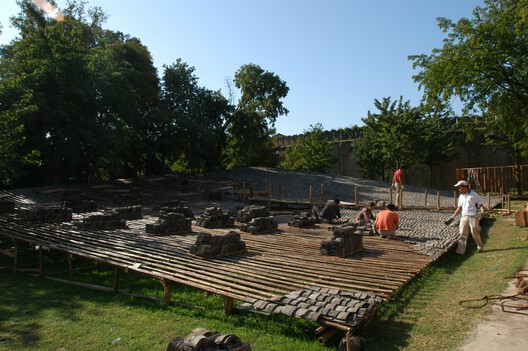
Lu Wenyu—co-founder of Amateur Architecture Studio with Pritzker laureate Wang Shu—has shaped many of the practice's most emblematic works across China, including the Ningbo History Museum and the Xiangshan Campus of the China Academy of Art in Hangzhou. Often working outside the spotlight, her leadership is unmistakable in the discipline of execution and the roles she has assumed: in 2003, together with Wang Shu, she established the Architecture Department at the China Academy of Art, where she also serves as Director of the Sustainable Construction Center. Her practice and teaching form a reciprocal loop: research conducted in studios at the China Academy of Art continually folds back into construction strategies on site, while lessons learned in the field return to the classroom as material intelligence rather than abstract theory.
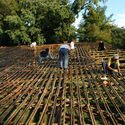
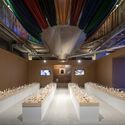
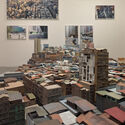
Amateur Architecture Studio's ethos of making with what exists remains clear and consistent: materials with memory, the traces of everyday life, the intelligence of unnamed structures, and the craft and tempo of the construction site. If Wang Shu is often cast as the poet—ideas, intuition, provocation—then Lu Wenyu is most often remembered as the calibrator and enabler, translating ambition into built reality. The studio's radicalism is grounded rather than rhetorical: recycled brick and timber meet contemporary engineering; vernacular logics are recomposed without nostalgia; urban demolition and rural displacement are answered with assemblies that reconcile city and countryside, artifice and nature. The result is a body of work that stays close to place and people while quietly expanding the possibilities of how architecture can repair, remember, and continue. Consequently, the work rarely pursues finish for its own sake; it seeks legibility—of joints, sequences, and the labor that brings them together.


