

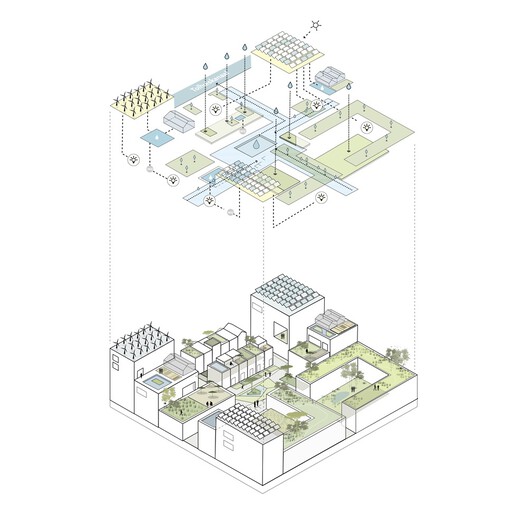
In the translation of three-dimensional reality onto a two-dimensional plane, axonometry stands as one of the graphic systems of representation that form the foundation of the language used by architecture and design professionals. Alongside plans, sections, and elevations, its exploded views often stand out for their ability to study the multiple layers that compose a project. Although axonometry is also employed in other disciplines such as engineering and urban planning, it consistently proves its capacity to function as more than a mere representational tool, strengthening the understanding not only of a project's construction processes, materials, and structural systems but also expanding the communication of the ideas and design processes that shape a project.
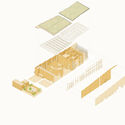
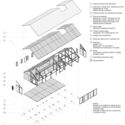
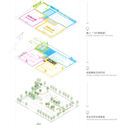
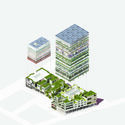
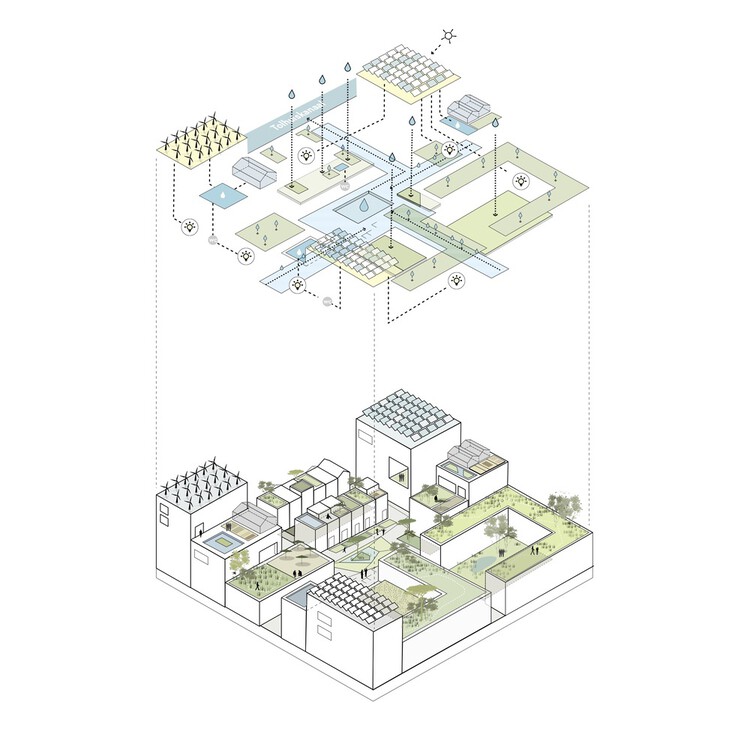
In Mirror: Reproduction and Representation, Fernández Galiano argues that representation is the mediation that makes the world intelligible. Just as Leonardo da Vinci dissected cadavers to study the circulatory system, muscles, and skeletal structure of the human body, axonometric sections and exploded views act as X-rays of architectural works, extending beyond the sketch to become an activity of knowledge, study, and analysis, akin to a laboratory practice. Whether applied to large-scale projects or to prototypes and ephemeral installations, exploded axonometry makes it possible to visualize the operation of each space, component, process, or construction logic, allowing architects, students, builders, clients, and other stakeholders to participate in the understanding of an idea.


