

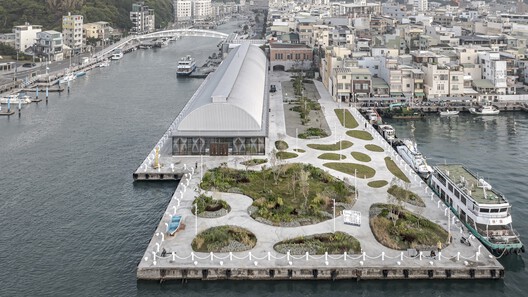
Throughout history, fish markets have played a singular role in mediating the relationship between city and sea. From the port agoras of antiquity, through medieval markets established along docks and estuaries, to the large covered structures of the 19th century, these spaces have been instrumental in shaping coastal cities. More than simple infrastructures for food supply, fish markets express cultural practices and modes of occupation rooted in proximity to water, consolidating themselves as intense and highly social public spaces. Within them, architecture, landscape, and social dynamics intertwine directly, revealing how the built environment can translate maritime traditions and reinforce the identity of coastal and port communities.
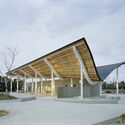
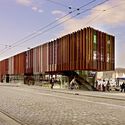

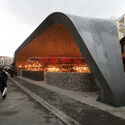
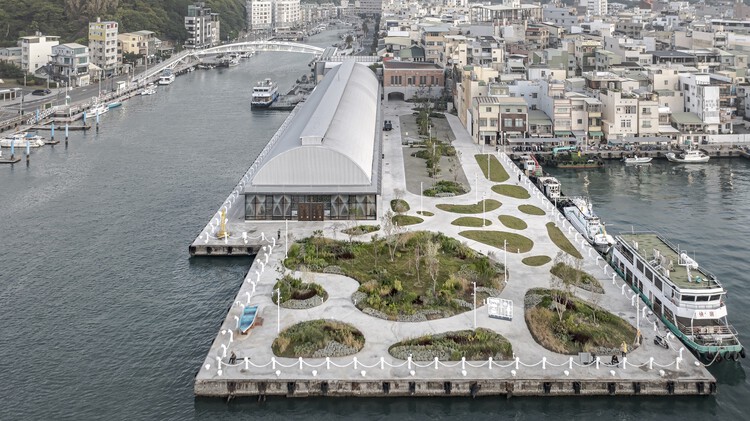
In contemporary projects, this typology undergoes a process of reinterpretation and expanded meaning, as fish markets increasingly assert themselves as hybrid public spaces open to the city, tourism, and everyday social life. The diversification of uses—including restaurants, event spaces, educational facilities, and leisure areas—goes hand in hand with a stronger connection to urban policies, such as waterfront regeneration and the strengthening of the cultural economy. Responding to this renewed urban role, the architectures presented below explore different strategies for mediating the relationship between land and sea, offering reflections on how architectural design can value local memory while fostering new forms of coexistence along the water’s edge.


