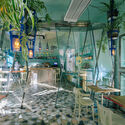
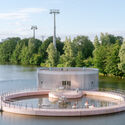
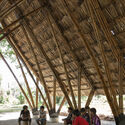
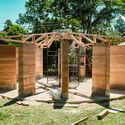
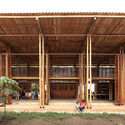
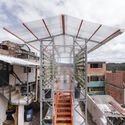
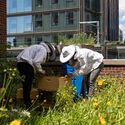
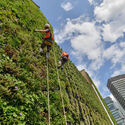
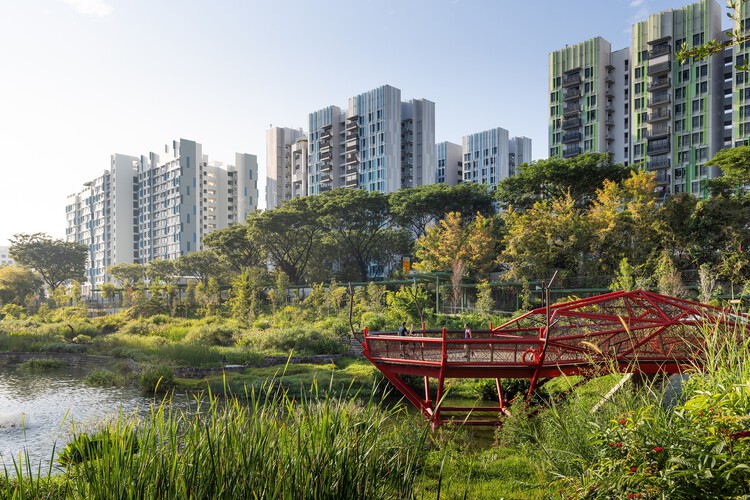
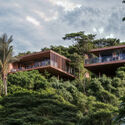
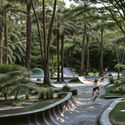
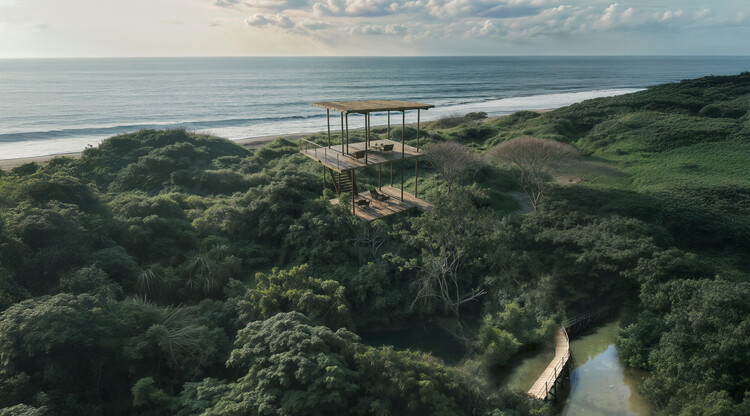
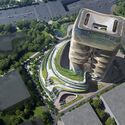
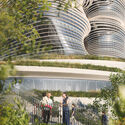
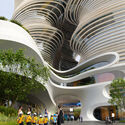
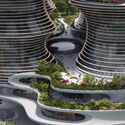
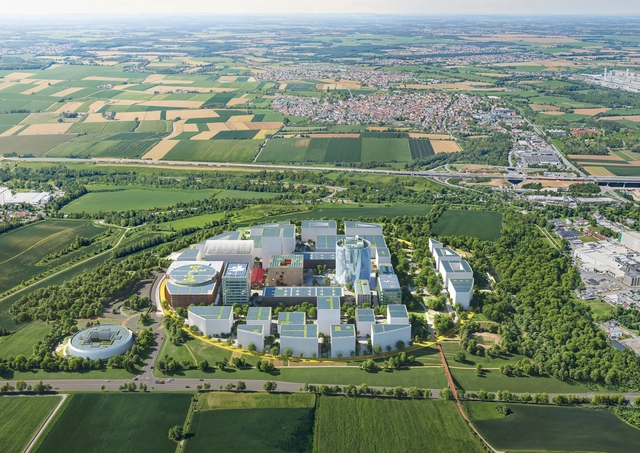
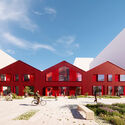
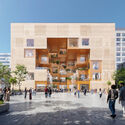
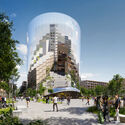
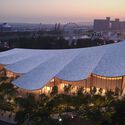
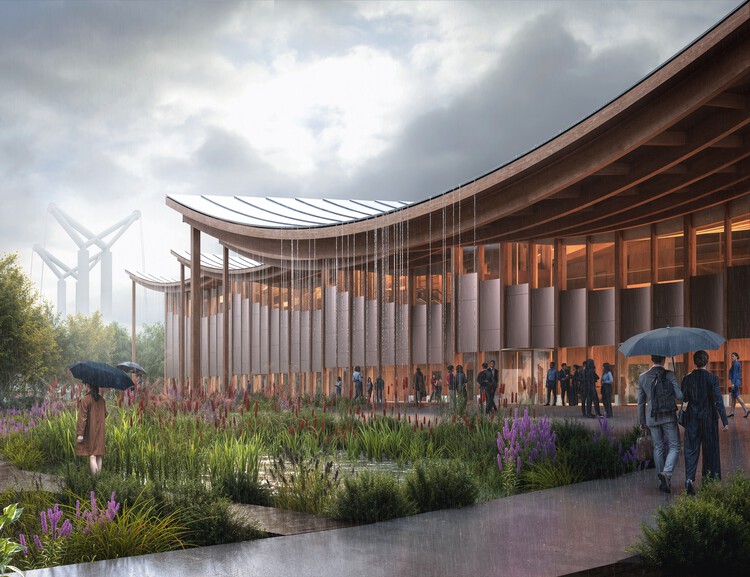
Jurong Lake Gardens is one of Singapore's newest national gardens, a 90-hectare urban oasis for the community. Elevate’s PondGard EPDM membrane was used to waterproof the pond. Image Courtesy of Holcim
The future of urban planning and architecture is promising if the world, collectively, looks beyond the concept of mere sustainability and instead embraces a nature-positive approach. As global population growth drives rapid urbanization—requiring humanity to build the equivalent of a city the size of Madrid every week for decades to come—the construction sector faces a defining challenge: how to build durable, energy-efficient, and resilient urban environments in harmony with natural ecosystems.
The project brings together architects, artists, researchers, scientists, and social workers, the project explores how embodied, material, and technological practices can help us rethink our relationship with the planet’s energy infrastructures.
As architecture moves beyond human-centered design, new practices are rethinking coexistence as an ethical and ecological framework. From political infrastructures to habitats, these approaches invite us to imagine architecture as a shared living system.
Modern architecture has long been written through an anthropocentric lens, placing the human at its center and rendering other species invisible. Yet this paradigm continues to shift, as architects and researchers redefine the role of design in more-than-human worlds. Studios such as Office for Political Innovation, Studio Ossidiana, and Husos Architects are questioning human-centered narratives and reframing design as a shared practice between species. In this context, architecture is no longer a tool of control but a medium for coexistence, a discipline that mediates between species, environments, and cultures.
Across South America, architecture is increasingly being understood as a collective act. Rather than imposing external views, many studios and designers are building with and for communities, learning from their local practices, materials, and ways of inhabiting. These projects are repositioning the architect's role from an author to a facilitator, transforming design into a participatory process that centers collaboration, care, and mutual respect.
What unites these efforts is not style or scale, but a shared belief: architecture emerges from collective dialogue, not imposition. From rural Ecuador to the urban peripheries of Brazil, Colombia, and Paraguay, these projects reveal how social engagement and local making produce spaces that are sustainable not only environmentally but also socially. They respond to inequality not through top-down solutions, but through co-authorship, offering spaces that reflect the needs, knowledge, and agency of the people who use them.
Biodiversity, defined by the World Wide Fund for Nature (WWF) as the different kinds of life found in an area, is in a state of crisis all across the world, with declines in the numbers of organisms and many species declared as at risk of extinction. All types are affected, from plants and fungi to large mammals, and there is a clear link to human activity being the cause. Although farming methods and climate change due to greenhouse gases play a major role, cities and buildings can play a small but important role in countering this decline.
In the low-lying deltas of Bangladesh, water defines both life and loss. Every year, millions are forced to rebuild after floods wash away their homes, crops, and livelihoods. In these precarious territories, the act of building has become an act of resilience. It is here that Khudi Bari emerges as a modest yet radical proposal. Designed by Marina Tabassum Architects, the project provides a lightweight, modular, and affordable dwelling for communities displaced by climate change. Recognized as one of the winners of the 2025 Aga Khan Award for Architecture, it represents a form of architecture that empowers rather than imposes.
The conversation with VOID emerges within the framework of the 2025 Latin American Architecture Biennial, offering an opportunity to explore a practice that listens, cares, and accompanies. Their work unfolds as an act of mediation: through interdisciplinary research and attention to the plurality of natural and social factors, they seek to understand the many natures of a place. Since its beginning in 2012, this process has evolved, consolidating a stance that seeks to design architecture from and for the place—caring for it, healing it, and regenerating it—opening spaces where territories sustain and unfold their own adaptive processes.
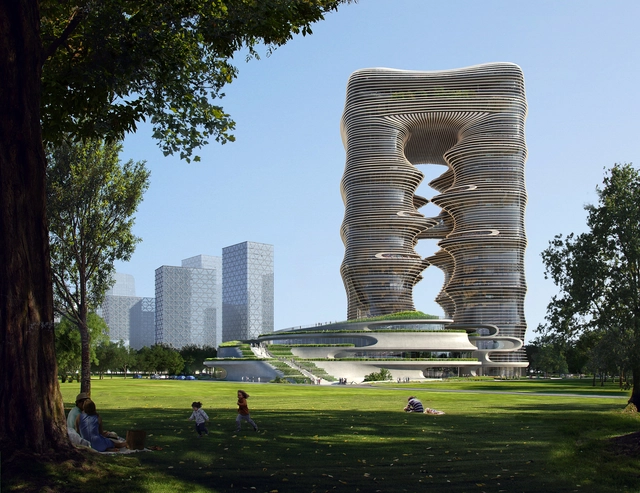
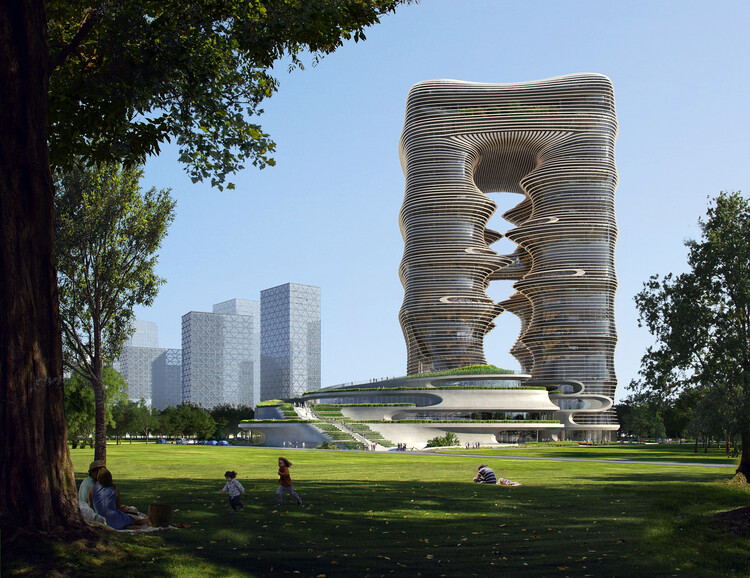
Construction of Zaha Hadid Architects' Yidan Center in Shenzhen, China, has reached full height. The new landmark will serve as the headquarters of the Chen Yidan Foundation and the Yidan Prize, organizations dedicated to promoting lifelong learning and innovation in education. The center will host facilities for academic research, cultural events, and exhibitions, supporting the foundation's mission to advance global education. Located adjacent to the Qianhai Museum, the Yidan Center helps define a new cultural quarter in China's third-most-populous city.
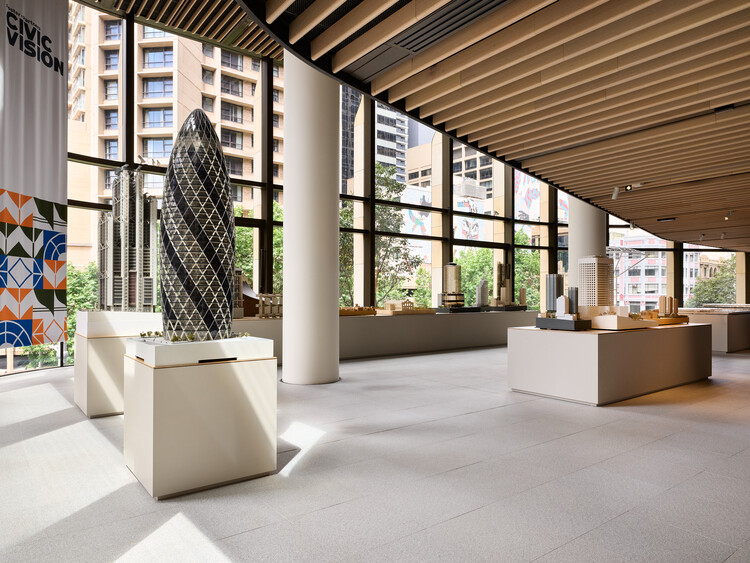
Foster + Partners has opened Civic Vision, the first comprehensive exhibition of the practice's work to be presented in Australia. On view until December 21, 2025, at Parkline Place, the firm's latest completed project in Sydney, developed by Investa on behalf of Oxford Properties Group and Mitsubishi Estate Asia, the exhibition offers an in-depth overview of Foster + Partners' global portfolio since its founding in 1967 by Norman Foster. It explores the evolution of the practice's design approach and its exploration of civic architecture across different contexts and scales.
There is growing awareness around sustainability—and the environmental cost of prematurely demolishing safe, structurally sound buildings only to replace them with new construction. In the broader race to reduce carbon emissions, corporations and institutions are placing greater emphasis on ESG performance (environmental impact, social responsibility, and governance). Many now require carbon accounting, set "carbon-neutral" targets, or purchase carbon credits to offset footprints.
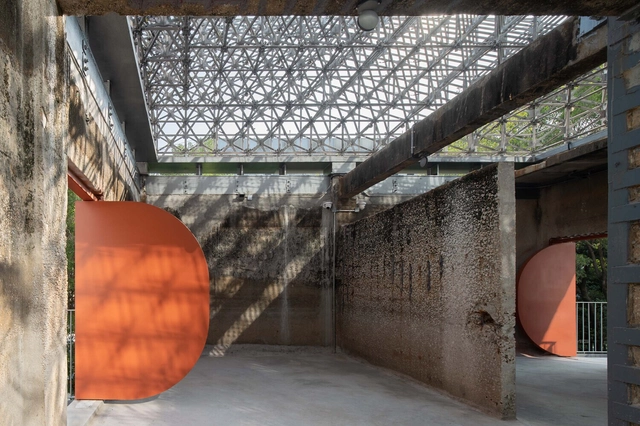
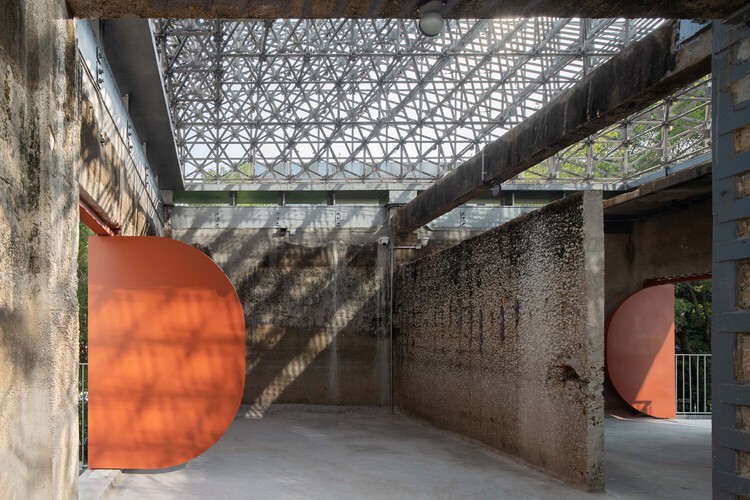
This shift, together with a wave of exemplary adaptive-reuse projects worldwide—Herzog & de Meuron's Tai Kwun in Hong Kong, Powerhouse Arts in Brooklyn, David Chipperfield's The Ned Doha, and Xu Tiantian's transformations of factories, quarries, and rammed-earth fortresses in China—has accelerated serious reconsideration of reuse as a primary development strategy. Yet despite its many benefits, adaptive reuse is still not as prevalent as it could be. Why and what might be the main obstacles and tensions?
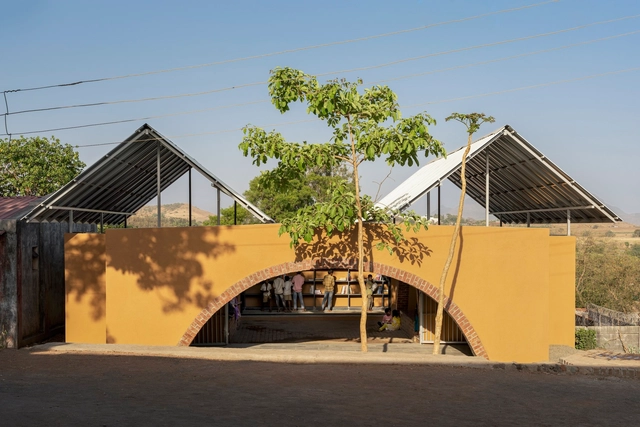
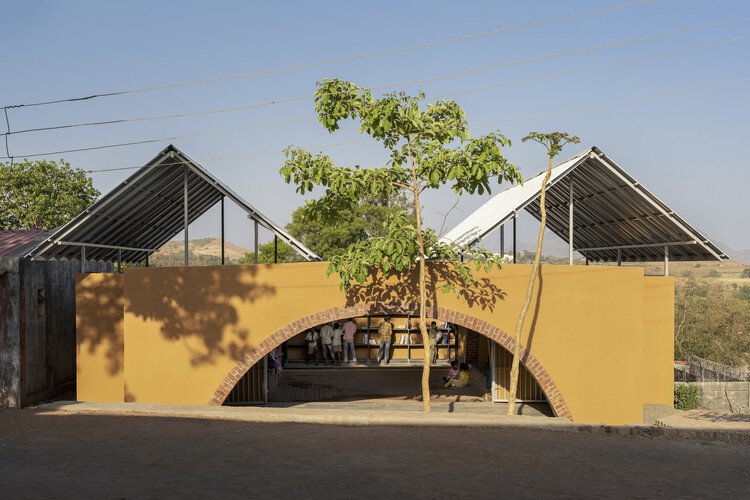
In many parts of the world, remoteness is not only defined by distance. It may describe a mountain settlement far from infrastructure or an urban and suburban neighborhood on the margins of visibility and opportunity. Across these diverse contexts, the library has been one of the most vital typologies—a space where architecture embodies the modes of accessibility, inclusivity, and community care.
Rapid urbanization, driven by population growth, is among the powerful megatrends transforming how cities are built. The world is adding a city the size of Madrid every single week — and will do so for decades to come. To meet this demand sustainably, a collaborative, systems-thinking approach to construction is needed.
Like the famous Russian Matryoshka doll, opening a package often feels like uncovering endless layers. Inside a cardboard box, there might be molded Styrofoam, then several plastic air pillows, and finally, individual plastic wrapping around each piece. Even a small product can leave behind a trail of plastic waste far larger than its size. Now imagine this logic applied to a construction site where every component, every delivery of materials, often arrives wrapped in multiple layers of protection. What already seems excessive in retail becomes monumental when repeated daily on large construction projects.
There are places in the world where temperatures already exceed fifty degrees, and others where water levels rise meters above expected levels. Meanwhile, in the heart of São Paulo, architects, researchers, artists, and communities come together to ask: how can we inhabit the Earth in times of extremes? This question drives the 14th International Architecture Biennial of São Paulo, held at the Oca in Ibirapuera Park, focusing on the theme Extremes: Architectures for a Hot World. More than an exhibition, it is a call to confront the climate crisis, social inequality, and the urgent need to reinvent ways of living.
Unlike previous editions, which were spread across multiple locations in the city, curators Clevio Rabelo, Jera Guarani, Karina de Souza, Marcella Arruda, Marcos Certo, and Renato Anelli chose to concentrate this year’s edition under a single roof, allowing the curatorial narrative to unfold clearly and directly. The entire journey is there, organized into sections that weave together ancestral practices and emerging technologies, material experiments and critical perspectives, local projects and global debates. The Oca thus becomes a crossroads: a space where diverse architectural visions overlap, offering a platform for collective reflection on society and the environment.
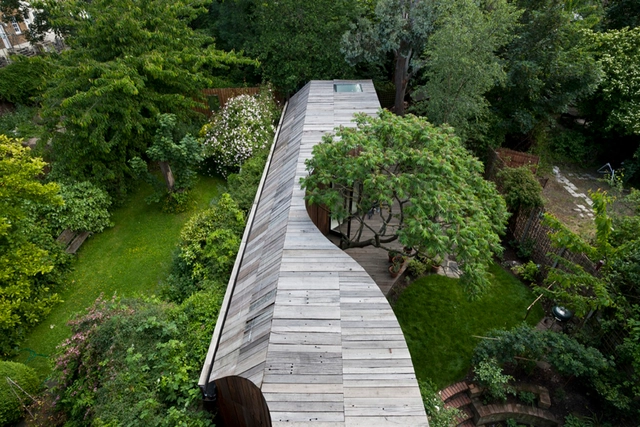
The preservation of the environment and the harmonious integration of the built and natural elements are fundamental principles in contemporary architecture. Various design strategies are employed to achieve this balance, ranging from the revival of vernacular techniques to the use of advanced technologies. However, this concern goes beyond the choice of specific construction systems or innovative materials; it also manifests in the design approach that ensures the preservation of the site's natural elements. In this context, we present 15 homes designed to protect local trees, showcasing how architectural decisions can adapt to nature rather than impose on it.
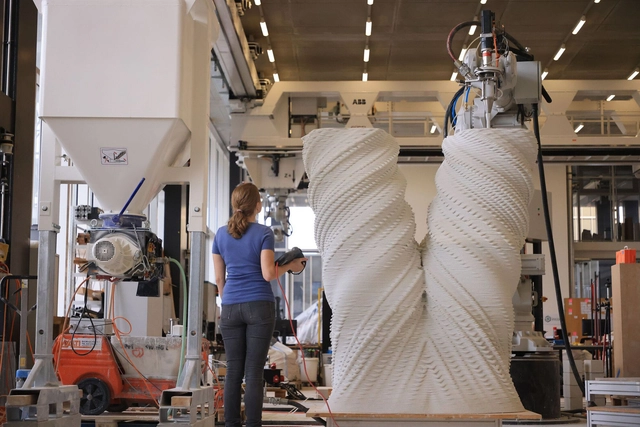
What is architecture? For some, its traditional role is to bring together imagination, technical knowledge, and problem-solving, allowing architects to design and construct while balancing ideas with the means to realize them. From the stone and wood of early buildings to the steel and concrete of the 20th century, each era demanded not only an understanding of form but also of the properties and potential of the materials in use. This grasp of materials has always been a core part of the creative process, though its scope was limited by the know-how and technologies available.
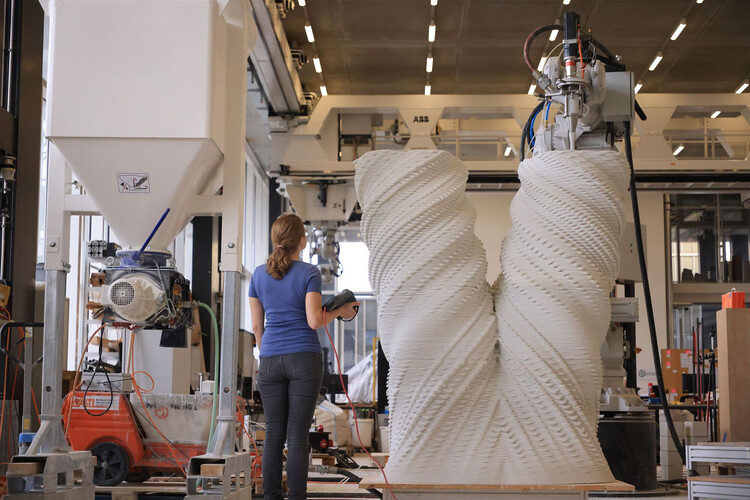
Over time, that balance has begun to shift. Architects have moved from merely using materials to actively designing them, applying scientific principles and experimenting with biological, chemical, and computational processes. This evolution has expanded the possibilities of architecture, intersecting nature, technology, and art, while pushing the role of the architect into a more experimental, science-driven dimension, where the manipulation and creation of materials becomes central to the creative act rather than merely a means to achieve forms or structures.