Reuters

BROWSE ALL FROM THIS PHOTOGRAPHER HERE

The City as a System of Health: Breaking Feedback Loops in Planning

Subscriber Access | 
Audio available

The spatial consequences of urban form are revealed when health outcomes are mapped over neighborhoods. Neighborhoods that support walking, daily errands, social interaction, and access to essential services create opportunities to incorporate physical activity into routine tasks. Places that are organized around long distances and automobile travel suppress this opportunity. Physical activity and the motivation to incorporate it into daily life are shaped by the distance to a grocery store, the safety of a pedestrian crossing, the frequency of public transportation, the width of a sidewalk, and the quantity of services within walking distance.

The City as a System of Health: Breaking Feedback Loops in Planning - More Images+ 18

Heritage in Mud, Stone, and Reeds: Rediscovering Ancestral Construction Techniques

Subscriber Access | 

Reflecting on the past is often viewed as nostalgia or, from a more critical standpoint, as a sign of regression. However, looking back can offer valuable insights into a society that sometimes appears overly focused—if not obsessed—with the future and technology. In architecture, this reflection allows us to reconnect with our roots and appreciate the knowledge accumulated over generations. It invites us to explore how our ancestors designed durable structures adapted to their environment. Refined through centuries of observation, experimentation, and likely even errors, these systems demonstrate a profound understanding of local materials and building techniques.

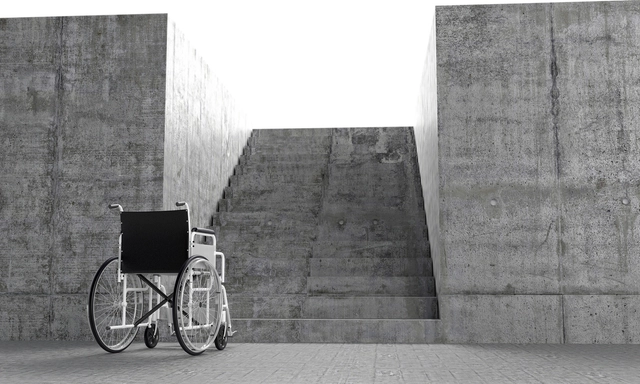
We Need More Wheelchair Users to Become Architects

When famed architect Michael Graves contracted a mysterious virus in 2003, a new chapter in his life began. Paralyzed from the chest down, the pioneer of Postmodernism would be permanently required to use a wheelchair. Graves could have been forgiven for believing that having fought for his life, having been treated in eight hospitals and four rehab clinics, and needing permanent use of a wheelchair, that his most influential days as an architect were behind him. This was not the case. To the contrary, he would use this new circumstance to design trend-setting hospitals, rehab centers, and other typologies right up to his death in 2015, all with a new-found awareness of the everyday realities of those in wheelchairs, and what architects were, and were not doing, to aid their quality of life.

Why Do Architects Still Struggle with Disability Requirements?

This article was originally published on Common Edge as " Why Architects Still Struggle With Disability Requirements 28 Years After Passage of the ADA".

The recent death of President George H.W. Bush occasioned assessments of his administration’s legislative achievements, one of which was the far-ranging Americans with Disabilities Act (ADA), a civil rights act signed into law in 1990. The law included accommodations for people with disabilities in buildings. In the ensuing decades the ADA has had a significant impact on the design and construction of the built environment in the U.S. To gauge the impact of ADA, how it has evolved, common misconceptions about ADA, and its role in promoting social equity in architecture, I spoke with Peter Stratton, Senior Vice President and Managing Director of Accessibility Services at Steven Winter Associates, who works with architects and others in the construction industry on the application of the ADA design standards. (I worked at the Connecticut-based Winter firm between 1996 and 2006; Stratton was a colleague.)