Beyond Storage, Designing Wardrobes as Architectural Statements

 | Sponsored Content

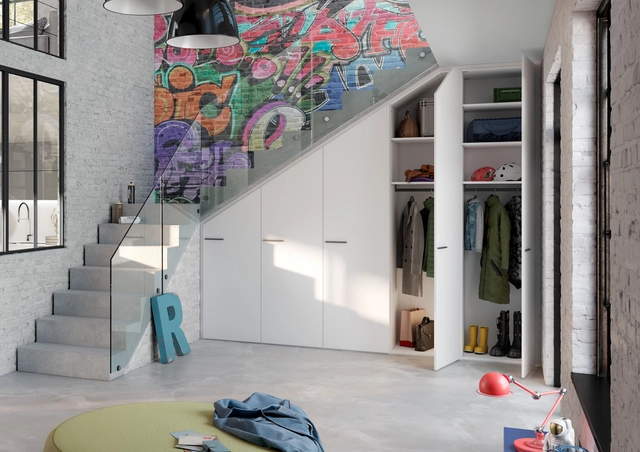
The capsule wardrobe concept, popularized in the 1970s by Susie Faux, proposes an exercise in synthesis: a compact set of versatile pieces, capable of combining in countless ways to suit different occasions. In visual culture, there are a few metaphors for this: in cartoons like Doug Funnie or Dexter's Laboratory, opening the closet revealed rows of identical clothes, ready to simplify life (and, in the case of animators, the work). In the real world, figures like Steve Jobs turned this logic into a method, adopting a daily uniform to eliminate the small but recurring decision of "what to wear?", freeing up time and energy for more important matters.
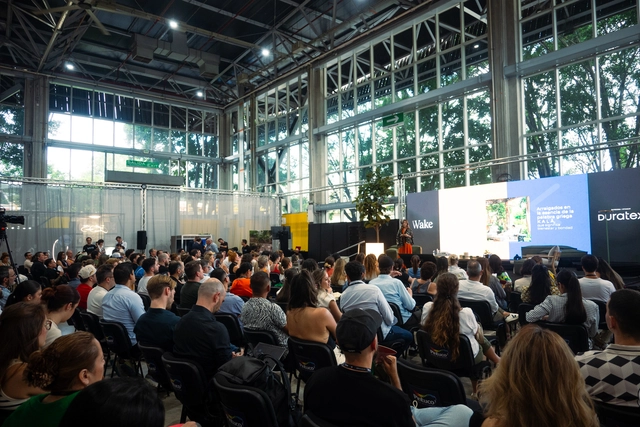
Insights from La Feria De Diseño Medellín: Well-Being, Innovation, and Global Design Perspectives

 | Sponsored Content

Asking questions is the first step toward challenging what we take for granted and opening up new possibilities for planning and building. These questions, valuable in themselves, gain new strength when shared and examined through different perspectives. As they intersect with the experiences of professionals and brands, they weave together viewpoints that enrich the discussion. Design fairs and events around the world have become spaces where these conversations gain momentum, fostering connections and encouraging collaborative dynamics. In this landscape, Colombia has emerged as a hub, serving as a platform that promotes architecture and design across Latin America and the Caribbean while bringing the region's voice to the global stage.

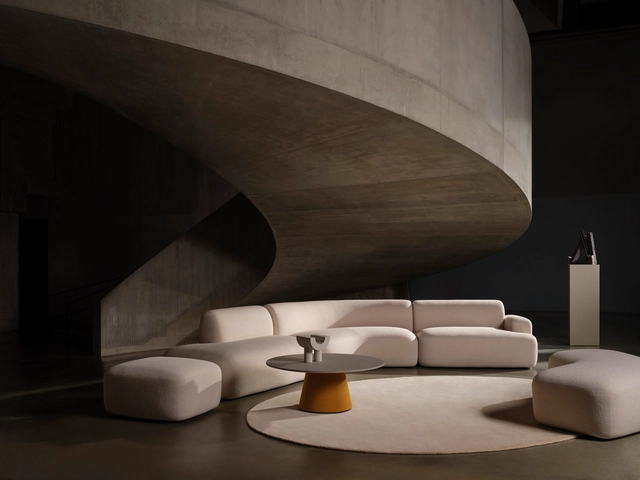
An Expansive Modular Sofa System: Reimagining Comfort Beyond Sitting On

 | Sponsored Content

Does architecture alone define how we inhabit a space? It's becoming increasingly clear that it does not. The objects within a space—particularly furniture and other design pieces—not only serve functional purposes but actively shape the spatial and human experience. As schools, homes, and offices evolve to accommodate new ways of working, living, and socializing, furniture accompanies these transitions, prompting conversations that extend beyond functionality and engage the corporeal dimension implied in its use.

Turning Surfboard Waste into Climate-Resilient Homes in Hawaii

Subscriber Access | 

Surfing is, without a doubt, one of the most visually striking and fascinating sports. A fluid choreography that combines strength and delicacy, like a dance on the waves, gathers enthusiasts across the world's oceans. Yet, behind this image of freedom and connection with nature, the sport also carries contradictions. It is a symbol of outdoor life and respect for the ocean, but on the other hand, it is marked by territorial disputes over waves and by an environmental footprint that rarely receives the same attention given to its aesthetics. In times of climate crisis, this paradox becomes even more evident. Surfing depends directly on the health of marine ecosystems, the very ones most affected by pollution and global warming. This tension has been pushing a new generation of shapers, architects, and material designers to seek alternatives, from plant-based and recycled foams to the reuse of industrial waste, in order to reconnect the sport with its ecological dimension.

Room Within a Room: Acoustic Spaces That Adapt to Contemporary Needs

 | Sponsored Content

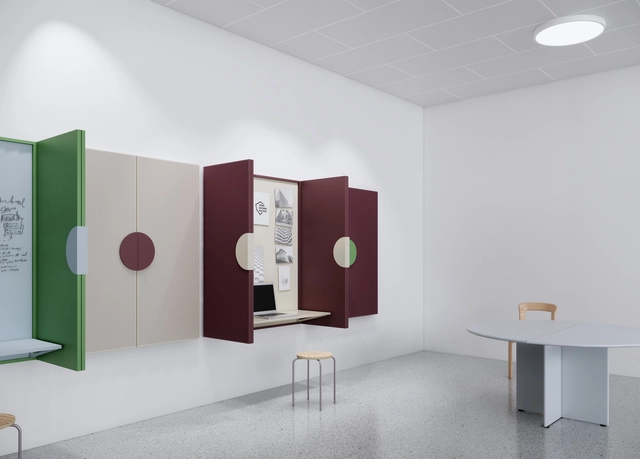
Work and learning environments have undergone profound transformations in recent decades. In offices, cubicles and compartmentalized rooms have given way to open, collaborative layouts. In schools and universities, traditional classrooms with rigid layouts, blackboards, and rows of desks have been replaced by more dynamic, flexible, and interactive spaces. In both contexts, the goal was to encourage integration, creativity, and constant exchange. But this openness has also introduced new challenges: increased distractions, sensory overload, and the difficulty of finding moments of focus or introspection. The more we remove barriers in favor of fluidity and collaboration, the more essential it becomes to provide moments of quiet, intimacy, and sensory balance for those who need to self-regulate. The challenge is both spatial and psychological, raising a fundamental question for architecture: how can we support connection and withdrawal, activity and silence, at the same time?

Exploring the Advantages of the Design-Build Method in Real Estate Development

 | Sponsored Content

The Design-Build model is an increasingly attractive project delivery method, offering benefits such as enhanced control, reduced risks, cost efficiencies, and quicker completion times. Central to this approach is teamwork and collaboration, contrasting sharply with the traditional method of separate design and fixed-price bidding by contractors. Design-Build naturally motivates all participants to seek ways to boost productivity and quality, ensuring fairness and transparency in costs.

Reimagining Lisbon’s Azulejos: Regenerative Biomaterial Tiles from the Tagus River

Subscriber Access | 

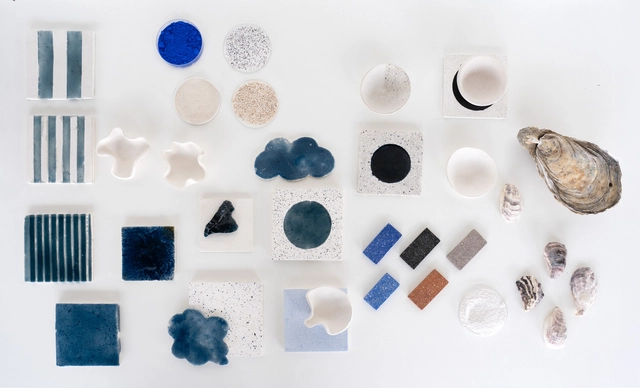
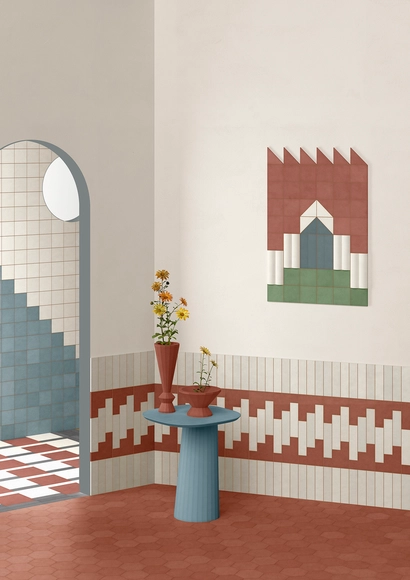
All materials come from somewhere, embedded in a chain of extraction, supply, production, and disposal that, depending on its scale, leaves more or less significant marks on the environment. In architecture, we usually approach this trajectory through the lens of materials' circularity, considering how they can re-enter production cycles rather than become waste. Yet, broadening our view to unexpected places reveals parallel systems where by-products from one industry become resources for another. This approach has found fertile ground in organic waste transformed into biomaterials, with one of the most recent examples being the work of Fahrenheit Works. Through their installation, "From the Tagus to the Tile", they repurpose oyster shells initially discarded by food systems to create a reinterpretation of Lisbon's iconic tiles.

Concrete as a Medium for Emotion and Expression in Architecture

 | Sponsored Content

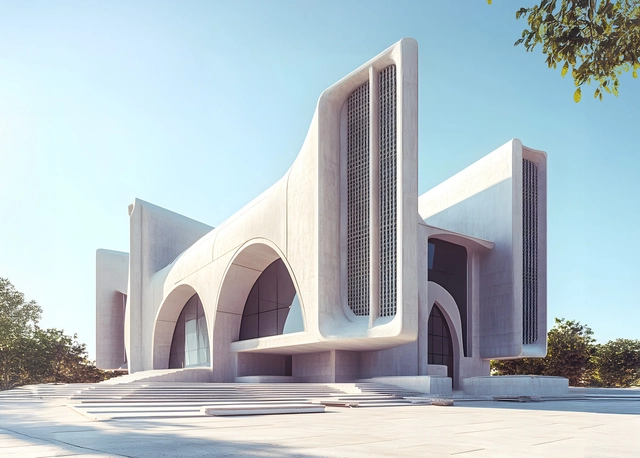
Concrete is anything but a consensus. Some love it, others hate it. It can feel as tough as granite or soft as velvet — all depending on whose hands are doing the shaping. Treated with engineering precision or a touch of artistic flair, concrete stops being just a material and starts acting alive. It plays with light, surprises with texture, and somehow gives form to silence. Although dense and structural, concrete can take on an almost immaterial presence: light, ethereal, and contemplative. In certain spaces, it seems to disappear, dissolving into the shadows or vibrating with the surrounding light. More than just a construction element, it becomes a language, capable of evoking emotion, spirituality, and time.

Redefining and Sustaining Architectural Aesthetics with Inspirational Finishes

 | Sponsored Content

In contemporary architecture, façades have evolved beyond their traditional role as protective exteriors—they now serve as powerful expressions of identity, creativity, and sustainability. As the visual gateway to a building, façades play a dual role: safeguarding structures from environmental stressors while enhancing their aesthetic appeal and architectural character.

Touchless Precision and the TOF Sensor Revolution in Public Spaces

 | Sponsored Content

In recent decades, a quiet revolution has reshaped how we interact with the objects and systems in our daily lives. What once required cranks or rotary mechanisms, and later the press of a button, is now giving way to experiences that are increasingly fluid, intuitive, and touchless. This shift is evident in public restrooms, where minimizing physical contact promotes better hygiene and reduces the spread of pathogens. It also reflects a broader change in paradigms of comfort, accessibility, and efficiency. Touchless devices, once restricted to isolated applications in hospitals, airports, or corporate buildings, have become standard in projects that prioritize user experience and sustainability.

Building Cities for Children: Streets That Slow Down, Play, and Teach

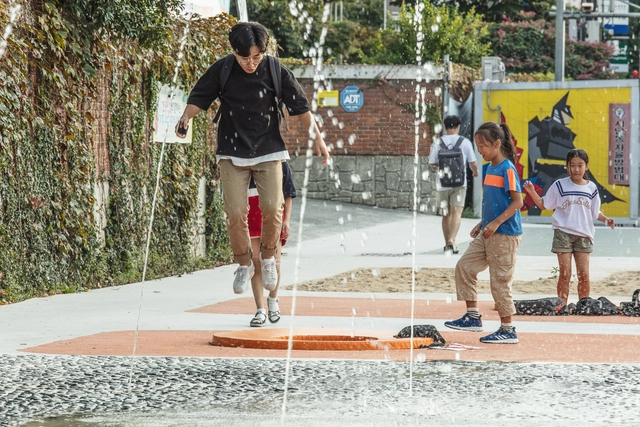
Historically, the concept of childhood as we know it today simply didn't exist and, until the Middle Ages, children were viewed as miniature adults. According to historian Philippe Ariès, it was only from the 17th century onward that childhood began to be understood as a distinct stage of development, requiring specific care, education, and protection. However, this evolving recognition has not been consistently reflected in the design and organization of urban space.

Between Matter and Gesture, Architectures that Think Through Details

Subscriber Access | 

A project can be drawn in broad strokes, but it's built in details. Simple as it may seem, a staircase involves a significant degree of engineering. Some are noticeably more tiring, or more difficult to climb and descend. To address this, in the 17th century, architect François Blondel proposed a formula to ensure the ideal proportion between riser and tread, an equation that, when respected, offers a comfortable path. But there's another equally decisive factor: all steps must be identical. This may sound trivial and logical, yet executing anything with precision is always a construction challenge. Our bodies quickly adapt to the dimensions of the steps, and any variation (even minimal) can lead to repeated stumbles or missteps. A seemingly insignificant detail, when poorly resolved, can compromise the well-being and safety of an entire building.

Designing with Memory: Rafayel Israelyan’s Enduring Legacy in Armenia

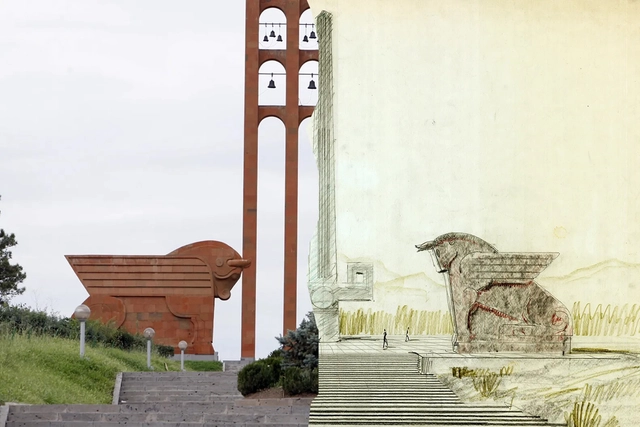
In a time when much global architecture can feel disconnected from local identity, the work of Rafayel Israelyan stands out for being rooted in place, culture, and memory. Working in mid-20th-century Armenia, Israelyan created architecture that is more than functional or monumental; it is culturally resilient. His use of traditional Armenian motifs, materials, and symbolic forms gave his designs a second life after the fall of the Soviet Union, when many buildings across post-Soviet states were abandoned or demolished. Armenia, by contrast, preserved many of his works, likely because their design approach not only served a specific moment in time, but also told a larger story. Long before concepts like sustainability or critical regionalism became popular, Israelyan understood that buildings gain meaning and endurance when they reflect the specific identity and characteristics of their place.

Can We Build with Food? Circular Experiments at the Matter Matters Lab

Subscriber Access | 

What does it mean to build with care, using what others leave behind? This question shapes the work of the Matter Matters Lab, an initiative founded by architect and researcher Catherine Söderberg Esper during the isolation of the pandemic. Drawing from experiences across cultures and motivated by a personal transformation during motherhood, Catherine began to investigate everyday waste as raw material for regenerative construction systems. Her first experiment involved gluing her own cut hair using white glue, initiating a radically intimate and handmade approach. Since then, the lab has focused on transforming organic waste into low-impact architectural materials, inspired by Indigenous knowledge systems and aiming to break from extractive models in construction. Projects like the Avocado Bricks, made from discarded avocado seeds, exemplify this approach of local, circular, and rooted in the idea of reciprocity between matter, place, and care, offering a new way of building with waste.

Redefining Smart Buildings Through AI and Low-Carbon Innovation

 | Sponsored Content

Humanity rarely embraces major transformations right away, often held back by fear, skepticism, or attachment to what already works. Gutenberg's press raised fears of misinformation; urban electrification drew warnings from doctors; and office computerization sparked concerns over the devaluation of human experience. Such ruptures often provoke resistance, but they tend to open space for critical reflection and innovation.

A Project That Brings Together Urban Mobility, Ceramic Technology and Public Art

 | Sponsored Content

The new Arden Station in Melbourne goes beyond its functional role as a transportation hub. Opened as a key component of the Metro Tunnel project, the station expands the city's rail infrastructure by relieving pressure on other lines and improving service frequency and, at the same time, establishes itself as a defining element in the urban transformation of Melbourne's northern precincts. Located on a former industrial site undergoing revitalization, it anchors the future development of a new district projected to accommodate up to 34,000 residents and 15,000 jobs in the coming decades.

Living Cycles in Regenerative Architecture: Lessons from the Goetheanum

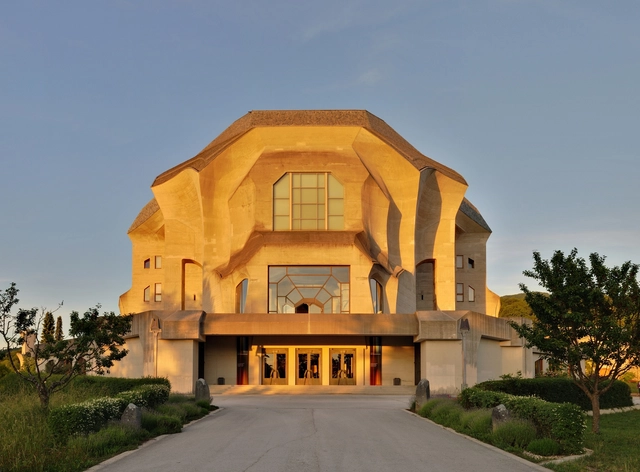
As climate uncertainty and ecosystem changes reshape design priorities, architecture plays an increasingly active role in these discussions, rather than merely observing. Within this perspective, the idea of making a "re" encourages a conscious step back to rethink, reconnect, and realign the relationship between buildings and their environments. This approach, central to regenerative architecture, extends beyond specific technologies or scales, encompassing everything from master plans that aim to re-naturalize cities to national pavilions that combine art and science.

Which Layer Remains? Restoration, Identity, and Contemporary Design in Spain

 | Sponsored Content

The theorist André Corboz, known for his contributions to the critical reading of territory, proposes that the cities should be understood as a palimpsest. That is, a surface continuously rewritten, where traces of previous layers remain visible even after successive interventions. For him, the city is not a static entity, but an organism in constant transformation, where historical, functional, and symbolic layers overlap. This is why working on restoration or rehabilitation projects for historical buildings is particularly complex, requiring careful thought about the approach to be taken: should extensions and renovations seek complete coherence with the original language, or assert themselves as architectural expressions of their own time?