

-
Architects: Actual Office
- Area: 600 m²
- Year: 2025
-
Manufacturers: Audo, Carl Hansen, HAY, Knoll International, VitrA



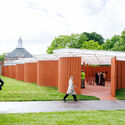
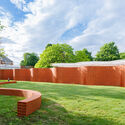
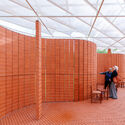
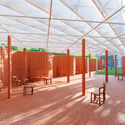
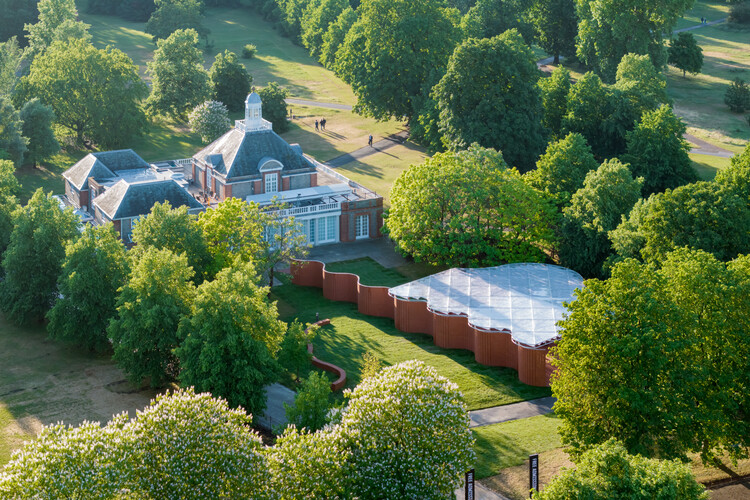
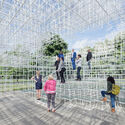
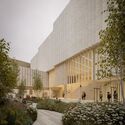
The 2026 Serpentine Pavilion, titled "a serpentine," designed by Mexico City-based architecture studio LANZA atelier, will open to the public on 6 June 2026 at Serpentine South in London. Newly released preview-days images show the completed structure ahead of its seasonal activation, which will run through 25 October 2026 and include Serpentine's annual programme of public events. Now in its 25th edition, the Serpentine Pavilion marks a milestone for the annual commission first launched in 2000 with Zaha Hadid's inaugural project. To commemorate the anniversary, Serpentine Galleries will also collaborate with the Zaha Hadid Foundation and the Architectural Association on a parallel programme reflecting on the Pavilion's legacy and its role in contemporary architectural discourse.

Mexican architecture practice LANZA atelier has unveiled new details for the 2026 Serpentine Pavilion, titled "a serpentine," which will open to the public on 6 June 2026 at Serpentine South. Designed by studio founders Isabel Abascal and Alessandro Arienzo, the project reinterprets the historic serpentine or crinkle-crankle wall through a lightweight brick structure integrated into the landscape of Hyde Park. Marking the 25th edition of the annual commission, the pavilion will remain on view through October 2026 and serve as a venue for Serpentine's public programme of performances, talks, screenings, and community events.

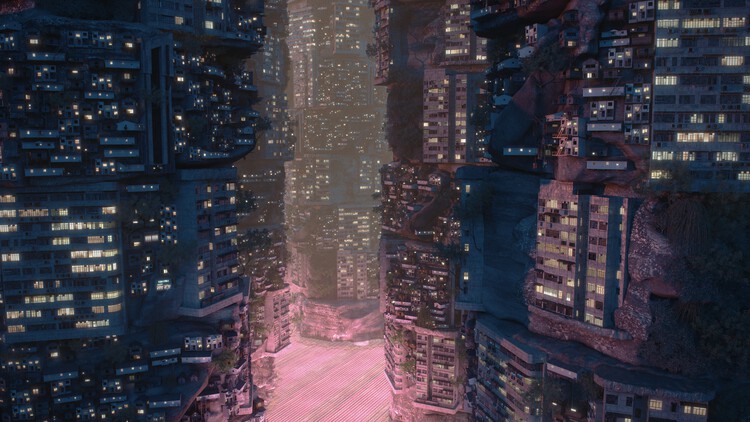
The Barbican Centre has announced In Other Worlds, a major immersive exhibition by speculative architect, filmmaker, and artist Liam Young, opening from May 21 through September 6, 2026. Occupying three distinct locations within the Barbican complex, the Silk Street Entrance, The Curve gallery, and Car Park 5, the exhibition will transform the Brutalist cultural landmark into a sequence of cinematic environments examining architecture, infrastructure, climate futures, and planetary urbanism. Developed in collaboration with writers, scientists, filmmakers, musicians, and performers, the project brings together large-scale projections, LED installations, sound environments, graphic narratives, costumes, and speculative artifacts to explore how fiction and spatial storytelling can shape conversations around environmental and technological change.

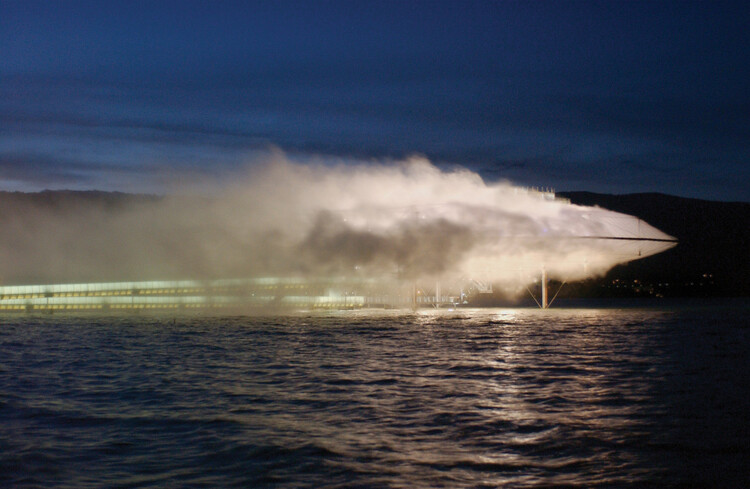
Architecture is traditionally chronicled through the persistence of the solid. We define the discipline by the weight of the lintel, the mass of the pier, and the resistance of the wall. Even when lightness is invoked, it is usually understood as a subtractive act, the thinning of a section or the precarious reduction of a load. Yet there is a parallel history, less visible and harder to isolate, in which the primary material of construction is not what occupies space, but what moves through it.
To treat air as a medium is to move past the binary of the envelope. The boundary between the interior and the world ceases to be a line of absolute separation and becomes, instead, a site of filtration and pressure. We begin to see the building as a thermal valve, a series of gradients where moisture, velocity, and heat are not merely background "conditions" to be mitigated by mechanical systems, but are the very substances being shaped.


As major cultural events, institutional transformations, and new architectural commissions unfold across different geographies, this week's discourse highlights how architecture operates at the intersection of public life, creativity, and long-term adaptation. With Milan Design Week 2026 foregrounding process, experimentation, and citywide participation, the projects and initiatives emerging this week point to a broader shift toward openness, accessibility, and experiential engagement across disciplines and urban contexts. Ongoing investments in cultural infrastructure, from new museums to large-scale renovations and competition-winning proposals, further underscore how institutions continue to recalibrate their spatial and social roles in response to evolving environmental, technological, and cultural demands.

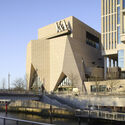
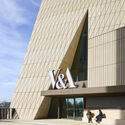
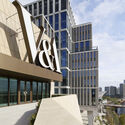
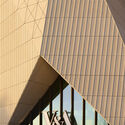
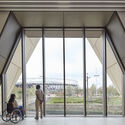
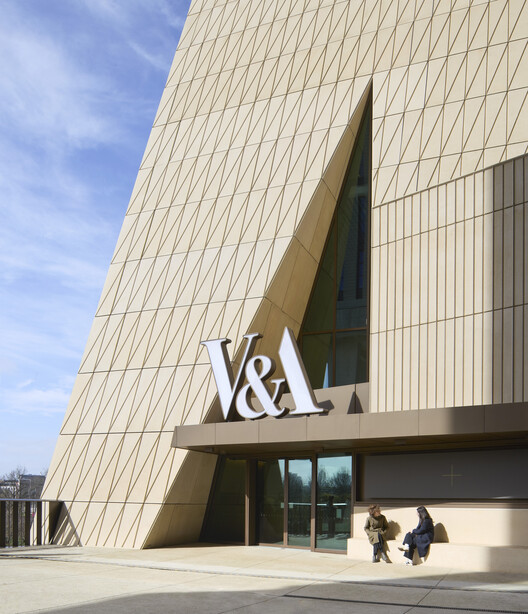
V&A East Museum, designed by architects O'Donnell + Tuomey, will open to the public on 18 April 2026. Assigned to the firm in 2015, the new building is located in the Queen Elizabeth Olympic Park, near its recently opened sister facility, the V&A East Storehouse, designed by Diller Scofidio + Renfro. Located in East London, the UK's newest cultural quarter supported by the Mayor of London, the two-building complex aims to "spotlight the many ways global artists, designers, and makers use creativity to shape the world." Dedicated to creative opportunity and its power to bring change, the museum's five public levels contain two permanent galleries, a 900 sqm temporary exhibition gallery, a top-floor project and event space, learning facilities, and a café.


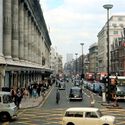
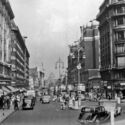
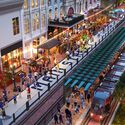
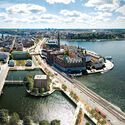
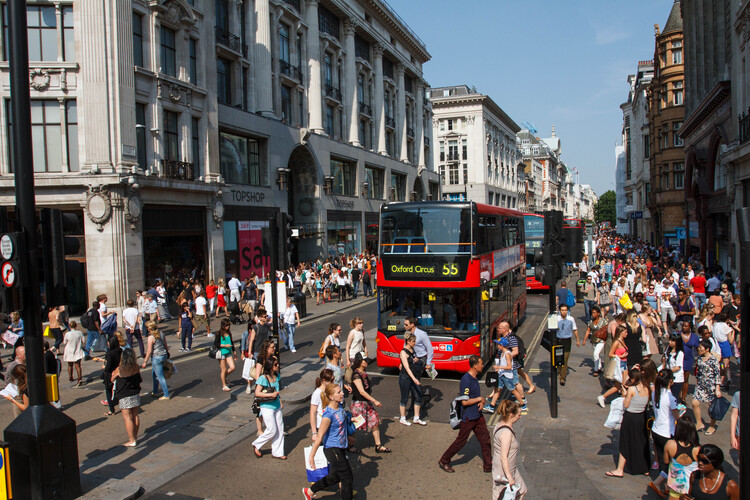
Across Europe and North America, pedestrianisation is increasingly being deployed as a context-specific urban strategy shaped by distinct economic, social, and spatial pressures. As cities continue to reassess the role of streets in the wake of economic shifts, climate pressures, and changing mobility patterns, pedestrianisation is emerging as a tool in current urban transformation efforts. Across London, New York, Houston, and Stockholm, ongoing pedestrian-first projects are testing different pathways toward more resilient and walkable cities, ranging from statutory planning and capital construction to research-driven visioning. London's Oxford Street is advancing through consultation and governance reform to address retail decline; New York's Paseo Park is moving from a temporary pandemic intervention into permanent infrastructure; Houston is accelerating the pedestrianisation of its downtown core in preparation for a global sporting event; and Stockholm's Superline is using design research to rethink the future of an inner-city motorway. These initiatives reveal how pedestrianisation is being actively negotiated, designed, and built today, adapting to local motivations while converging on a shared objective of streets that perform as resilient public spaces rather than traffic conduits.

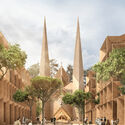
London's National Gallery has announced Kengo Kuma & Associates, in collaboration with BDP and MICA, as the winners of the international competition to design a new wing for the institution. Launched in September 2025, the competition attracted 65 submissions from international practices, from which six teams were shortlisted to develop proposals. The selection marks a key milestone in the institution's long-term development strategy, Project Domani, positioning the new addition as a central component in the reconfiguration of its architectural and curatorial framework. Conceived as the most significant transformation of the museum since its establishment in 1824, the project aims to expand both spatial capacity and curatorial scope, enabling the presentation of a continuous narrative of Western painting within a single setting.

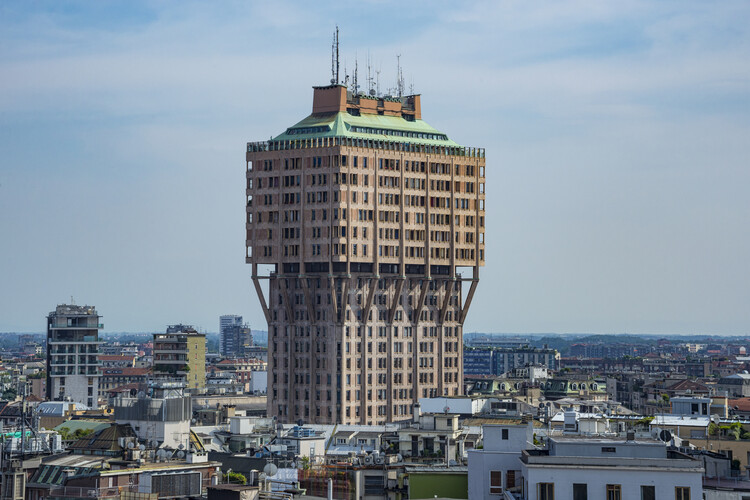
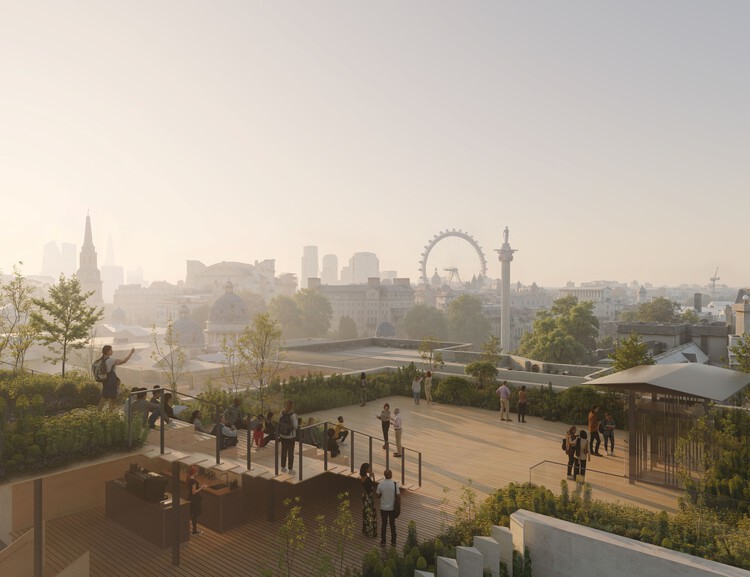
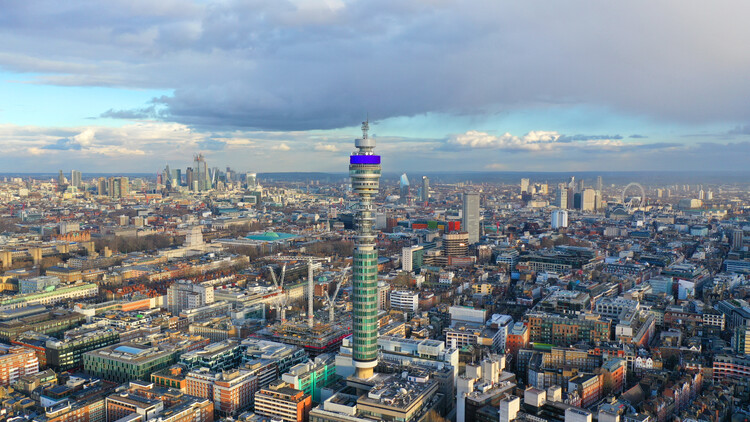
BT Tower, one of London's most recognizable postwar landmarks, is set to be converted into a hotel. London-based architecture practice Orms has been appointed to lead the redevelopment following the acquisition of the Grade II–listed tower by the American hospitality company MCR Hotels in early 2024. The project was initially expected to be led by Heatherwick Studio, though the practice is no longer involved; Orms will now advance the scheme and is expected to present its initial proposals during a first round of public consultations scheduled for May. Construction cannot begin until the decommissioning and removal of telecommunications equipment by BT Group, a process currently expected to conclude around 2030.

The 2026 Pritzker Price Award has been awarded this year to the Chilean architect of Croatian descent, Smiljan Radić Clarke. Born in Santiago, Chile, in 1965, his practice evokes a geography of extremes, shaped by the tectonic tension between the staggering weight of the Andes and the seismic instability of the territory. After graduating from the Pontifical Catholic University of Chile and pursuing further studies in aesthetics in Venice, Smiljan Radić Clarke established his base in Santiago. From there, he has developed one of the most singular visions in contemporary architecture. His work privileges the intensity of the moment through a fragile architecture. Within it, the building operates as a temporary and tactile refuge that places the spectator in a state of aesthetic uncertainty, oscillating between ancestral ruin and avant-garde artefact.

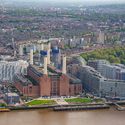
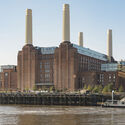
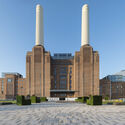
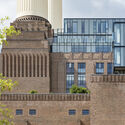
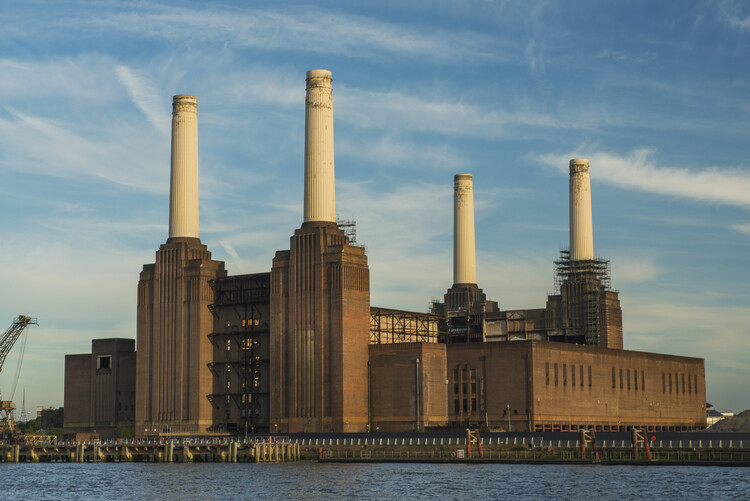
Battersea Power Station is a former coal-fired power station located on the south bank of the River Thames in London, originally designed by architects J. Theo Halliday and Giles Gilbert Scott. Notable for its appearance on the cover of Pink Floyd's 1977 studio album Animals and in Alfred Hitchcock's 1936 film Sabotage, the station is one of the world's largest brick buildings and is known for its Art Deco interior fittings and décor. Recognized today as part of modern industrial heritage, the site's transformation into a commercial development began in 2012, with the adaptive reuse guided by a masterplan designed by Rafael Viñoly. On February 16, Battersea Power Station announced the appointment of the strategic urban design practice Studio Egret West to evolve the original masterplan for the remaining 16 acres of the 42-acre riverside neighbourhood in the southwest London.


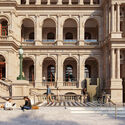
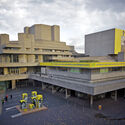
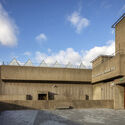
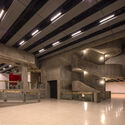
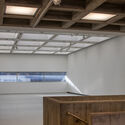
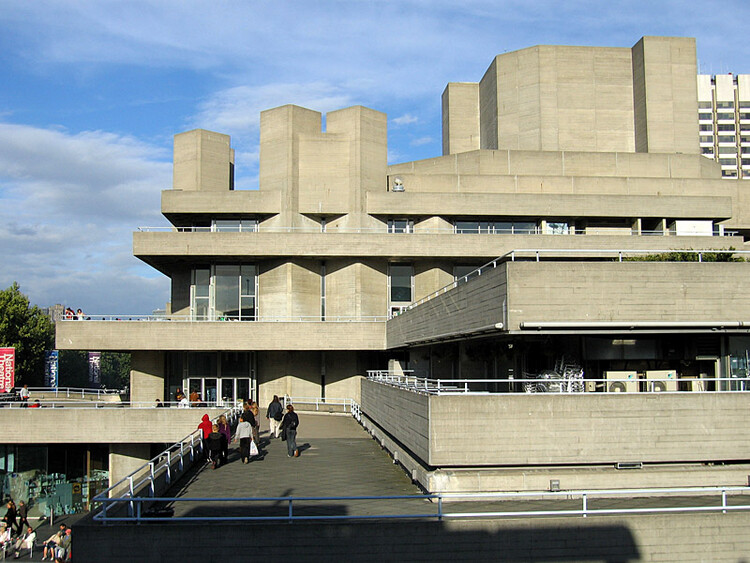
The Southbank Centre is a cultural complex in London built between 1963 and 1968 and widely regarded as a representative example of British Brutalism. Today, the site hosts a wide range of events, including visual arts, theatre, dance, classical and contemporary music, literature, poetry, and debate. The building was designed by a team from the Architects' Department of the London County Council, led by architect Norman Engleback. It became a controversial example of modern architecture following its opening in October 1967, when engineers voted Queen Elizabeth Hall "the supreme ugly" in a poll of new buildings, and the Daily Mail referred to it as "Britain's ugliest building." Fifty-nine years later, on February 10, 2026, the complex was granted Grade II listed status by the UK government's Department for Culture, Media and Sport (DCMS), following a 35-year campaign advocating for its protection as modern architectural heritage.

Cities around the world share a common goal: to become healthier and greener, supported by civic infrastructure that restores ecosystems and strengthens public life. The question is how to reach this. Global climate targets, local building codes, and municipal standards increasingly guide designers and planners toward better choices. Still, many cities struggle to translate these frameworks into everyday, street-level comfort and long-term ecological protection. What happens if the city is no longer treated as a traditional city, but as a national park?
National parks operate through systems of protection that treat land as a network of ecological relationships rather than a collection of isolated sites. They establish a shared baseline for what must be preserved, maintained, and made accessible over time. When this logic is applied to the urban environment, success can inspire pride and a sense of shared responsibility among designers, policymakers, and residents, fostering a collective commitment to health, habitat, and civic infrastructure.