1. ArchDaily
  2. Infrastructure

Infrastructure: The Latest Architecture and News

How Can Transport Infrastructures Take On a New Lease of Life?

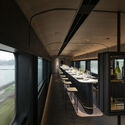
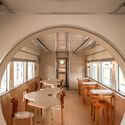
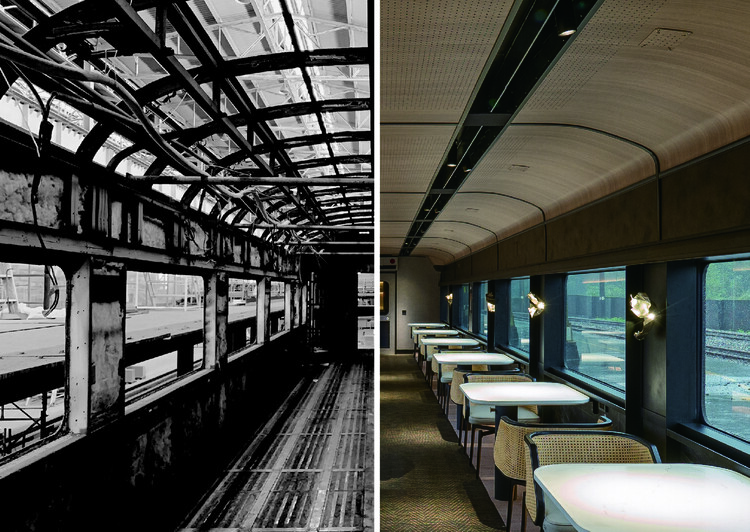
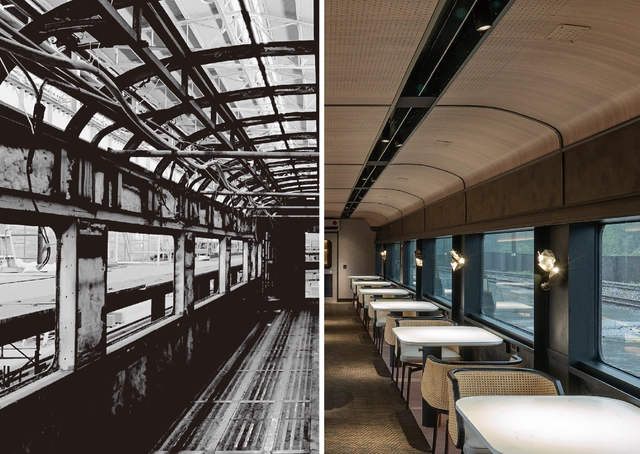
Faced with the combined forces of population growth, economic prosperity, and urban expansion, cities are witnessing a significant rise in the movement of people and goods—mirroring the evolution of diverse mobility systems within urban environments. As technologies advance and modes of transport evolve, the adaptive reuse of train carriages, airplane cabins, and other service infrastructures reveals opportunities to explore their creative potential. Materials, technologies, and design tools converge around a shared goal: refurbishing and repurposing disused structures to give them new life.


How Can Transport Infrastructures Take On a New Lease of Life? - Image 1 of 4How Can Transport Infrastructures Take On a New Lease of Life? - Image 2 of 4How Can Transport Infrastructures Take On a New Lease of Life? - Image 3 of 4How Can Transport Infrastructures Take On a New Lease of Life? - Image 4 of 4How Can Transport Infrastructures Take On a New Lease of Life? - More Images+ 12

From Albania to Iran: 7 Unbuilt Infrastructure Projects Reimagining Mobility, Ecology, and Connection

Subscriber Access | 

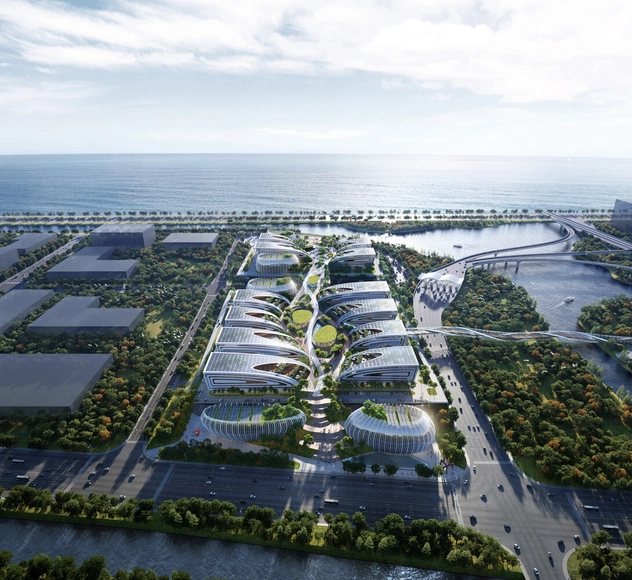
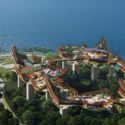
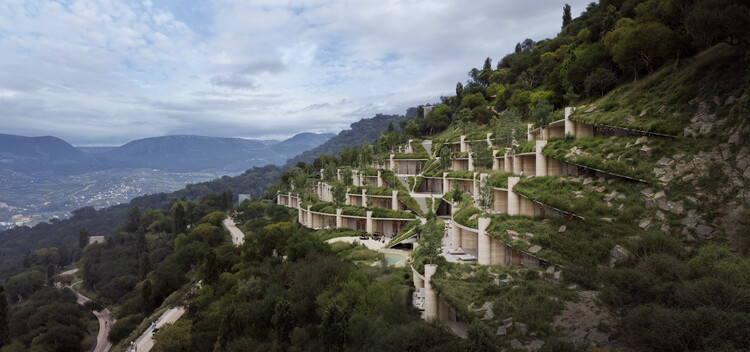
Infrastructure has long defined the backbone of cities by linking people, landscapes, and economies through systems that often go unnoticed until they fail. Today, as global challenges demand more adaptive and human-centered responses, architects are rethinking what infrastructure can be: not just a framework for movement and utility, but a catalyst for ecological restoration, cultural continuity, and civic imagination. The following unbuilt projects, submitted by the ArchDaily community, explore this expanded role of infrastructure, where airports, bridges, industrial parks, and pedestrian networks become architectural expressions of connection and care.

From Albania to Iran: 7 Unbuilt Infrastructure Projects Reimagining Mobility, Ecology, and Connection - Image 6 of 4From Albania to Iran: 7 Unbuilt Infrastructure Projects Reimagining Mobility, Ecology, and Connection - Image 10 of 4From Albania to Iran: 7 Unbuilt Infrastructure Projects Reimagining Mobility, Ecology, and Connection - Image 15 of 4From Albania to Iran: 7 Unbuilt Infrastructure Projects Reimagining Mobility, Ecology, and Connection - Image 24 of 4From Albania to Iran: 7 Unbuilt Infrastructure Projects Reimagining Mobility, Ecology, and Connection - More Images+ 36

RIBA Stirling Prize Winner and Faith Park in Albania: This Week’s Review

This week's architectural developments highlighted how design operates as a form of social and cultural infrastructure, linking care, community, and context across scales. From London's reinterpretation of the almshouse model to the transformation of urban gateways in Phnom Penh and Tirana, architecture reflected a shared interest in spaces that foster connection and adaptability. Parallel to these urban and infrastructural works, new cultural projects in Paris and Hanoi explored how museums and performance spaces can renew public institutions through material experimentation and spatial flexibility.

RIBA Stirling Prize Winner and Faith Park in Albania: This Week’s Review - Image 1 of 4RIBA Stirling Prize Winner and Faith Park in Albania: This Week’s Review - Image 2 of 4RIBA Stirling Prize Winner and Faith Park in Albania: This Week’s Review - Image 3 of 4RIBA Stirling Prize Winner and Faith Park in Albania: This Week’s Review - Image 4 of 4RIBA Stirling Prize Winner and Faith Park in Albania: This Week’s Review - More Images+ 3

Zaha Hadid Architects’ Danjiang Bridge Nears Completion Ahead of 2026 Opening in Taipei, Taiwan

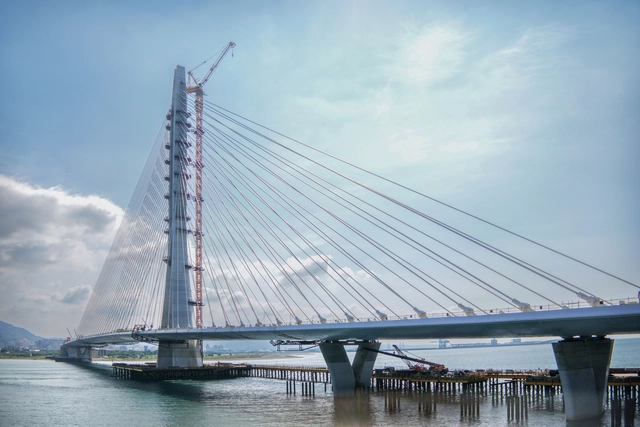
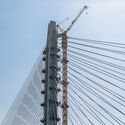
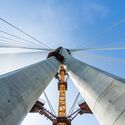
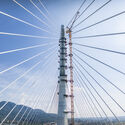
Zaha Hadid Architects was announced as the winner of the Danjiang Bridge International Competition in 2015. At the time, the design proposal sought to minimize the bridge's visual impact by employing a single concrete structural mast to support a 920-meter-long cable-stayed span. Construction began in 2019 on what would become the world's longest single-mast, asymmetric cable-stayed bridge. In October 2025, the final segment of the bridge's steel decking was installed, connecting the east and west banks of the Tamsui River estuary in Taiwan for the first time and confirming its opening date for May 12, 2026.

Zaha Hadid Architects’ Danjiang Bridge Nears Completion Ahead of 2026 Opening in Taipei, Taiwan - Image 1 of 4Zaha Hadid Architects’ Danjiang Bridge Nears Completion Ahead of 2026 Opening in Taipei, Taiwan - Image 2 of 4Zaha Hadid Architects’ Danjiang Bridge Nears Completion Ahead of 2026 Opening in Taipei, Taiwan - Image 3 of 4Zaha Hadid Architects’ Danjiang Bridge Nears Completion Ahead of 2026 Opening in Taipei, Taiwan - Image 4 of 4Zaha Hadid Architects’ Danjiang Bridge Nears Completion Ahead of 2026 Opening in Taipei, Taiwan - More Images+ 12

OUALALOU+CHOI Wins Competition for the New Casa Sud Train Station in Casablanca

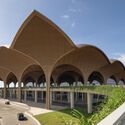
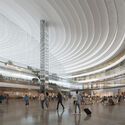
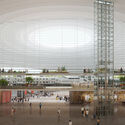
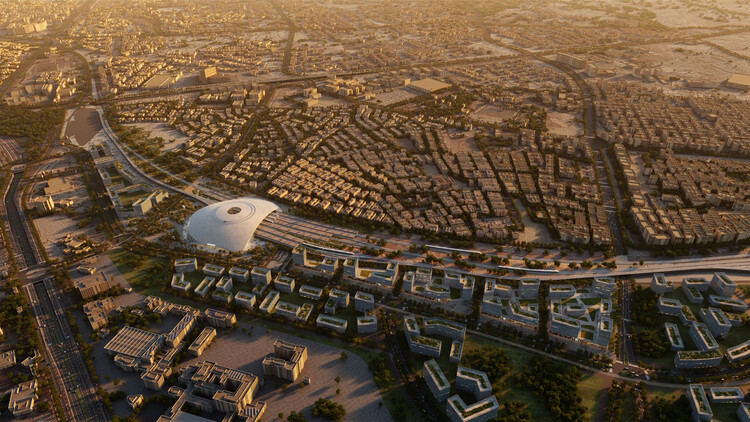
OUALALOU+CHOI has won the international competition for the design of the new Casa Sud Train Station in Casablanca, Morocco. Based in Paris and Casablanca, the architecture and urban design practice led by Tarik Oualalou and Linna Choi is recognized for its work exploring the relationship between architecture, infrastructure, and public life. The winning proposal envisions the new station as both an infrastructural hub and a civic landmark, addressing the needs of a rapidly expanding metropolis while contributing to the urban and social fabric of Morocco's economic capital.

OUALALOU+CHOI Wins Competition for the New Casa Sud Train Station in Casablanca - Image 1 of 4OUALALOU+CHOI Wins Competition for the New Casa Sud Train Station in Casablanca - Image 2 of 4OUALALOU+CHOI Wins Competition for the New Casa Sud Train Station in Casablanca - Image 3 of 4OUALALOU+CHOI Wins Competition for the New Casa Sud Train Station in Casablanca - Image 4 of 4OUALALOU+CHOI Wins Competition for the New Casa Sud Train Station in Casablanca - More Images+ 2

Passages. Architecture for Flowing and Connecting Spaces

Welcome to Passages
International Conference at Politecnico di Milano,
Department of Architecture and Urban Studies (DAStU).

How Entrance Systems Are Becoming the Hidden Infrastructure of Smart Buildings

 | Sponsored Content

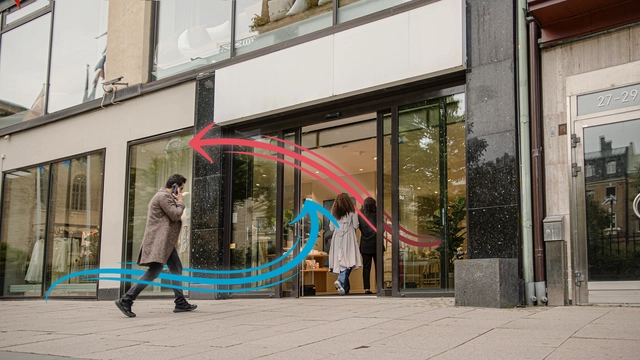
In Jacques Tati's Mon Oncle (1958), architecture itself becomes a character: sliding doors, an automatic fountain, gates that emit mechanical sounds, devices that both enchant and frustrate the inhabitants. The comedy arises precisely from the fact that these seemingly trivial systems silently shape everyday life. More than six decades later, the observation seems prophetic. In contemporary buildings, countless systems work autonomously and discreetly, going unnoticed when they function well. Among them, automatic doors, traditionally seen as secondary elements, are emerging as part of a new "invisible infrastructure": connected, efficient, and intelligent systems that support comfort, sustainability, and operational resilience.