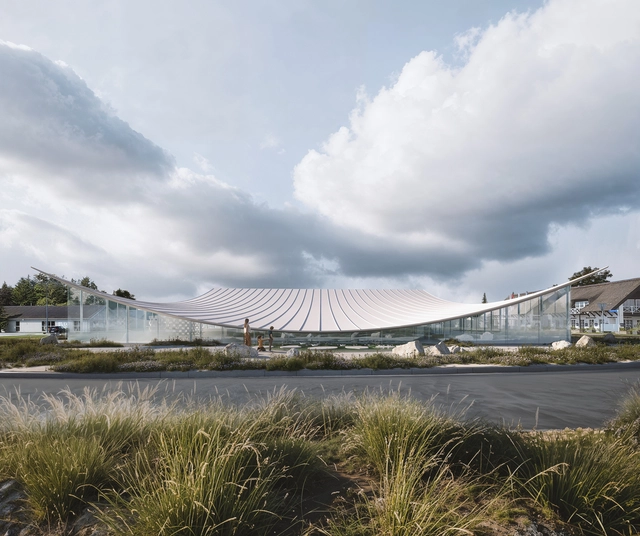
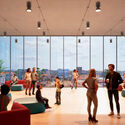
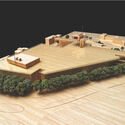
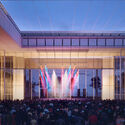
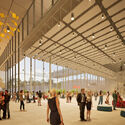
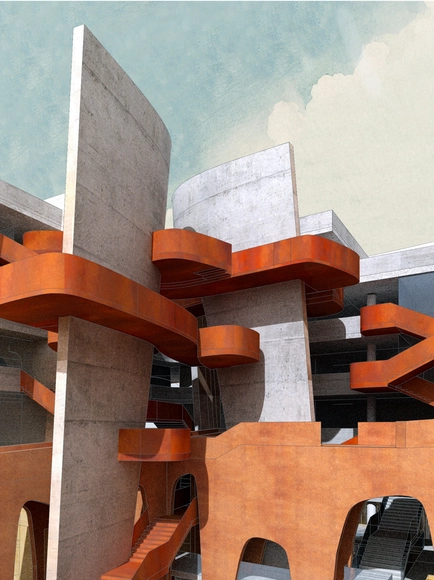
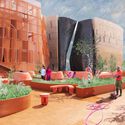
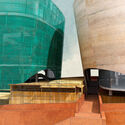
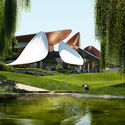
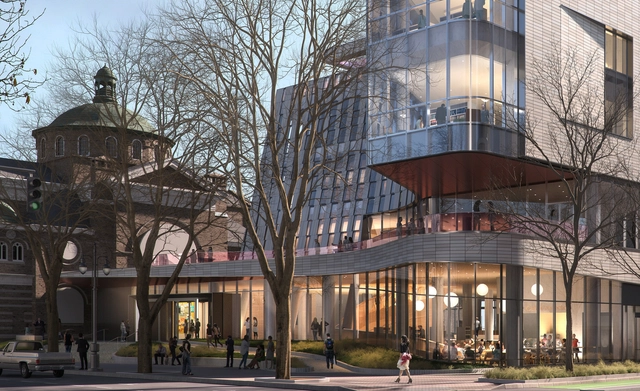
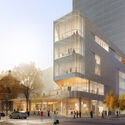
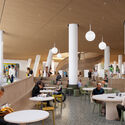
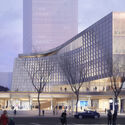
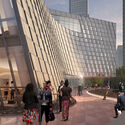
Bjarke Ingels Group (BIG) is leading the transformation of a former supermarket into the new Museum for Paper Art in Denmark's North Jutland region. With paper art deeply ingrained in Danish cultural heritage, symbolized by Le Klint's folded lampshades and H.C. Andersen's intricate paper cuttings, this renovation and expansion aim to elevate the museum's profile and double its visitor numbers. The design will celebrate paper as both an art form and a craft, extending the museum's role in promoting this unique heritage.
Educational and cultural centers serve as pivotal spaces where communities engage with knowledge, creativity, and shared experiences. As architectural programs, they offer unique opportunities to explore how physical environments can foster learning, cultural expression, and social interaction. The significance of these projects lies not just in their function but in how they reflect the values and aspirations of society. When established architecture firms take on these projects, their design choices become a lens through which we can examine contemporary approaches to space, place, and community, offering a glimpse into the evolving role of architecture in shaping educational and cultural landscapes.
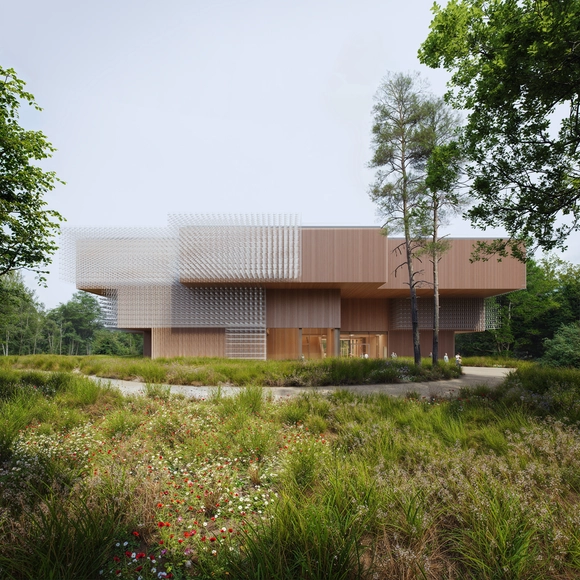
Among this week's curated list of unbuilt projects submitted by established architecture practices,fala atelier’s project for a school in Broc, Switzerland, stands out with its sensitive integration of Alpine architectural elements; WXCA’s Xylopolis Centre in Poland reflects a deep contemplation on humanity’s relationship with nature, while KPF’s life sciences building in London and Jones Studio’s WaterEducation Center in Arizona further exemplify how architecture can address contemporary societal needs, from fostering innovation ecosystems to educating the public on critical environmental issues.
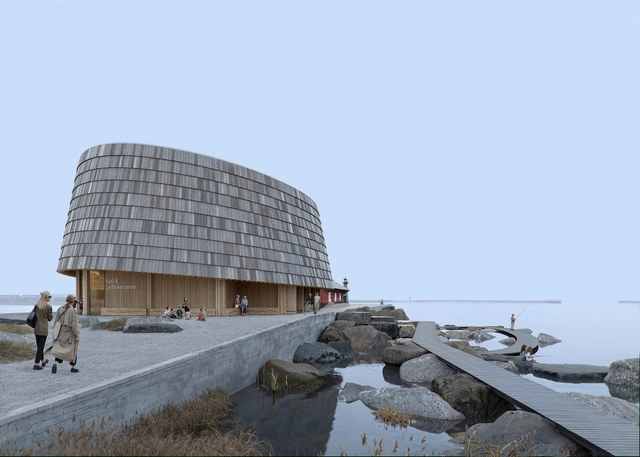
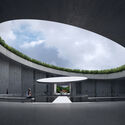
3XN GXN and landscape architect DETBLÅ have won the commissions for the design of a new Centre for Coastal Nature and Sport Fishing in Assens, Denmark. The proposal features a subtle oval structure to showcase local stories of the natural environment. The building aims to enhance public awareness and appreciation of the marine environment, reflecting a growing understanding of the need for better marine stewardship. It will also act as a hub for knowledge exchange about the impact of humans and climate change on the sea.
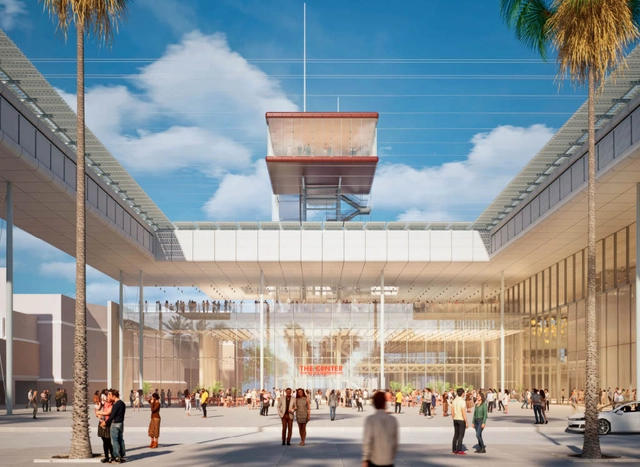
Pritzker Prize Laureate Renzo Piano has just revealed designs for Boca Rotan’s new creative campus, The Center for Arts & Innovation in Florida. The Center seeks to transform Boca Raton into an internationally recognized destination for culture, arts, innovation, and technology. In fact, the three-story structure features functions that bridge creativity across the realms of arts, education, business, and community.
Still in its early and iterative stages, the Center aims to pioneer a new approach to how the world designs, imagines, programs, and embraces its cultural infrastructure. Catalyzing future leaders and visionaries, the scheme offers a dynamic platform for new ideas, AI integration, and end-to-end STEAM education. Seeking to cultivate knowledge and community engagement, The Center is dedicated to shaping tomorrow’s cultural landscape through equipping its future leaders and occupants with the resources they need today to build a better tomorrow.
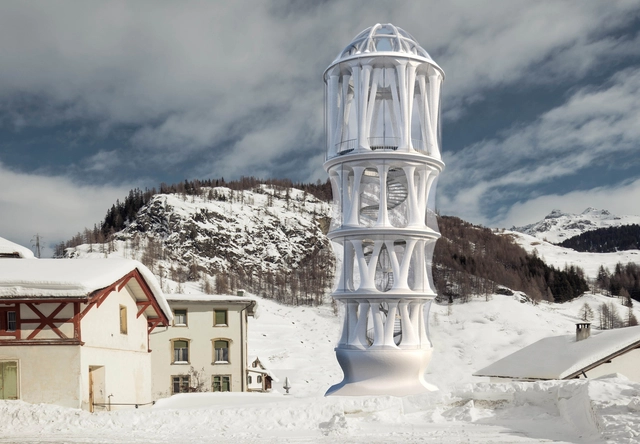
Construction has just begun on the Tor Alva, or the White Tower, the world’s largest 3-D printed tower. Designed by architects Michael Hansmeyer and Benjamin Dillenburger and printed with concrete by the technology university ETH Zurich, 8 out of 32 structural columns have been completed. Nestled in the village of Mulegns in the Swiss Alps, the White Tower is designed as a venue for music and theater events. Standing at 30 meters, the design features 32 distinct Y-shaped columns, each boasting a pattern of textured details.
In commemorating World Autism Day, it is crucial to acknowledge the impact of design on the lives of individuals with disabilities. Whether it’s the Autism Garden in Iran by Hajm.e.Sabz, the Sycamore at Northgate Park Hospital in the United Kingdom, or the Home for The Homeless, each of these projects celebrates diverse needs and seeks to foster a sense of belonging and empowerment for all.
The architecture of cultural centers in Mexico has gained relevance in recent years. There has been a growing interest in providing spaces for recreation and education, transforming them into urban landmarks that attract visitors from all over the country year after year.
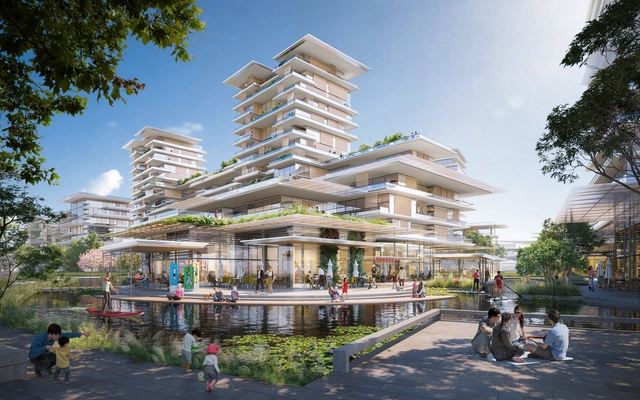
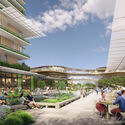
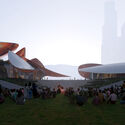
Foster + Partners has just unveiled the designs for the Xicen Science & Technology Center at the heart of the Yangtze River Delta Region in Shanghai,China. The project is strategically located along the Shanghai – Huzhou development axis, ensuring connectivity to the city center through high-speed rail links. Drawing inspiration from the timeless allure of the surrounding water towns, the center blends new and existing waterways to create a community featuring residential, commercial, and recreational spaces.
Many buildings often fall into disuse due to our cities' constant economic, social, and technological changes. The programmatic inconsistency of current times demands great versatility and adaptability from our infrastructures, increasingly leading projects to become uninhabited, and left to abandonment and decay.
Next, we present a series of 20 Latin American projects in which old warehouses, homes, prisons, mills, and markets were recovered and transformed into Cultural Centers, Museums, and Galleries.
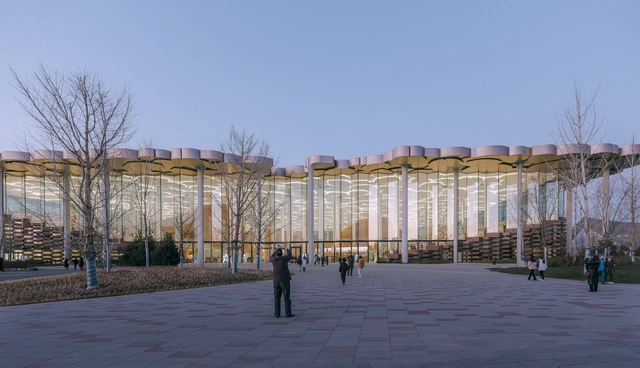
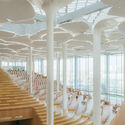
Snøhetta’s Beijing City Library has opened its doors to the public, introducing a unique space for learning and knowledge-sharing in Beijing’s cultural scene. As one of the most anticipated projects of 2024, the library features the world's largest climatized reading space, in addition to various facilities aimed at creating a vibrant cultural destination in the city. Snøhetta was awarded the Beijing City Library in 2018 through an international competition and the project was completed with local partner ECADI.
A considerable part of architectural innovation involves the use of materials. Technical development and new formal languages utilize them to "announce" the "next" architectural era. Of course, materials are essential for construction and significant for the consolidation of languages. Glass, steel, concrete, or brick convey messages about buildings. However, like any language, the meaning of words can vary according to the prevailing social organization; there is a dispute over the meaning of certain expressions, or there is pressure for the abolition—or at least the dissociation—of certain senses associated with some words. It would not be any different in architecture.
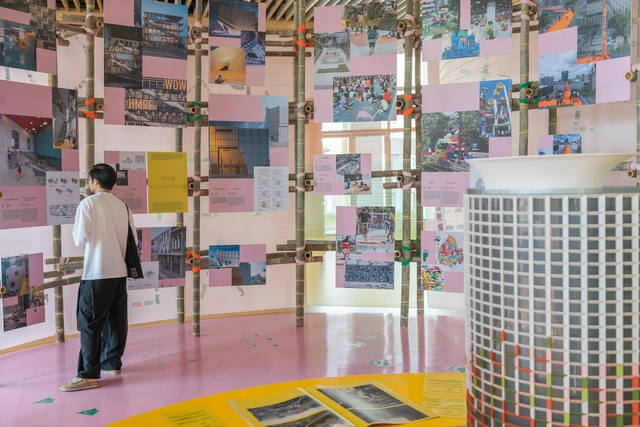
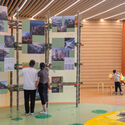
“ReviveR,” a new exhibition by MVRDV opened at the Shenzhen Women & Children’s Centre, focused on the different narratives surrounding its hosting building, from the role of play and social interaction, to the importance of fun environments for people of all ages, along with the need to reduce carbon emissions by applying principles of circularity. The exhibition is on display in the building’s 5th-floor auditorium from December 6, 2023, until February 28, 2024.
Sir Peter Cook and Gavin Robotham’s CRAB Studio has unveiled the design for a new cultural center to be constructed in New Delhi, India. Located on the site of a former quartzite quarry, the BRIJ offers facilities for the visual, performing, literary, and culinary arts as well as a new arts academy. The scheme, aiming to promote interactions between artists and audiences via an immersive environment, is designed by CRAB Studio, now led by Gavin Robotham, and CP Kukreja Architects (CPKA) as Executive Architect.
The German Pavilion was designed by Ludwig Mies van der Rohe in 1929 for the German representation at the International Exhibition in Barcelona held on Montjuic that same year. The Pavilion was conceived as a space of modest dimensions and refined materials. It was made of glass, steel, and four types of marble, intended to host the official reception led by King Alfonso XIII and German authorities. The uniqueness in the use of materials, which was always highlighted in his work, wasn't about their novelty but about the modernity they represented and their precise application in terms of geometry, the accuracy of their components, and the clarity of their assembly.
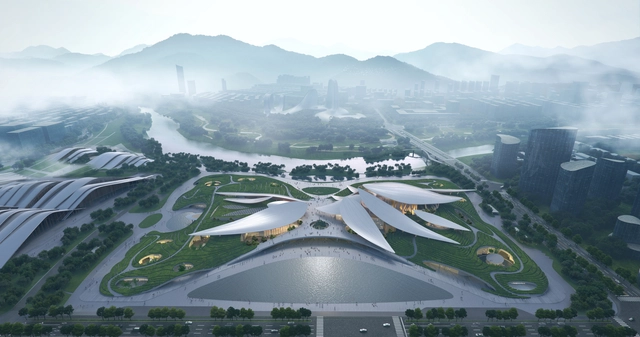
Anji Culture and Art Center . Image Courtesy of MAD Architects
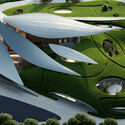
Led by Ma Yansong, MAD Architects has revealed the design of the Anji Culture and Art Center in the Zhejiang Province in southeast China. The new center, covering a site area of about 149,000 square meters, features six event venues: a Grand Theater, a Conference Center, a Leisure Center, a Sports Center, a Youth Activity Center, and an Art Education Center. All functions are spread out beneath bamboo-leaves-inspired roofs, referencing the Anji area, known as the ‘bamboo and white tea’ town of China. Construction of the center has begun and is expected to be completed and in use by 2025.
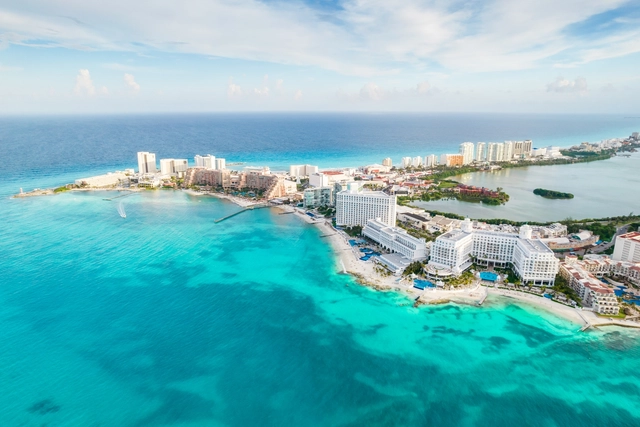
via Shutterstock | mariakray, Boca Raton Aerial View
The Center for Arts and Innovation has just selected Pritzker Prize-winning architect Renzo Piano to design its new creative campus. The campus is situated in the heart of downtown Boca Raton in Florida and aims to become a global hub for creative excellence. Ultimately, The Center is on a mission to transform Boca Raton into an internationally recognized destination for culture, arts, innovation, and technology.
Charlotte Mecklenburg Library. Image Courtesy of Snohetta
Construction has just begun on Snøhetta’sCharlotte Mecklenburg Library in North Carolina,USA. The new project is designed to become a significant destination in Uptown Charlotte. Last week, the main library organized a commemoration to celebrate the beginning of the demolition phase on site in anticipation of the upcoming construction. It is set to open in the spring of 2026.
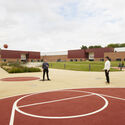
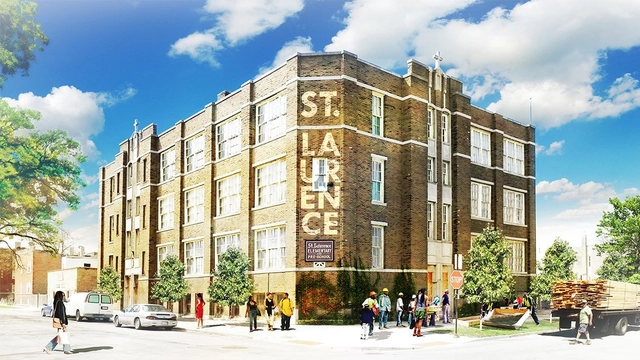
Rebuild Foundation, run by Artist Theaster Gates, is converting the St. Laurence Elementary School into a new 40,000 sq foot arts hub on Chicago’s South Side. The formerly vacant elementary school in Chicago’s local St. Laurence neighborhood has been reimagined to redeem indoor and outdoor spaces, making it a cultural hub. Set to open in 2024, the building's adaptive reuse expanded the program and the landmark into a place of exploration, entrepreneurship, and creative education.