Subscriber Access

Amman Architecture City Guide: 11 Projects in a Capital Shaped by Migration and Stone

Audio available

Built across several hills, Amman has grown at a pace few Middle Eastern capitals have matched. The city has received successive waves of migration — Circassians in the late 19th century, Palestinian refugees in 1948 and 1967, the Iraqi population after 1990, and Syrians since 2011 — each reshaping its density and social profile. Locally quarried limestone, extracted from quarries across Jordan and required by law for façades since the 1970s, has become the city's only common visual denominator. Behind this material uniformity, however, lies a continuous dialogue between vernacular tradition and international ambition.
Subscriber Access

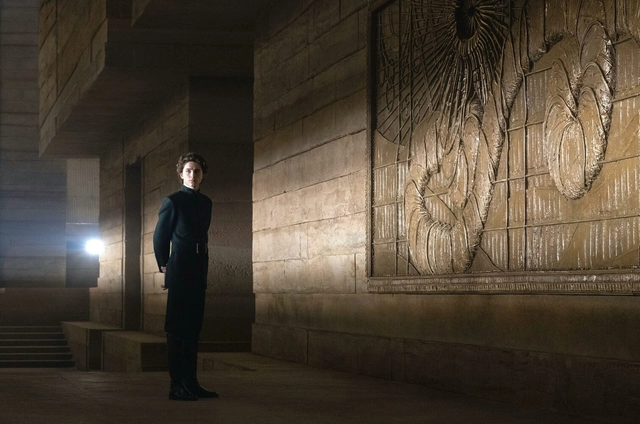
The Architecture of Dune: Leveraging the Past to Create a Myth of the Future

Imagine a world thousands of years into the future, one where humanity has conquered planets from galaxies away, only to default to a neofeudalistic social order in a constant power struggle, all built upon an intricate tapestry of cultures and religions and set in a harsh yet vivid landscape that becomes a character in and of itself. This was the challenge faced by director Denis Villeneuve and production designer Patrice Vermette in creating the cinematic adaptation of Frank Herbert's 1965 novel. The two Dune movies, released in 2021 and 2024, were conceived as a whole and therefore share a coherent style and cinematic expression. Beyond aesthetics, the environment and architecture of Dune present a lived-in, believable world, one that anchors the action and characters, silently offering invaluable insights into the values and mythology of each civilization.

Subscriber Access

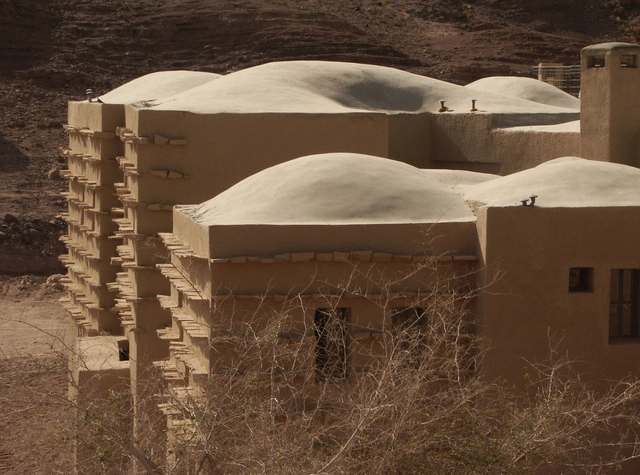
"The Site is the Architect, the Site is Materiality": On Ammar Khammash and Notes on Formation

Ammar Khammash is a Jordanian architect, designer, and artist best known for his approach that focuses on the preservation of cultural and natural heritage while crafting an architecture that engages with its surroundings. With deep admiration for nature and its ecosystems, Khammash trusts that "the site is the architect”, a statement for which he is renowned that underscores the profound influence of context on his architectural design. With over three decades of experience spanning various disciplines and across several Middle Eastern countries such as Jordan, Oman, Palestine, Egypt, Syria, and the UAE, Ammar Khammash has consistently attempted to preserve and enhance the symbiosis between human constructions and the natural environment. His contributions include the Royal Academy for Nature Conservation, the Wild Jordan Center, and the restoration of the Church of Apostles.