From Cloud to Coast: The Physical Cost of AI in Hong Kong’s Borderlands

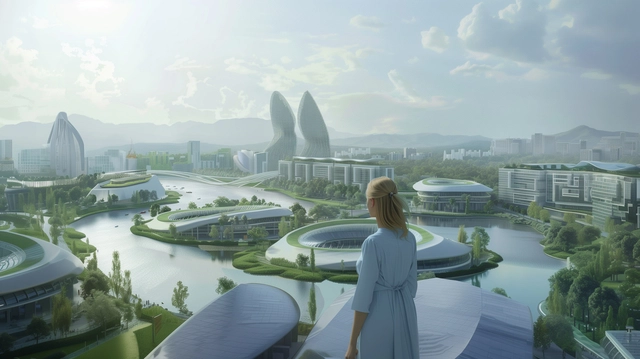
Amid the rapid build-out of data centres and AI economies across the Greater Bay Area—and alongside the celebration of AI as a tool and "author," as featured in 2025 Hong Kong–Shenzhen Bi-City Biennale of Urbanism\Architecture (Hong Kong)—a parallel question becomes unavoidable: how do the planning and construction of AI infrastructure actually begin to shape everyday life? Many of the facilities already built remain intentionally distant from daily experience. The "cloud" may be marketed as immaterial, but its architecture is profoundly physical: high-power, high-heat, service-heavy environments that are often sited in remote or low-density areas to take advantage of lower land costs and to minimize friction with nearby communities. Security and risk management further reinforce this logic. Data centres hold sensitive, privileged information—corporate assets, legal records, government and institutional data—and remoteness becomes part of their operating model, keeping the infrastructures of AI both spatially and socially out of sight.

The Plan and the Prompt: How AI Is Rewiring Design and Practice

Subscriber Access | 

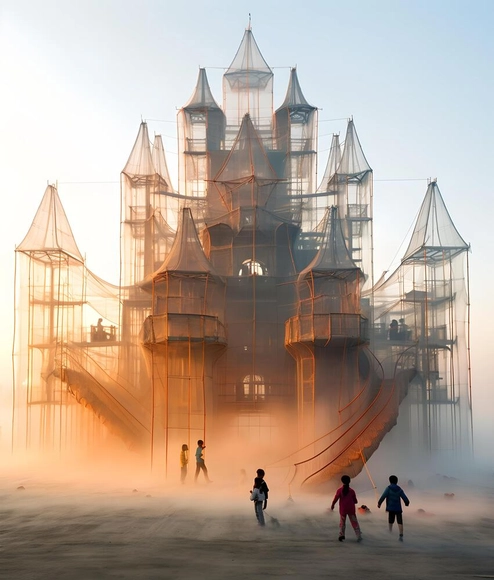
Architecture's design process has always been shaped by the tools at hand. We once drew with pen and ink on fragile sheets, copied by blueprint and guarded against smudges and tears; then Mylar arrived, making revisions and preservation easier and nudging drawings toward a leaner, more deliberate economy of lines. Computer-aided drafting followed, speeding coordination and changing how we think about scale and precision. Today, AI adds another layer—gathering information in seconds and spinning images on command—promising new efficiencies while raising fresh questions about authorship and craft. What we make, and how we make it, has evolved with each tool; the history of our methods is the history of our ideas.

Beyond the Image: Rethinking Architecture in the Age of AI

Subscriber Access | 

Artificial intelligence is becoming an undeniable presence in our daily lives. It teaches, generates content, and disrupts the fragile boundaries—both visual and imaginative—that once governed our interactions on social media. On platforms like Instagram, we witness a flood of imagery where every kind of speculative exercise is freely shared, recalibrating our understanding of the relationship between architecture and image. Amid this transformation, entire professions find themselves on uncertain ground, as AI begins to challenge areas once defined by human expertise.

Vernacular Building and AI: Can Data Alone Bridge the Gap?

As artificial intelligence (AI) becomes increasingly embedded in society, it's essential to pause and reflect on the foundations that sustain it—and the dimensions to which it extends. At the heart of AI's learning are datasets, whose structure and content shape how these systems interpret and respond to the world. This reliance creates a deep interdependence—one that not only informs AI's capabilities but also defines its potential blind spots. In light of this, we must ask: What forms of understanding might this process exclude, especially those not easily captured in digital form?

AI and the Human Vector in Architecture: Embracing Emotional Engagement and Empathy

This article is the tenth in a series focusing on the Architecture of the Metaverse. ArchDaily has collaborated with John Marx, AIA, the founding design principal and Chief Artistic Officer of Form4 Architecture, to bring you monthly articles that seek to define the Metaverse, convey the potential of this new realm as well as understand its constraints. In this feature, architect John Marx questions the limits and capabilities of AI in architecture and in creating buildings that resonate deeply with people and communities.

How are AI Systems Assisting Architects and Designers?

Since their introduction to the wider public, artificial intelligence technologies seem prone to change the working landscape for professionals across all fields, and architecture and urban planning are no different. While many fear their negative impact, AI technologies can also be viewed as a different set of tools in the arsenal of architects and designers. As revolutionary as they are, there is a plethora of applications and platforms being developed not to replace, but to aid, offload repetitive tasks, and help visualize ideas or large data sets, all to provide a basis for the architect's decision-making process.

Artificial Intelligence and Urban Planning: Technology as a Tool for City Design

Subscriber Access | 

The convergence of artificial intelligence (AI) and urban planning holds significant promise for creating more intelligent, efficient, and sustainable cities. This fusion entails the integration of cutting-edge technologies that can guide decision-making, enhance resource allocation, predict trends, engage citizens, and more. In this framework, where AI is seen as a tool for advancing various urban aspects, there has been a surge in the development of applications, software, and other technological systems tailored to support urban planning. Below, we have highlighted some global studies and technologies applied from urban morphology to community involvement.

How AI Will Make Everyone a Better Designer: For Better or Worse

This article is the seventh in a series focusing on the Architecture of the Metaverse. ArchDaily has collaborated with John Marx, AIA, the founding design principal and Chief Artistic Officer of Form4 Architecture, to bring you monthly articles that seek to define the Metaverse, convey the potential of this new realm as well as understand its constraints.

How Does Artificial Intelligence Perceive the Contemporary Home? Different Perspectives from 15 Countries

To think about how we inhabit is to think about architecture. If the primal need for shelter gave rise to the discipline, today, housing remains one of architects' most significant concerns. Providing comfort, seeking innovative materials, respecting memory, transforming culture - multiple layers intersect in a residence's design. Therefore, imagining the synthesis of the contemporary home is a great challenge. In search of new perspectives, we collaborated with Ulises Design Studio to understand how Artificial Intelligence (AI) perceives the contemporary home in the context of 15 different countries. Among data that touches on facts of reality and fiction, the pictures that emerge can bring inspiration and important reflections on spatial practice and the creation of its images.

The AI Image Generator: The Limits of the Algorithm and Human Biases

Subscriber Access | 

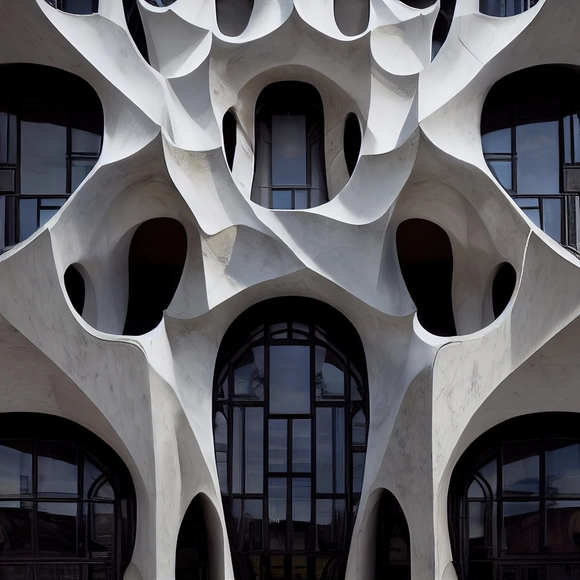
2022 has been the year of AI image generators. Over the past few years, these machine learning systems have been tweaked and refined, undergoing multiple iterations to find their present popularity with the everyday internet user. These image generators—DALL-E and Midjourney arguably the most prominent—generate imagery from a variety of text prompts, for instance allowing people to create conceptual renditions of architectures of the future, present, and past. But as we exist in a digital landscape filled with human biases—navigating these image generators requires careful reflection.