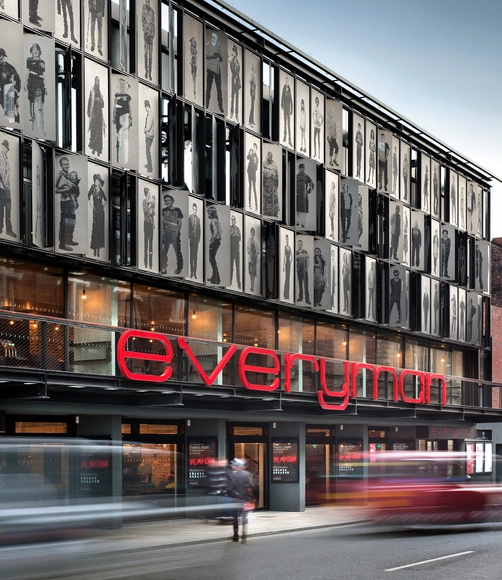
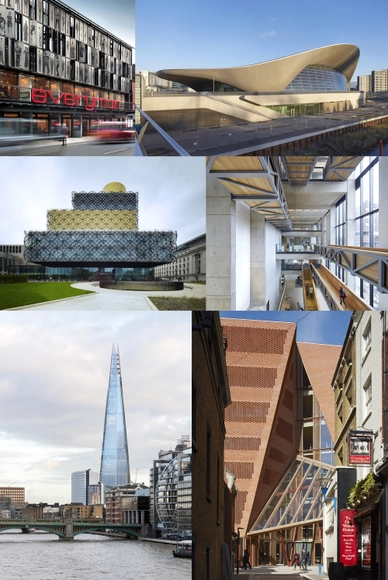
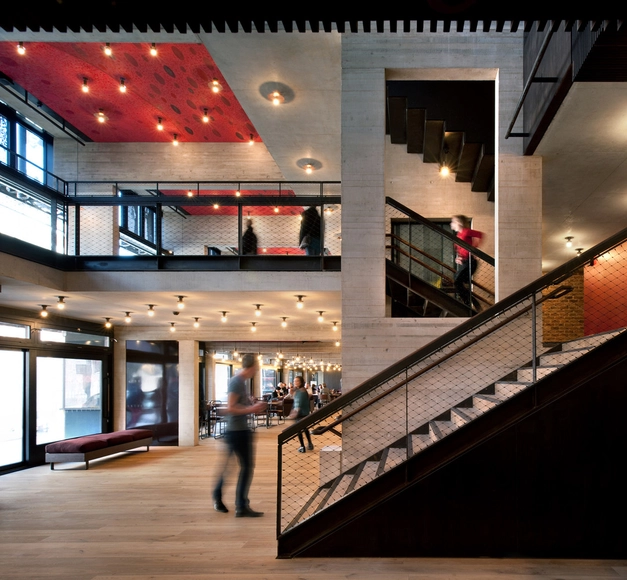
Haworth Tompkins'Everyman Theatre has won the RIBA Stirling Prize for 2014, beating competition from Zaha Hadid, Renzo Piano, Mecanoo, O'Donnell + Tuomey and Feilden Clegg Bradley. The result was announced last night by RIBA President Stephen Hodder at an event held at the RIBA's Headquarter's in London, with Hodder saying that "Haworth Tompkins have struck the perfect balance between continuity and change" and calling the scheme "a ground-breaking example of how to build a daring, bold and highly sustainable large public building in a historic city centre."
The Royal Institute of British Architects (RIBA) has now announced the six projects that form this year's Stirling Prize Shortlist, the award that is the ultimate prize for any British building. As the RIBA's most publicly prominent award, the Stirling Prize is often a prime demonstration of the tension between architecture that is widely appreciated by the general populace, and that which is lauded by architectural critics and practitioners.
This year is no exception, with perhaps the country's highest-profile project in years - the Shard - just part of the controversy. What did the critics make of the RIBA's selection? Find out after the break.
The RIBA has announced the six projects that will compete for the 2014 Stirling Prize, the award for the building that has made the greatest contribution to British architecture in the past year. The six nominees will now be judged head to head for British architecture's highest honour, based on "their design excellence and their significance in the evolution of architecture and the built environment," with a winner announced on October 16th. See the full shortlist after the break.
From this list of National winners, the RIBA will select the shortlist for the RIBA Stirling Prize, which will be revealed next month. See the full list of winners after the break.
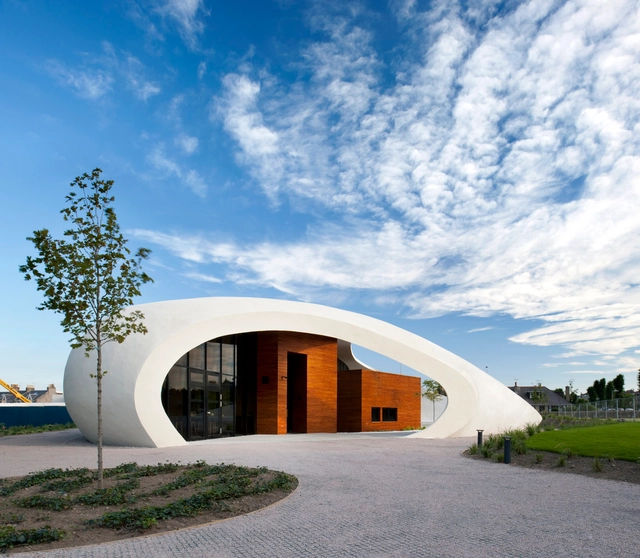
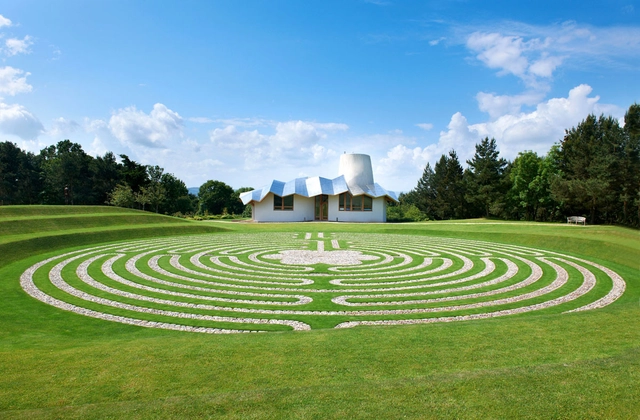
Dundee, Scotland, 2003 by Frank Gehry / Courtesy of Maggie's Centres. ImageThe third center was designed by Frank Gehry, a close friend of Maggie's. “Frank gave us so much publicity, and allowed us to raise the money,” Jencks says. Each center is self-financed through donations.
Maggie's Centres are the legacy of Margaret Keswick Jencks, a terminally ill woman who had the notion that cancer treatment environments and their results could be drastically improved through good design. Her vision was realized and continues to be realized today by numerous architects, including Frank Gehry, Zaha Hadid, and Snøhetta - just to name a few. Originally appearing in Metropolis Magazine as “Living with Cancer,” this article by Samuel Medina features images of Maggie's Centres around the world, taking a closer look at the organization's roots and its continued success through the aid of architects.
It was May 1993, and writer and designer Margaret Keswick Jencks sat in a windowless corridor of a small Scottish hospital, dreading what would come next. The prognosis was bad—her cancer had returned—but the waiting, and the waiting room, were draining. Over the next two years until her death, she returned several times for chemo drips. In such neglected, thoughtless spaces, she wrote, patients like herself were left to “wilt” under the desiccating glare of fluorescent lights.
Wouldn’t it be better to have a private, light-filled space in which to await the results of the next bout of tests, or from which to contemplate, in silence, the findings? If architecture could demoralize patients—could “contribute to extreme and mental enervation,” as Keswick Jencks observed—could it not also prove restorative?
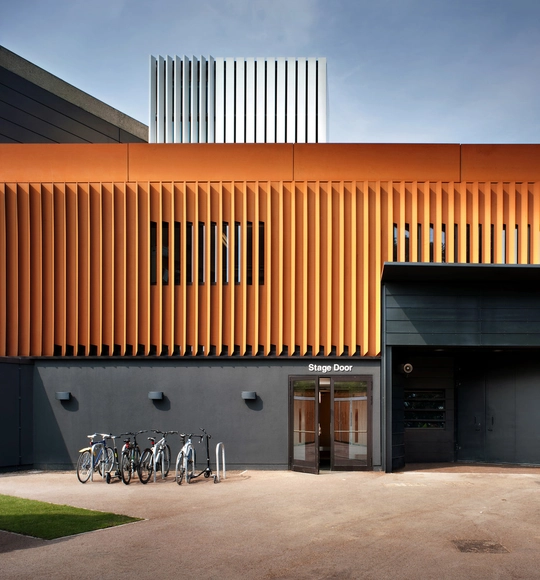
The Shed, a 225-seat auditorium designed by Haworth Tompkins, was completed earlier this year in London. It's made of raw steel and plywood, while the rough sawn timber cladding refers to the National Theatre’s iconic board-marked concrete. You can see more photos of photographer Philip Vile after the break.









.jpg?1397700541&format=webp&width=230&height=230&crop=true)