

-
Architects: RAW/deAbajoGarcia
- Area: 1500 m²
- Year: 2017
-
Manufacturers: SieroLam, TVITEC, Teznocub, VMZINC, Yofra
-
Professionals: Fernández Rosillo SL, EUTECA, PROYECTA SL


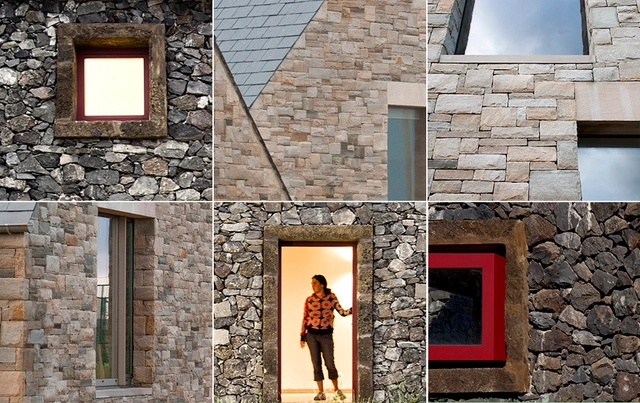
Stone is elemental to our built world. It is one of the oldest (if not the oldest) materials used in man-made habitats. The sense of timelessness in stone is attributed to its long and varied history alongside architecture. From ancient monoliths to cities to houses, the diversity of stone means that it can be used to convey a variety of expressions. Carved, polished, sedimented, stacked, preserved - the list can go on and on. The feeling stone conveys in contemporary projects usually brings with it a sense of place – a raw materiality when paired with timber or other natural materials. With that in mind, check out these 6 details of projects that stand out for their use of stone:

As editors on the Projects Team at ArchDaily, we wanted to reflect on the projects published in 2016—and, based on those submissions, to consider what we hope to see from the submissions we will publish in 2017.
During 2016, the projects we published had a high level of visual impact. Axonometric views were part of the vast majority of our publications, democratizing understanding by creating easily accessible views which closely resemble reality. Secondly, the development of immersive video technology has allowed us to publish full 360-degree tours through the interiors of works of different sizes, generating images which are increasingly representative of the physical reality of the work in question.
One of the most significant buildings of the late modernist style, Le Corbusier’s Convent de la Tourette exemplifies the architect’s style and sensibilities in the latter end of his career. Built between 1956 and 1960 on a hillside near Lyon, France, the priory dominates the landscape, with its strict, geometric form.