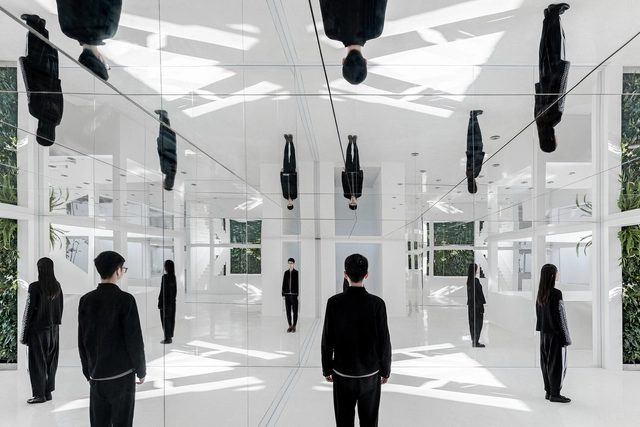
Humans have used mirrors since as early as 600 BCE, employing highly polished obsidian as a basic reflective surface. Over time, people began to use small pieces of gold, silver, and aluminum in a similar manner, both for their reflective properties and for decoration. By the 1st century CE, people had started using glass to make mirrors, but it was only during the European Renaissance that Venetian manufacturers began making mirrors by applying metallic backings to glass sheets, remaining the most common general method of mirror manufacturing today. Since then, mirrors have continued to play both a decorative and functional role in architecture, serving a clean, modern aesthetic despite its ancient origins. Below, we investigate how mirrors are made, provide a brief history of mirrors in architecture, and offer several tips for architects looking to use mirrors in their designs.
https://www.archdaily.com/942109/mirrors-in-architecture-possibilities-of-reflected-spaceLilly Cao
Neon lights are a bold, cosmopolitan statement that can easily revitalize or accentuate an architectural space or structure. With eye-catching brilliance, a plethora of color options, and ties to a retro aesthetic, these lighting pieces can make a space feel simultaneously modern and nostalgic. Yet few understand the scientific workings or material properties of neon, and many architects neglect its use due to its narrow association with commercial signage. Below, we explore how neon works, its architectural history, and how architects can continue to use it today.
https://www.archdaily.com/940713/how-neon-lighting-shapes-architectureLilly Cao
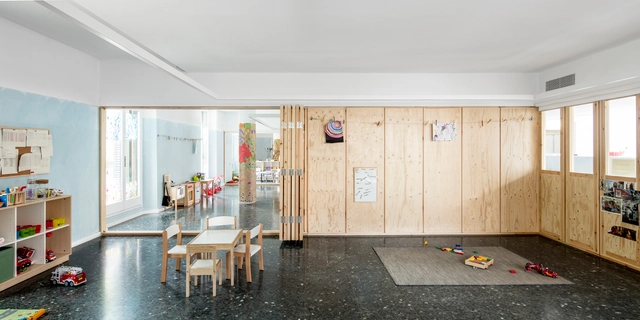
Introduced by Rudolf Steiner, Waldorf pedagogy draws on the principles of anthroposophical philosophy. One of the theory's foundational characteristics is its holistic approach to the human being: feelings, imagination, spirit, and intellect are considered unique to every individual, and thoughts, feelings, and actions are understood to always be linked.
Thus, the focus of the philosophy is to cultivate individuals who are capable of relating both to themselves and to society (inter and intrapersonal intelligence) - fundamental skills for overcoming the challenges of the 21st century. This kind of learning takes place in schools that follow Steiner's method, introducing families to the school environment and bringing them into the community. Below, we review the operations and implications of this pedagogy.
In 2018, the UN released an article stating that 55% of the world’s population already lived in urban areas, predicting that by 2050 this percentage would reach 68%. This trend toward greater urbanization carries with it several implications regarding environmental degradation and social inequality. According to National Geographic, urban growth increases air pollution, endangers animal populations, promotes the loss of urban tree cover, and heightens the likelihood of environmental catastrophes such as flash flooding. These health hazards and catastrophic phenomena may be more likely to impact poorer populations, as larger cities tend to demonstrate higher rates of economic inequality and uncontrolled growth tends to produce unequal distributions of space, services, and opportunities.
To mitigate these negative effects of urbanization, designers are increasingly prioritizing sustainability and the maximization of available space – allowing more people to occupy less space with a smaller footprint.
Indoor gardens can contribute important benefits to home living, ranging from aesthetic beauty to improved health and productivity. Research has shown that indoor plants help eliminate indoor air pollutants called Volatile Organic Compounds (VOCs) that emanate from adhesives, furnishings, clothing, and solvents, and are known to cause illnesses. They also increase subjective perceptions of concentration and satisfaction, as well as objective measures of productivity. Indoor gardens may even reduce energy use and costs because of the reduced need for air circulation. These benefits complement the obvious aesthetic advantages of a well-designed garden, making the indoor garden an attractive residential feature on several fronts.
https://www.archdaily.com/932106/how-to-incorporate-gardens-in-home-designLilly Cao








.jpg?1591399889&format=webp&width=230&height=230&crop=true)






.jpg?1591019033&format=webp&width=230&height=230&crop=true)













.jpg?1583859382&format=webp&width=640&height=580)


.jpg?1583859382)