At this morning’s press event, The Museum of Modern Art in New York (MoMA) unveiled the completed renovations to the east end of its museum campus, while also revealing for the first time the full design of their multi-year expansion project designed by Diller Scofidio + Renfro in collaboration with Gensler.
With the completion of the east wing renovation, which began in February 2016, the museum has created two spacious third-floor galleries by reconfiguring 15,000 square feet of space, allowing for better flexibility in installing the collection and temporary exhibitions.
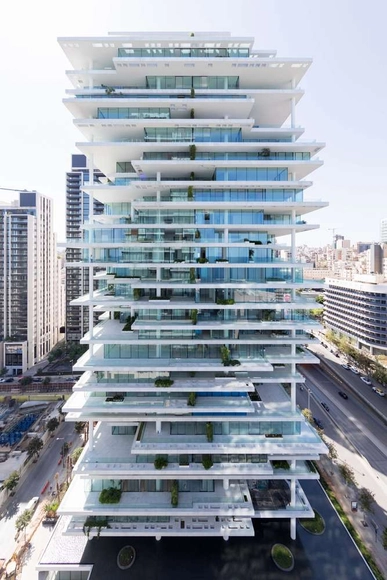
27 years after the Lebanese Civil War (1975 – 1990), Beirut finds itself a city of conflicting personalities. A summer night stroll through the recently completed Zaitunay Bay Marina flaunts the capital’s ongoing facelift. What GQ calls “the chosen destination for young rich cool kids across the globe” is now peppered with glitzy glass-clad high rises, world-class nightclubs, droves of foreign tourists, and high-profile architecture. A Steven Holl-designed yacht club is just minutes away from Herzog & de Meuron’s Beirut Terraces, a luxury condominium skyscraper overlooking a seaside promenade that the resort refers to as an “urban beach.” However, this inner-city development has also had extreme consequences on the city's periphery, as shown clearly in this photoset by Manuel Alvarez Diestro.
The Royal Architectural Institute of Canada (RAIC) has announced the four projects shortlisted for the 2017 Moriyama RAIC International Prize. The prize was established in 2014 by Canadian architect Raymond Moriyama along with RAIC and the RAIC Foundation to recognise buildings that are judged to be " transformative within its societal context and reflect Moriyama's conviction that great architecture transforms society by promoting social justice and humanistic values of respect and inclusiveness."
"These projects celebrate human life and shape activity," commented RAIC President Ewa Bieniecka, FIRAC. "They embody innovation, contribute to how we experience space, and explore how spaces allow opportunities for freedom. The four shortlisted projects demonstrate how architecture is generous and gives back to the community. These works have a strong sense of place and connect to their surrounding landscape."
Awarded every two years, the winning project will receive a CAD $100,000 prize and a handcrafted sculpture by Canadian designer Wei Yew. The prize is open to all architects, irrespective of nationality and location. The inaugural prize was won by Chinese architect Li Xiaodong for his design of the Liyuan Library in Jiaojiehe, China.
The World Architecture Festival (WAF) has announced four internationally recognized names as members of the Super Jury that will judge the awards program at the 2017 Festival in Berlin this November. After the selection of winners from across 31 categories on the first two days of the event, category winners will present to the Super Jury, who will decided the winners of the World Landscape, Future Project and Completed Building of the Year Awards.
Designing a museum is always an exciting architectural challenge. Museums often come with their own unique needs and constraints--from the art museum that needs specialist spaces for preserving works, to the huge collection that requires extensive archive space, and even the respected institution whose existing heritage building presents a challenge for any new extension. In honor of International Museum Day, we’ve selected 23 stand-out museums from our database, with each ArchDaily editor explaining what makes these buildings some of the best examples of museum architecture out there.
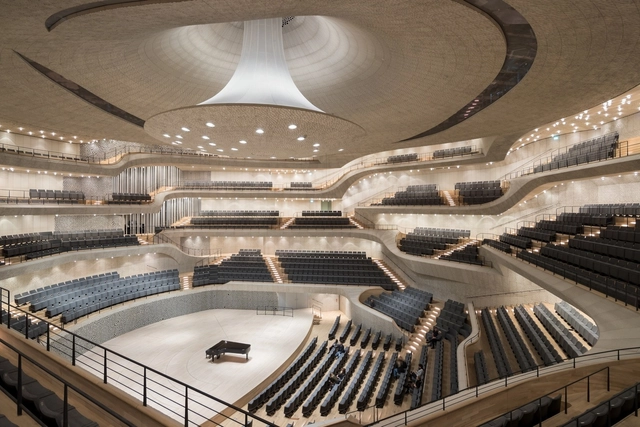
The Washington Post (WaPo) has launched a new architectural augmented reality series that will provide readers with an in-depth look at the details behind some of the world’s most innovative new buildings. For its first edition, architecture critic Philip Kennicott narrates an AR projection of the unique ceiling of the main concert hall at Herzog & de Meuron’s recently completed Elbphilharmonie in Hamburg, Germany.
For many observers, Thom Mayne might easily be considered the most unpredictable personality in architecture. Once labeled the “bad boy of architecture” by critics—a moniker which he has, at times, enthusiastically adopted and even encouraged—Mayne's actions in the architecture world can range from something as responsible as designing one of the United States' most sustainable university campuses to something as outrageous as proposing one of the world's tallest towers in a revered Austrian mountain town. In this interview, the latest from Vladimir Belogolovsky's “City of Ideas” series, Mayne discusses his ideas, his past statements on architecture, and where he thinks the profession will go next. The interview was originally published by the Berlin-based SPEECH Magazine.
The Cooper Hewitt, Smithsonian Design Museum has announced the winners of their 2017 National Design Awards, recognizing outstanding achievement in design and innovation across a variety of design disciplines. Now in its 18th year, the annual award was established to “promote design as a vital humanistic tool in shaping the world.”
The Chicago Architecture Biennial has announced partnerships with six Chicago museums and institutions that will serve as “community anchor” sites during the event’s run from September 16, 2017–January 7, 2018. This selection of sites will play host to events, exhibitions and other programming surrounding the festival, in hopes of encouraging Biennial attendees to explore other parts of the city and experience a few of Chicago’s historic museums.
The American Institute of Architects (AIA) has named the fourteen projects selected as recipients of the 2017 Housing Awards. Now in its 17th year, the AIA’s Housing Awards program was established to recognize "the best in housing design and promote the importance of good housing as a necessity of life." Projects are awarded in four categories: One/Two Family Custom Housing, One/Two Family Production Housing, Multifamily Housing and Special Housing.
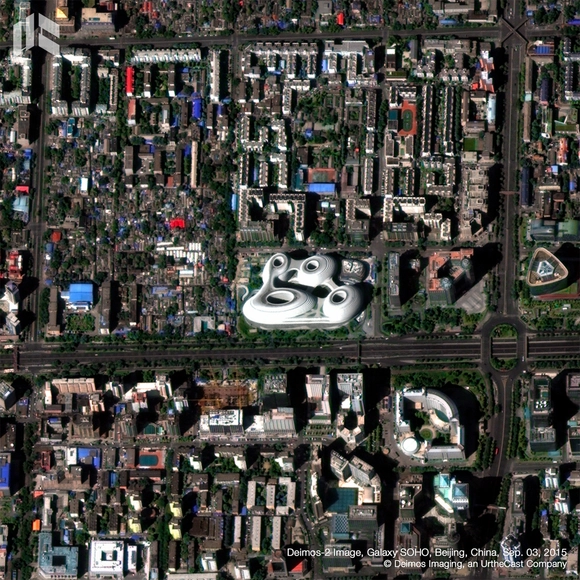
Hadid's untimely death left a fascinating and inspiring legacy. Meanwhile her firm, Zaha Hadid Architects, continues to work on nearly a hundred projects worldwide. To remember her legacy, Spanish company Deimos Imaging has shared a series of photographs focusing on Hadid's work in five countries.
The images were captured by the Deimos-2 satellite, which was launched in 2014 and designed for very high-resolution Earth observation applications, providing multispectral images of just 75 centimeters per pixel. Hadid's incredible works take on a new dimension when you contemplate their proportions from the sky—or rather, from a satellite.
Zaha Hadid's projects are remarkable not only for her innovative way of handling tangible materials but also for her imagination regarding the medium of light. Her theories of fragmentation and fluidity are now well-known design techniques which enabled her form-finding. However, her advances in using light to render her architecture have often been neglected—even though they became an essential element in revealing and interpreting her architecture. The three-decade transition from minimal light lines at her early Vitra Fire Station to the world's tallest atrium at the Leeza SOHO skyscraper, which collects an abundance of daylight, shows the remarkable development of Zaha Hadid’s luminous legacy.
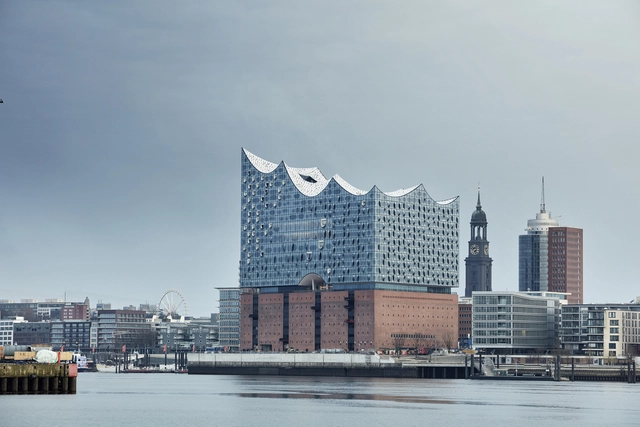
So much has already been written about Hamburg’s undeniably excellent Elbphilharmonie, which formally opened in January but has been publicly accessible, in part, since November. The chatter has mostly revolved around the same two talking points—the building’s on-the-tip-of-your-tongue shape and its fantastic price tag. In addressing the former, critics have called attention to the hall’s resemblance to an iceberg, an outcrop, a ship, circus tents, or the Sydney Opera House. And as for the costs, totaling $900 million, they point out how the project hemorrhaged cash, even if they have inadvertently exaggerated the figures. Having momentarily lost control of the narrative, the city felt compelled to set the record straight in time for the inaugural performance: The building cost just three—not ten!—times the initial budget.
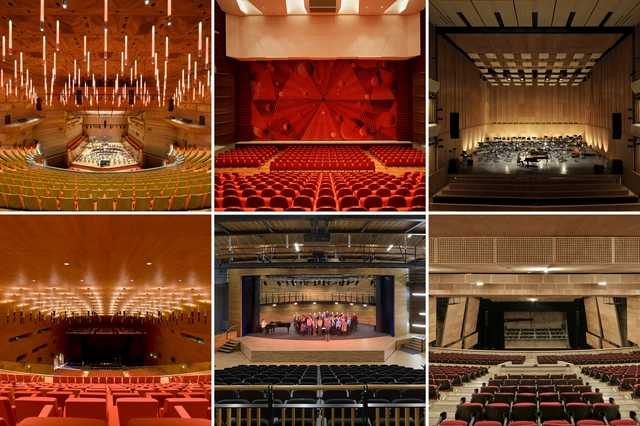
Seeing the space of an auditorium in section is a key tool in allowing us to approach a design's of acoustics, accessibility, and lighting. These components are what make the design of an auditorium a complex task, requiring detailed and specific studies.
There are a number of ways to design an auditorium that offers multiple responses to these challenges. For this reason, we have selected a number of sections from different auditoriums that can help you understand how other architects have solved the challenge.
Check out the 30 auditorium sections below, they are sure to inspire you!




.jpg?1496153834&format=webp&width=640&height=580)


.jpg?1496153929&format=webp&width=230&height=230&crop=true)
.jpg?1496153834)
.jpg?1495744233&format=webp&width=230&height=230&crop=true)










.jpg?1494330446&format=webp&width=230&height=230&crop=true)






.jpg?1490812427&format=webp&width=230&height=230&crop=true)