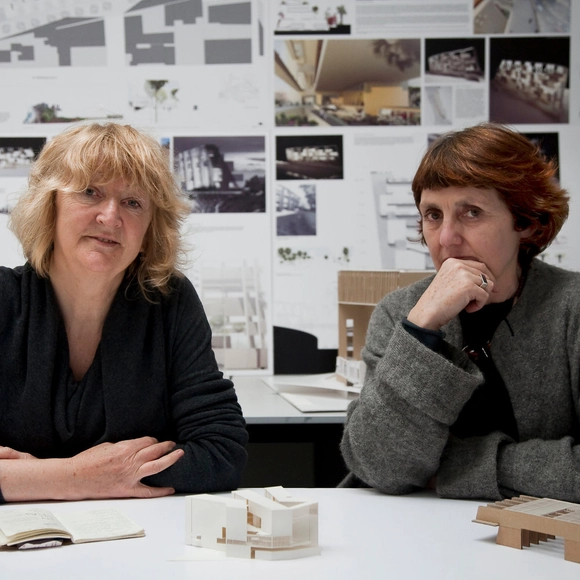
This year, architecture’s highest honor, the Pritzker Prize, has been granted to Grafton Architects, a Dublin-based architectural firm mainly ran by female partners Yvonne Farrell and Shelley McNamara. For the first time ever in its 42-year history, due to the constraints set by Covid-19 global pandemic, the organizers of the Pritzker Prize decided to use Livestream the award ceremony. Having reached the end of 2020, ArchDaily has summed up what current and previous Pritzker Prize winners have accomplished during this turbulent year.
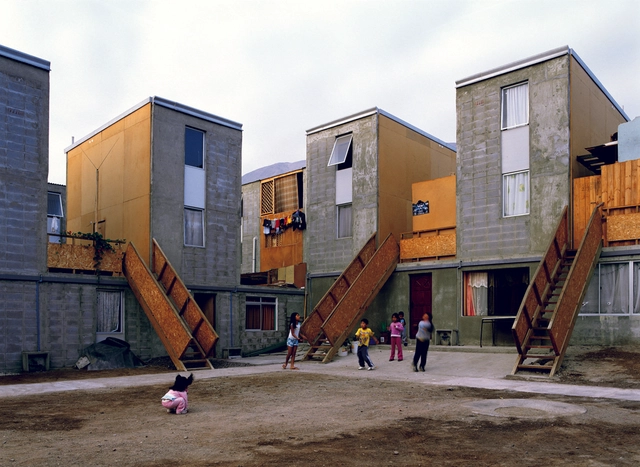
As founder of the “Do Tank” firm ELEMENTAL, Chilean architect Alejandro Aravena (born on June 22, 1967) is perhaps the most socially-engaged architect to receive the Pritzker Prize. Far from the usual aesthetically driven approach, Aravena explains that “We don’t think of ourselves as artists. Architects like to build things that are unique. But if something is unique it can’t be repeated, so in terms of it serving many people in many places, the value is close to zero.” [1] For Aravena, the architect’s primary goal is to improve people's way of life by assessing both social needs and human desires, as well as political, economic and environmental issues.
Justin McGuirk’s Radical Cities: Across Latin America in Search of a New Architectureshould be required reading for anyone looking for ways out of the bleak social inequality we’re stuck in. There were 40 million more slum dwellers worldwide in 2012 than there were in 2010, according to the UN. Private markets clearly can’t provide universal housing in any way approaching efficiency, and governments are often hostile to the poor. The only alternative is collective action at the grassroots level, and I’ve never read more vivid reporting on the subject.
https://www.archdaily.com/629354/radical-cities-radical-solutions-justin-mcguirk-s-book-finds-opportunities-in-unexpected-placesJoshua K Leon