With the amount of information and technology we currently have, whether from academic research or from the manufacturers of construction products themselves, there is very little room for empiricism and experimentation when we design on the most diverse scales. Even worse is when design specification misconceptions can pose huge costs and headaches. However, long before construction and occupancy of the building, it is possible to clearly understand how the construction will function thermally, its photovoltaic power generation capacity, and even how much power will be required to cool and/or heat it. There are software, tools and applications that allow you to quantify all these design decisions to avoid errors, extra costs, unnecessary waste generation, and ensure the efficiency of all materials applied.
In many parts of the world, more women have architectural degrees than men. However, this fact hasn’t translated past university into the working world as women continue to be underrepresented across nearly all levels of practice.
The conversation regarding women in architecture gained tremendous traction back in 2013 with the petition for Denise Scott Brown to be recognized as the 1991 Pritzker Prize winner, alongside her husband and the consequent rejection of that request by Pritzker. The Architectural Review and Architect's Journal have, since 2015, jointly presented awards to the exceptional female practitioners as part of their Women in Architecture Awards program. The swelling of these movements have helped to promote not only the role but also the recognition of women in architecture.
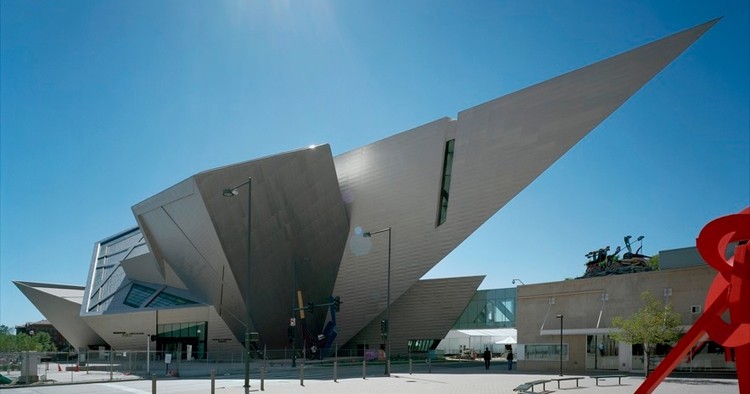
In the architecture world, few designers can claim to have a more clearly-defined style than Daniel Libeskind (born May 12, 1946). Much of Libeskind's work is instantly recognizable for its angular forms, intersecting planes, and frequent use of diagonally-sliced windows, a style that he has used to great effect in museums and memorials—but which he has equally adapted to conference centers, skyscrapers, and shopping malls.
In PLANE-SITE's latest video from their Time-Space-Existence series, Daniel Libeskind describes his work in relation to Shakespeare's quote that "time is out of joint." Weaving in his philosophy regarding time, memory and architecture, Libeskind discusses his seminal works such as the Jewish Museum Berlin and the Ground Zero master plan. These ideas will be transferred to his new project named Facing Gaia, an architectural sculpture to be located in Giardini Marinaressa, which explores the connections between climate, time, space and existence.






















_Doublespace.jpg?1523414942&format=webp&width=230&height=230&crop=true)
.jpg?1523415119&format=webp&width=230&height=230&crop=true)
_Georges_de_Kinder.jpg?1523414986&format=webp&width=230&height=230&crop=true)
_Studio_Libeskind.jpg?1523414813&format=webp&width=230&height=230&crop=true)
_Doublespace.jpg?1523414942)








.jpg?1489053378&format=webp&width=230&height=230&crop=true)