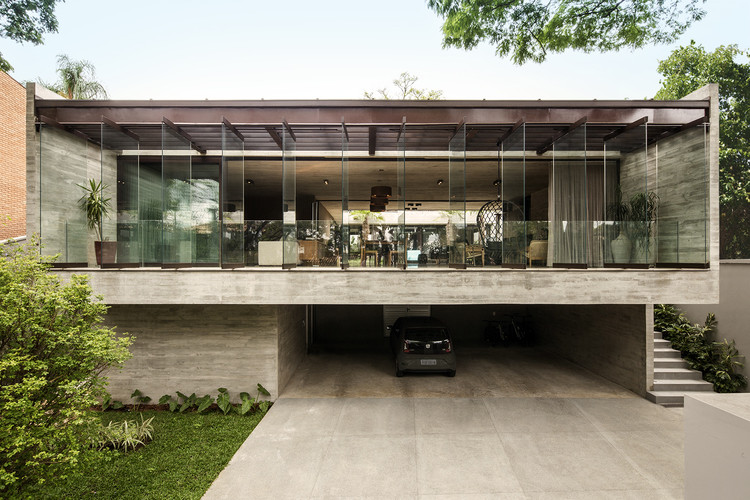
We’ve all seen them: cringeworthy designs and abysmal construction fails. For architects and designers, it's difficult not to hone in on the details of every space we encounter. And, it’s even harder not to laugh at doors incapable of opening, plaster jobs that could have been completed by a 4-year old, and an overly liberal use of caulking to solve any construction mishap.
Inspired by this guilty pleasure, the Instagram account of “Certified Caulk Installer” Trevor Lahey aka greaseball1987 has collected the best of the worst home improvement disasters for your viewing pleasure. See more of Lahey's plethora of hilarious tragedies below.
Building and growing are two actions that should be considered more often than not at the same time. This is how the 2017 "Build to Grow" social housing competition, looked to establish bases that sustain a flexible way of living. The event took place in the Belén district in the city of Iquitos, on 3.7 hectares plot of land. The project that received first place proposed to locate 120 incremental homes, that alternatively allowed users to modify and expand it according to their needs and economic means. In short, a home with a solid nucleus formed by a structure that supports changing activities.
The Harvard Graduate School of Design has announced the appointment of Mark Lee as Chair of the university’s Department of Architecture. Having taught at Harvard GSD since 2013, Lee is also a principal and founding partner at Johnston Marklee Architects. He will succeed K. Michael Hays, who has taught at Harvard GSD since 1998.
Lee has previously held the position of Frank Gehry Chair at the Daniels Faculty of Architecture, Landscape, and Design at the University of Toronto, as well as Cullinan Guest Professor at Rice University School of Architecture. He has also been a design critic at Harvard GSD since 2013, where he himself earned a Masters in Architecture in 1995.
https://www.archdaily.com/891227/harvard-gsd-appoints-mark-lee-as-chair-of-department-of-architectureNiall Patrick Walsh
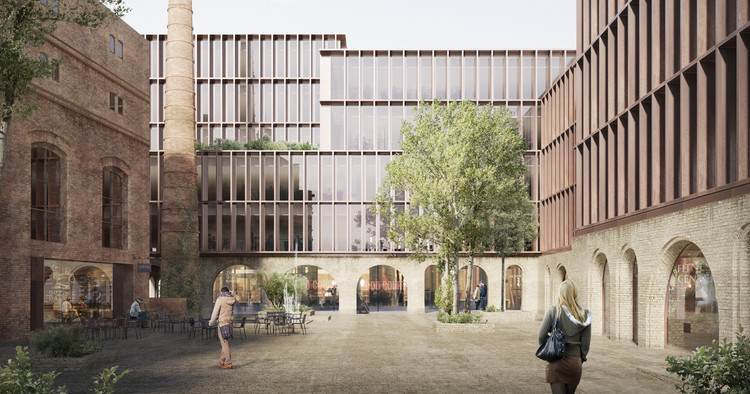
The proposal for the 120,000-square-foot (11,500-square-meter) district manifests as a vibrant, public-orientated program, including a gym, child care center, café, food court, and spa. A series of courtyards and plazas are laced throughout the scheme, connecting old and new in a “timeless, classic appearance that is also uniquely contemporary.” The design took 2nd place in a competition in which no first place winner was selected, as the jury felt that no entry fully met the competition criteria. As the highest-placing entry, the competition organizers have committed to begin negotiations with Schmidt Hammer Lassen to refine the design.
London-based Grimshaw Architects has been selected to serve as Lead Architect for the design of Newark Liberty International Airport’s new Terminal One building in New Jersey. Grimshaw will work in partnership with STV to design the $1.41 billion terminal, featuring 1 million square feet (93,000 square meters) of space and 33 gates spread across a two-level T-shaped building. The scheme represents the largest transportationinfrastructure design-build project in New Jersey’s state history.
https://www.archdaily.com/891218/grimshaw-to-lead-design-of-newark-liberty-international-airport-terminalNiall Patrick Walsh
3D printing – also known as additive manufacturing – turns digital 3D models into solid objects by building them up in layers. The technology was first invented in the 1980s and has since found its way into our everyday life – and in architecture and interior design. Architecture firm DUS has a vast expertise in architectural 3D printing and is now applying its expertise to interiors and retail spaces.
“3D printing is an ideal technique to tailor-produce to a space or a brand,” says Inara Nevskaya, head designer at DUS. “We can link a furniture’s functionality with unique form features to create statement pieces, special focal points that frame new experiences for the consumer in the retail landscape.”
https://www.archdaily.com/890494/interior-design-and-3d-printing-giving-unique-forms-to-functional-spacesLidija Grozdanic for Archipreneur.com




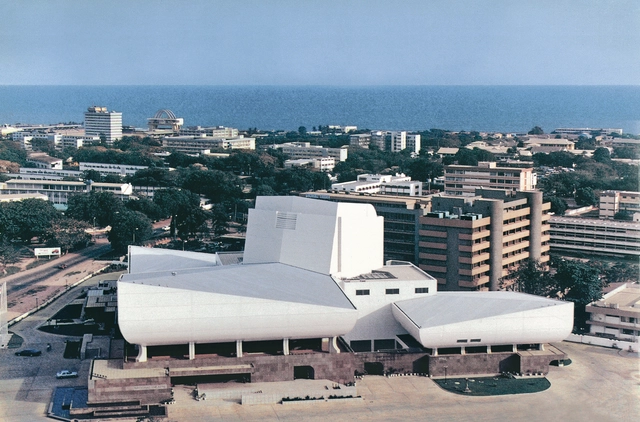


.jpg?1521656165 "Courtesy of CCTN Architectural Design")

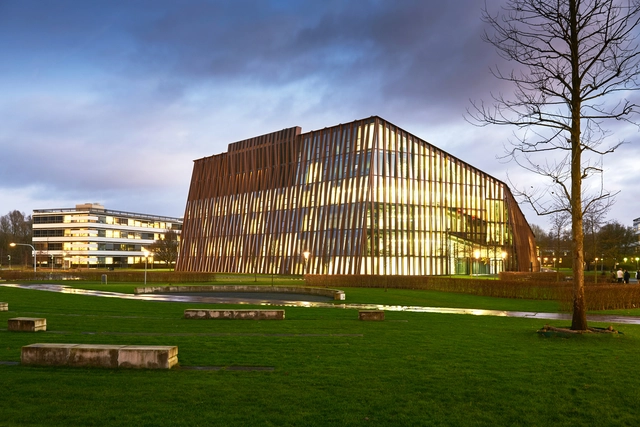













.jpg?1515431278 "© Manuel Sá")
.jpg?1515431235 "© Manuel Sá")
.jpg?1515431080 "© Manuel Sá")
.jpg?1515431102 "© Manuel Sá")