Keshia Badalge

-

BROWSE ALL FROM THIS AUTHOR HERE

What Is Architecture Without Clients And Money? ArchDaily Editors Talk

Subscriber Access | 

In January, we covered an interview with Bjarke Ingels where he spoke of the role that clients play in architecture. In the article, Bjarlke Ingels mentioned that "In the world of architecture there are many more things beyond an architect's control than are under his command." The post started a debate among our readers as well as our editors at ArchDaily. Many readers bemoaned the demise of architecture at the hands of clients with big pockets. Some of us talked about how IT giants not only control our digital world, they are now also encroaching upon our urban environments. Several readers blamed big clients for creating starchitects who build grand buildings and, as they allege, cause an "infantalisation" of architecture in the process.

Here at ArchDaily, our editors got to thinking: Can architecture exist without a client? Or is it just a service, a capitalistic exchange? And really, are clients such a bad thing for the field?

We talk to some of our editors to get their perspective.
Architecture as Experiential Marketing: The Surprisingly Bright Vantablack Olympic Pavilion in PyeongChang

Subscriber Access | 

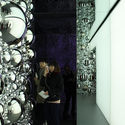
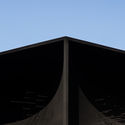
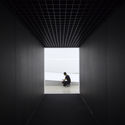
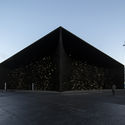
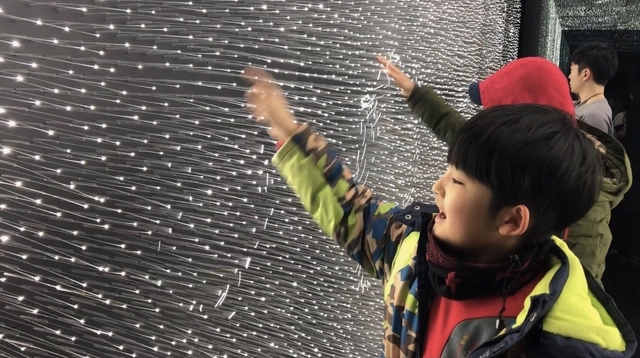
Much has been said about the darkest building in the world, designed by Asif Khan, for Hyundai's Winter Olympic pavilion this year. What’s more surprising about this blackest-of-black pavilion is really how bright it is inside. The imposing facade of Vantablack VBx2 encloses a series of radiant, playful rooms and the entire project is part of a joint effort by Hyundai and Asif Khan to use architecture and design principles to bring delight to Olympic visitors in Pyeongchang this year.

Architecture as Experiential Marketing: The Surprisingly Bright Vantablack Olympic Pavilion in PyeongChang - Image 5 of 4Architecture as Experiential Marketing: The Surprisingly Bright Vantablack Olympic Pavilion in PyeongChang - Image 13 of 4Architecture as Experiential Marketing: The Surprisingly Bright Vantablack Olympic Pavilion in PyeongChang - Image 20 of 4Architecture as Experiential Marketing: The Surprisingly Bright Vantablack Olympic Pavilion in PyeongChang - Image 23 of 4Architecture as Experiential Marketing: The Surprisingly Bright Vantablack Olympic Pavilion in PyeongChang - More Images+ 34

Sir David Adjaye Selects Mariam Kamara As His Protégée For Rolex Arts Initiative

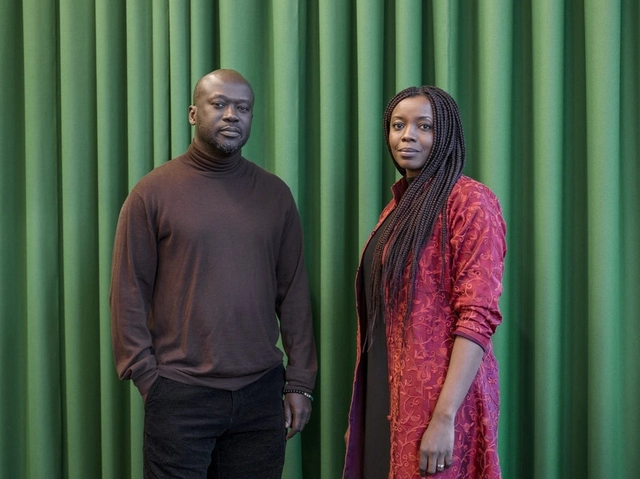
Rolex has announced four new mentors and protégés for the prestigious Rolex Arts Initiative. In the architecture category, Sir David Adjaye was selected as mentor and Niger-based architect Mariam Kamara will be his protégée in 2018-2019.

Asif Khan Unveils 'Darkest Building on Earth' For Winter Olympics Pavilion

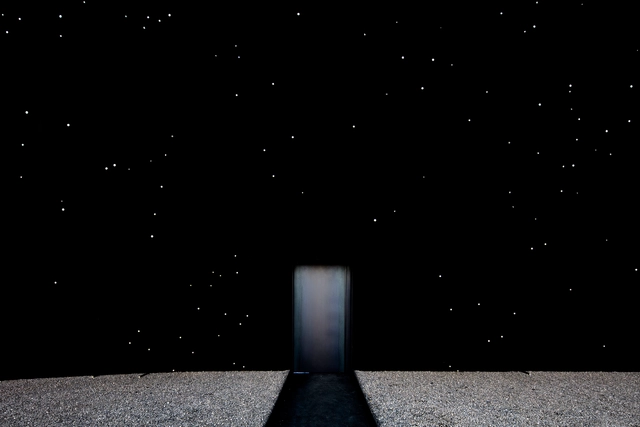
Asif Khan's Vantablack pavilion, the world's first super-black building, will open at the PyeongChang 2018 Opening Ceremony on 9 February 2018.

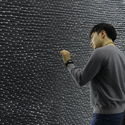
The Olympic pavilion is coated with Vantablack VBx2 carbon nanotubes and illuminated by thousands of tiny white light rods. These rods extend from the structure's parabolic super-black facade and create the illusion of a field of stars suspended in space. Looking at the building will be the closest experience to looking into space from a point on Earth.

Asif Khan Unveils 'Darkest Building on Earth' For Winter Olympics Pavilion - Image 1 of 4Asif Khan Unveils 'Darkest Building on Earth' For Winter Olympics Pavilion - Image 2 of 4Asif Khan Unveils 'Darkest Building on Earth' For Winter Olympics Pavilion - Image 3 of 4Asif Khan Unveils 'Darkest Building on Earth' For Winter Olympics Pavilion - Image 4 of 4Asif Khan Unveils 'Darkest Building on Earth' For Winter Olympics Pavilion - More Images+ 6

The 2018 Winter Olympics Stadium That Cost $100 Million to Build, Will Only Be Used 4 Times, and Is Roofless

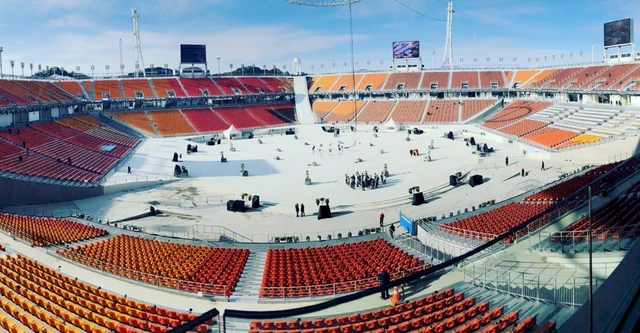
Traditionally, Winter Olympics stadiums have stuck to a design that obscures the sky and protects against the elements in order to keep the guests warm. This year, the Pyeongchang 2018 Winter Olympics organizing team wanted to try something different. Guests will watch the three-hour opening ceremony at the PyeongChang Olympic Main Stadium – and it will be roofless.

Pyeongchang, located not too far from the border of North Korea, is notorious for one of the worst winters in the country. Temperatures in PyeongChang are forecast to reach minus 14 deg C (about 7 deg F), partly due to the powerful, biting winds that barrel down from Siberia and the Manchurian plain. This may be the coldest Olympics since the 1994 Olympics in Lillehammer, Norway. And because of the curious roofless architecture, the roughly 35,000 spectators will be completely exposed.

Reebok Teams Up With Gensler to Turn Gas Stations Into Fitness Hubs

Subscriber Access | 

The gas station does not usually catch one’s fancy. It is a ubiquitous building, one built primarily for function instead of for pleasure or community. We see them all the time but barely give them a second glance unless the need arises – and then, we get our fuel, and we are out of the station in minutes.  

With the smell of gasoline and the usual convenience store spread, these service stations do not exude any particular sense of wellness. Neither have their flat, perennial structures captured the imagination of architects – until now. 

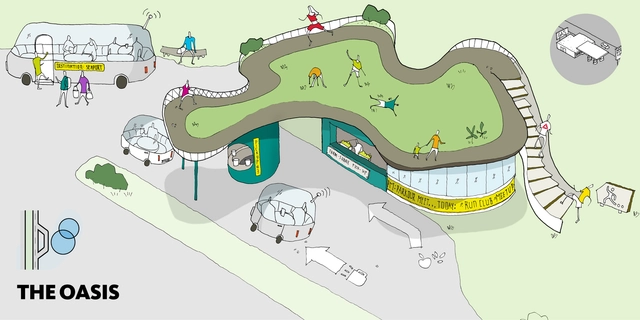
Reebok and Gensler are the first to catch on to the enormous potential of the common gas station. These buildings sit on prime real-estate all over the country, from highways to local streets. In their new collaborative project, “Get Pumped,” the global architecture firm and the fitness brand are coming up with a plan to re-do the gas station as we know it.