Romullo Baratto is an architect with a PhD from FAUUSP, member of the curatorial team for the 11th São Paulo Architecture Biennial in 2017. Former Managing Editor of ArchDaily Brasil, he guided the platform to win the FNA Award, the first media outlet to receive this honor. In 2023, he became Project Manager for ArchDaily Global, leading initiatives like the Building of the Year Awards and ArchDaily New Practices. Combining academic and professional experience, he communicates architecture through texts, interviews, lectures, curatorship, and photography. Follow him on Instagram: @romullobf
The city has been explored as a theme in movies since the early days of cinema, appearing as both a setting and a protagonist in films by renowned directors like Fritz Lang, Jean-Luc Godard, François Truffaut, Roberto Rossellini and Quentin Tarantino. In one of the first films ever made, Arrival of a Train at La Ciotat (1925), the Lumière brothers already show the modern urban environment as an important element and part of the contextualization.
Yet the cinema and the city have an extensive relationship, each influencing one another. The influence of architecture (especially modern) in the settings and cities of films can be seen in movies like Jacques Tati’s My Uncle (1958) and Ridley Scott’s Blade Runner (1982), while the influence of cinema in architecture and buildings can be seen in the work of architects like Rem Koolhaas, Jean Nouvel and Bernard Tschumi.
We have compiled a list of 10 films in which the city plays a much more important role than just the mere setting, acting as a true protagonist of the plot.
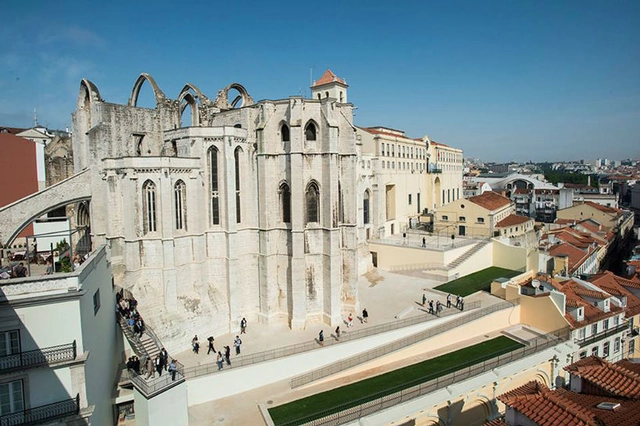
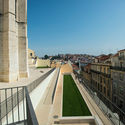
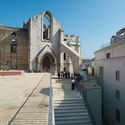
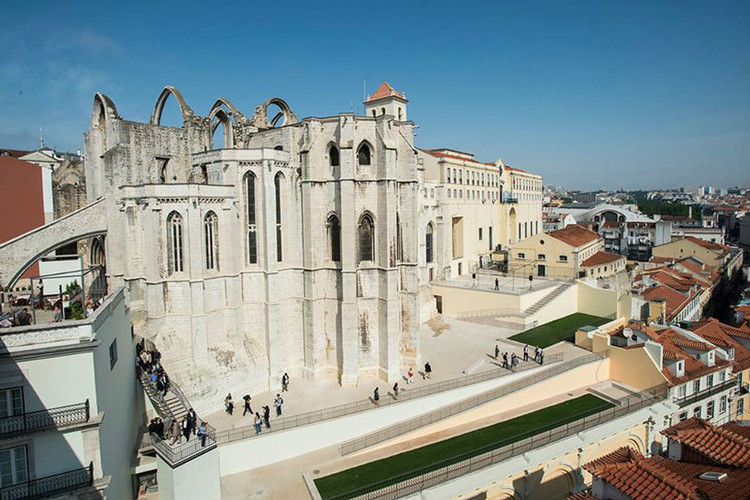
Due to a fire in 1988, the Chiado district of Lisbon had many of its buildings damaged or partially destroyed by the flames, and an intense restoration and recovery project led by Álvaro Siza has been going on for over a decade.
Among the strategies employed by the Portuguese architect (and winner of the 1989 Pritzker Prize) is the reorganization of routes and walkways, creating elevated walkways to facilitate access to the area and the flow of locals and visitors. According to the Municipal Council of Lisbon, Siza has recently completed the connection between one of the courtyards of the Carmo Convent (Patio B) to the Largo do Carmo square and the Carmo Terraces with a pedestrian path.
Founded by Harvard and MIT, edX offers more than 800 free, online courses as well as certificates from top universities around the world, including Harvard, MIT and UC Berkeley. The courses cover everything from literature to poetry, medicine, biology, urban planning, engineering, history and architecture.
Taught mostly in English, the courses have different weekly requirements, and generally require participants to be online at designated times of the day. There are also classes offered in other languages like Chinese, French, Spanish and Portuguese. They also offer certificates that can be purchased at the end of the course, costing between $50-$70.
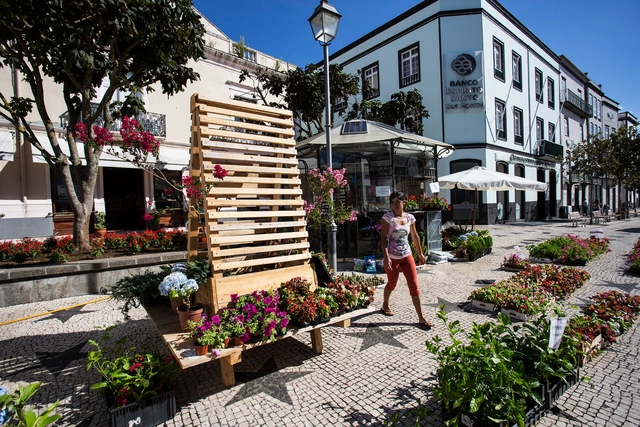
A volcanic island in the middle of the Atlantic Ocean with 140,000 inhabitants has become a stage for artistic experimentation in the last four years through the Urban Art Festival “Walk & Talk”.
The open-air festival takes place in Ponta Delgada, capital of the Archipelago of the Azores in Portugal, but the events are spread out in other areas of the São Miguel Isle as well.
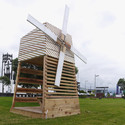
While well-known street artist murals characterized the first editions of the festival, the most recent ones gathered other artistic expressions, like dance, cinema, design and architecture, developing a multidisciplinary cultural event, which has put the island under the contemporary art radar.
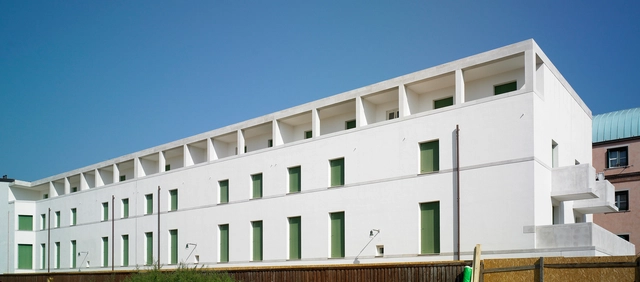
Portugal has unveiled the theme of its contribution to the 2016 Venice Biennale: “Neighborhood – Where Alvaro Meets Aldo.” Curated by Nuno Grande, a Portugese architect, teacher, critic, and curator, and Roberto Cremascoli, an Italian architect and longtime collaborator of Álvaro Siza Vieira, the exhibition will focus on the works of both Álvaro Siza and Aldo Rossi.
The Portuguese exhibition is unique in that it will be installed on Venice’s Giudecca island, where Siza’s 1985 social housing project Campo di Marte is located. Campo di Marte is part of a larger plan on the island, which includes designs by other architects such as Aldo Rossi, and was never fully completed.
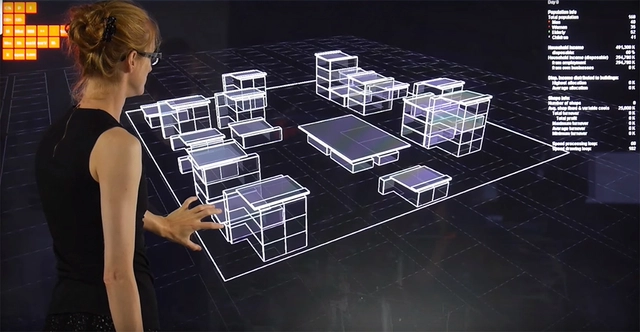
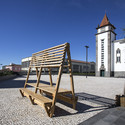
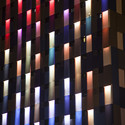
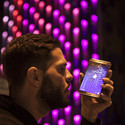
Part street furniture, part data visualization, Guto Requena’s “I am” installation in São Paulo invited passers-by to interact with the city and connect with one another. Observers were asked to sit on a bench and take a picture of themselves, while also selecting which of six emotions they were feeling at the time: love, joy, surprise, anger, fear or sadness.
Each emotion was associated with a color through which the photo was filtered before appearing on the main façade of the FIESP Building along Paulista Avenue. The images then faded into a graph to colorfully display the predominant emotions at the moment.
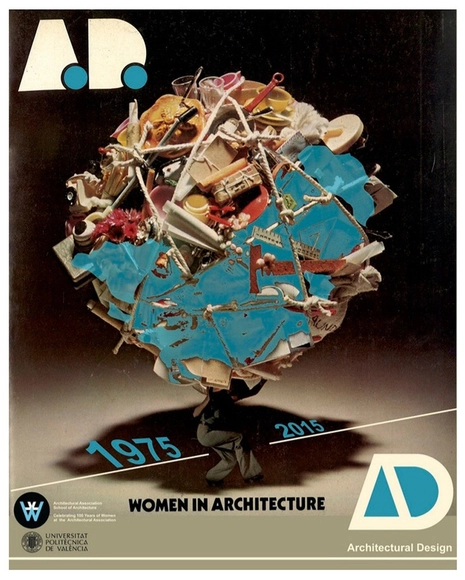
In August 1975, Architectural Design magazine published a special edition about Women in Architecture. At the time, director Monica Pidgeon sent letters to 100 architects asking what women can contribute to architecture that men can’t (and vice-versa), as well as the advantages and disadvantages of being a woman in the profession.
Architect, illustrator and cofounder of the Miniatura project, Bruna Canepahas shared with us a stunning collection of her illustrations and collages, which offer a fresh gaze onto one of architecture’s most common tools: the drawing. Beyond depicting examples of unreal architecture, her works present architecture that replaces firmitas, utilitas and venustas for complexity, wonder and irony.
From extrusions and explosions of familiar typologies to surreal and sterile atmospheres of empty spaces, we suggest three subcategories to frame Bruna’s illustrations as shown below: Houses, Cubics, and Displacements.
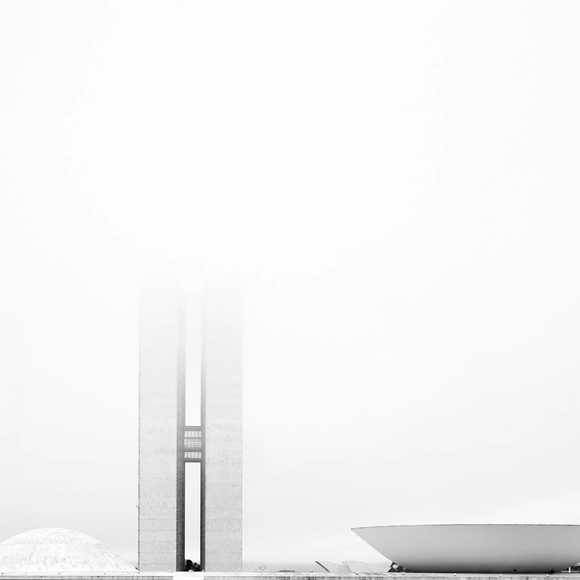
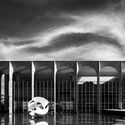
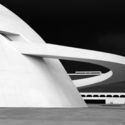
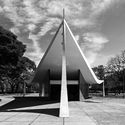
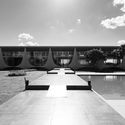
Architecture photographer Haruo Mikami has shared with us a series of black and white photographs of some of Oscar Niemeyer’s most important works in Brasília. From the Cathedral of Brasília to the Alvorada Palace and the National Congress, see some of the Brazilian architect’s most iconic works after the break.
Drone Brasília has shared with us a brief video filmed by a drone that gives a bird’s eye view of a signature feature of Brasília -- the “tesourinhas,” the so-called cloverleaf interchange that the city’s highways form.
In just thirty seconds the video shows the scale of the space, marked by cars traveling through the wide avenues, which themselves are projected onto an expansive green plane.
Constructed on the banks of the Tagus River, the first building in Europe by the Brazilian Pritzker Prize winner was surrounded by controversy during its construction, and today surprise visitors from all over, housing the world's largest collection of carriages. In the interview given at his own office, Mendes da Rocha talks about the specificity of the area, his approach to the historical context and memory related to coaches, and his concise adaptations of the extensive program to the complexity of the surroundings.
The ruestungsschmie.de architectural collective has shared with us their latest video mapping project on the façade of the Karlsruhe Palace in Karlsruhe, Germany. Designed to celebrate the city’s 300-year anniversary, the projection illuminates all 300 meters of the building’s façade.
The Karlsruhe Palace is the architectural and urban center of the city, from which 32 streets stem out, structuring the urban design of Karlsruhe. This unique city design served as part of the inspiration behind the audiovisual work. The project was created in partnership with Sound Selektor, who composed the soundtrack using only noises recorded from inside the castle, including doors, switches, stairs and the sounds of specific exhibits.
The route is organized by the themes that have shaped CVDB’s design in recent years, such as public space, transitional space, visual continuity and materiality. In this way, Building Pictures uses the themes to connect the different spaces featured in the video.
The first woman to receive the Pritzker Prize in 2004, Iraqi architect Zaha Hadid tells newspaper El País that she was fortunate as a child to have traveled with her parents and seen some of the world’s most impressive works of architecture and engineering feats.
Awed by the Mosque of Cordoba, Hadid says that the contrast between the darkness and the marble of the central church left a lasting impression, making this one of her favorite works to this day.
Internal and external images show the public interacting with the pavilion, while detail shots present the multitude of textures and materials that form the building. The juxtaposition of the moving images, along with Lívio Tragtenberg's strong soundtrack, transport the viewer to the Milan Expo and to the experience of walking on the organic surface.
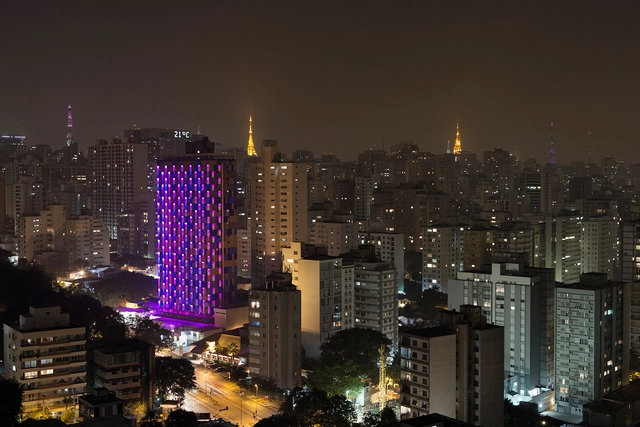
Estudio Guto Requena has designed a new façade, which also doubles as an urban art intervention, for the Hotel WZ Jardins in São Paulo. Dubbed “The Light Creature,” the 30-story facade is visible both during the day and at night, changing to interact with its surroundings and responding to stimuli like air quality and sound. During the day the façade has a pixilated blue, gray and gold skin that serves as “a visual reflection of the soundscape of São Paulo’s iconic Avenida Rebouças,” and at night it is illuminated by interactive light patterns.
Brazilian photographer Joana França first became captivated with capturing architectural form when she started taking pictures at the age of 15. A graduate of the University of Brasilia with a degree in architecture, França has a keen eye for the city and built work.
The Brazilian capital -- where she was born -- has become one of her main objects of exploration, and she photographed the city for the Guide to Oscar Niemeyer’s Works – Brasilia 50 Years.
Since 2012, she has worked to document art exhibitions in Brazil, publishing, for example, “Peasant Da Vincis” which highlighted exhibitions by the Chinese artist Cai Guo-Qiang in Brasilia, São Paulo and Rio de Janeiro in 2013.
Enjoy an interview with França as well as a selection of her photographs after the break.
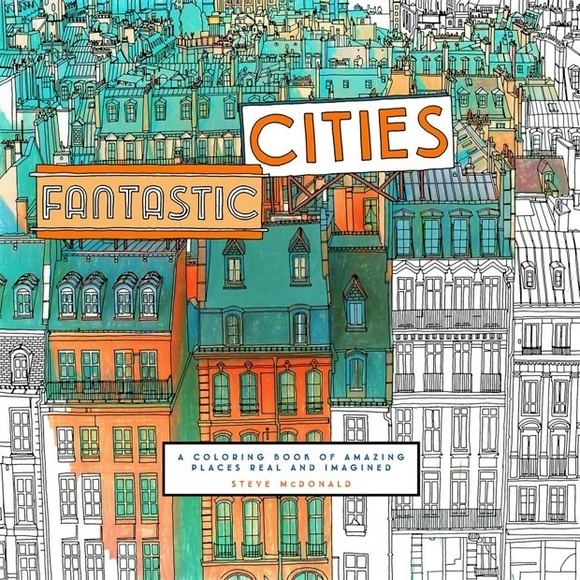
Canadian artist Steve McDonald has released "Fantastic Cities," an illustrated coloring book featuring 60 cities from around the world. From Paris to New York, Tokyo to Istanbul, the illustrations will take any architect or urban planner back to childhood times.
The book, with 48 full-view pages of real and imaginary places, is on sale Amazon and Chronicle Books. Take a look inside, after the break.