Ole Storjohann

Ole Storjohann was born in northern Germany and trained as an architect at the Royal Danish Academy of Fine Arts Schools of Architecture, Design and Conservation in Copenhagen, DK. After employment at Effekt in Copenhagen and Herzog de Meuron in Basel he is now working for over a decade at Cobe Architects, where he has the role of Project & Sustainability Lead. In his career, Ole has gained wide professional experience in architecture, public realm projects, and urban planning. He has a deep curiosity for the urban environments that surround us and to understand why things are as they are and how they could be different. At Cobe, his role focuses on translating complex requirements and sustainable strategies into clear visions and concrete physical form. Among others, Ole was design lead on Adidas HALFTIME in Herzogenaurach, DE. Recently, he has been project lead on the “Museum for Furniture Studies” in Älmhult, Sweden, and the “Kasvuhoone” innovation hub underway in the Krulli steelworks, Tallinn, EE. These projects combine some of his core interests: timber construction and adaptive reuse.

BROWSE ALL FROM THIS AUTHOR HERE
↓

Stories as a Resource: How Narrative Design Builds Resilience

Subscriber Access | 
Audio available

This article is part of "Thresholds", a special edition printed newspaper by Cobe Notes x ArchDaily.

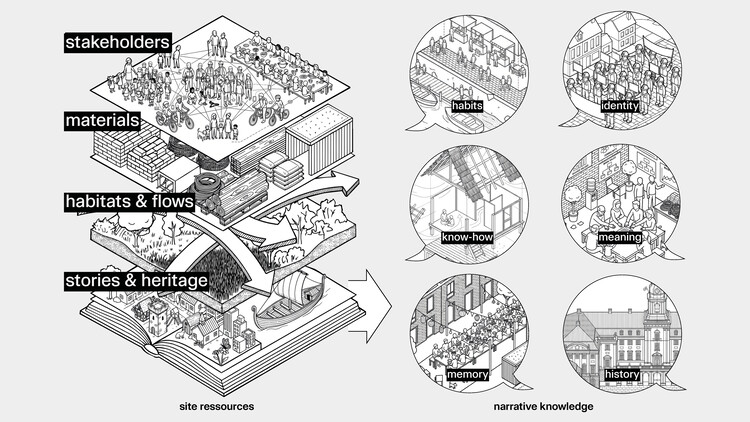
There are two unique things about being human that made us survive the early years and spread over the whole planet: sweating and storytelling. Sweating helps cool down the body when running long distances. Stories help us collaborate in big numbers and share knowledge across groups and generations. As architects, we still rely on the same tools to make visions become reality.

As professor of stories Angus Fletcher points out in his book Primal Intelligence, there is a common misconception about the role of stories: when our "rational" brain has developed an idea that we fail to explain to a wider group, we pack it into a story, and suddenly everybody understands. Fletcher argues that it actually works the other way around: ideas come from stories, our brain works in stories, and stories form reality. Architects have a derogatory term for turning that process the wrong side up: "post-rationalisation", for example when diagrams are made to explain a design that is already decided.
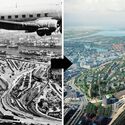
Stories as a Resource: How Narrative Design Builds Resilience - Image 1 of 4Stories as a Resource: How Narrative Design Builds Resilience - Image 2 of 4Stories as a Resource: How Narrative Design Builds Resilience - Image 3 of 4Stories as a Resource: How Narrative Design Builds Resilience - Image 4 of 4Stories as a Resource: How Narrative Design Builds Resilience - More Images