Architect, urbanist, and Content Editor at ArchDaily, covering news and developments in architecture and the built environment. Editorial work focuses on the Gulf region and the Middle East, exploring contemporary regional architectural languages and their relationship to local contexts.
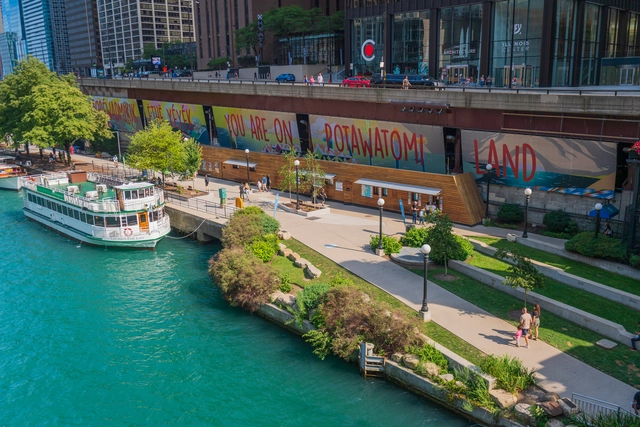
The Chicago Architecture Biennial has unveiled a phased opening plan for its fifth edition, CAB 5: This is a Rehearsal. The inauguration of CAB 5 will be on September 21, 2023, with installations and programs held all over city sites. This will build up to a citywide opening celebration on November 1st when all exhibitions will be unveiled at the Chicago Cultural Center and the Graham Foundation. CAB 5 is curated by the collective Floating Museum, a group of artists, designers, poets, and educators focused on building connections between art, community, architecture, infrastructure, and public institutions.
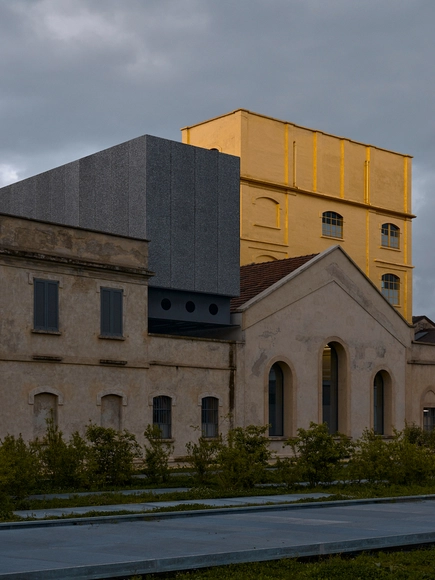
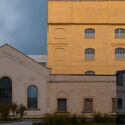
In 2018, OMA opened the Fondazione Prada in Milan, Italy, housed within a former gin distillery established in 1910. The project which includes a statement facade cladded in 24-carat gold leaf and camouflaged mirrors, comprises the renovation of seven buildings in the Largo Isarco industrial complex on Milan’s southern outskirts, making the foundation neither a preservation project nor a new architecture. Recently, photographer Bahaa Ghoussainy captured the infamous structure in his new architectural photo series.
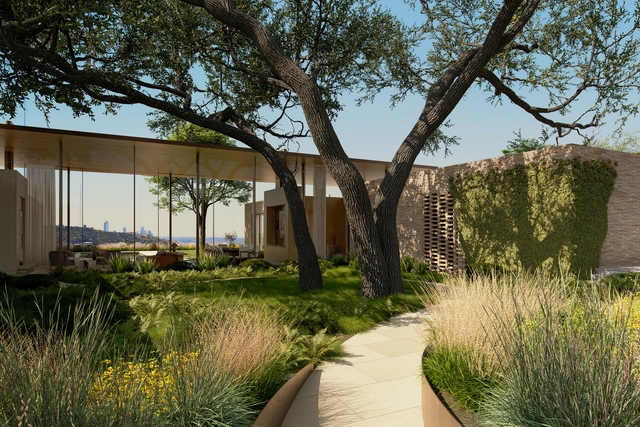
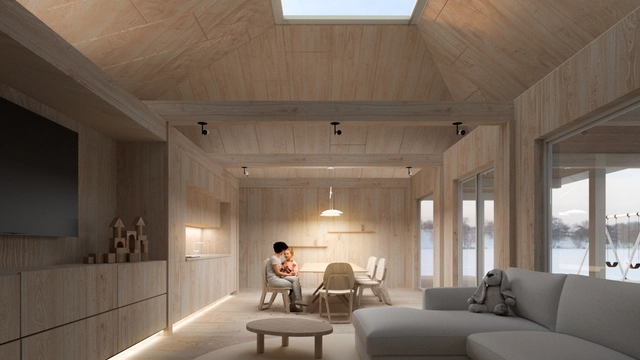
It is well known that exposure to more green spaces and cleaner air has profound impacts on human health and psychology. This kind of exposure has been linked to reduced stress, improved cognitive function, and enhanced creativity. These sanctuaries offer relief, allowing the human to reconnect with the natural world. These residential homes are often a refuge from busy city life, ranging from vacation homes to retirement homes. Moreover, as the global call for sustainable practices becomes more pressing, the role of natural elements in architecture becomes imperative.
Neri&Hu presented “Liminality”, a multimedia exhibition selected by Lesley Lokko, at the International Architecture Exhibition in Venice. The exhibition took place in the Dangerous Liaisons section of La Biennale di Venezia at the Arsenale. In response to Lokko’s curatorial statement, Neri&Hu’s display explored the concept of liminality, the “zone” between design practice and theoretical exploration. The display consisted of three adaptive reuse projects that represent the practice’s research in “Reflective Nostalgia, Recasting Vernacular, and Ruinophilia/Future Artifact.”
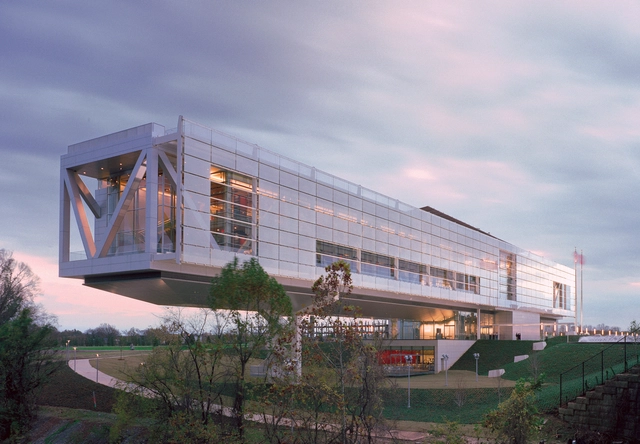
The Clinton Foundation in Little Rock, Arkansas, has just announced a major expansion of the Clinton Presidential Center. The expansion will be designed by Studio Gang, with the aim to further the Center’s mission to engage and educate people about President Clinton’s values. Moreover, the project expansion will be further detailed in 2024, creating new essential programs in the development.
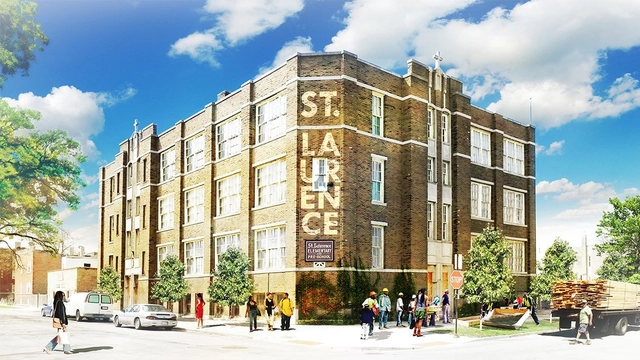
Rebuild Foundation, run by Artist Theaster Gates, is converting the St. Laurence Elementary School into a new 40,000 sq foot arts hub on Chicago’s South Side. The formerly vacant elementary school in Chicago’s local St. Laurence neighborhood has been reimagined to redeem indoor and outdoor spaces, making it a cultural hub. Set to open in 2024, the building's adaptive reuse expanded the program and the landmark into a place of exploration, entrepreneurship, and creative education.
Drawing inspiration from the visual style of acclaimed director Wes Anderson, known for films like "Asteroid City" and “The Grand Budapest Hotel,” this new architectural film chronicles the homeland and landscape of Singapore. Directed by Kevin Siyuan, this is the second volume of “A Wes Anderson-ish Singapore” released. Moreover, the 20-minute documentary will be previewed on Singapore’s National Day and focuses on the urban planning, architecture, parks, and the people of Singapore.
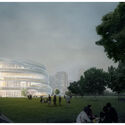
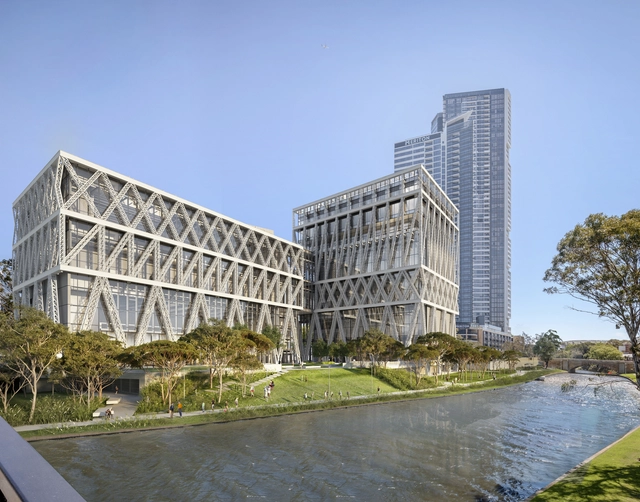
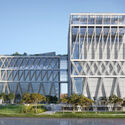
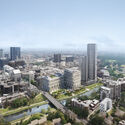
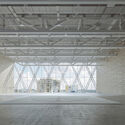
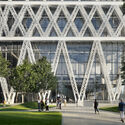
Powerhouse Parramata, Sydney’s new largest museum, has been announced to open in early 2025. The museum group overseeing the project sits at the intersection of the arts, design, science, and technology industries. Designed by Moreau Kusunoki in collaboration with local practice Genton, the museum will be located on the south bank of the Parramatta River in Western Sydney, acting as the largest cultural infrastructure project in the Australian capital city since the Sydney Opera House.
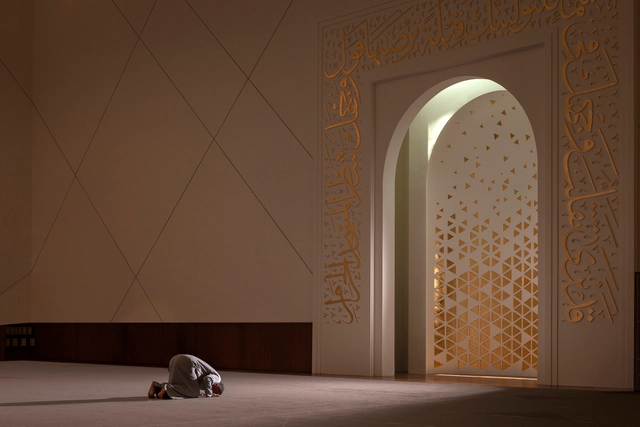
The Islamic Architecture style has a diverse history, spanning over a millennium, stretching from Western Africa to Europe to Eastern Asia. Beginning in early 7th century Arabia, this form of architecture emerged with the rise of the Islamic civilization. In fact, Al Masjid Al Nabawi, the first Mosque to ever be constructed was built in 622, in Medina, Saudi Arabia. Moreover, early Islamic architecture was influenced by the pre-existing styles around the region, such as Roman, Byzantine, and Persian qualities.
Today, Islamic architecture is known for its acute attention to detail, craftsmanship, and its spiritual symbolism. Furthermore, as color plays an essential role in architecture, influencing the emotional experience of the space, different colors have been utilized over the years in Islamic Architecture to evoke certain meanings. In Islamic Architecture, colors hold significant spiritual symbolism, reflecting the values and beliefs of the Islamic faith. Four core colors, Green, Blue, Gold, and White, are each used to convey various cultural, religious, and symbolic meanings.
Read on to discover the use of these colors in various Islamic architectural icons around the world.
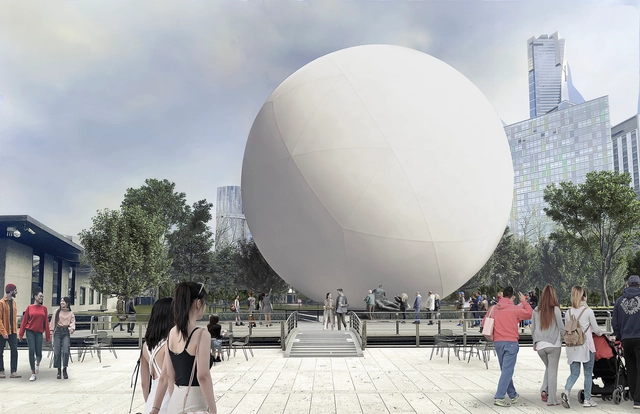
The National Gallery of Victoria 2023 Architecture Commission has chosen a colossal inflatable sphere, named (This is) Air, as its centerpiece. This unique creation is a collaboration between architect Nic Brunsdon and ENESS, aiming to bring the invisible into view by highlighting a fundamental aspect of life: breathing air.
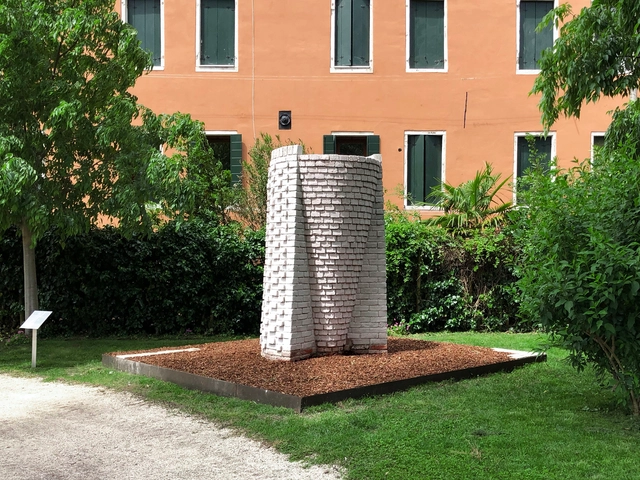
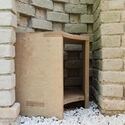
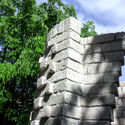
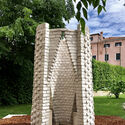
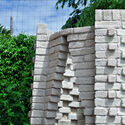
Urban Radicals presented a temporary pavilion “A Brick for Venice” as part of the European Cultural Center’s “Time Space Existence program during the same time as the 2023 Venice Architecture Biennale. The entirety of the brick pavilion was made with mud from the city’s canals. Furthermore, “A Brick for Venice” is the first proof of concept for the team’s novel waste-based construction product.
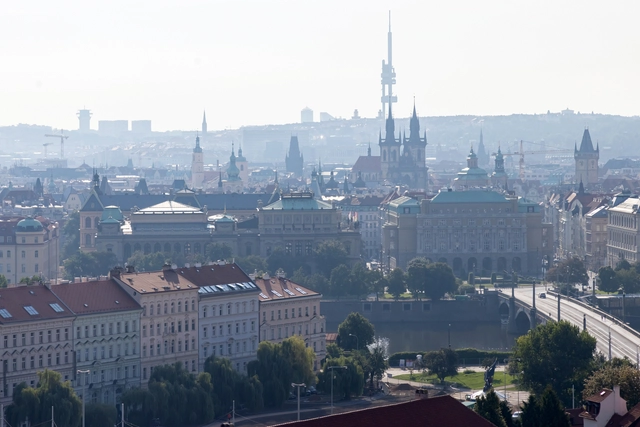
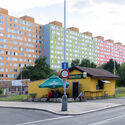
In the summer of 2022, Iwan Baan completed an urban pilgrimage through the unique streets of Prague. For 7 days, the photographer photographed the city on foot, on a bike, and from a helicopter, capturing the essence of the urban fabric, from the center to the periphery and the landscape along the Vltava River. Presenting the city as a raw and often neglected entity, Iwan Baan showcased his exhibition “Iwan Baan: Prague Diary” this year at CAMP.
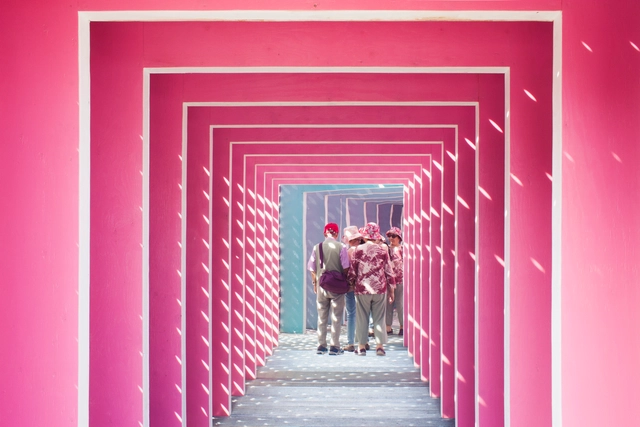
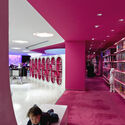
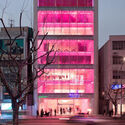
Pantone 219C, or Barbie Pink, is a vibrant and bright magenta pink shade synonymous with the Barbie brand. Since the inception of the Barbie doll in 1959 by a company named Mattel, the doll has slowly trademarked this specific shade of pink. As Barbie’s popularity grew, the global association with the color pink did, too. From pink accessories, pink houses, pink haircuts, and pink packaging, there is no Barbie without pink. Moreover, as the doll became a popular cultural icon, her iconic shade of pink started to influence various industries beyond just toy manufacturing, including fashion, beauty, and interior design.
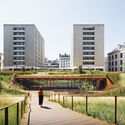
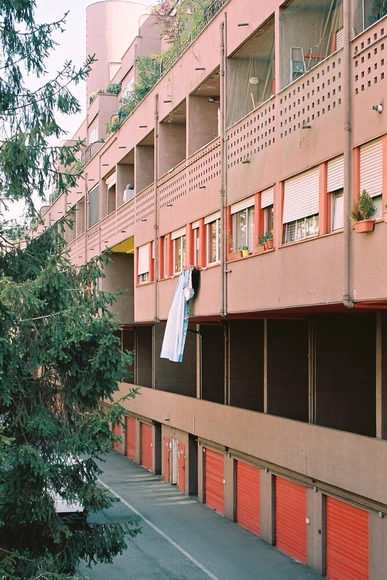
In the aftermath of the Second World War, a drastic housing shortage spread across Europe, and Milan was no exception. Various plans and solutions were conceived to address this crisis, outlining satellite communities for the city to accommodate between 50,000 and 130,000 residents each. The first of these communities began construction in 1946, just one year after the war's end: the Gallaratese project.
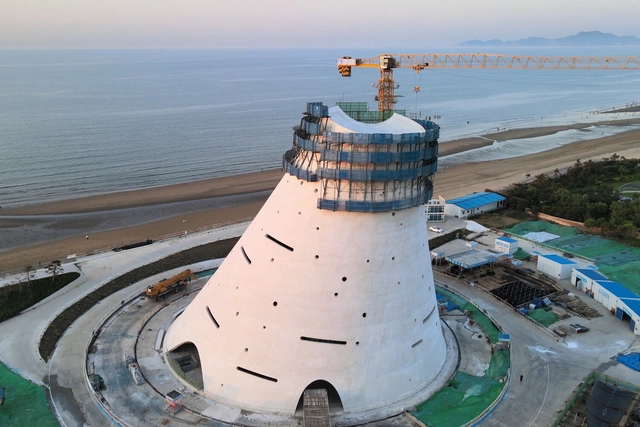
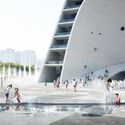
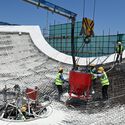
OPEN Architecture’s Sun Tower, designed as a landmark for the Chinese coastal city of Yantai, topped out last month. On the summer solstice day, the 50-meter-tall structure reached its peak height. The landmark is expected to be open to the public in 2024. Acting as a cultural placeholder, the building reframes the typical understanding of "design with nature."