Designer (Architecture and Interior), founding partner of YY Projects. Lecturer at the University of Hong Kong and the Technological and Higher Education Institute of Hong Kong. Holds a M.Arch from Harvard University and a B.A. (Arch) from UC Berkeley. Previously in Brooklyn, currently based in Hong Kong.
Architectural heritage is not only what a building was, but what itcontinues to become: a long process of building, rebuilding, and re-occupying over time. Where opportunities allow, this continuity produces a layered condition—one in which visitors can witness, experience, and feel the gradual shifting of a building's fabric, materiality, spatial order, and patterns of use, and occasionally even participate in that transformation.
Yet many projects—particularly those driven primarily by commercial imperatives—do not choose to value, or even to recognize, this slower work of adaptive reuse and heritage continuation. Developments governed by a numbers-only logic often opt for the easier path of demolition and rebuild: maximizing plot ratio, GFA, and rentable area with the efficiency of a clean slate. And still, every now and then, an opportunity surfaces that allows us to see—and to enjoy—the city's process of architectural "heritaging" in real time.
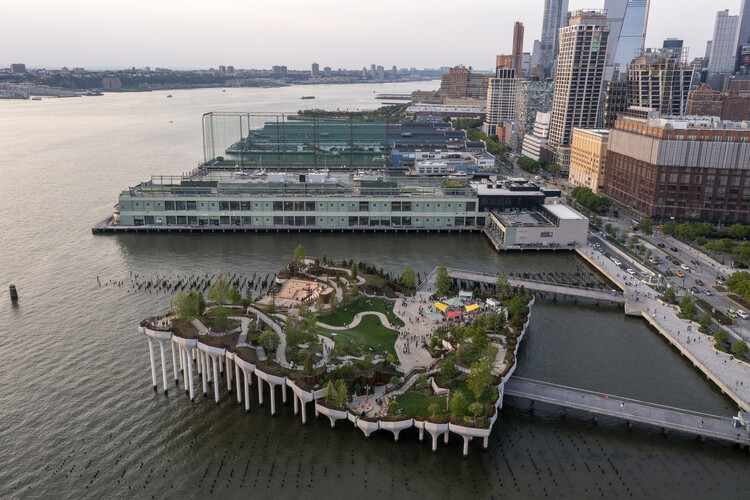
Coastal development in major cities has long been a terrain of opportunity and contention—shaped at once by the pursuit of capital (premium views, scarce land, and the promise of reclamation), by civic demands for public access and collective waterfront life, and by contemporary aspirations for sustainability and place-defining urban identity. Precisely because these agendas rarely align, extracting the full potential of waterfront sites is never straightforward.
Yet in New York City and Hong Kong, we can trace each city's ambitions—despite differing strategies, priorities, and political logics—through a set of keystone projects that anchor their coastlines. Read together, these projects reveal not only what each city chooses to value, but also what it is willing to trade off in order to build at the edge.
This article is part of our new Opinion section, a format for argument-driven essays on critical questions shaping our field.
Traditionally, a museum visit is a calendared occasion with a clearly scripted sequence. Arrival is ceremonially marked—by grand stairs or thresholds, by ticketing and information desks, by an audio guide and a concise institutional preface about mission and history. That deliberate "special occasion" quality extends from how museums were long conceived: deliberately exceptional, tightly curated, and organized around a specific narrative arc. In this model, the museum assumes an authoritative voice—its knowledge deep, vetted, and to be respected rather than contested—while architecture and choreography reinforce a rather singular way of entering, learning, and remembering.
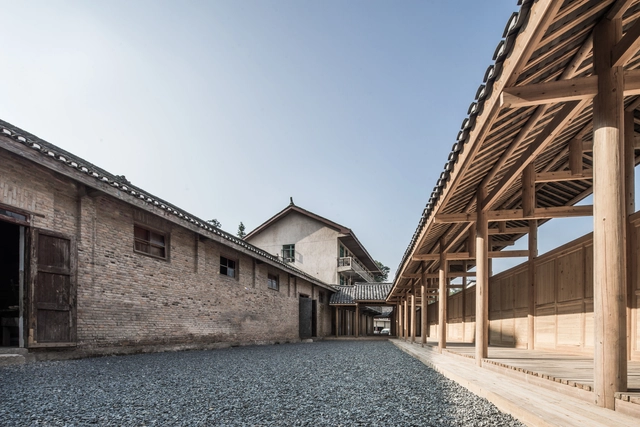
Lu Wenyu—co-founder of Amateur Architecture Studio with Pritzker laureate Wang Shu—has shaped many of the practice's most emblematic works across China, including the Ningbo History Museum and the Xiangshan Campus of the China Academy of Art in Hangzhou. Often working outside the spotlight, her leadership is unmistakable in the discipline of execution and the roles she has assumed: in 2003, together with Wang Shu, she established the Architecture Department at the China Academy of Art, where she also serves as Director of the Sustainable Construction Center. Her practice and teaching form a reciprocal loop: research conducted in studios at the China Academy of Art continually folds back into construction strategies on site, while lessons learned in the field return to the classroom as material intelligence rather than abstract theory.
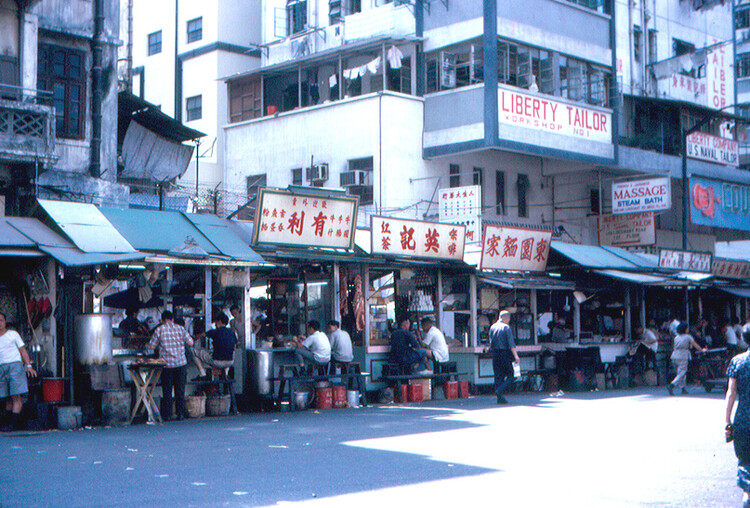
Across cities worldwide, architecture unfolds continuously at the scale of people and community—not only through new buildings, renovations, or monumental works. "Third spaces" are especially revealing. Consider the street-side culinary realm: how seating, serving, and lingering occupy the edge of the street often discloses a city's cultural codes and spatial habits. What forms of dining and inhabitation have emerged in response to local climate, regulation, and social custom—and how have they evolved over time?
In parts of Europe, for instance, al fresco in Italy and en terrasse in France name culturally specific ways of dining in public, drawing the meal into the urban field—attuned to weather, air, and the passive sociability of people-watching. Since COVID-19, New York City has similarly expanded outdoor dining, reflecting a community-driven desire to engage the streetscape while eating—an everyday, street-level "third place" within a dense metropolis.
Wonder Cabinet / AAU ANASTAS. Image Courtesy of AAU ANASTAS
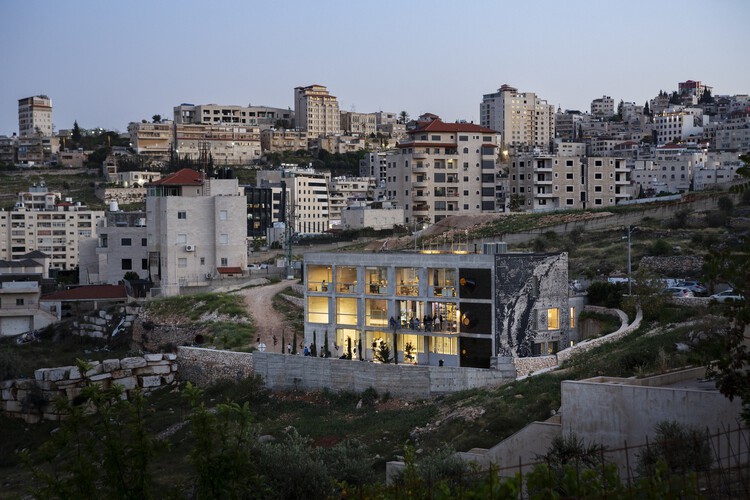
Among the 2025 Aga Khan Award winners is AAU Anastas and their project, Wonder Cabinet in Palestine, whose central aim is to serve as a haven for culture and creativity and a bridge between design and production. Beyond this meaningful project, AAU Anastas—working from offices in Bethlehem, Palestine, and Paris, France—has built a broad portfolio since 2015. Notable works include Dar Al Majous, a restoration in Bethlehem that challenges the boundary between domestic and public realms; the Tulkarm Courthouse (2015), one of their first projects that redefined civicness and social gathering on a prominent corner site in Tulkarm; and The Flat Vault, a commercial intervention that adds a juxtaposed stone vault to an existing monastery shop associated with a church built in the 12th century by the Crusaders.
Among these compelling works, Wonder Cabinet likely drew the jury's attention not only for its refined execution and layered spatial complexity, but also for how it operates as a socially generative platform—dissolving the boundary between social infrastructure and architecture. Conceived to support culture, creativity, design, and production, the building aspires to host architects, designers, chefs, artisans, and sound and visual artists, among others. In no small way, it advances the spirit articulated by the 2025 judges, who characterized this cycle as a year of fostering resilience and optimism through design, by demonstrating how architecture can catalyze community and enterprise simultaneously.
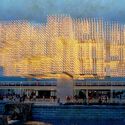
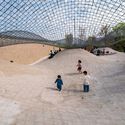
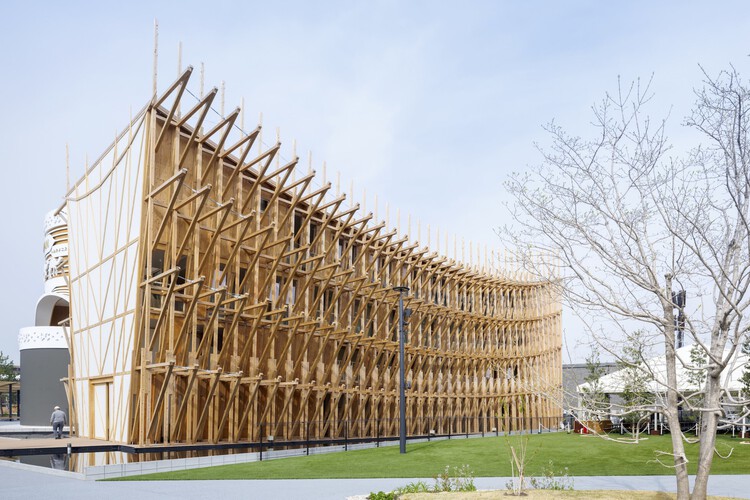
The 2025 Osaka Expo has captured widespread attention—not only for its architectural ambition and spectacle, but also for breaking records and generating controversy. Its most iconic feature, a monumental timber ring designed by Sou Fujimoto, has already made headlines as a Guinness World Record-breaking wooden structure. Built on the reclaimed island of Yumeshima, the site has attracted praise and critique in equal measure. Beyond its awe-inspiring 2-kilometer circumference—parts of which extend dramatically over the water—the structure has also drawn concerns, including questions about health & safety, extreme heat, and swarms of insects that may affect the visitor experience.
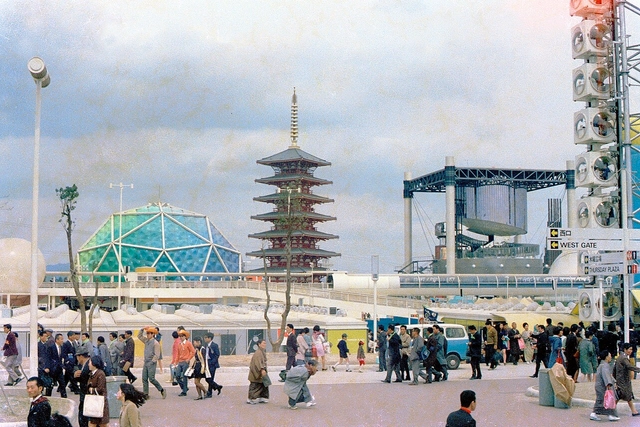
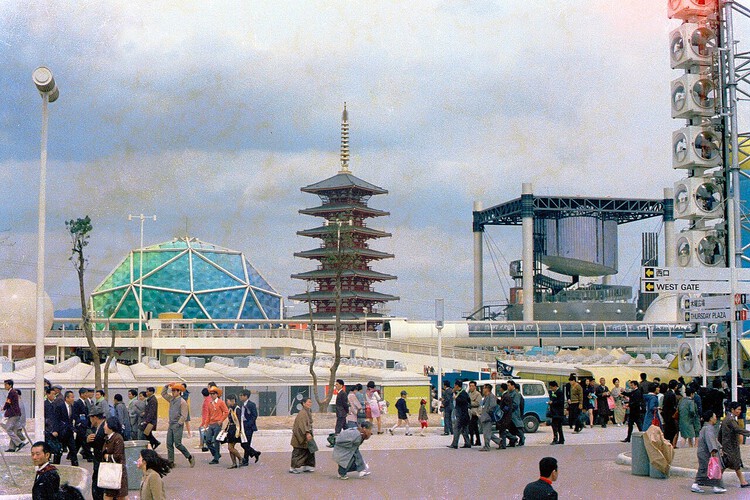
This year also marks a significant anniversary: the 55th year since the 1970 Osaka Expo, held under drastically different socio-economic conditions. Comparing these two expos—both hosted in the same city—offers a rare opportunity to reflect on how the rhetoric, curatorial themes, and architectural ambitions of world expos have evolved over time. From "Progress and Harmony for Mankind" in 1970 to "Designing Future Society for Our Lives" in 2025, the shift in thematic focus reveals changing global priorities. Meanwhile, the scale and nature of architectural involvement have also transformed, from the futuristic visions of Japanese Metabolism to a more internationally dispersed group of designers concerned with sustainability, technology, and civic engagement.
In much of China, concrete remains the dominant construction material. Despite growing concerns over its environmental impact, concrete continues to align with the priorities of many developers and clients—it is fast, cost-effective, and highly durable. As a result, most building types in China still rely heavily on concrete. This reliance is further reinforced by China's position as the world's largest producer of Portland cement. A deeply entrenched supply chain, rooted in raw material manufacturing and economic infrastructure, ensures that concrete remains the default choice in the construction industry.
Yet historically, Chinese architecture was built upon a rich tradition of timber construction. The Forbidden City is a prime example: not only is it emblematic of China's architectural heritage, but it also remains one of the largest and best-preserved collections of ancient wooden structures in the world. This legacy prompts an important question: does timber construction have a meaningful future in China's contemporary building industry?
In 2025, the architectural field has been marked by a dense calendar of exhibitions, a measured slowdown in construction across multiple regions, and a period of reflection that scrutinizes the impact of intelligence (artificial and natural)—both on professional practice and workplace culture, as well as its use as a pedagogical tool. Over this calendar year, ArchDaily has published more than 30 interviews in a range of formats—Q&As, in-person conversations, video features, and more. These exchanges have engaged themes of sustainability and nature, housing and urban development, AI and intelligence, adaptive reuse and public life, and have closely followed major exhibition platforms including the Venice Biennale, Expo 2025 Osaka, Milan Design Week, Concéntrico, and others.
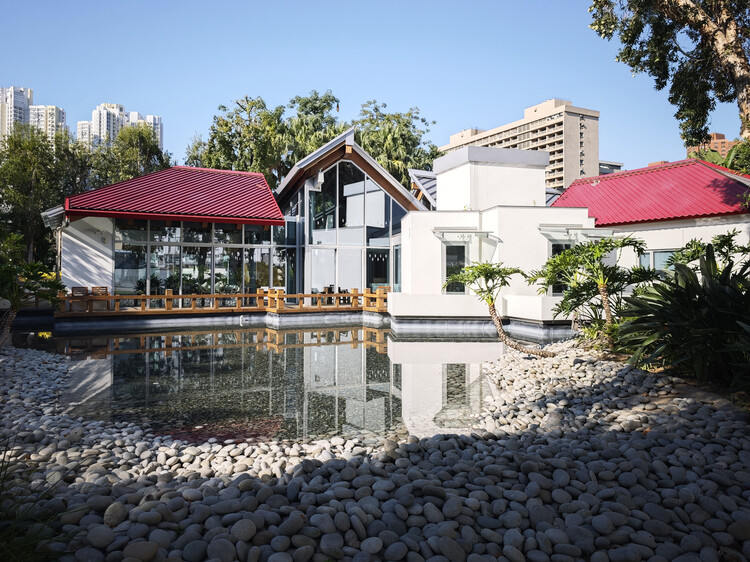
Earlier this month, news of Frank Gehry's passing prompted an outpouring of tributes to the architect behind flamboyant museums, concert halls, and sinuous residential complexes. Rather than revisit that well-charted terrain, it is worth pausing on a more contemplative work in his oeuvre: Maggie's Cancer Caring Centre in Hong Kong. Quiet, optimistic, and calibrated for everyday resilience, the building reflects multiple registers of Gehry's intent: a commitment to positivity and survival—and, more personally, an architect's own reckoning with loss and end-of-life care.
The remark reframes Maggie's Hong Kong as more than a commission; it suggests a design process shaped by grief and turned toward comfort, dignity, and the possibility of hope—an ethos that aligns closely with the organization's mission.
The fragility—and temporal beauty—of neon has captivated audiences since the early 1900s. First shown commercially by French engineer Georges Claude at the 1910 Paris Motor Show, neon spread rapidly, achieving broad popularity in the United States from the 1920s through the 1950s. Mid-century America saw it everywhere: from the casinos of the Las Vegas Strip to roadside motor inns along Route 66 and the spectacle of Times Square. By the latter half of the century, however, many signs were scrapped or left to decay, and numerous municipalities restricted neon as visually garish or power-hungry—despite the technology's comparatively modest energy use. In the U.S., renewed interest in neon arguably didn't meaningfully return until the early 2000s.
In Hong Kong, by contrast, neon was embraced with unusual enthusiasm at a time when it began to lose popularity elsewhere. Even as installation slowed in recent decades—largely due to updated ordinances requiring removal of overhanging signs whose support structures failed to meet safety standards—the city's affinity for neon never fully disappeared.
Urban renewal is inherently fraught—financially complex, politically exposed, stakeholder-dense, and almost guaranteed to leave someone dissatisfied. Precisely for these reasons, many cities default to inertia rather than risk the upheaval that comes with reworking entrenched urban fabrics, their residences, and their dynamics; once the "sleeping bear" is prodded, unexpected complications tend to multiply.
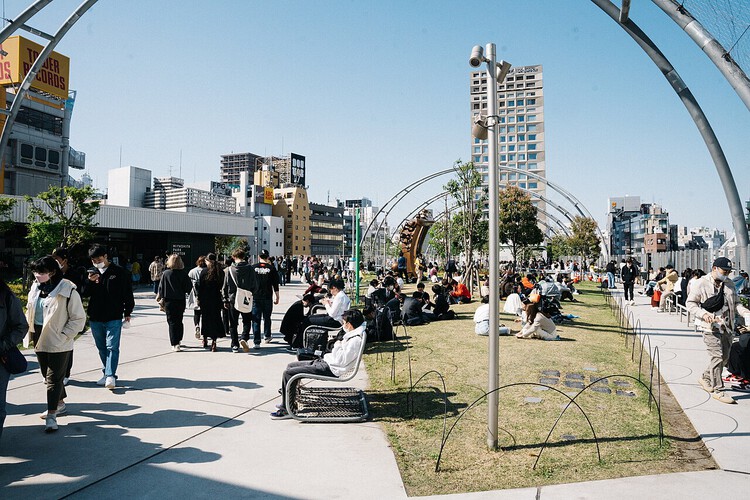
Miyashita Park (Miyashita Kōen), located in Shibuya, Tokyo, crystallizes this dilemma. Its current form—a layered, mixed-use complex balancing commercial activity with a publicly accessible park—emerged from years of negotiation, critique, and recalibration. The result is a distinctive example of a public-private partnership that seeks to align urban amenity, everyday leisure, and economic viability, producing a new piece of city that hosts public life while underwriting its own upkeep.
Living by the beach has long been a defining aspiration—drawn by the promise of tempered nature, privacy, and immediate access to the water. Historically, beach houses tended to be rustic and pared back: partly because servicing remote sites and delivering materials was difficult, and partly because their charm lay in being closer to the elements—simpler, rougher, more direct.
Accordingly, many early beach houses were built in timber. Wood offered clear advantages: it was lightweight, adaptable, quick to work with, and could be erected with minimal heavy machinery. While timber weathers and fares poorly in salt-laden humidity, exterior-grade lumber carries a raw, natural character that reinforced the appeal of the beach-house ideal.
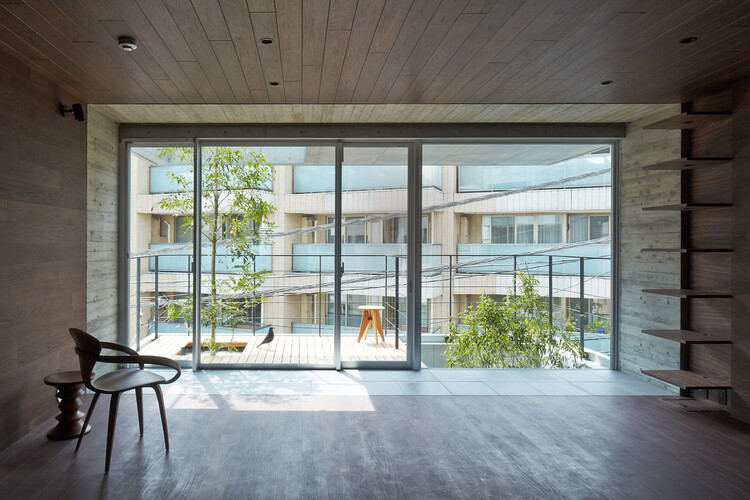
Balcony House / Ryo Matsui Architects. Image Courtesy of Ryo Matsui Architects Inc
We walk on "flat" ground every day and rarely think twice—but how flat is it, really? In the city, curbs are chamfered, sidewalks pitch toward grates, and roadways are crowned to shed water into shallow gutters. In suburbs and on unpaved paths, irregular terrain is the norm. Inside buildings, by contrast, we pursue near-perfect horizontality—structural frames, slabs, and finishes are all disciplined to create level walking surfaces in the name of safety and accessibility. Yet flatness is inherently at odds with water. A closer look reveals a quiet repertoire of accommodations: slight falls at entries, thresholds raised a few millimeters, wet areas with barely perceptible pitches. The floor is read as flat, but it is in fact carefully tuned—micro-topographies masquerading as plane—to manage water without calling attention to themselves.
What are the common ways architects "keep things flat" while actually managing water—the perennial enemy of buildings? A useful way to look at it is by zooming into three recurring conditions: exterior or roof decking, bathrooms and other wet rooms, and exterior ground planes. Each relies on a slightly different toolkit—pedestal systems over sloped waterproofing, micro-gradients to floor traps, hidden perimeter drains, split slopes—to maintain the illusion of a seamless, level surface. Studying these situations side by side reveals just how much design effort goes into reconciling perceptual flatness with the messy reality.
Office in Sanno / Studio Velocity. Image Courtesy of Studio Velocity
Historically, architecture and the built environment have insisted on creating flat, hard surfaces. In earlier eras, walking without paved ground meant mud-caked shoes, uneven footing, tripping hazards, standing water after rain, and high maintenance. Hence, as we shaped cities, we prioritized a smooth, continuous, solid horizontal datum. The benefits are real: easier walking, simpler cleaning, and straightforward programming—furniture, equipment, and partitions all prefer a level base. This universal preference for building on flat ground remains the norm and, for many practical reasons, will likely continue to be.
What's less recognized is that making a truly flat surface is surprisingly difficult—and many well-executed "flat" floors aren't perfectly flat at all. They are often gently sloped, calibrated to precise gradients for drainage. While interior spaces do not always require this, many ground floors and wet areas do incorporate subtle inclines as a safeguard—whether for minor flooding or to manage water that overflows from the street or plumbing when one of the discharge systems is malfunctioning.
Domestic workers in Hong Kong and Singapore are the city's quiet infrastructure. In Hong Kong alone, there are a total of roughly 300,000 domestic workers, serving a portion of the approximate 2.7 million households. Their care labor sustains dual-income family routines: childcare, eldercare, cooking, cleaning, and the everyday logistics that make professional life possible. Yet the people who hold this balance together remain largely invisible in policy—and, crucially, in space.
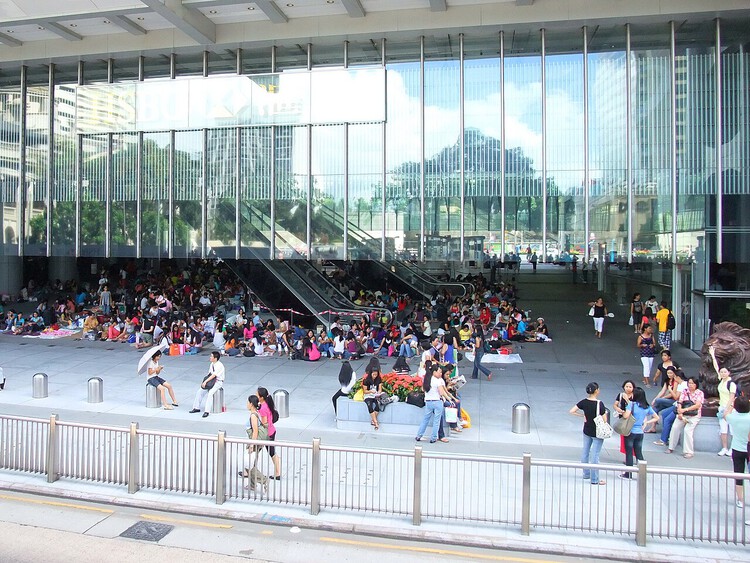
On Sundays in Hong Kong's financial district, that invisibility becomes visible. Elevated walkways and podium forecourts—underused on weekends—turn into ad-hoc commons. With cardboard mats, small tents, towels, food and water, and a music speaker or two, domestic workers assemble places to sit, rest, and socialize. These improvised rooms in the city are often their only chance to exercise spatial agency—something they rarely have in the homes they maintain or in formal public infrastructure. In the absence of sanctioned, serviced places for rest, quieter bridges and passages become practical stand-ins.
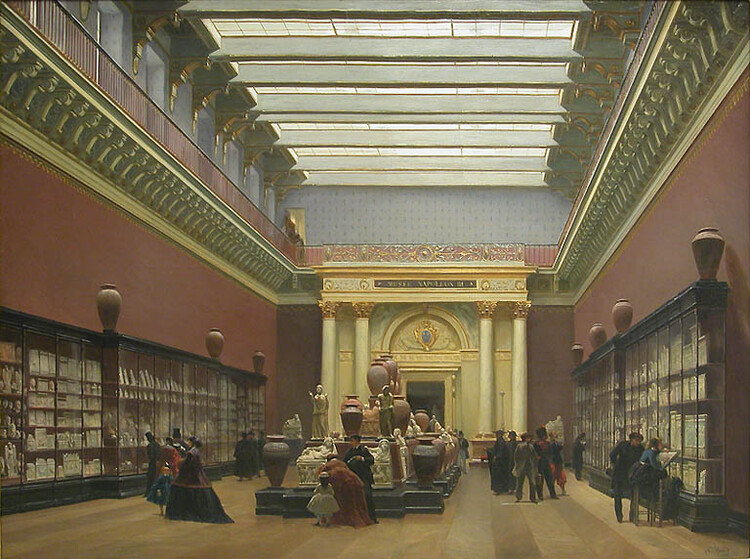
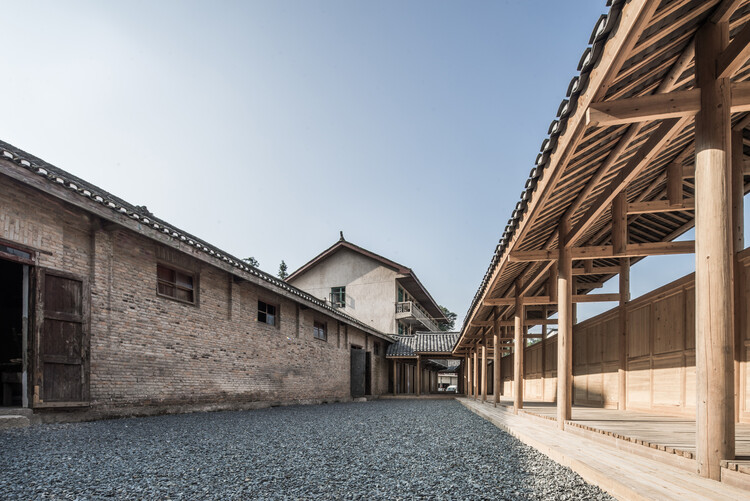
Architecture—one of the few cultural artifacts made to be publicly lived with, preserved, and often capable of standing for centuries—contributes significantly to the cultural identity of places and people. Historically, buildings have expressed institutional attitudes, influence, and power; they are clear demonstrations of culture. Yet longevity complicates preservation: when a structure is rebuilt, repaired, or entirely reassembled, in what sense is it still the same building?
There's the classic Ship of Theseus puzzle from Plutarch. if a ship's planks are replaced one by one over time, is it still the same ship? Thomas Hobbes adds a twist—if the original planks are reassembled elsewhere, which ship is "the original"? The paradox tests what grounds identity: material fabric, continuous use and history, or shared recognition. In architecture and conservation, it reframes preservation as a choice among keeping matter, maintaining form and function, or sustaining the stories and practices that give a place meaning.
Historically—like other cultural forms—architecture has been documented, shared, and promoted primarily through print. Books, journals, and magazines carried the discipline's arguments and images, and because architectural practice relies so heavily on visual communication, printed journals created a bridge between academic publications and commercial magazines. Through the postwar decades, beautifully produced volumes curated a collective point of view, signaling what the field broadly considered discussion-worthy or exemplary.
Across major cultural centers, a handful of publications shaped this discourse: Their perspectives were typically sophisticated, professional, and carefully edited—distilling an unruly global output into a small constellation of remarkable projects. The system arguably privileged certain practices and geographies, but it also amplified architecture for wider audiences. Buildings began to lodge in public imagination; cultural travel—journeys taken expressly to experience architecture—moved from rarity toward ritual.