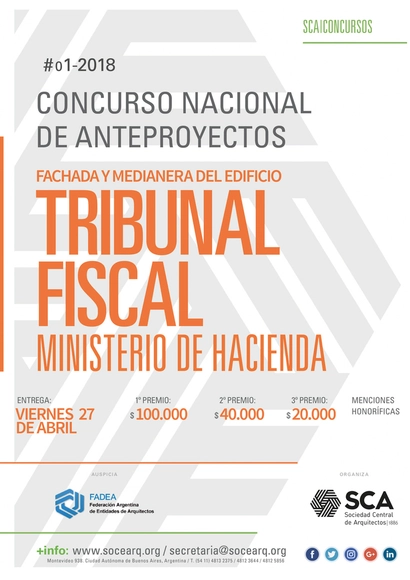
Organized by the Sociedad Central de Arquitectos, this national competition calls for the preliminary design of the facade and the treatment of the right party wall for the new building that will house the relocated offices and archives of the National Tax Court.
Cortesía de Colegio de Arquitectos Regional 5 de la Ciudad de Villa María
Organized by the Regional 5 College of Architects in the city of Villa María, this design competition seeks ideas and proposals for the new headquarters of the Regional 5 Southeast branch of the College of Architects of the Province of Córdoba.
Organized by the Colegio de Arquitectos Provincia de Buenos Aires (CAPBA D5), this national competition seeks proposals for the "Plaza de las Carretas" in Campana, Buenos Aires.
The initiative aims for the Plaza de las Carretas to function as a unifying space that provides connections to the surrounding axes, while also establishing itself as a true "public activity center" for continuous use in its own right.
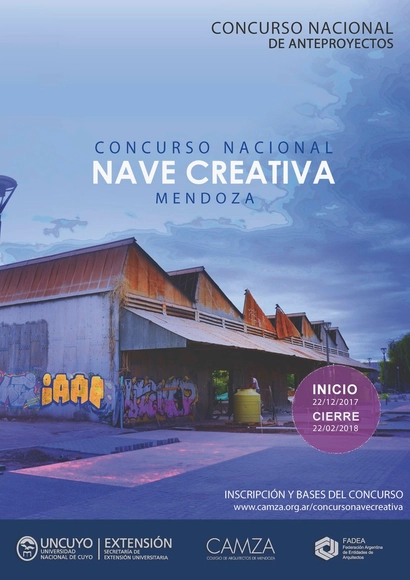
Organized by the Mendoza Architects' Association (CAMZA), this competition seeks proposals for the repurposing, restoration, and enhancement of the Northeast Warehouse located on the grounds of the former General San Martín Railway (FCGSM), which once comprised the Mendoza Central Station.
The goal is to transform the site into a "Nave Creativa" (Creative Hub)—an artist incubator and public space designed to democratize tools and physical space for the development and promotion of growing local creative industries. This initiative aims to facilitate access through a multi-purpose innovation and experimentation space that brings together and promotes sector activities, empowering entrepreneurs in the fields of design, music, and visual and audiovisual arts.
Architects and designers, as well as psychologists and sociologists, recognize that aesthetics and its underlying philosophy have the power to change how we perceive the world around us. Consequently, a deeper understanding of what is beautiful holds the powerful potential to alter how people respond to their environment.
Exploring the different meanings of aesthetics in architecture, from 'form follows function' to the aesthetics of the metaverse, can help us understand the potential of our physical and virtual environments on the path toward a better world.
Much has been written on the subject, from Alberto Pérez-Gómez's "The Beautiful and the Just in Architecture" to Pablo Caldera's "The Failure of Beauty." Now, however, we want to open up the debate and invite you, our readers, to share your perspectives on what makes a building or a city beautiful.
Share your thoughts in the form below. Selected responses will be published in an upcoming article.
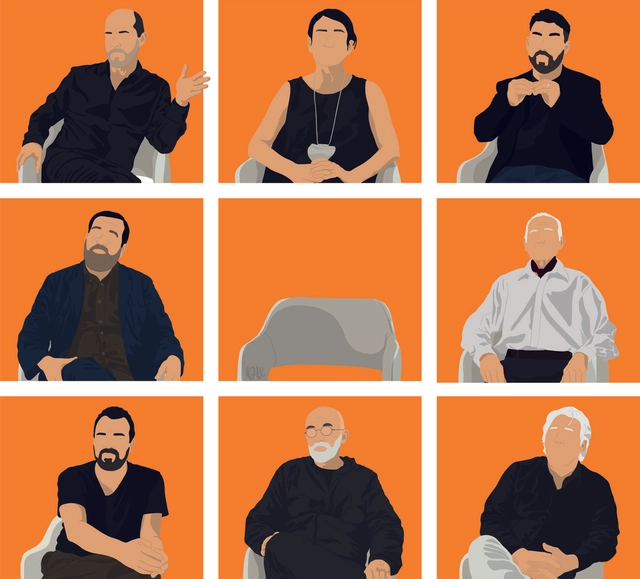
Desde la periferia is an audiovisual project directed by José Luis Uribe, PhD in architecture and professor at the School of Architecture of the University of Talca, Chile. The project consists of three documentaries to be released progressively over the next two years, exploring various aspects associated with contemporary Latin American architecture. The first installment, Volume I: Ugly, Dirty & Bad: A Contemporary Architecture in Latin America, is an audiovisual essay that gathers some of the initial thoughts on its current state through the oral accounts of a group of architects in a hotel room in Asunción, Paraguay.
Cortesía de Consejo Superior de los Colegios de Arquitectos de España
To promote the key, transformative role of architecture in improving quality of life and contributing to a better world, the Higher Council of Colleges of Architects of Spain (CSCAE) is revamping the awards it has presented since 1981 with the launch of the first edition of the ARQUITECTURA Awards.
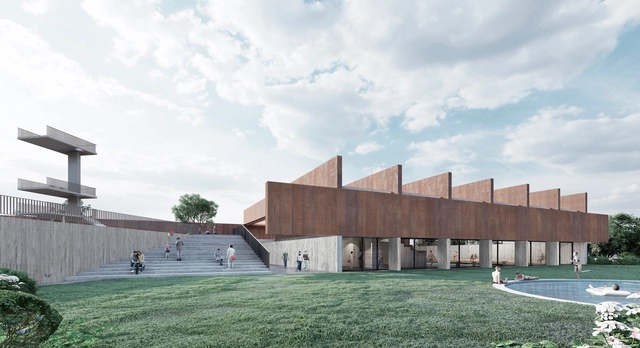
The New Municipal Swimming Pool of La Calera project in the Valparaíso Region is about to begin construction, as announced by the firm Gubbins Polidura Arquitectos on social media.
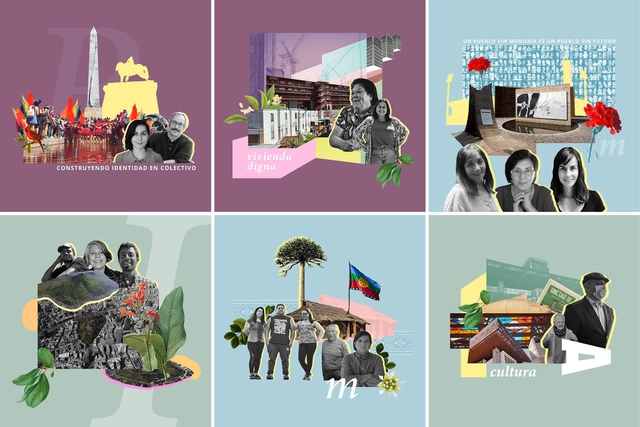
The fourth season of the podcast Causa Común—a co-production between Fundación Lepe and Fundación Aldea for the OH! Stgo festival, held in mid-January in Santiago, Chile—explores the past, present, and future of the capital, alongside the role of its inhabitants in prioritizing the common good and collaborative ways of making, inhabiting, and imagining our shared home.
Directed and coordinated by Francisca Cordero, Soledad Díaz de la Fuente, Magdalena Novoa, and Trinidad Piriz, the six-episode season examines the everyday stories, communities, monuments, and public spaces we inhabit from new perspectives. Featured topics range from the multiple identities of a public square, female leadership in housing projects, and the construction of urban memory, to island hills as socio-environmental opportunities, Mapuche urban dwelling, and the GAM building as an exponent of architecture and social change.
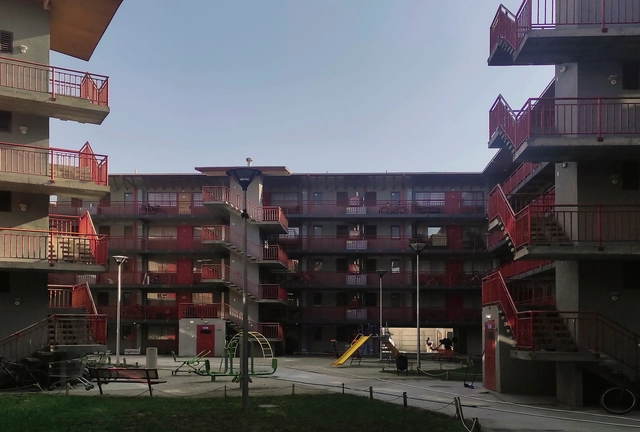
The new Maestranza Ukamau Neighborhood, an example addressing access to public housing in Santiago, Chile. Image
"Every person has the right to decent and adequate housing that allows for the free development of personal, family, and community life," states the provision that advanced to the draft of Chile's new Constitution. The draft is being prepared by the Constitutional Convention—a 155-member political body tasked with drafting and approving the proposal for a new agreement for the Republic, which was enabled by the October 2020 plebiscite and driven by the social protests that took place in the country in October 2019.
View of the Factory from the Wetland. Project by Mathias Klotz and Sebastián Mundi for the CCU Limache Brewery Museum. Image via CCU
The team led by Mathias Klotz and Sebastián Mundi of the architecture firms Klotz and SML has been unanimously selected in the open call for the heritage reconversion of the former CCU Brewery in Limache, the Chilean company announced today in a press release.
This project seeks to preserve the brewing heritage represented by the iconic building founded in 1883, through a museum open to the public.
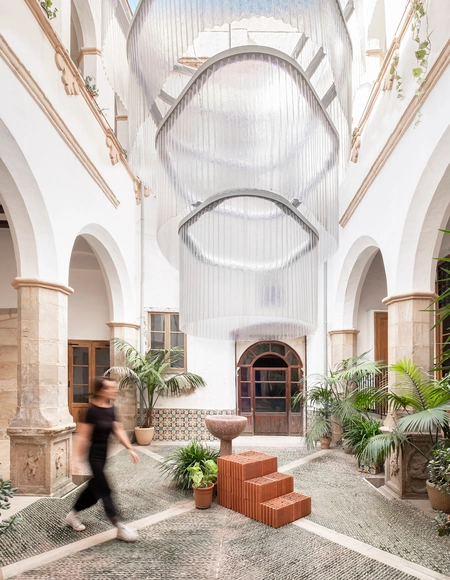
This monumental lamp, standing over 6 meters tall and covering an area of 55 square meters, hangs from the main courtyard of the Purissima Concepció monastery, radically transforming this 17th-century building through light and color.
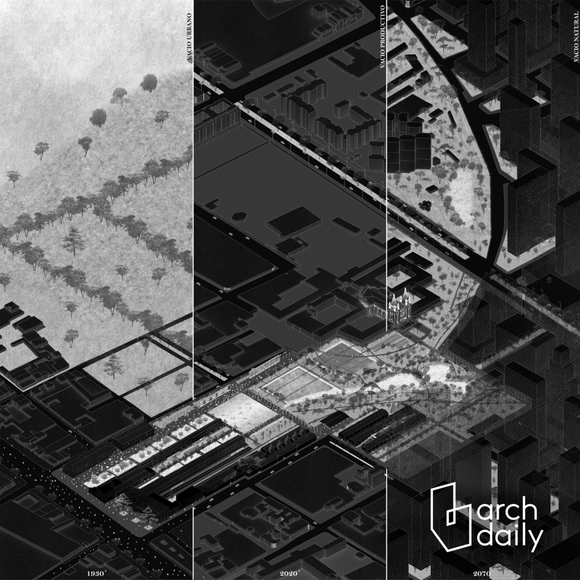
Traducciones: la utopía y el vacío performativo. Image Cortesía de Juan Manuel Sandoval Perdomo
To showcase the valuable work emerging from Latin American and Spanish universities, this year we launched an open call inviting architecture students to submit their graduation projects completed in 2021.
After thoroughly evaluating 137 proposals, our editorial team has selected and highlighted 10 projects that demonstrate rigorous critical thinking in response to their self-defined challenges. The selection valued not only those projects that delivered the best possible architecture through efficient design tailored to their context, program, and users, but also those that paid significant attention to human scale, the environment, experimentation, and new ways of addressing architecture in cities.
A week ago, we announced the 15 finalist projects of the 2022 Building of the Year award —the prize for the best architecture in Spanish. Our jury of experts—you, our readers—made an initial selection of 15 from nearly 1,000 architectural works built in Latin America and Spain to proceed with the final vote for 3 projects that represent the best of the architecture that inspires, defines, and shapes us.
Today is the day to announce the winners of ODA2022!
We are pleased to present three projects located in Colombia, Cuba, and Chile that demonstrate the relevance of thinking of architecture as a solution to specific and local needs in order to improve the quality of life, at any scale or program.
The 2022 Building of the Year Award is presented to you by Dornbracht, renowned for its leading designs in architecture, which can be found internationally in bathrooms and kitchens. See the selected projects below.
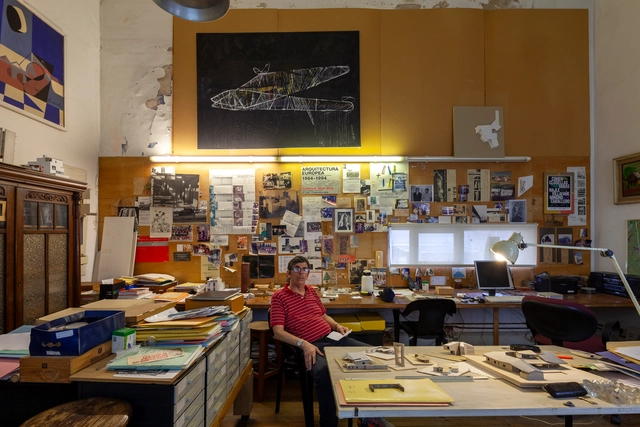
Marcelo Villafañe (1951), an architect from Rosario, passed away on Wednesday, January 26, as announced on social media by the Colegio de Arquitectos Distrito 2.
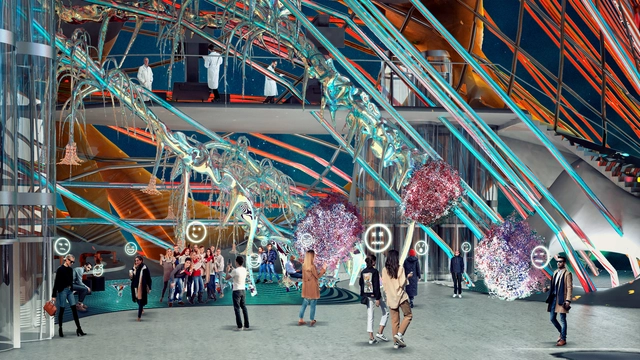
El poder de la Data - Render interior conceptual. . Image Cortesía de Online Lab of Architecture (OLA)
From NFTs and the Metaverse to the productivity benefits of real-time rendering, this year presents a prime opportunity to discuss the latest trends in visualization.
With this in mind, we want to open the debate and hear your thoughts on the following questions: How much can we learn from other related industries such as cinema, video games, and industrial design? How can architecture contribute to and advance the world of visualization?
It is well known that the construction industry is one of the largest producers of CO2. Although significant progress has been made in technology and in design and construction processes, there is still a long way to go to minimize or nearly eliminate carbon emissions in the development of the built environment.
Indeed, as revolutionary as the construction industry may seem today, it remains responsible for nearly 40% of global carbon dioxide emissions, 11% of which result from the manufacturing of building materials such as steel, cement, and glass.
What are the latest trends in reducing emissions in both design and material manufacturing? How should the industry transition toward net-zero architecture? These are some of the questions we want you to help us answer.
"I'm an architect... now what?" must be one of the most common questions for any recent graduate holding an architecture degree. Over the years, many will find jobs in different industries that do not necessarily involve working in an office designing and building buildings.
.jpg?1521632880&format=webp&width=640&height=580)

.jpg?1643728555&format=webp&width=640&height=580)