"In various regions of the planet, nature imposes adverse conditions on the human body. In these places, designing a building is almost like creating a garment: an artifact that protects and offers comfort. This challenge requires technological performance that must be combined with aesthetics. Making human beings feel good involves more than just meeting notions of comfort and safety; it's also a question of working with spaces in their symbolic and perceptual dimensions." This is the beginning of the description for the design of the Brazilian Antarctic Station in Antarctica, by Estúdio 41, located on the Keller Peninsula, where the surrounding sea freezes for around six to seven months of the year, where everything and everyone arrives by plane or ship and the nearest hardware store is days away. If designing a building in normal circumstances already presents numerous complexities, it's not hard to imagine the additional challenges when developing something in an extreme environment, such as locations with very high or low temperatures, or in places susceptible to corrosion, radiation, and more. In this article, we will explore the difficulties, the main solutions and the materials used in these contexts.
By operating with only five notes, the pentatonic scale establishes a stable and intuitive musical system in which structural clarity allows for variation without the risk of excessive dissonance. From this consolidated structure, which forms the basis of countless musical styles, especially popular music, the blues introduced a decisive inflection by incorporating additional notes into the scale. Without delving into excessive technicalities, these are subtle tonal deviations, small dissonances often associated with a more melancholic sound, known as blue notes. Played fleetingly rather than as emphatic accents, they briefly tension the system, adding expressiveness and depth while keeping the underlying structure intact.
If in music the blues scale operates through a subtle deviation that "seasons" the underlying structure, a similar principle can be identified in architecture. Although comparisons between different artistic languages are always delicate, it is possible to recognize projects that find their expressive strength not in rupture, but in localized inflections introduced within clear systems, whether of modulation, subtraction, materiality, or typology. Localized displacements and asymmetries function as internal tensions that do not compromise the coherence of the whole, revealing how expressiveness can emerge from controlled deviation rather than from permanent exception.
When developing an architectural project, there are multiple possible points of departure. Some architects begin with volume, gradually carving form in dialogue with its context. Others start from the longitudinal section, while some organize the project around the functional layout of the plan. There is no right or wrong method, but rather distinct approaches that reflect different ways of thinking about and making architecture. Since the widespread adoption of solar panels and photovoltaic energy, however, a recurring pattern has emerged: these systems are almost always introduced later in the process, framed as technical optimizations or responses to regulatory and energy-efficiency requirements. As a result, they tend to be treated as secondary elements, often relegated to rooftops or less visible areas and detached from the architectural language of the building.
By shifting rotation away from traditional hinges and distributing weight vertically, pivot doors were developed to address a specific architectural challenge: how to move large, heavy door panels with precision, durability, and minimal visual interference. These systems allow doors to grow significantly in scale, weight, and material ambition, often blurring the line between door, wall, and architectural surface. Over time, this technical innovation has expanded the role of doors in architecture, allowing them to operate not only as points of access, but also as spatial thresholds, compositional devices, and expressive elements within the building envelope.
Highlighting this evolution, FritsJurgens established the Best Pivot Door Contest to showcase projects where engineering precision and architectural intent converge. Founded in the Netherlands, the company is internationally recognized for its concealed pivot systems capable of supporting exceptionally large and heavy doors. These systems give architects greater freedom in scale and materiality while maintaining precision, reliability, and architectural clarity.
Reflecting on the modern city, Walter Benjamin described the flâneur, a figure who walks without a defined destination, attentive to details, chance encounters, and the narratives that emerge from urban space. This way of being in the city, shaped by observation and openness to the unexpected, has long been in tension with the rationalist and functionalist ideals that came to guide urban planning throughout the twentieth century. Streets designed primarily for efficiency and flow rarely leave room for detours, pauses, or the coexistence of different rhythms of life.
Jane Jacobs was also one of the voices that challenged this predominantly rationalist logic, arguing that truly vibrant streets are those capable of sustaining the diversity of everyday life, its informal exchanges, and the forms of care and natural surveillance that emerge from them. What these authors share is a fundamental insight: streets are not merely infrastructures for circulation, but social ecosystems, shaped by the relationships, uses, and encounters that take place within them.
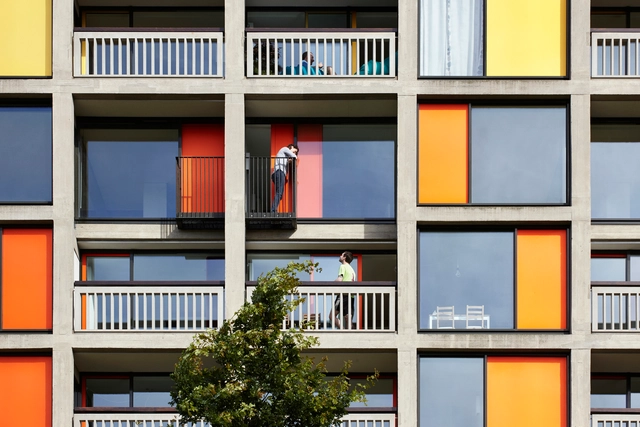
Park Hill, a large social housing complex in Sheffield, stands out as one of the most ambitious examples of modernist architecture in post-war Britain. Designed in 1961 by Jack Lynn and Ivor Smith, its innovative concept of "streets in the sky" aimed to combine high-density housing with the community spirit of traditional neighborhoods. By the late 20th century, the complex had fallen into severe neglect, marked by social problems and structural degradation that undermined both its functionality and reputation. Gradually, Park Hill became synonymous with the failure of modernism, carrying a heavy social stigma and marginalizing its residents.
Starting in the 2000s, significant efforts began to reverse this narrative through a two-phase revitalization process. The first phase, led by Urban Splash in collaboration with the architectural firms Hawkins\Brown and Studio Egret West, focused on preserving and enhancing the building's historical elements while introducing modern interventions to create a livable, functional, and attractive space. This stage demonstrated the potential of adaptive reuse in revitalizing communities and reclaiming architectural icons. The second phase of the renovation, carried out by the firm Mikhail Riches, sought to build on this initial work by introducing new elements that deepened the connection between the existing spaces and contemporary living. With an approach that combined historical sensitivity and architectural innovation, Mikhail Riches continued the process of transforming Park Hill into a landmark example of how modernist architecture can be adapted to meet current needs without losing its original identity.
AI Generated Image (Gemini). Concept by Eduardo Souza (ArchDaily)
Few plants have accompanied humanity as closely as cannabis. Used for millennia to make textiles, paper, and medicines, it has quietly shaped everyday life and built environments alike. Hemp, its non-psychoactive variety, is one of the earliest cultivated crops and a material of remarkable versatility: strong, breathable, and renewable. From ropes and sails to insulation and biocomposites, hemp’s fibers have been helping humans build for thousands of years.
Ellisse, location: Armando Cose, Designer: Philippe Malouin
Communicating an idea using only the essentials is a far greater challenge than it often appears. From Japanese haikus to the refined sculptures of Constantin Brâncuși, many artistic expressions have sought to condense the maximum meaning with the minimum of elements. This economy of form is not a sign of scarcity, but of intensity: every stroke, every word, every silence gains weight. There is something intrinsically appealing in what presents itself as simple and well-resolved, whether it is a text that wastes no words, a tennis player who moves with purposeful gestures, or a melody that is both direct yet unexpectedly profound.
That same principle, which transcends various artistic languages, resonates deeply in contemporary design. When reduced to the essential, furniture or everyday objects reveal a form of beauty that arises from precision and transcends their function. This is exemplified by HUM, the new collection of taps developed by designer Philippe Malouin for QuadroDesign, in which a simple gesture is transformed into a complete language.
Once confined to the aerospace and automotive industries, composite materials have taken on an increasingly central role in contemporary architecture. By combining two or more components, such as fibers and polymers, they offer lightness and strength, high durability, formal freedom, and enhanced environmental performance. Their incorporation into architectural practice marks a profound transformation in how we design, fabricate, and inhabit space.
For a long time, architecture was understood as an essentially individual activity, dependent on the figure of a creative genius and centered on the ability to solve problems through drawing. Over time, this image began to fade. The protagonism once concentrated in a few names reached its peak during the era of the starchitects and gradually became distributed among offices, collectives, and multidisciplinary teams. Today, architects are expanding their boundaries into other fields such as gastronomy, music, design, and the corporate world, applying spatial thinking to address challenges of various kinds. As social, environmental, and political crises deepen, the role of the architect continues to evolve from a solitary author to a mediator, activist, and collective agent of transformation. This shift reflects an ethical awakening and a recognition that design, regulation, and care are inseparable dimensions of contemporary practice.
Generative AI (Gemini / Google DeepMind). Concept: Eduardo Souza / ArchDaily
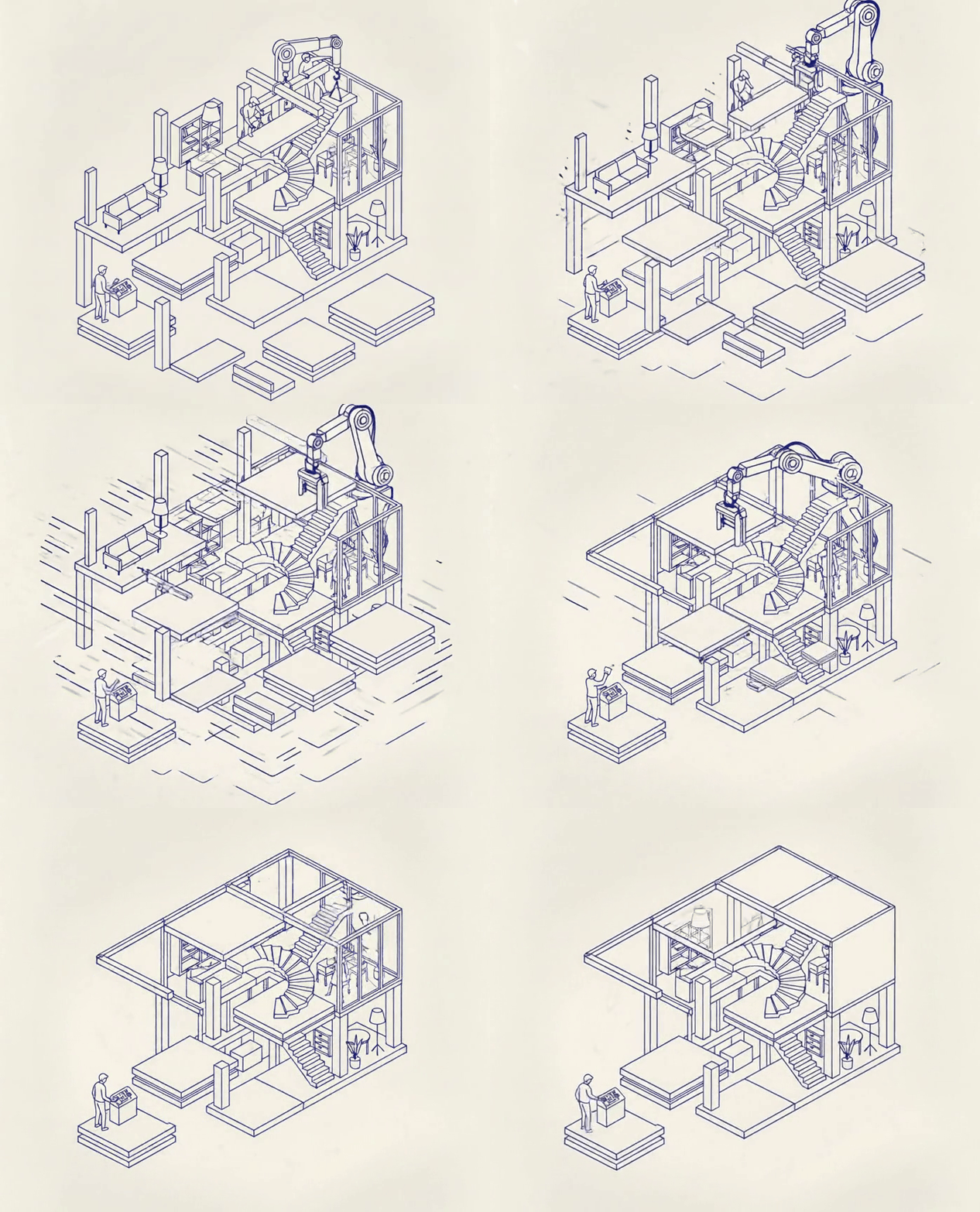
Once synonymous with monotony, “prefabricated” buildings often bring to mind the gray, repetitive housing blocks of the postwar era. But that image no longer fits today’s reality. Powered by digital design, robotics, and advanced materials, prefabrication has evolved into a language of innovation and precision. Far from uniform, it now enables flexible, efficient, and sustainable spaces that reflect the individuality of contemporary architecture.
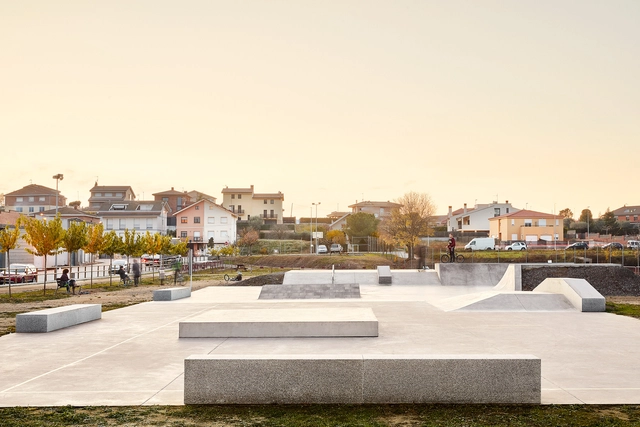
Created by California surfers who wanted to bring the lines of surfing onto asphalt, skateboarding soon outgrew its role as a simple alternative for flat days. It established itself as a practice that reads the city through a different logic, reinterpreting steps, handrails, walls, and interstitial spaces as possible lines, challenges, and opportunities. Over time, it evolved into a global urban culture, a way of inhabiting and transforming public space through movement. What was once marginal has become a catalyst for urban activation, community building, and new uses for overlooked spaces. At its core, skateboarding reveals how many cities coexist within the same city, depending on who moves through them and how each person is able to reinterpret their surroundings.
In 1952, American composer John Cage presented his groundbreaking piece "4'33''" for the first time. In it, the orchestra produces no intentional sound for four minutes and thirty-three seconds. What can be heard instead are breaths, movements, and subtle noises that would normally go unnoticed, but here become part of the composition itself. With this work, Cage revealed that absolute silence does not exist. There is always sound, even when unplanned.
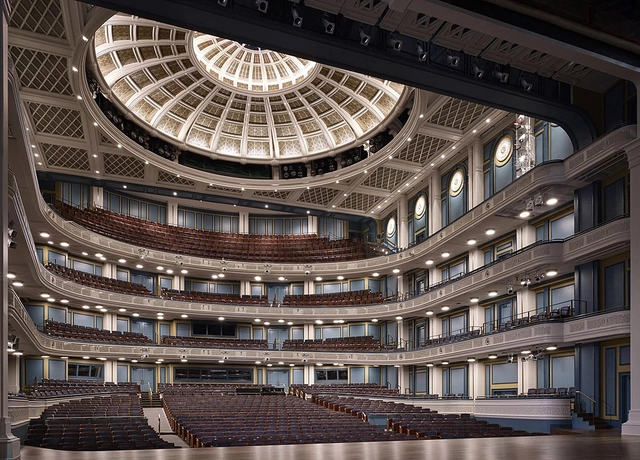
In the same way, every architectural space has its own soundscape. Sound moves, reflects, reverberates, and dissipates according to the materials, volumes, and surfaces it encounters. Hard walls and high ceilings can amplify echoes, while fabrics and porous panels soften them. Acoustics, therefore, is not merely a technical concern but a form of materialized listening, a science that operates at the boundary between perception and emotion. For this reason, it is also complex. Each typology, whether a museum, temple, studio, or theater, has its own sonic logic, and understanding these nuances is essential to creating spaces that embrace sound, voice, and silence with equal precision.
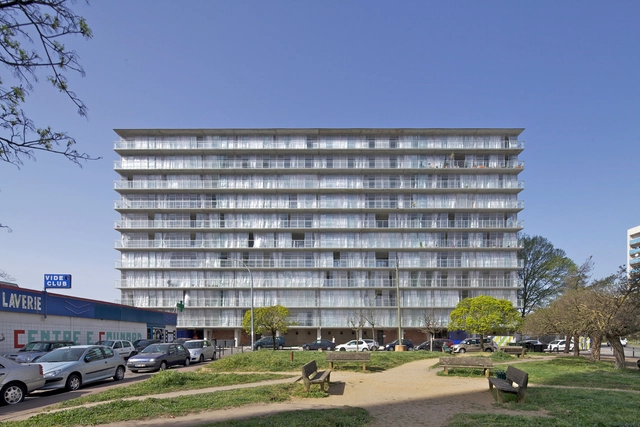
Cities bring together the best and worst of the human condition. They concentrate opportunities for work, social networks, and cultural production, but they also expose deep social inequalities. Among the many forms of urban exclusion are limited access to transportation, housing, leisure, or safety issues. One form that is rarely discussed is thermal inequality. In lower-income neighborhoods, where there are fewer trees, parks, and permeable surfaces, heat accumulates and thermal discomfort dominates, resulting in higher energy consumption and health risks. As concern about the climate crisis grows, this discussion becomes more urgent: extreme heat is no longer just a climatic phenomenon but also a spatial expression of inequality.
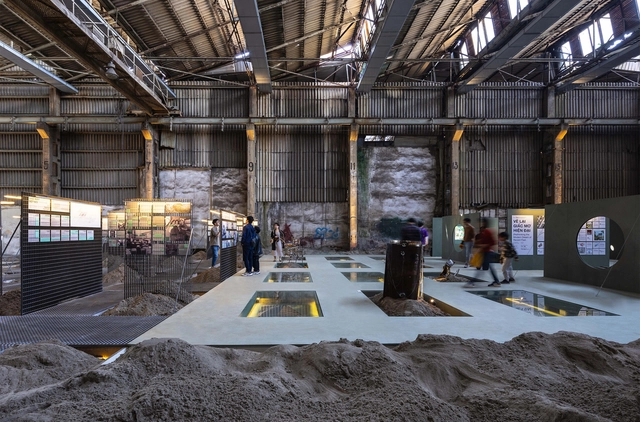
Behind layers of plaster, paint, and finishes lies an intricate network of pipes, electrical conduits, beams, and other structural elements that make a building function and stand, yet remain invisible to the everyday eye. Within these layers, traces of different periods accumulate: replaced systems, improvised adaptations, and technical solutions that once responded to specific contexts and urgencies. In adaptive reuse, the greatest challenge often begins before construction even starts, which is understanding what lies within when little or no reliable documentation exists. During a renovation, pleasant or unpleasant surprises are inevitable. The unexpected is part of the process, but it also represents cost, delay, and risk factors that often discourage investors and professionals from engaging in this type of project.
At voco Brussels City North, hansgrohe and Hydraloop unite for smarter water use. Image Courtesy of Hansgrohe
Water is the foundation of life. It shapes landscapes, regulates climates, and sustains every living organism. Yet on the only known inhabited planet, this essential resource faces a growing crisis: although 70% of Earth's surface is covered by water, less than 1% is actually available for human use. Most of it is consumed by agriculture and industry, while in households, activities like bathing and flushing use vast amounts of drinking water for non-essential purposes. The bathroom, therefore, has become a key space for innovation, where technology and design can help redefine how we use and reuse this vital element.
The practice of combining materials to achieve better performance has accompanied humanity since the earliest constructions. One of the first known examples emerged over five thousand years ago, when civilizations in Mesopotamia and Egypt mixed mud and straw to mold sun-dried adobe bricks. Light and fibrous, straw prevented cracking and increased strength, while mud acted as a binder and protection. This simple yet ingenious invention can be considered the first composite in history, illustrating the ancestral intuition that distinct materials, when combined, can become something stronger and better.
Aristotle is credited with the proverb "One swallow does not make a summer." In nature, the arrival of these migratory birds often announces the change of seasons, a universal symbol of renewal and hope. Yet it is only when many take flight that the true warmth of summer begins. The same can happen in architecture: an isolated project, however exemplary, rarely changes a reality on its own. When, however, a work teaches, inspires, and can be replicated, it becomes the harbinger of something greater.
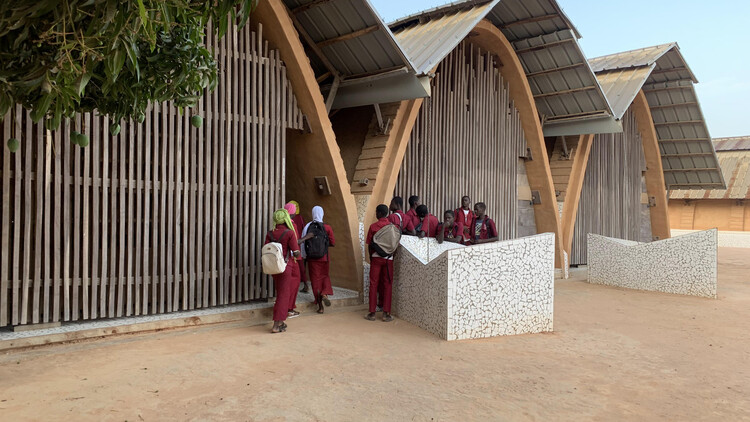
Initiatives that combine simple technologies, local materials, and participatory processes show how building can also be an act of learning. Structures and bricks shape places of mutual teaching, where architects and residents share knowledge and build together, multiplying skills and strengthening bonds. These projects point to the possibility of a collective summer, a future in which knowledge spreads as widely as the walls that shelter it.