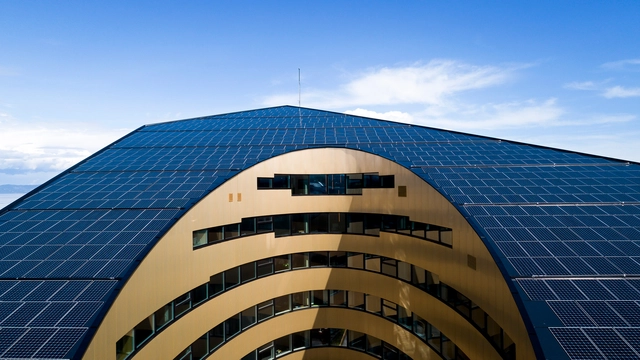
Once restricted to space stations and satellites, photovoltaics are now gaining popularity and becoming an increasingly viable option. Every day, the sun releases an enormous amount of energy, far more than the entire population consumes. Being that the sun is a sustainable, renewable, and inexhaustible source for generating electricity, not using it seems almost counter-intuitive, especially considering the social and environmental impacts of other forms of energy generation. But the technology to create electricity from the sun is by no means simple and still has some limitations, the most significant being price. The following article attempts to explain some basic concepts about this process, and to highlight important considerations for designing a solar energy system.
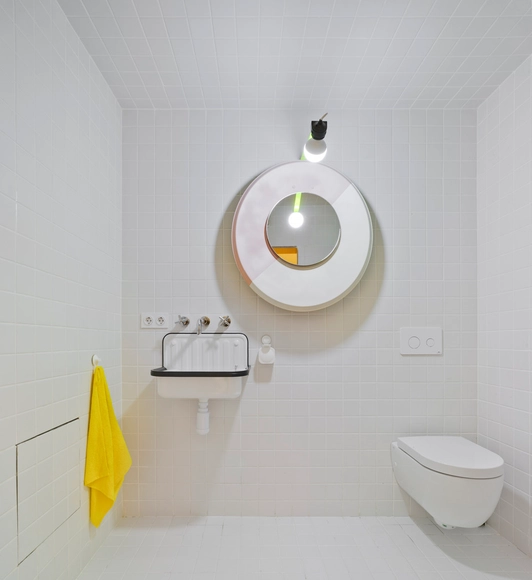
Square, rectangular, hexagonal, matte, shiny. It's hard to think of a more versatile flooring material than tiles. They're also known for their high durability, ease of maintenance and installation, and are among the most common choices for covering floors and walls, whether wet or not. Following are 10 common questions about ceramic tiles, and their answers:
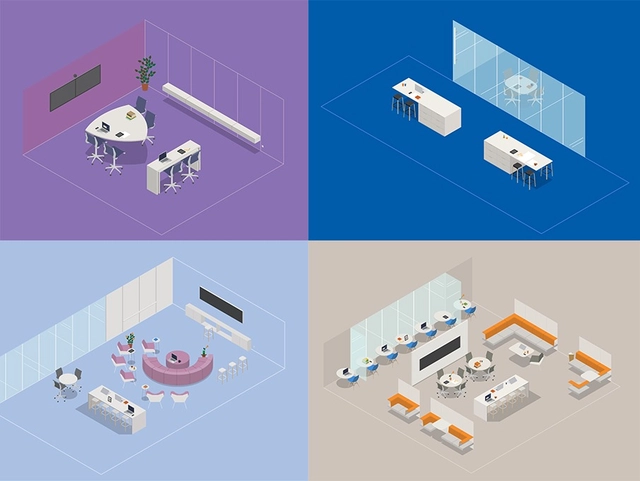
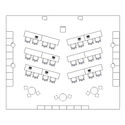
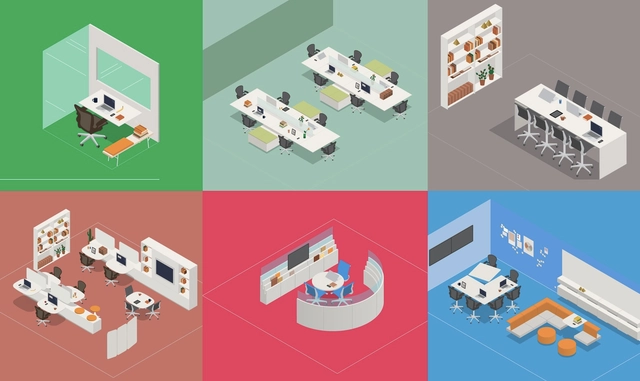
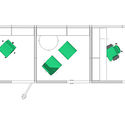
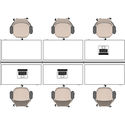
Today's generation no longer sees work in the same way as previous generations. New company models and occupation possibilities have changed the spaces where people develop their professional activities. Working from home, from coworking spaces, or remotely from anywhere in the world is already a fairly common reality. But a number of companies still do not utilize or create spaces where their employees can work together, collaborating in the same environment. In addition to shared culture that companies often try to create, it is essential that the design of an office takes into account the needs and particularities of each type of work and encourages communication and interaction, while providing places for concentration and focus. As generations and corporate cultures change, it is natural for the office space to move away from traditional layouts with cubicles, tables, and meeting rooms.
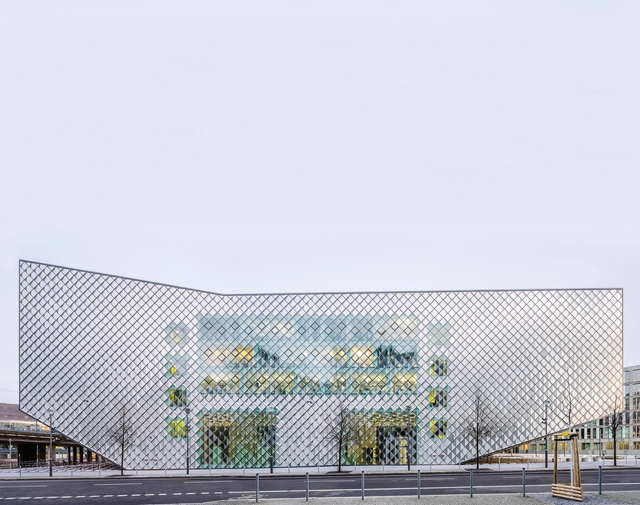
Facades are the interface between the interior and exterior of a building. They are the most striking and visible parts of a building, they protect it from external agents and are one of the main contributors to creating comfortable environments since it is where thermal gains and losses occur. Just like our skin, an extremely versatile organ of our body, it should be natural for it to be the part of the building which bears technology capable of becoming adaptable to the environmental conditions of the place where it is located.
Once restricted to luxury or super-tech buildings, home automation is proving to be an increasingly fundamental and affordable addition to architectural projects, whether to new buildings or renovations. While understanding how they operate can be extremely complex, the primary purpose of technology is to make life simpler, safer, and easier. By definition, home automation seeks to be globally intelligent, functioning as a system that facilitates processes without unnecessarily complicating the user's life. The idea is to connect devices, which in turn connect and talk through a centralized control unit, accessible by computers, tablets, and mobile phones. These include lights, appliances, electrical outlets, and heating and cooling systems, but also alarms, doors, windows, smoke detectors, surveillance cameras, and many other sensors and devices.
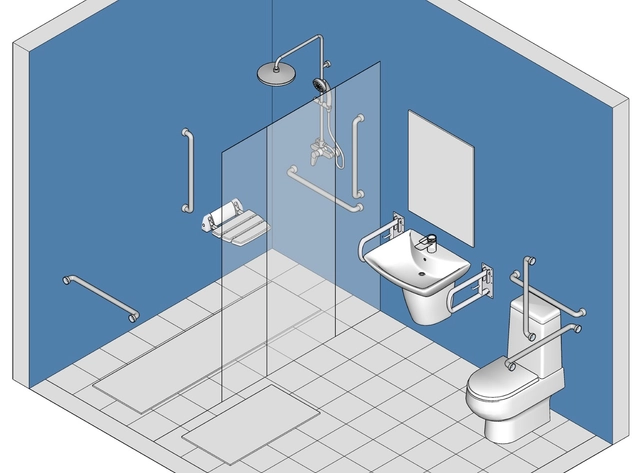
There exist frequent reports of toilet accidents, as they are often located in tight and slippery places. Although no one is immune to a slip after bathing, it is the elderly who suffer most from falls, and can often suffer serious injuries, sequelae, and functional limitations. Due to the natural reduction of reflexes and muscle mass, the higher the age group, the more prone to falls we become.
To provide more comfortable living conditions as users grow older, the environment must adapt to the new physical capabilities of its occupants. Making toilets safer is critical to reducing the risk of accidents and decreasing response time in the event of a fall. Here are some things to keep in mind when designing toilets for older people:
Many people's way of working has changed, but most offices remain the same.
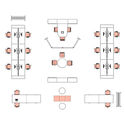
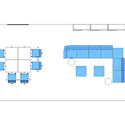
However, innovating doesn't necessarily mean breaking down every wall and creating a play space; the design of an office must take into account the needs and details of each type of work separately. For every function, there are better and worse ways to organize spaces, and some configurations work better for certain activities but not for others. The most important consideration is that the workplace allows interactions while providing spaces for concentration and focus.
The way we approach work has changed, and that is undeniable. Our profession no longer defines us as much as past generations, and new forms of work have been incorporated into everyday life. While technology has revolutionized our ability to perform a variety of daily tasks, many professions have disappeared, some will probably not last much longer and, while others were created.
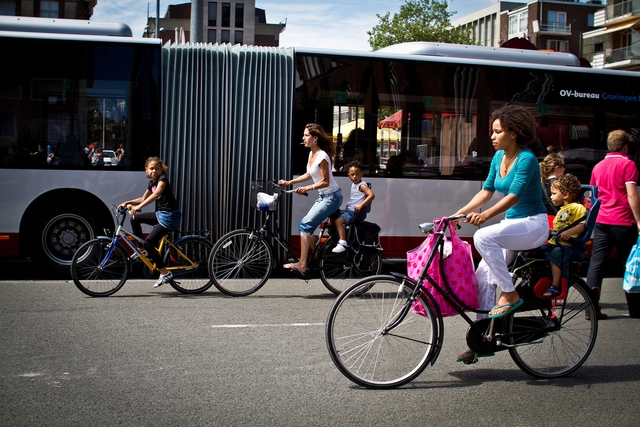
Being able to move around cities is a basic requirement for the development of most human activities. Yet daily trips between home and work, study, leisure, and other daily commitments are not always done under the most comfortable conditions, whether it be because of crowded public transportation or unexpected traffic jams. Urban mobility is a hotly debated topic, from informal conversation circles to technical and scientific seminars. It's hard to find someone who doesn't have an opinion on the subject or some miraculous solution to the problems in their city or region. In fact, we have already posted several articles addressing this issue on this site, from utopian proposals to questions related to the daily lives of most of the population.
It's very likely that you are reading this text in an interior space with the lights on. For most people, modern living entails spending most of the day in closed rooms, bathed in a sum of artificial and natural lights. Yet while artificial light has afforded mankind incalculable possibilities, it has also caused some confusion in our bodies, which have evolved for thousands of years to respond to the stimuli of sunlight in the day and darkness at night. This responsiveness to natural light is called the circadian rhythm or cycle, and describes the 24-hour biological cycle of almost all living beings. Circadian rhythms are primarily influenced by light reception, but temperature and other stimuli also play a role in the process.
Terrazzo is a mix of a concrete mixing base with natural stone fragments; it is characterized for being an extraordinarily resistant and versatile material. Since its frequent use some decades ago, this material has been rediscovered by architects and is used more and more often in works nowadays. Aside from the natural stones, this cement mixing base can include unused elements from construction – nails, bricks, and chunks of wood – resulting in very interesting final products.
The history of concrete dates back to ancient Rome, approximately 2,000 years ago. The so-called “Roman Concrete” is composed of limestone, volcanic ash, and seawater and it permitted the construction of aqueducts, highways, and temples; many of them still stand to this day. Some time ago, this original mix was discovered to form a mineral called aluminum tobermorite, which gets stronger as time goes by.
British company Kast has launched a new version of its traditional pigmented concrete sinks. Since concrete is an extremely versatile material, which combines the characteristics of natural stone with the ability to be molded in different forms, the products show carved surfaces with highly defined textures. The exploration of their linear patterns ranges from smooth horizontal ripples to diagonal folds or 'sharp' and vertical grooves. The organic variations in the colors and textures of the surfaces create a different aesthetic that comes directly from the character of the material.
Videos
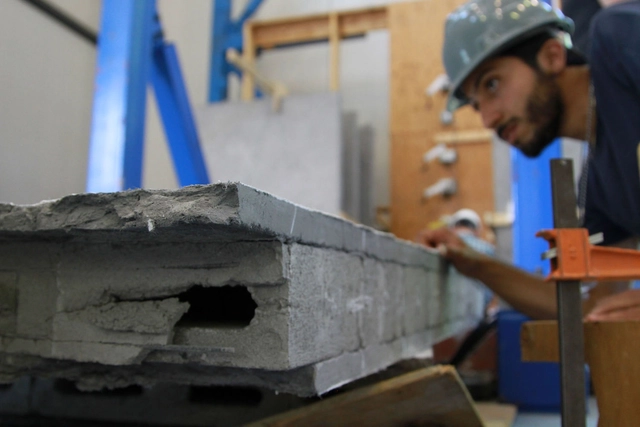
Image Courtesy of TuDelft and the Spong3d project
The term "resilience" has been employed in a wide range of subjects. The scientific definition is the ability of a substance or object to recover its form after suffering some trauma. In other words, it is quite different from resistance, as it concerns the capability of adapting and recovering. In ecology, resilience is about the ability of an ecosystem to respond to a perturbation or disturbance, resisting damage and recovering quickly. In architecture, however, designing something while having resilience in mind can lead to a variety of approaches. Resilient designs are always site-specific. Predicting the potential scenarios for typical building use, and even any disasters that could challenge the integrity of the project and its occupants is an important starting point. Furthermore, it is possible to address adaptive structures and materials that can ''learn'' from their environment and continuously reinvent themselves. Since there are software and robots with algorithms that learn from their contexts, why can't we use the same approach in construction?
We have selected 10 adaptive materials and solutions that work under the concept of Resilience in Architecture and Construction. We are left wondering whether these solutions will someday become mainstream or merely occasional innovations.
Since the 1970s, humanity’s resource consumption began to exceed what the planet could renew in a year. That is, we are withdrawing and polluting nature more than it can naturally recover. According to the World Bank, if the world's population reaches even the projected number of 9.6 billion people by 2050, it will take almost three Earth planets to provide the natural resources needed to maintain humanity's current lifestyle.
Every day an enormous amount of carbon dioxide is released into the atmosphere through industry, transportation, burning fossil fuels and even respiration of plants and living things. As the consequences of climate change become clearer, both governments and private sector companies are setting targets for carbon emission reductions, since these are regarded as the main greenhouse gases, and their high concentration in the atmosphere lead to air pollution and acid rain, among other consequences.
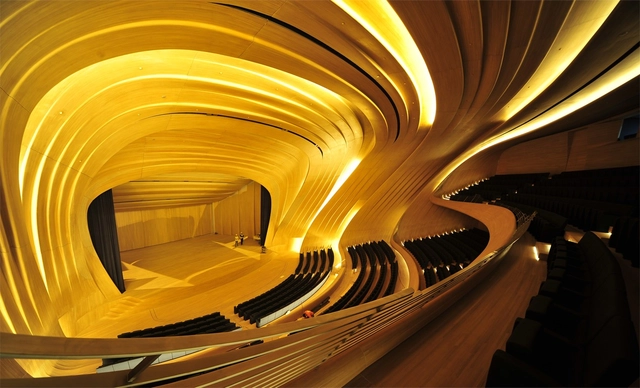
Picture this. You're in a restaurant and you can hear the conversation of the person in the table next to you better than the person you're sitting with. Then, everyone begins to speak louder, making the environment chaotic. Absorption, reflection, reverberation, frequency, decibels, etc. Although acoustics is a complex science that can render buildings almost uninhabitable when not properly thought out, architects do not always possess the theoretical resources nor have the necessary concern to develop acoustically comfortable spaces.
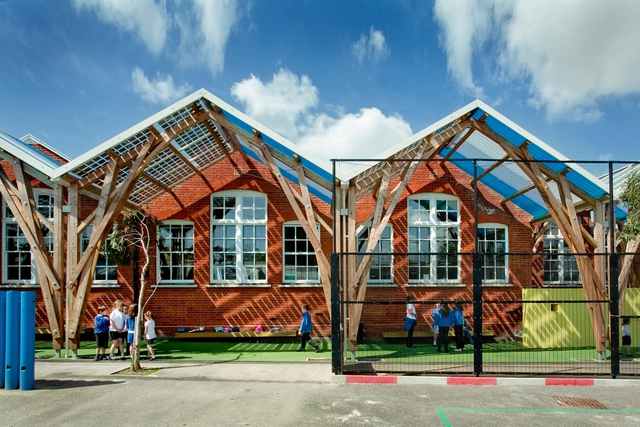
European children spend approximately 200 days a year at primary school. Even though the academic year in most parts of the world is not as long as in Europe, the place where children and adolescents spend the most time, following their own homes, is usually in educational institutions. These can be places for learning, playing and socializing, and as sad as it may be, they can also be safer places for children living in environments of abandonment, hunger, and violence, providing them with opportunities and even meals. A United Kingdom-wide survey found that the differences in physical characteristics of classrooms accounted for 16% of the variations in learning progress over the course of a year. In other words, the better a classroom is designed, the better children perform academically. According to the study, the factors that most affect children are sunlight, indoor air quality, acoustic environment, temperature, the design of the classroom itself and the stimulation within it.
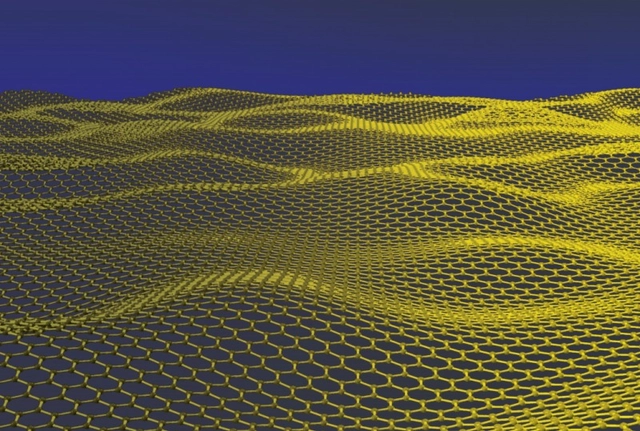
Ever since Manchester University first isolated Graphene in 2004, it has been widely referred to by its properties as a promising material through diverse research that focuses on reaching a range of uses in the most varied industries. Graphene is known to be one of the strongest materials known to science due to its composition of a single carbon atomic layer in a hexagonal mesh. It is also one of the finest materials known to mankind, 200 times stronger than steel yet 6 times lighter. Plus, it is an excellent heat and electricity conductor, aside from its interesting light absorption qualities. When combined with other elements, including gases and metals, it can produce different new materials with highly superior properties.












.jpg?1567178154&format=webp&width=640&height=580)













.jpg?1560778703&format=webp&width=640&height=580)