At the apogee of the Roman Empire, its territory extended over more than five million square kilometers, between Europe, Asia, and Africa. Rome exercised power over a population of more than 70 million people, which equated to roughly 21% of the world population at the time. In fact, as we have already shown in another article, all roads led to the city of Rome. The great seat of the empire and the material and immaterial heritage left by it is immeasurable, and even today researchers seek to understand its full impact on the current world. From the beginning of its expansion in the 6th century BC until its fall in the year 476 AD, the legacy left by the Romans encompasses areas such as law, plastic arts, Latin (which originated many different languages), systems of government, and, importantly, architecture.
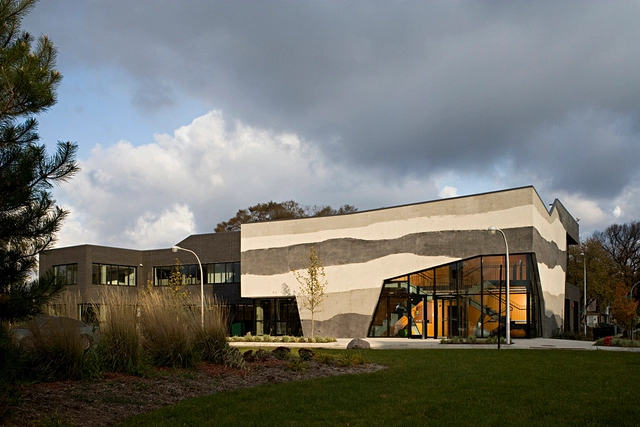
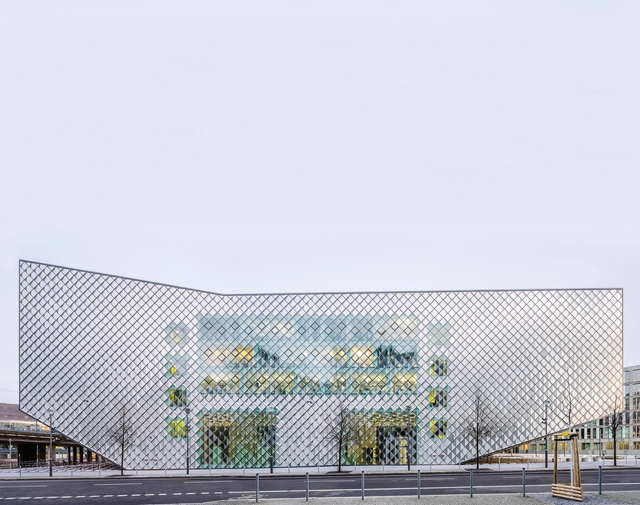
SOS Children’s Villages Lavezzorio Community Center / Studio Gang. Image Cortesia de Studio Gang
Having been utilized as early as the Roman era in buildings of almost every scale, it is almost impossible to think of a building that does not have at least one concrete element. In fact, it is the most widely used construction material in the world, due to its versatility, resistance, ease of handling, accessibility, aesthetics, and other factors. At the same time, its manufacture is also one of the main polluters in the atmosphere, mainly due to the fact that the cement industry emits around 8% of all global emissions of carbon dioxide (CO2).
In addition to its intensive production, concrete is an extremely rigid material, heavy and composed of cement, water, stone, and sand. Thus, would it be possible to continue to use concrete sustainably after demolition, eliminating its disposal as mere waste and overloading landfills?
We may not give them the importance they deserve, but toilets are fundamental to our daily lives and our health. There are two "golden rules" that articulate their usefulness: they 'separate' us immediately from our waste, and they transport them for treatment, preventing them from contaminating the environment or making people sick.
In addition to being a good place to think about new ideas, browse Instagram, and answer emails, the toilet helps us stay healthy, an attribute we take for granted until we lose access to it.
Unfortunately, we've probably all experienced the unfortunate surprise of finding mold at home. These undesirable black and greenish spots, usually seen in dark, damp corners, may seem harmless at first, but they pose a major problem for buildings and occupants. Because the tendency of mold is to continuously spread, it gradually contaminates other materials and surfaces, causing a characteristic smell and contaminating the air. But how is it possible to control it and, mainly, to prevent it from occurring through architectural design?
With the amount of information and technology we currently have, whether from academic research or from the manufacturers of construction products themselves, there is very little room for empiricism and experimentation when we design on the most diverse scales. Even worse is when design specification misconceptions can pose huge costs and headaches. However, long before construction and occupancy of the building, it is possible to clearly understand how the construction will function thermally, its photovoltaic power generation capacity, and even how much power will be required to cool and/or heat it. There are software, tools and applications that allow you to quantify all these design decisions to avoid errors, extra costs, unnecessary waste generation, and ensure the efficiency of all materials applied.
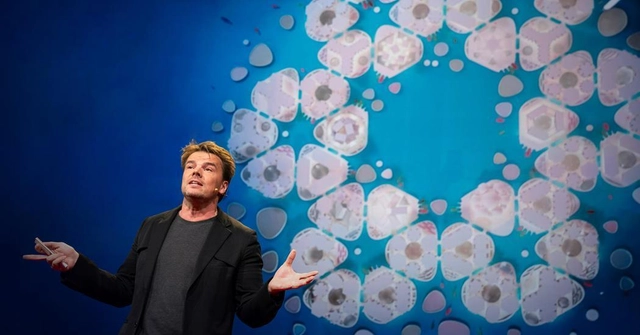
After the great repercussions of Bjarke Ingels' meeting with Brazilian President Jair Bolsonaro last week, the Danish architect released a statement on why he came to Brazil. The meeting also brought together a delegation from the Be-Nômade group, which plans to invest in sustainable tourism in the country and the Minister of Tourism, Marcelo Álvaro Antônio. Read on for the text titled "Our Role and Impact in the World.
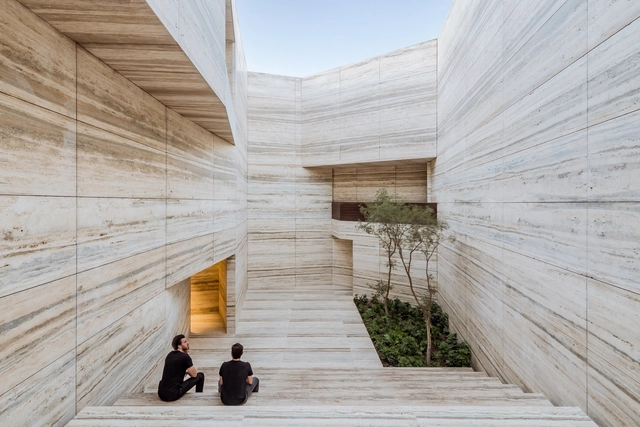
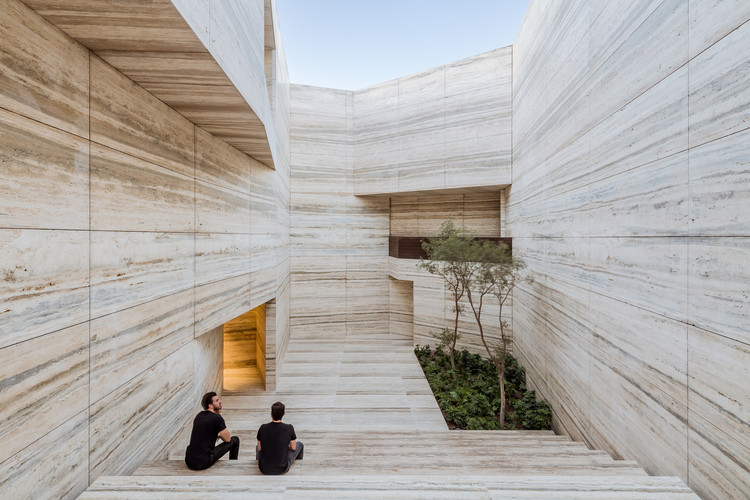
Michelangelo's sculptures. The ancient Greek temples. Castle interiors and palaces. The iconic Barcelona Pavilion of Mies van der Rohe. When we approach the history of architecture and sculpture, it is inevitable that we speak of marble. Originating from a chemical reaction in limestone when exposed to high pressures and temperatures for thousands of years, this notable material is a metamorphic rock generally found in regions where volcanic activity has occurred. Its extraction, by itself, is already a spectacle.
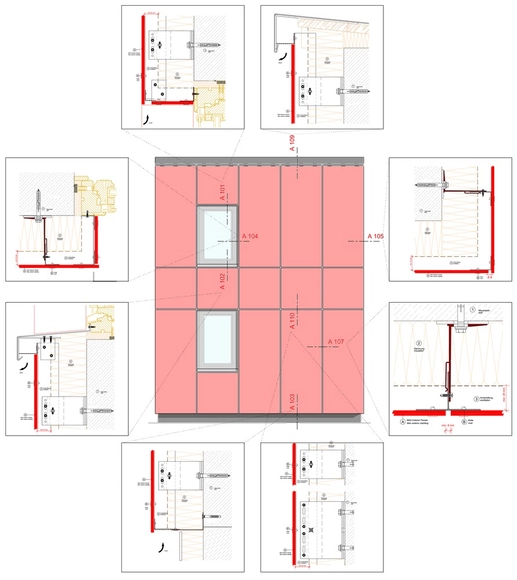
A facade must meet steep requirements as both the first skin that protects a building, its interiors, and its materials, and as the first thing a person sees. In addition to weather resistance and durability, its appearance is extremely vital for any architectural project. Prefabricated facade panels provide a clean, precise, and sophisticated finish to buildings and sport high versatility through different patterns and shapes.
It's very common for architects to use more than one program when developing a project. While one software can help us with the conceptual design and image of the project, other programs may work better for the development of technical documents, such as drawings, sections, and details. On the other hand, other software products can help us make a three-dimensional model, and yet others allow us to create renderings. There are also programs used for the postproduction of images, videos, or even to diagram panels and portfolios. The list is long and as a result our computer processors may suffer.
Although with BIM (Building Information Model) programs, this pilgrimage between programs tends to decrease when covering the entire design process, understanding the extensive list of file extensions is not as simple as it seems. In addition, it's not uncommon to find incompatibilities between versions and file types when, for example, the project must be opened on complementary equipment. Next, we review the file extensions most used by architects, focusing mainly on BIM programs.
Human economic activities are naturally dependent on the global ecosystem, and possibilities for economic growth may be limited by the lack of raw materials to supply factory and trade stocks. While for some resources there are still untapped stocks, such as certain metals and minerals, there are others, such as fossil fuels and even water, with serious availability issues in many locations.
Have you ever been stuck for hours obsessing over a font that matched your work? Before starting a project, do you already think about which font you will use? Do you get annoyed when you read an important message written in Comic Sans? Or do you feel offended when a mundane sentence is written in all caps? Rest assured, you are not alone.
Architects and designers constantly use graphic elements as expressive means in the schematization of their works. Among them, the most common are the drawings, in a constant variety of techniques, styles, and patterns. But among the elements that make up the boards, panels and drawings, techniques and models, there is a particular fragment that helps them in composition and identity: the font.
Walking into an electrical store can be intimidating. At first glance all the lights are on, and the thousands of chandeliers and lamps are blinding. When you walk toward the lamps, you see shelves with dozens of options, shapes, colors, prices, and uses. In each package, informational tables with numbers that seem to make no sense at all. Lumens, color temperature, wattage. There are so many confusing terms. But before you give up on everything and rush back with the cheapest option, turning the lamp on only for it to make your house or the house you designed feel like a sinister back-country funeral home, some basic information can help you a lot. We know that good lighting design can greatly improve a building or even its occupant's productivity. And poorly designed lighting can ruin it or negatively affect its occupants. To help out, we've gathered some information that can help you the next time a light bulb burns out in your home.
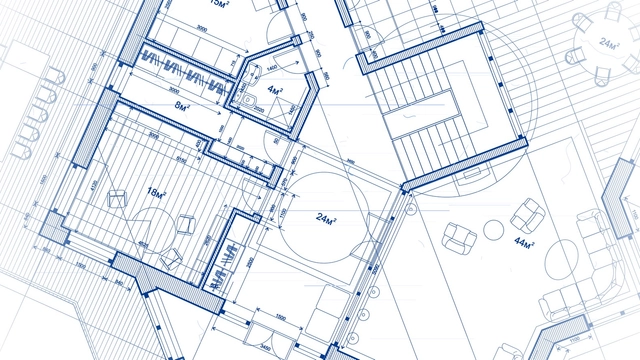
Building Information Modeling (BIM) is an increasingly common acronym among architects. Most offices and professionals are already migrating or planning to switch to this system, which represents digitally the physical and functional characteristics of a building, integrating various information about all components present in a project. Through BIM software it is possible to digitally create one or more accurate virtual models of a building, which provides greater cost control and efficiency in the work. It is also possible to simulate the building, understanding its behavior before the start of construction and supporting the project throughout its phases, including after construction or dismantling and demolition.
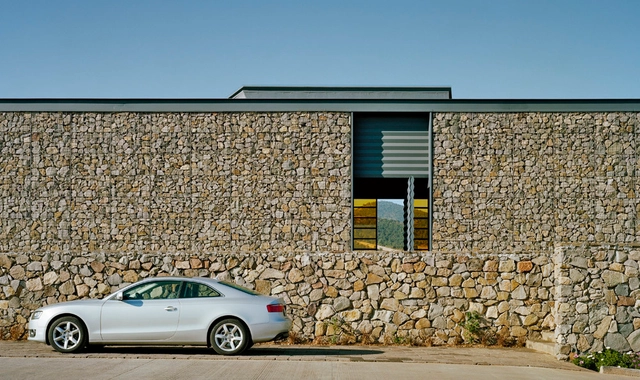
Widely used in infrastructure, gabion walls are structures made of mesh metal cages filled with stones. These permeable walls use galvanized steel wire to withstand outdoor conditions.
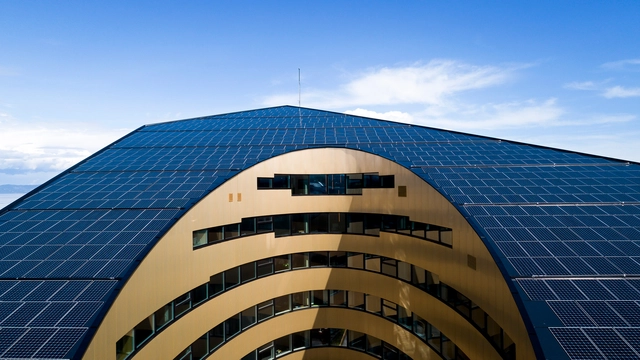
Once restricted to space stations and satellites, photovoltaics are now gaining popularity and becoming an increasingly viable option. Every day, the sun releases an enormous amount of energy, far more than the entire population consumes. Being that the sun is a sustainable, renewable, and inexhaustible source for generating electricity, not using it seems almost counter-intuitive, especially considering the social and environmental impacts of other forms of energy generation. But the technology to create electricity from the sun is by no means simple and still has some limitations, the most significant being price. The following article attempts to explain some basic concepts about this process, and to highlight important considerations for designing a solar energy system.
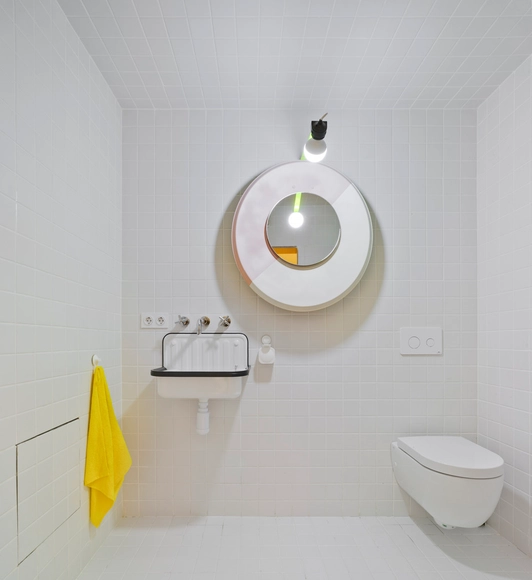
Square, rectangular, hexagonal, matte, shiny. It's hard to think of a more versatile flooring material than tiles. They're also known for their high durability, ease of maintenance and installation, and are among the most common choices for covering floors and walls, whether wet or not. Following are 10 common questions about ceramic tiles, and their answers:
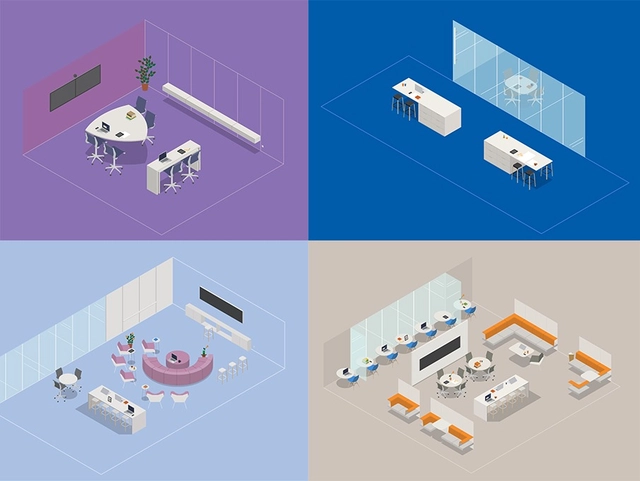
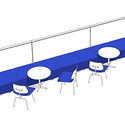
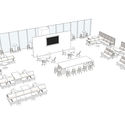
Today's generation no longer sees work in the same way as previous generations. New company models and occupation possibilities have changed the spaces where people develop their professional activities. Working from home, from coworking spaces, or remotely from anywhere in the world is already a fairly common reality. But a number of companies still do not utilize or create spaces where their employees can work together, collaborating in the same environment. In addition to shared culture that companies often try to create, it is essential that the design of an office takes into account the needs and particularities of each type of work and encourages communication and interaction, while providing places for concentration and focus. As generations and corporate cultures change, it is natural for the office space to move away from traditional layouts with cubicles, tables, and meeting rooms.
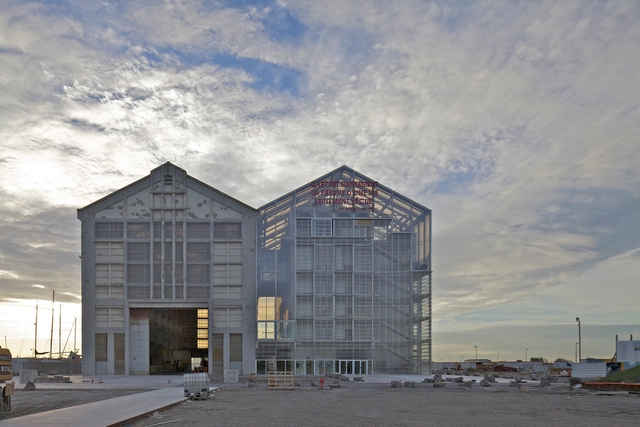
Facades are the interface between the interior and exterior of a building. They are the most striking and visible parts of a building, they protect it from external agents and are one of the main contributors to creating comfortable environments since it is where thermal gains and losses occur. Just like our skin, an extremely versatile organ of our body, it should be natural for it to be the part of the building which bears technology capable of becoming adaptable to the environmental conditions of the place where it is located.