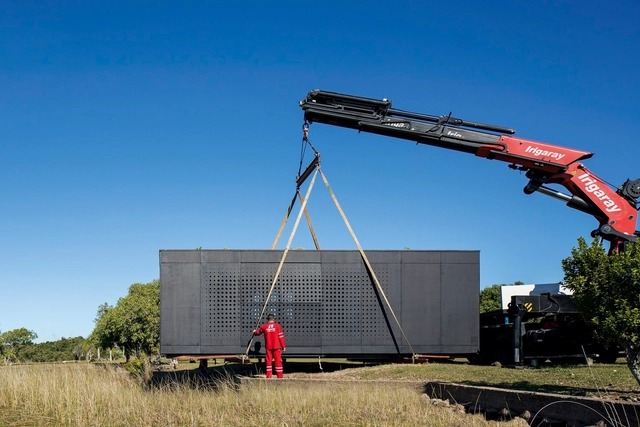
The construction industry moves a huge amount of resources, employs millions of people, and is a fairly accurate gauge for the economic situation of different countries. If the economy goes down, construction shrinks, and vice versa. Members of the construction industry include mining companies, contractors, material manufacturers, architects, engineers, governments, real estate, and more. In other words, many agents participate either directly and indirectly in the industry. But construction is also considered to be one of the most backward and resistant industries to embrace new technologies, instead opting to replicate traditional ways of doing less efficient work with high rates of waste. A study by McKinsey & Company showed that, unlike other industries, industry productivity has remained stable in construction in recent years, despite all the technological progress that has occurred.
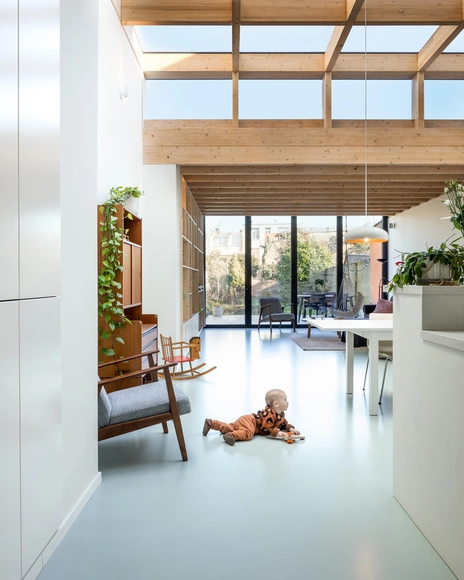
In recent years, we have published many articles about wood. Addressing trends of use, possibilities for log wood, panels, curves, and finishes, innovations in tall building structures, and wood's behavior towards fire, these articles have explicated a wide variety of the material's applications and characteristics. A specific type of wood, Cross Laminated Timber (CLT), has emerged as highly structurally efficient with thermal, seismic, and even sensory benefits, described by specialists as the concrete of the future. But when we post these articles on social media, we frequently encounter comments from our readers concerned about the impact of deforestation. Although we may see wood as a great building material of the future, we must ask ourselves: is it possible to continue cutting down trees and using their wood while still calling it sustainable?
In the Genesis flood narrative, Noah built an ark after a call from God, who decided to flood and destroy all life on Earth due to the misbehavior of humanity. Only Noah's family and a couple representatives of each species of animals could enter the huge vessel and save themselves. In the bible, the ark is described in the exact measurements of 300 cubits in length by 50 cubits in width by 30 cubits in height. This was a unit used at the time based on the length of the forearm, measured from the tip of the middle finger to the elbow. A Dutchman who has devoted himself to building a replica of Noah's Ark, without success in finding a correspondingly accurate value in the metric system, used his own body measurements as a module. Modulation in architecture means adapting the project to a defined measurement based usually on a specific dimension or material. Whether it is a meter, a brick, a tile, or a container, it serves to guide the design process and make it more efficient and sustainable.
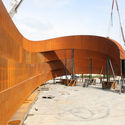
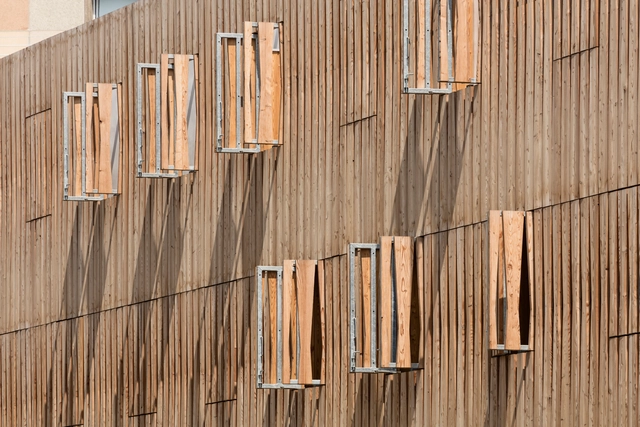
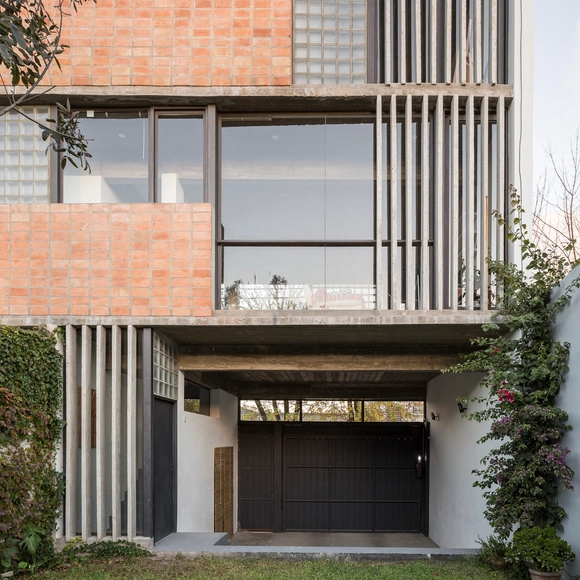
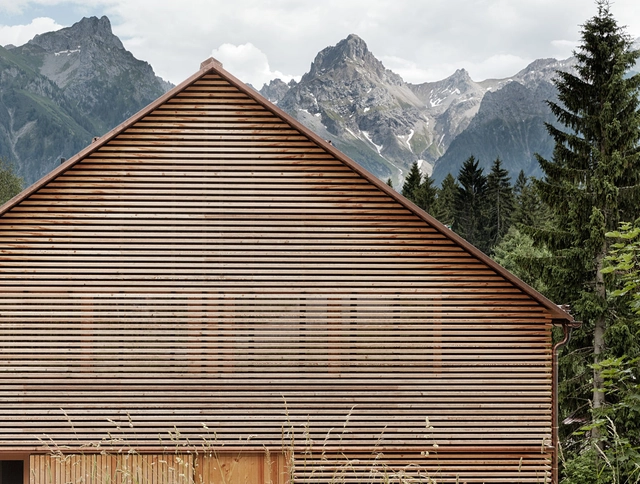
When designing the Nordic Pavilion in Venice, Sverre Fehn incorporated Nordic architectural elements in unusual ways. One of the most attention-grabbing elements of the building is its laminar roof cover of white concrete, which is broken by trees planted inside the building blocking the sun's rays and filtering the light. Depending on the angle, the roof blades allow visitors to see the colors of the sky and the canopy of the trees, bringing dynamism to the pavilion's lighting and movement. In fact, the use of parallel slats on facades, walls, and roofs is a tradition that comes from Nordic architecture and has spread throughout the world. In this article we will cover some examples that use this element, including its variety of possibilities and the best ways to amplify their effect.
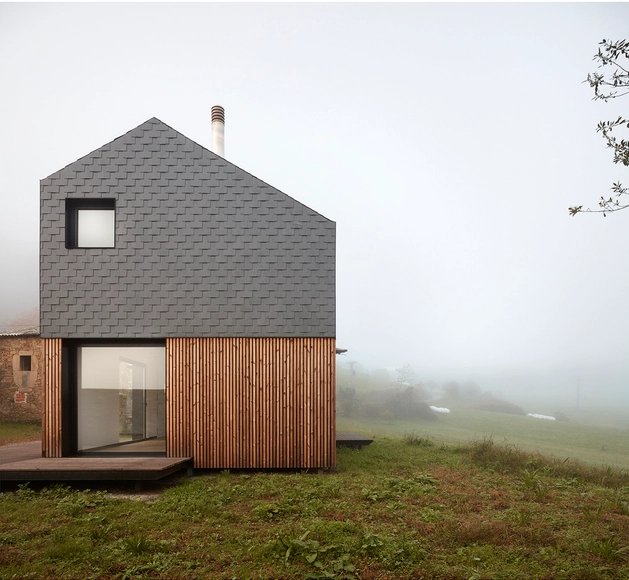
Every child has drawn a house. Perhaps a sunny day with some clouds, a leafy tree, a family with a dog, low wooden fences, or even a car. But in these drawings, they will almost certainly draw a simple rectangle with a gable or hip roof. This archetype of the house appears in virtually all cultures, and even today many architects use it for contemporary projects.
In addition to the primary function of draining rainwater and snow, and thus protecting the building from the weather, roofs can be an important aesthetic device for composing a project. In modern architecture, waterproof roof slabs emerged as a popular alternative, but sloping roofs have continued to captivate both clients and architects. In this article, we will cover the various types of roofs and, more specifically, the manufacturing process and characteristics of natural slate tiles.
Cooking shows have never been more popular around the world than they are now. Whether from recipes, reality shows, or documentaries, writer Michael Pollan points out that it is not uncommon to spend more time watching than preparing our own food. This is a very curious phenomenon, as we can only imagine the tastes and smells on the other side of the screen, which the presenters often like to remind us. At the same time, when we watch something about the Middle Ages, polluted rivers, or nuclear disasters, we are relieved that there is no technology to transmit smells across the screen. In fact, when dealing with odors (more specifically the bad ones), we know how unpleasant it is to be in a space that doesn't smell good. When dealing with buildings, what are the main sources of bad smells and how can this affect our health and well-being?
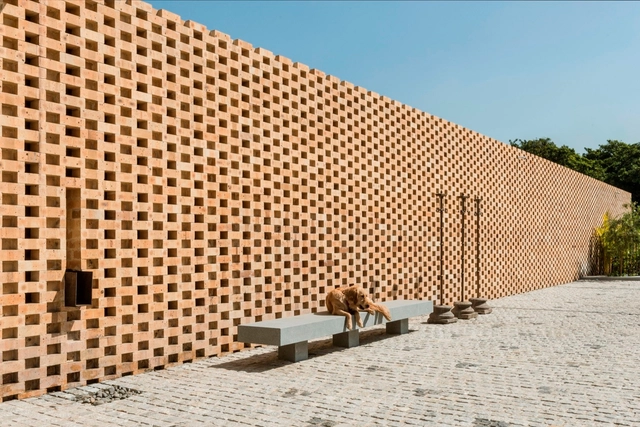
Ranging from yellow, to gray, to traditional red and orange, bricks are ubiquitous in many of our cities and widely used in construction. Briefly, the manufacturing process of traditional bricks involves molding clay and firing it in ovens, facilitating the creation of solid blocks, perforated blocks, cobogós, tiles, and other shapes. Ceramic bricks are inexpensive; easy to find; boast strong resistance, thermal inertia, and finish; and do not require such specialized labor for construction. But if the installation is done near sources of high heat, the common brick will end up cracking and breaking, making refractory bricks more suitable. But what does that mean?
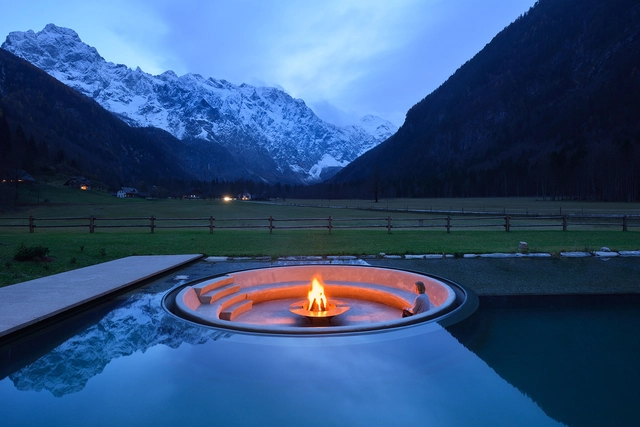
Yuval Noah Harari points out that, around 300 thousand years ago, Homo erectus, Neanderthals, and ancestors of Homo sapiens already used fire daily. According to the author of the international bestseller “Sapiens,” fire created the first significant gap between man and other animals. "By domesticating fire, humans gained control of an obedient and potentially limitless force." Some scholars even believe that there is a direct relationship between the advent of the habit of cooking food (possibly due to the domestication of fire) and the shortening of the intestinal tract and growth of the human brain, which allowed human beings to develop and create everything we now have.
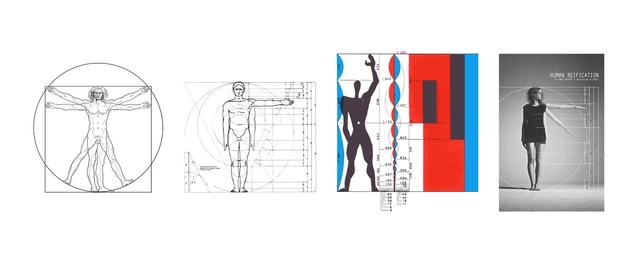
“The whole hand will be the tenth part of the man; From the bottom of the chin to the top of the head is an eighth of its height; From the nipples to the top of the head it will be the fourth part of the height.” If you're still here without going to get a measuring tape, these phrases were written by Marcus Vitruvius Pollio, a Roman architect who lived in the 1st century BC, who delineated them in his influential treatise “De Architectura Libri Decem” – Ten Books on Architecture. The data presented by Vitruvius was compiled and depicted visually around fifteen hundred years later by Leonardo Da Vinci in his famous work “Vitruvian Man,” which is reproduced in all different contexts today, from book covers to kitchen aprons.
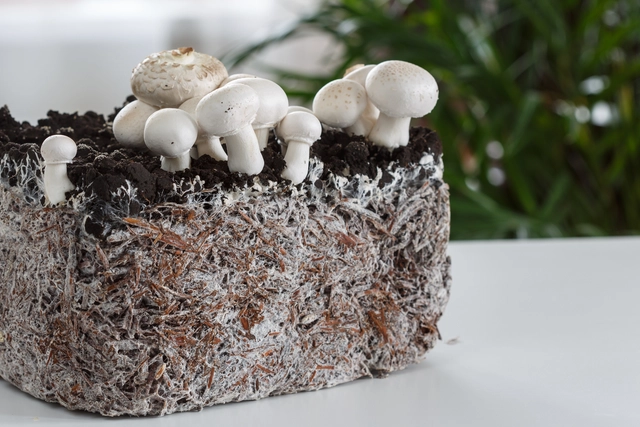
Fungi are everywhere. In the air, in the water, in our bodies, in the trees, in the ceilings of our bathrooms, underground. They can be mushrooms (edible, medicinal, hallucinogenic, or very poisonous), or take other simpler forms, such as molds. They can trigger illnesses, but they can also produce antibiotic remedies, such as penicillin, or help ferment amazing cheeses and breads. Could they also be the future of packaging and building materials?
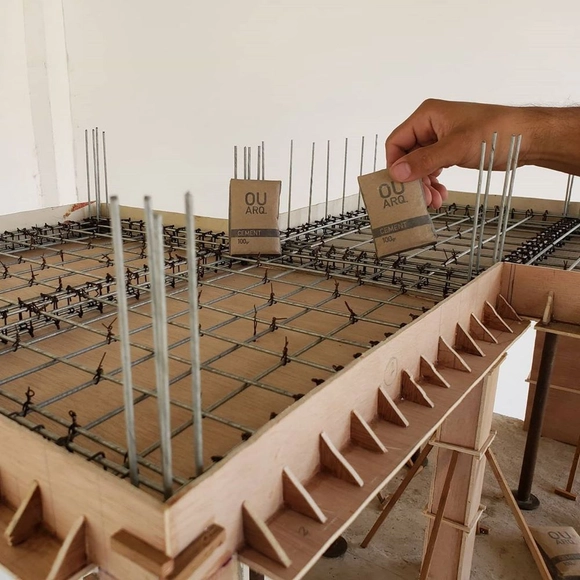
Everyone loves models, but not everyone loves making them. For some, models bring up memories of fingers full of dry glue, cuts from sharp pieces, wasted materials, and large doses of frustration. For others, with the unique ability to physicalize drawings easily and beautifully, making small-scale models can even be fun. But, of course, on the internet, there will always be someone who can take any activity to unbelievable levels of achievement. In model building, the OUROBOROS ARQ YouTube channel takes this role. With almost 2 million subscribers, and videos with over 50 million views, the channel documents the construction processes of highly complex miniature buildings.
Between 1950 and 2011, the world's urban population increased fivefold. In 2007, for the first time, the number of people living in cities surpassed the number of people living in the country. In 2019, the urban population had already reached 55% of the total population, and by 2050, it is estimated that just over two thirds of the population will live in urban areas. However, this growth is not constant in all parts of the world: according to the UN World Urbanization Prospects 2018 Report, the global urban population is expected to grow by 2.5 billion inhabitants between 2018 and 2050, with almost 90% of this increase concentrated in Asia and Africa. As populations in these areas increase, so will the demand for energy, food, and water, making resources more scarce. This scarcity will be compounded by the negative impact of urbanization on the climate and the environment.
For many, the aesthetics of wood are powerfully enchanting. With a huge diversity of species and innumerable variations in colors, weights, and textures, wood is one of the most highly appreciated materials of all time. But the unrestrained logging of forests for use in construction has had and will continue to have enormous environmental impacts if precautions such as sustainable management, legitimate certification, or reforestation are not taken. Being an organic material, when used for construction, wood tends to morph under conditions of humidity, heat, and loads, and its fibers eventually deform over time. In addition, wood is a material that does not respond well to environments where it is soaked and dried repeatedly, which can cause it to rot after some time if it is not adequately waterproofed. Therefore, there are some situations where using wood may not be a good idea.
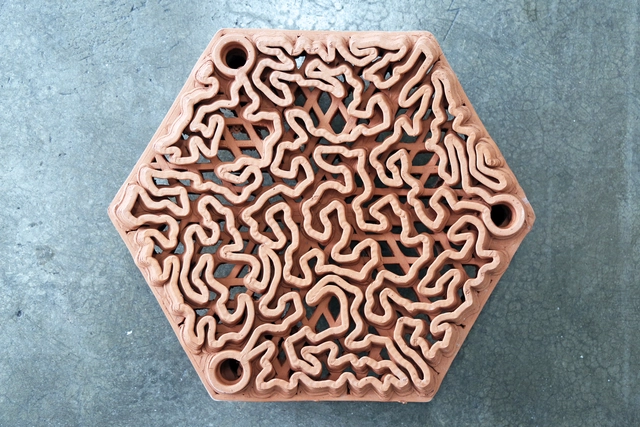
Corals are fundamental to marine life. Sometimes called tropical sea forests, they form some of the most diverse ecosystems on Earth. They serve as a refuge, breeding, and feeding area for dozens of species in the sea, and their absence can negatively affect local biodiversity to a tremendous degree. Yet just as humanity pollutes and destroys, it can also remedy and encourage the creation of more life. This is why shipwrecks of old vessels or the sinking of concrete structures for the creation of artificial reefs are frequently reported as providing immense potential. In Hong Kong, researchers have been developing 3D printed structures using organic materials that can lead to the creation of new opportunities under the sea.
All too often, architects and designers spend hours searching for textures and materials to represent their visions. This struggle takes many forms: from scrolling through Google, Pinterest, and databases in search of the perfect texture, to manually creating one over the course of several hours, or even days. In either case, the result is frequently painful, and rarely perfect. A database organized, reliable, free and easy to use is not always a simple thing to find.
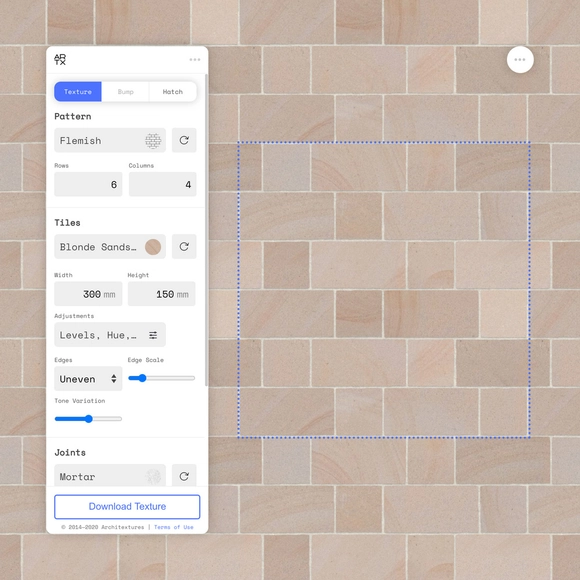
Architextures began in 2014 as a library of high-quality image files, with textures submitted by users or created by the platform itself. Over time, the platform’s creator Ryan Canning noticed that, in his professional work as an architect, the array of static image files available online did not meet the specific textures he was looking for in his design projects. Frustrated with the endless process of searching, editing and overlaying textures in Photoshop, Ryan reinvented Architextures in 2019 as an interactive tool where designers like himself could create specified, high-quality textures in seconds. And importantly, being free to use for personal and educational use, with professional accounts available for a small fee to support the tool’s development.
At the 2014 Venice Biennale, celebrated architect and curator Rem Koolhaas chose an unusual curatorial theme. Rather than exploring the major issues that plague modern society or their manifestations in the profession of architecture, the event's theme, "Fundamentals," and its main exhibition, "Elements of Architecture," examined in detail the bare fundamentals of buildings, simple elements used by everyday architects for everyday designs. According to Koolhaas, “Architecture is a profession trained to put things together, not to dismantle them. Only by looking at the elements of architecture under a microscope can we recognize cultural preferences, technological advances, changes triggered by the intensification of global exchange, climatic adaptations, local norms and, somewhere in the mix, the architect's ideas that constitute the practice of architecture today.”
The Brundtland Report, 1987 - "Our Common Future" - introduced the notion that the sustainable use of natural resources must "meet the needs of the present generation without affecting the ability of future generations to meet theirs." Since then, the term sustainability has been popularized and, often, trivialized in our daily lives. In the construction industry, this is no different. As much as we know that to build, we need to destroy, how is it possible to mitigate the effects of construction during the useful life and demolition of buildings? A sustainable building, in its design, construction, and operation, must reduce or eliminate negative effects overall and may even generate net positive impacts on the climate and environment – preserving resources and improving the quality of life of the occupants simultaneously. To say that a building is sustainable is easy and even seductive. But what exactly makes sustainable construction?
Answering this question is not a simple exercise. That is why, in the last 30 years, several building sustainability certifications have been created. Through outsourced and impartial evaluations from different sources, they aim to verify the sustainable aspects of any construction. Each of them addresses particular building elements and is typically focused on certain regions of the world. While there are some certifications that verify whether the building meets certain efficiency criteria, others create different classifications, assigning a score based on these evaluations. Below, we list some of the primary sustainability certifications around the world – ranked alphabetically – and include their main architectural applications alongside a brief explanation:
In the dome of the Pantheon in Rome, several construction techniques were used to allow such a bold construction to stand. One concerns the composition of the concrete (in this case, non-reinforced concrete) with different densities throughout the structure. Closer to the top, lighter stones were used in the mixture, reducing the dome's weight retaining the solidity of the base. Another technique was the inclusion of “coffers”, which are nothing more than subtractions in the concrete, reducing the weight of the dome while maintaining a cross section sufficiently robust to support its own weight. Built almost 1,900 years ago, this building still surprises us with the genius of the solutions. Using a quantity of materials just high enough to fulfill its primary function, and creating intelligent structures as a result, is just one of the lessons that this building provides.