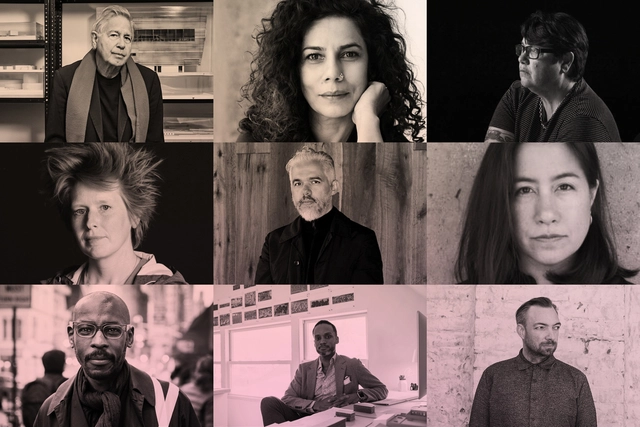
Top left to right: Bernard Tschumi, Anupama Kundoo, Catherine Opie. Middle left to right: Erin Besler, Héctor Esrawe, Ana María León. Bottom left to right: Mario Gooden, Sekou Cooke, Liam Young. Image Courtesy of SCI-Arc
SCI-Arc (Southern California Institute of Architecture) was created in 1972 and based on the concept of a "college without walls". Its original name was New School, which symbolized a paradigm shift in teaching architecture, focusing on a horizontal relationship between teachers and students and on experimentation, making it one of the few independent architecture schools in the world. In 2022, the institution turns 50 and has planned a calendar full of events and projects to take place throughout the year.
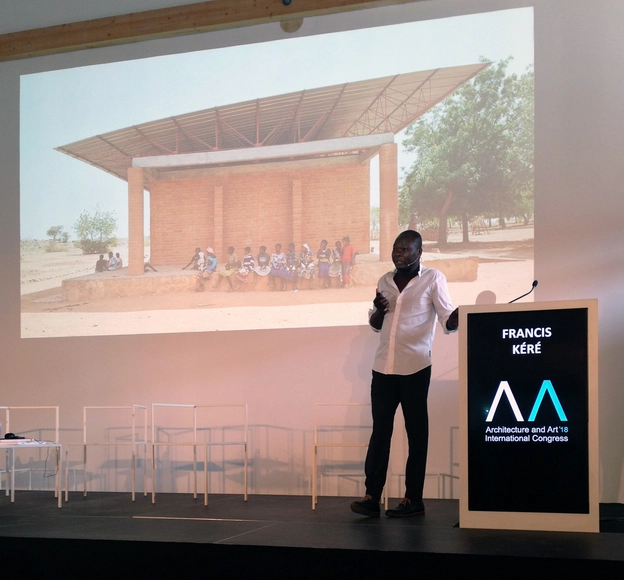
"I Draw on Paper, but I Prefer to Draw on the Ground". This phrase caught my eye during Diébédo Francis Kéré's speech at the AAICO (Architecture and Art International Congress), which took place in Porto, Portugal from September 3 to 8, 2018. After being introduced by none other than Eduardo Souto de Moura, Kéré began his speech with the simplicity and humility that guides his work. His best-known works were built in remote places, where materials are scarce and the workforce is of the residents themselves, using local resources and techniques.
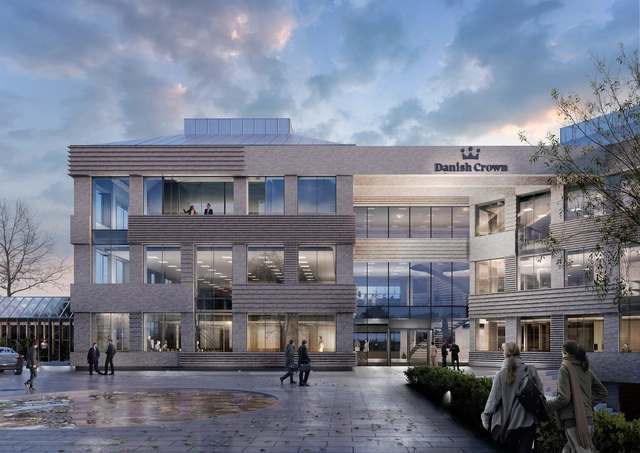
It is crucial to consider the future environmental impact of everything we create. Climate change remains high on the global agenda, and every industry must take part in the goal of reaching Net Zero. One of the more challenging industries concerns construction, which plays a vital role in the process of decarbonization and is constantly encountered with challenges to become greener. Therefore, it demands innovative techniques and development of data to find new and sustainable processes. One solution is to introduce and design both cleaner and more efficient materials. Bricks are a good example, as they can be used in building constructions to ensure a circular process and minimize carbon emissions, being an extremely durable material that can be produced with more sustainable techniques.
In recent years, much attention has been given to timber constructions. Being a sustainable and renewable material, which captures a huge amount of carbon during its growth, the innovations related to this material have allowed for increasingly higher constructions. However, when we talk about wood we approach an immense variety of species, with different strengths, nuances, potentials, limitations and recommended uses. While there are extremely hard and heavy woods, with strengths comparable to concrete, there are other soft and soft woods that are suitable for other purposes.
The clothes used by nomadic peoples in the desert (Bedouins, Berbers, Tuareg, among others) are usually dark, long and made of heavy fabric. Contrary to common sense, which would recommend light, pale and short clothes for a hot climate; heavy and loose clothing favors air convection, creating a constant flow of air along the body, providing thermal comfort in arid climates. For buildings, the analogy works. When approaching energy efficiency and project performance, we will inevitably talk about its envelope, among other aspects of the project. A successful solution in one location, will not always be efficient in another.
During the last 2 years we have created a series of articles on wellness and sustainability focused on the construction industry. But how do projects, according to their demands and context, apply the solutions to make them, in fact, efficient and perform well?
A corridor that is too narrow, a poorly located switch or a simple unevenness can go completely unnoticed to many, but they can also be insurmountable barriers for someone with a disability. We all have a family member or acquaintance with mobility difficulties and, possibly, we might also experience them at some point in our lives. Architecture has the power to create truly inclusive spaces so that people with disabilities can have the autonomy to perform all necessary daily tasks, without needing the help of others. Integrated into architecture, technology can play an important role in this context, making the spaces in which we live even more accessible to everyone.
It is difficult to measure, observing a completed building, the amount of work, resources and knowledge that were deposited there. All decisions made influence in some way the performance of the building and its durability. As for the execution details, not all architects allow the dissemination of their constructive solutions. There are professionals, however, who go against the grain and focus on disseminating knowledge, identifying common design decisions that can lead to pathologies (such as leaks, rot, corrosion, mold and odors) and more economical ways to avoid them. This is the idea behind Building Science Fight Club, an Instagram profile whose purpose is to explain some issues and critically analyze certain constructive details and ways of installing materials. We spoke with Christine Williamson, creator of the platform, about her journey. See the full interview below:
In each of our nostrils, two types of nerves play an essential role in our health. The olfactory and trigeminal nerves capture odors and send information to the brain, more specifically to the olfactory bulb, for interpretation. In turn, this communicates with the cortex, responsible for the conscious perception of odors, but also with the limbic system, which controls mood and unconscious emotions. This is the body's defense against bad smells or irritating or strong odors, creating aversion to those that could harm us in some way.
But not all pollutants can be detected through this sophisticated system, and they have an intrinsic ability to positively or negatively influence our health. In fact, research has shown that air quality can be quite poor and even worrying in many indoor environments, where we spend about 90% of our lives. This is usually caused by inadequate ventilation of the space, external pollution, and biological contaminants; but mainly chemical contaminants from internal sources. That is, the building materials used in space. Therefore, there are some products that should be avoided whenever possible.
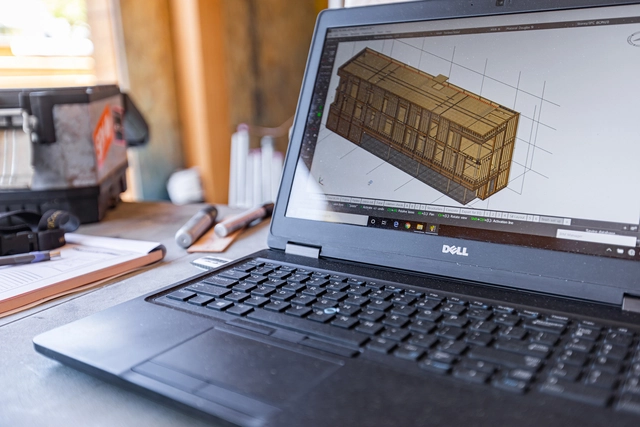
In the original design for the Sydney Opera House, Jørn Utzon envisioned the shells supported by precast concrete ribs under a reinforced concrete structure, which turned out to be prohibitively expensive. As one of the first projects to use computational calculations, the final solution - reached jointly between the architect and the structural engineer - consisted of a precast ribbed system of concrete shells created from sections of a sphere. At the Guggenheim Museum in Bilbao, the project team used CATIA software (typically used by the aerospace industry) to model and materialize the complex curvilinear shapes of the titanium-coated volume designed by Frank Gehry. Challenging projects tend to spark the creativity of those involved to make them possible, but there are constructive systems that interact well with existing technologies. This is the case, for example, with engineered wood and the BIM system. When used simultaneously, they usually achieve highly efficient and sustainable projects.
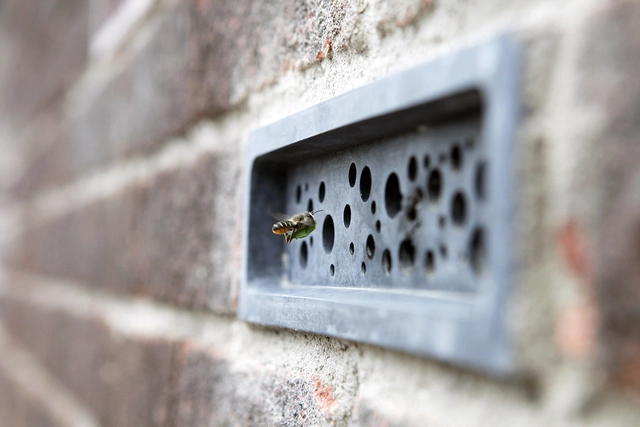
Humanity's relationship with insects is ancient and complex. While they can spread disease and wipe out crops, they are also vital to our survival on Planet Earth, as pollinators and recyclers. Edward Osborne Wilson, a leading American biologist, stated in one of his articles that “If insects were to vanish, so would nearly all flowering plants and the food webs they support. This loss, in turn, would cause the extinction of reptiles, amphibians, birds and mammals: in effect, nearly all terrestrial animal life. The disappearance of insects would also end rapid decomposition of organic matter and thus shut down nutrient cycling. Humans would be unable to survive.”
Especially in the case of bees, public opinion has changed in recent years and their importance in food production has sparked warnings about the indiscriminate use of poisons and pesticides around the world. But unlike nature, with its meanders and countless possibilities for resting places, our modern cities and buildings generally do not create adequate environments for insects, and even birds or other animals. The English company Green&Blue has been working on this and creating refuges to incorporate nature into our buildings. We spoke with them to better understand these products.
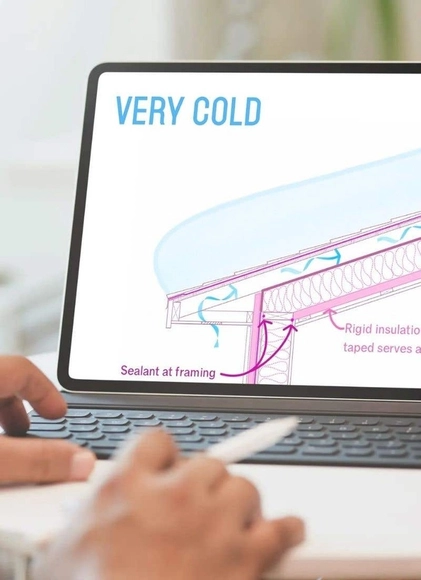
When talking about energy efficiency in buildings, it is inevitable to mention thermal insulation. We rarely see it in a finished building and, even in the technical drawings, the insulating layer appears as a thin hatch. But this is an element that is of vital importance, as it acts as a barrier to the flow of heat, hindering the exchange of energy between the interior and the exterior, reducing the amount of heat that escapes in winter and the thermal energy that enters in the summer. In a building with good thermal insulation, there is less need for heating to keep the house at a pleasant temperature, also reducing its carbon footprint. Currently, there are many countries that require a minimum level of thermal insulation for buildings, with increasingly strict parameters. But how should this issue be dealt with in the near future, with the worrying climate crisis forecast?
It is fascinating to think how Scandinavia - such a small geographic region - has had such a strong influence on design, starting in the middle of the 20th century and continuing into the present day, globally. Scandinavian design is known for combining simplicity, craftsmanship, elegant functionality and quality materials. Sophistication is present in its details and its furniture is characterized by well-studied dimensions, economy of materials and the lack of information overload. In fact, there is even a Danish and Swedish term that defines this philosophy: “hygge” refers to the coziness that provides a feeling of well being and contentment. But how can we incorporate some lessons from Scandinavian design so that our interior projects can become more cozy and comfortable?
Videos
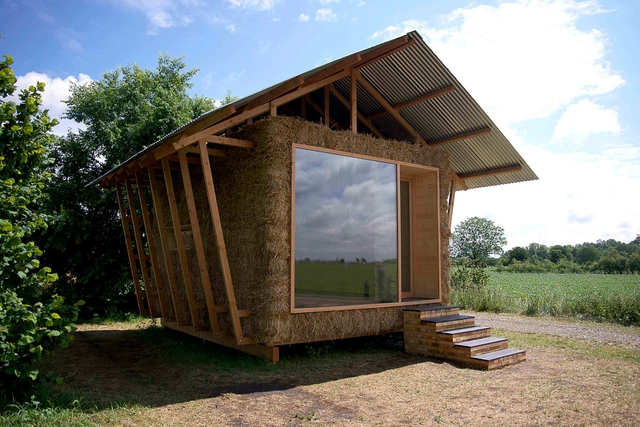
Ecologic Pavilion In Alsace / Studio 1984. Image Cortesia de Studio 1984
The concept of upcycling refers to taking an item that would be considered waste and improving it in order to make it useful again, adding value and new functionality to it. This is a common word in several industries, such as fashion and furniture. In civil construction, this concept can also be incorporated, making the waste generated by the industry itself recirculate or even bringing what would be discarded from other industries to be processed and incorporated into constructions. This is the case of transforming agricultural waste into building materials, bringing a new use to discards, reducing the use of raw materials and creating products with excellent characteristics.
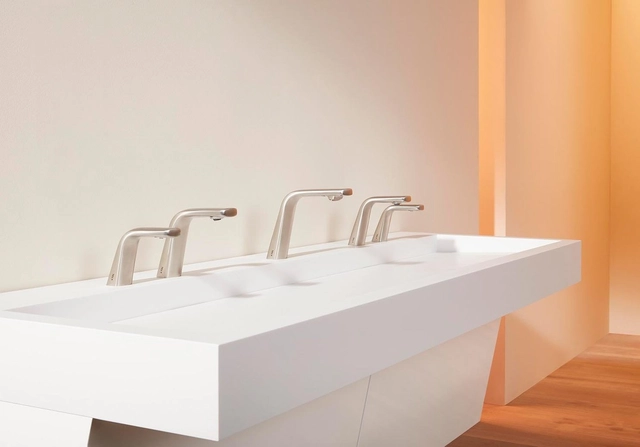
Cool lights, wall-to-wall tiles and trivial fixtures. Little by little, public bathrooms have changed this aesthetic and opted for more careful designs. Gone are the days when designs were focused only on functionality, accessibility and ease of maintenance and cleaning. Along with these essential qualities, a good bathroom project can also bring tranquility and show values that the space or the company wants to convey to its users. whether through finishes, lightning, or less material factors such as inclusivity, making users feel good is ultimately the goal of all environments, including bathrooms.
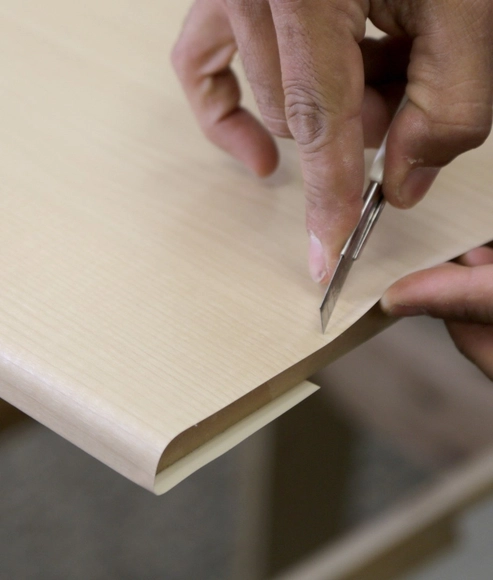
The outer layer of surfaces and buildings is the interface with the world and communicates much of its appearance, characteristics, and conditions. There are times that, whether due to budget constraints, difficulties, or lack of time, we need to look for quick and easy-to-install solutions. 3M™ DI-NOC™ Architectural Finishes are adhesive decorative films that offer a sustainable, cost-efficient option for refurbishing surfaces, providing less landfill waste, minimal downtime, noise, and dust for use on casework, doors, columns and internals walls. There is also a version for exterior solutions, the 3M™ DI-NOC™ Architectural Finishes Exterior EX Series product line. The finishes can be applied directly over existing façade material, providing high design along with other features. Below we will explore two examples that will highlight the possibilities with 3M surface finishes.
Although artificial intelligence is showing the potential to carry out successive iterations with good results, designing the layout of spaces takes up large portions of a designer's time. The organization of elements present within a space determines the flow of movement, the points of view and will largely dictate how it will be used. But the idea of stifling the use of the environment may not work for all cases. Due to space restrictions or supplementary uses that a room can have, some architects have developed dynamic layouts that have more than one possible use. Whether through dividing elements or special modules, these projects allow the space to change radically through movement.
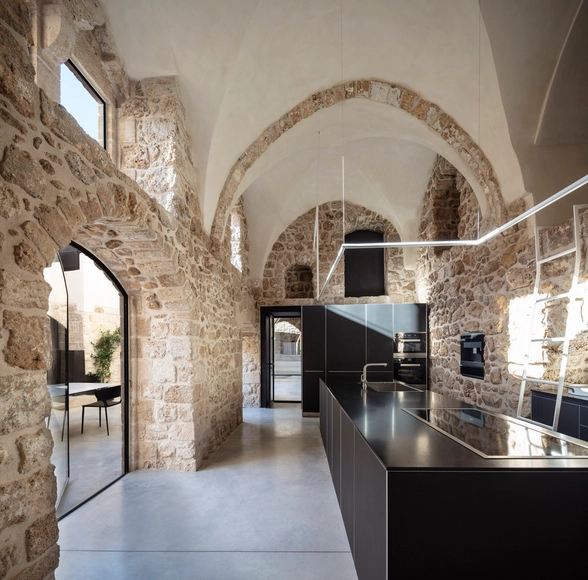
Old Jaffa House 4 by Pitsou Kedem Architects. Image Courtesy of German Design Awards 2022
The German Design Awards have been presented by the German Design Council for the tenth time. The internationally renowned prizes are awarded to companies whose pioneering products and projects stand out in the categories of “Excellent Product Design”, “Excellent Communications Design” and “Excellent Architecture”. In addition to the “Winner” and “Special Mention” awards, the jury gave out a total of 81 “Gold” awards – the highest distinction of the German Design Awards.
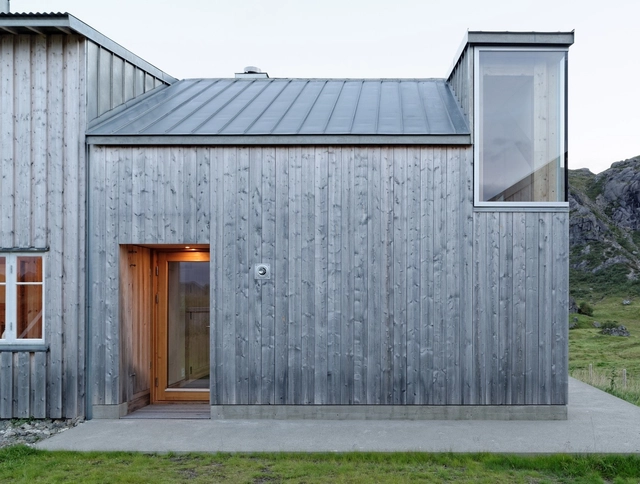
Summer House Gravråk / Carl-Viggo Hølmebakk. Image Cortesia de Carl-Viggo Hølmebakk
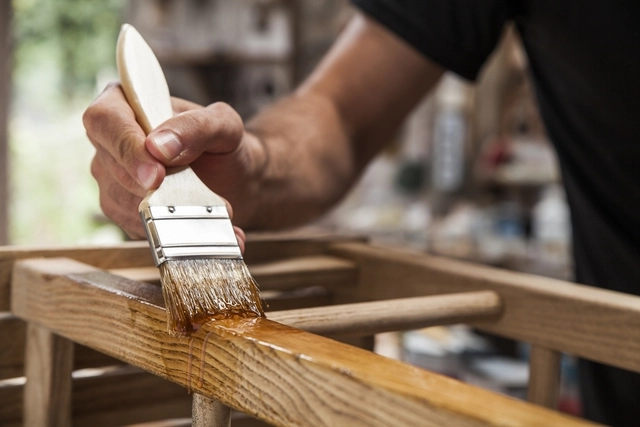
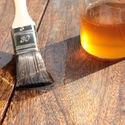
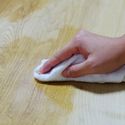
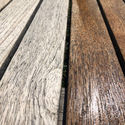
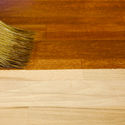
The moment a tree is cut down and its biological processes are interrupted, it can be said that the deterioration process of wood also begins. Steps such as the correct cutting of the trunk, drying and storage or the precise specification of the best species for each use will determine its durability. Composed basically of cellulose, hemicellulose and lignin, each wood species has a certain natural durability, also influenced by the environmental conditions of where it is inserted, such as temperature, humidity, oxygen content, and the microorganisms and insects present there. Generally, surface treatments are used to increase the protection of different parts, such as varnishes, oils and other chemical processes. But there are situations in which untreated wood can be used outdoors, achieving a gray and sober aesthetic that blends into the exterior and brings personality to the building.