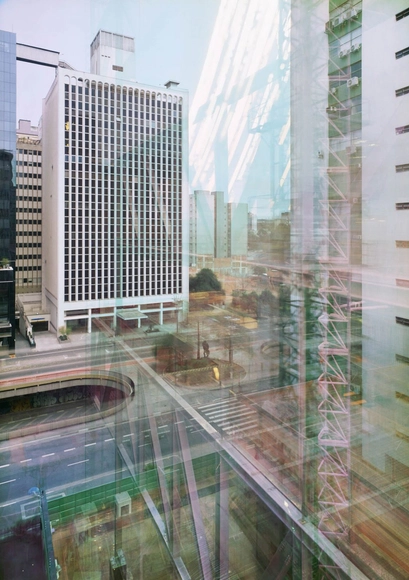
Is it possible to photograph time through transformations in urban space? To accumulate past and present in a single image, inviting the viewer into a visual and archaeological investigation? The Betoneira Podcast spoke with German photographer Michael Wesely about photography and cities. A pioneer of long-exposure photography, Wesely developed a technique that allows a single negative to be exposed for hours, days, or even years. The result is the condensation of the entire exposure period into a single photograph, producing poetic images of profound visual impact.
During the conversation, Michael explains that his interest in long-exposure photography began early, just as he started his studies. In his view, photography is closer to invention than to truth. His goal is not to produce a faithful record of reality, but rather to capture the movement and transformation brought about by the passage of time. Early in his career, Wesely quickly abandoned the concept of the “decisive moment” to focus his research on long-exposure photography.
We have repeated the word “sustainability” so often in recent years that we have almost lost sight of its true meaning. What does it actually mean to be sustainable?
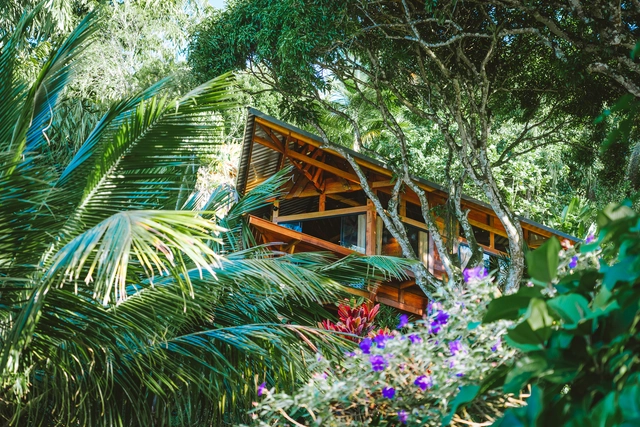
A guest on the Betoneira Podcast, architect Marko Brajovic suggests that, rather than seeking out certifications—often used for greenwashing—the most genuine approach is to recognize that we are part of the very nature we are trying to protect.
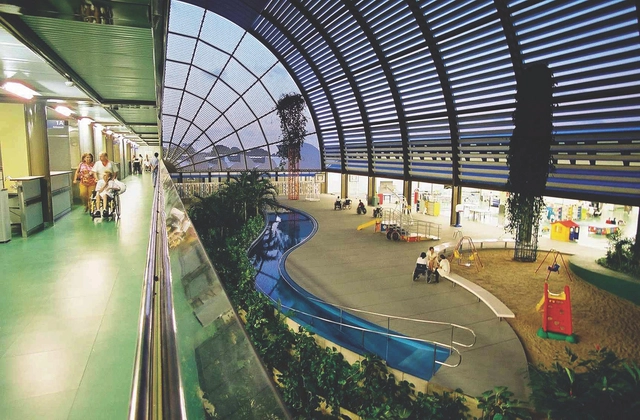
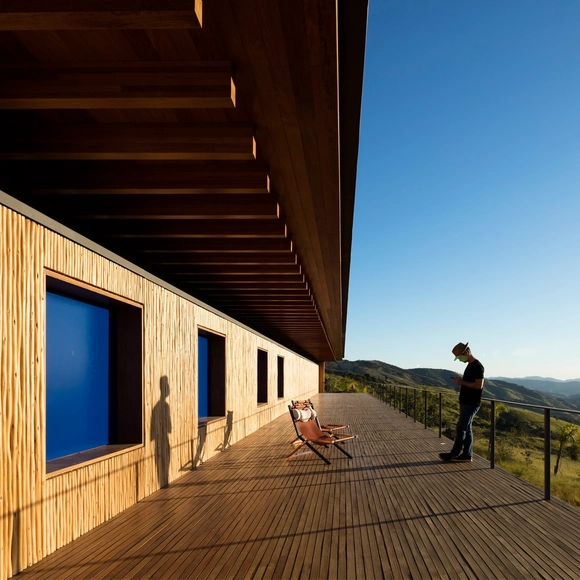
Sarah Fortaleza Neurorehabilitation Center, 2001. Photo: courtesy of EC, via Betoneira
With a deeply social body of work dedicated to public use, João da Gama Filgueiras Lima, known as Lelé, became one of the key figures in Brazilian architecture. Over his 60-year career, he built hospitals, schools, transit terminals, bus shelters, courthouses, government offices, and other administrative headquarters.
Across all these projects, he combined a meticulous care for materials and the workforce with technical and artistic excellence. He understood, like few others, how to leverage natural light and ventilation to promote energy efficiency and user well-being.
Whether as an actor or a writer, Gregorio Duvivier makes us laugh – and think – even when commenting on today's bleakest issues. This is, according to him, a way to build connections and strengthen friendships.
A guest on the Betoneira Podcast, he also discusses Carnival, public spaces, and the Rio-São Paulo rivalry, a recurring theme in his work.
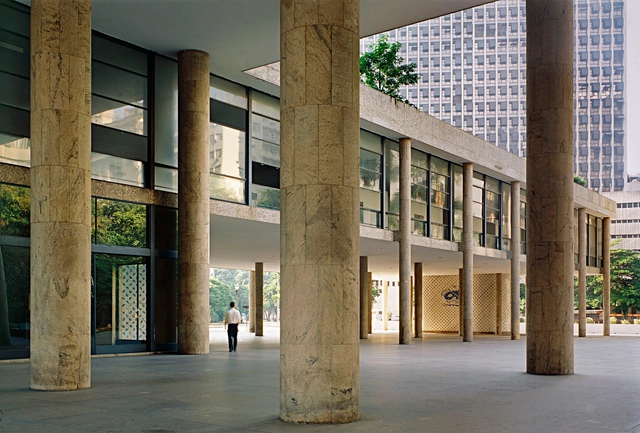
Capanema Palace, also known as the Ministry of Education and Health, in Rio de Janeiro. Photo: Nelson Kon
Thought you had already seen, read, and heard everything about the Week of '22? The Betoneira Podcast, however, approached the topic through a different lens: architecture. Guest Guilherme Wisnik explained how Oswald de Andrade's *antropofagia* underpinned Lúcio Costa and Oscar Niemeyer’s relationship with Le Corbusier in the design of the Capanema Palace, Brazil’s first public modernist building.
There is no shortage of filmmakers trained in architecture, nor of architects passionate about cinema. On the Betoneira Podcast, architect and filmmaker Marcio Kogan joined hosts Marcelo Barbosa and André Scarpa, both architects and cinephiles, to discuss the films that have shaped their lives and influenced their architecture.
Documenting architectural and urban projects is not just a final step, but a vital act of preserving memory. In this episode of the Betoneira Podcast, architect Hugo Segawa, a pioneer in using photography as a tool for researching and documenting Brazilian architecture, emphasized that the act of documenting must generate knowledge.
Breaking out of architectural bubbles and popularizing this field of knowledge so that more people engage with the subject is highly beneficial to society. Utilizing audiovisual media as a tool to disseminate this culture is exactly what several professionals have done in recent years, with documentaries such as Paisagem Concreta, about Álvaro Siza, which has just premiered on the Arte 1 channel.
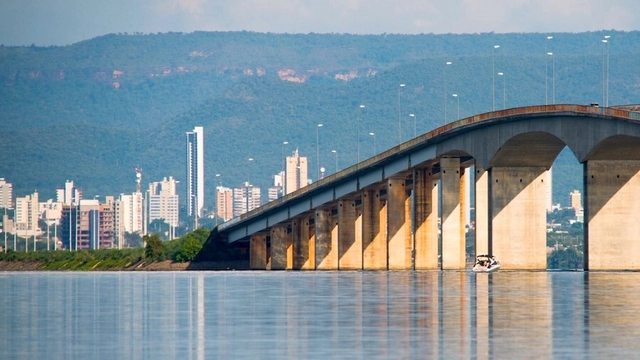
Palmas Lake, Tocantins, in the city where Paulo Vieira grew up. Photo: Courtesy of Prefetura de Palmas
The guest on episode 48 of the Betoneira Podcast is actor, writer, comedian, screenwriter, composer, singer, and television host Paulo Vieira. With humor and wit, he discusses serious issues, such as the importance of education and art as tools for generating new possible futures for the people of this country, and, of course, his relationship with architecture.
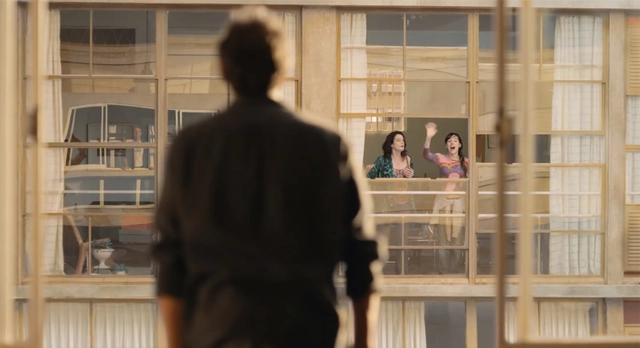
Scene from the movie "De onde eu te vejo", in which Vera worked as an art director. Image: movie screenshot
Real or imagined, houses and cities are always present in cinema. In this episode, the Betoneira Podcast hosts art director and set designer Vera Hamburger to discuss how professionals like her appropriate urban space to create illusions, capture the public imagination, and bring the magic of cinema to life.
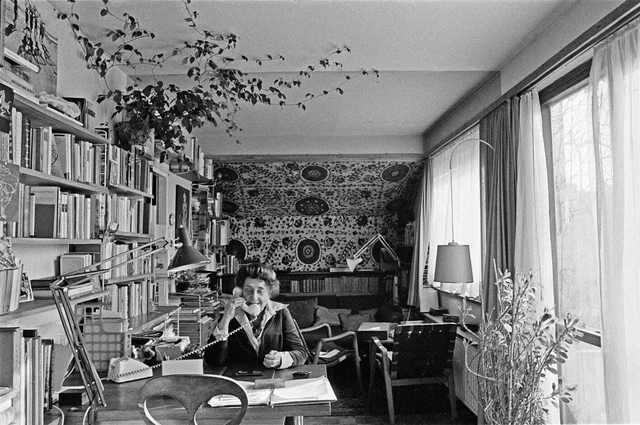
Margarete Schütte-Lihotzky in her apartment, in 1981. Photo: Margherita Spiluttini
So often overshadowed by romantic and professional partnerships with men, women architects have been, and still are, constantly tested and subjected to symbolic violence, disguised as jokes or "simple" banter. The conversation in episode 51 of the Betoneira Podcast, with professor and researcher Silvana Rubino, raised an ever-urgent debate: what is the place of women in architecture?
How can emotional connection help create more welcoming spaces for marginalized groups? What is the impact of technology on the conception of our cities and homes? How can architecture and design improve well-being and elevate self-esteem? These and other questions guide this conversation with architect, urbanist, and designer Guto Requena hosted by the Betoneira Podcast.
How do you explain the importance of hiring an architect to the general public? In the thirteenth episode of Betoneira, the guest is Stephanie Ribeiro, who shares how she tackled this challenge when given the opportunity to host the show Decore-seon GNT. The conversation revolves around the hits and misses of communication between architects and clients.
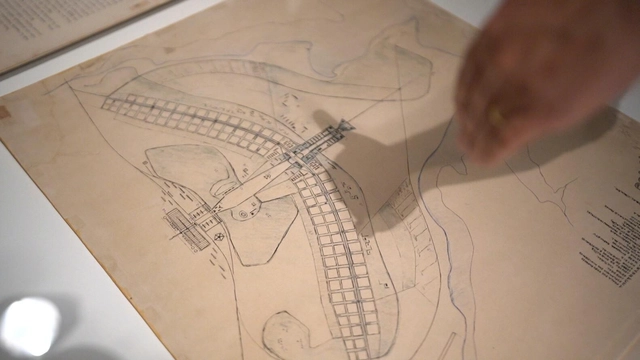
Lucio Costa's drawing for the Brasília Pilot Plan competition (1956-57), at the Casa da Arquitectura. Photo: courtesy of Casa da Arquitectura
Within the span of a year, Brazil saw two of its greatest architectural archives leave the country: that of Paulo Mendes da Rocha in September 2020, and that of Lucio Costa in October 2021. Both were donated to the Casa da Arquitectura in Portugal. Together, they total around 20,000 items. These announcements sparked a heated debate regarding the preservation of such documents, the role of the Portuguese institution, and what must be done to keep remaining archives in Brazil.
Cities are fascinating and challenging spaces. While they serve as arenas for exchange and encounter, they also present seemingly unsolvable problems. Episode 58 of Betoneira features a conversation with urban planner Mauro Calliari on the potential of cities, considering the complexity of the post-pandemic landscape.
The first point Calliari addressed was the very concept of the city. According to him, defining it precisely is one of the central debates of urbanism, as there are many ways to approach the issue. A city is usually a reasonably large, dense, and diverse place. Cities presuppose a certain concentration of people, commercial activities, and other functions necessary to sustain life.
Nadia Somekh, a guest on Betoneira, speaks about housing for all. Drawing on her extensive experience in the public sector as an architect, manager, and activist, Somekh begins the conversation by noting that while public housing policies in Brazil are not yet where they need to be, progress is being made. Her research on verticalization shows that, since 1957, zoning and urban planning regulations in São Paulo have systematically excluded low-income populations from apartments. For instance, these regulations prohibited the construction of studio apartments on Avenida Nove de Julho and Avenida Paulista.
The latest episode of Betoneira welcomed Romullo Baratto, Victor Delaqua, and Susanna Moreira, editors of ArchDaily Brasil, to discuss the platform's trajectory and the state of architectural communication. For all three, the main challenge lies in covering current events and urgent architectural issues at the speed of digital media, rather than the traditional pace of print. Staying attuned to this rapid flow is essential; over the last twelve years, since the launch of the Portuguese-language site, shifts in digital media have fundamentally reshaped how architecture is researched and published, alongside changes in lifestyle and consumption patterns.
Photographers Ana Mello and Evelyn Müller were the guests on the latest episode of Betoneira, and the conversation revolved around the work of architectural and interior photographers, author attribution, and image ownership. Müller spoke about the inception of Conafarq (Coletivo Nacional de Fotógrafos de Arquitetura) during the pandemic, when many photographers were left without work for months. Although the market was at a standstill, photographers noticed that their pre-pandemic photos continued to be used by clients in various contexts—such as social media, emails, and other channels. Small groups began to mobilize to discuss the need for photographers to be compensated whenever their photos are used commercially.