Known as one of the world’s grandest subway systems, the Moscow Metro is filled with materials more commonly associated with palaces or museums – marble and granite walls, bronze columns, and lavish chandeliers are just a few of the opulent textures you’ll find beneath the streets of Russia’s largest city.
Despite their renown, the Moscow government almost never allows professional photographers to capture the beauty of the stations. But in 2014, photographer David Burdney was finally given that opportunity. Visiting the system late at night after the metro had closed, Burdney was able to capture each station in its best light, and completely devoid of people.
https://www.archdaily.com/868147/these-photographs-capture-the-opulent-beauty-of-empty-moscow-metro-stationsAD Editorial Team
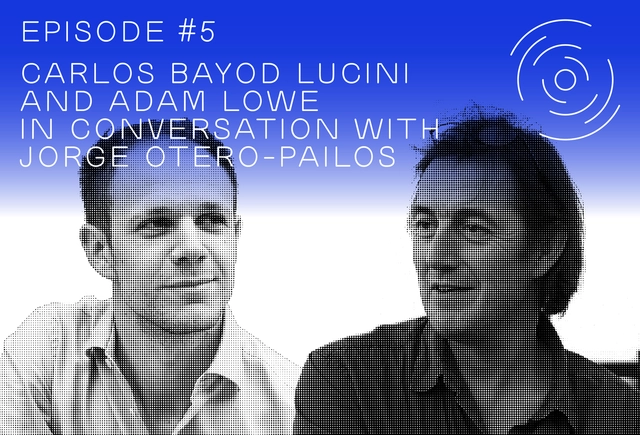
In this fifth episode of GSAPP Conversations, Jorge Otero-Pailos, Director of Columbia GSAPP’s Historic Preservation Program, speaks with Carlos Bayod Lucini and Adam Lowe (Factum Arte). Based between Madrid, London and Milan, the practice was founded by Lowe and has become internationally renowned for setting new standards in digital documentation and redefining the relationship between originality and authenticity. Here they discuss Factum Arte’s work, including the creation of the first high resolution digital record of the Tomb of Seti I in Luxor, Egypt, the importance of teaching students not only practical skills but also a conceptual understanding of how new technologies can be applied, and the importance of recording of artefacts during times of peace.
https://www.archdaily.com/868024/columbia-gsapp-conversations-5-factum-arte-adam-lowe-carlos-bayod-lucini-preservation-recording-recreationAD Editorial Team
Is it a pop-up, a folie, an installation? Does it have a function? What is it made of? Does it challenge technology? What is the methodology? How long will it stay? After our Re-Use series in KotorAPSS, we continue our journey with the topic of TEMPORARY in architecture. Inside the city walls of UNESCO site and within the vicinity of Old Austrian Prison - the mothership of KotorAPSS we have decided to break up with the permanence and talk about its significance in architecture.” Temporary structures might be designed to disappear shortly or just host an event, might have to be set-up quickly - but they do become part of the public space, part of
https://www.archdaily.com/867999/call-for-applicants-kotorapss-with-numen-for-use-temporaryAD Editorial Team
[Architecture can] change the life of people and give them a new one right away. This is not a job for normal people to do. This should be the work of God.
https://www.archdaily.com/867965/wang-shu-architecture-is-not-just-an-object-that-you-place-in-the-environmentAD Editorial Team
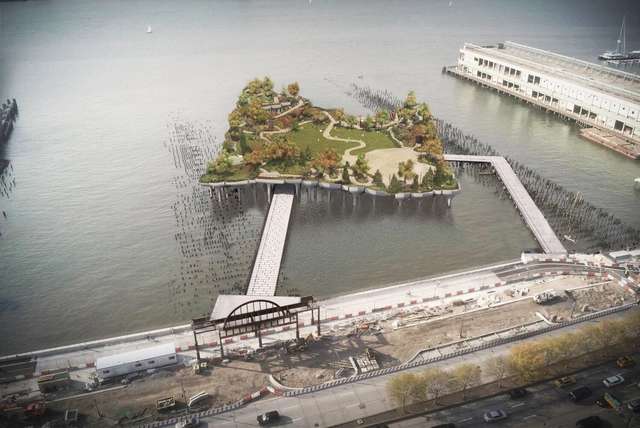
Construction on Heatherwick Studio’s undulating Pier 55 in New York has come to a screeching halt, following a ruling by a United States District Court judge last week that will require the project to undergo an intense wildlife impact review.
Last April, the U.S. Army Corps of Engineers gave the project, located on the Hudson River in West Chelsea, the go-ahead, allowing initial construction to begin. But the district judge found that the Army Corps of Engineers had failed to properly consider the wide effects of the projects on the river wildlife.
https://www.archdaily.com/867951/construction-halted-on-heatherwicks-pier-55-in-new-yorkAD Editorial Team
Given the hearty success of our architecture resume/CV post, we understand that there's a demand for inspirational information that will help you land the job, grant or school admission you've always wanted. But portfolios, though a basic requirement in many creative fields, can be very tricky to master. How do you select the work you want to feature? How will you present it visually? Most importantly—how will you make it memorable enough that it won't be cast aside after a three-second glance? In an age where more and more portfolios and CVs will be viewed exclusively on a screen, how have you, our readers, developed portfolios that you are proud of? We would be honored to share the most innovative, inspirational, well-designed portfolios, so submit your designs!
If you think your portfolio has what it takes to be featured in a top-10 list, then send it over. (But please read the rules and guidelines!)
https://www.archdaily.com/867923/call-for-entries-the-best-architecture-portfoliosAD Editorial Team
ArchDaily is looking for a motivated and highly-skilled architecture-lover to join our team of interns for Summer 2017! An ArchDaily Content internship provides a unique opportunity to learn about our site and write engaging, witty and insightful posts.
Interested? Then check out the requirements below.
https://www.archdaily.com/867733/call-for-archdaily-interns-summer-2017AD Editorial Team
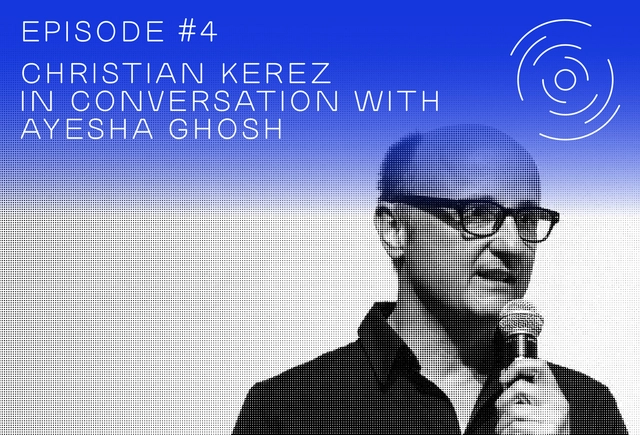
In this fourth episode of GSAPP Conversations, third-year GSAPP Master of Architecture student Ayesha Ghosh speaks with Swiss architect Christian Kerez, who delivered the opening lecture of the school's Spring 2017 Semester. Kerez's recent projects include Incidental Space at the Swiss Pavillion of the 2016 Venice Architecture Biennale, an amorphous structure which raised questions of the limits of imagination and technical feasibility in architecture today.
https://www.archdaily.com/867558/columbia-gsapp-conversations-4-wonder-structure-christian-kerez-contemporary-swiss-architectureAD Editorial Team
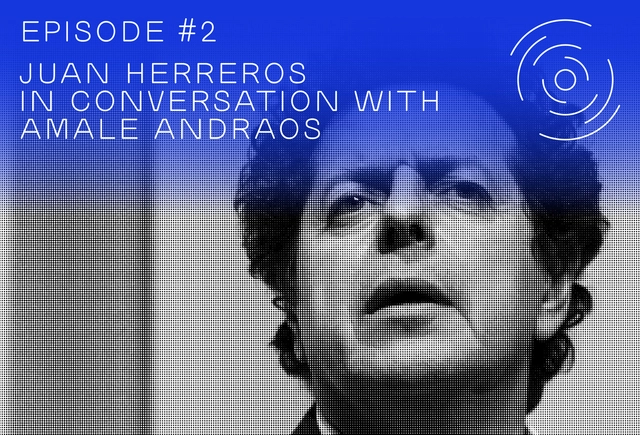
In this second episode of GSAPP Conversations, Amale Andraos speaks with Spanish architect and GSAPP Professor Juan Herreros about the relationship between teaching and practicing architecture, and how he has carefully designed a particular way of working globally. Herreros, who co-founded Abalos&Herreros in 1984 and currently leads estudio Herreros, offers insight into how working sensitively in foreign settings also helps to develop a robust local practice, and how he is bringing new models of emerging practices to his students in GSAPP’s Advanced Architecture Studios.
https://www.archdaily.com/867553/columbia-gsapp-conversations-2-juan-herreros-amale-andraos-spanish-architecture-starting-small-practiceAD Editorial Team
We want to see your designs for an architecture Easter Egg! Download the design template below and illustrate/animate/build a small celebration of springtime. We'll be accepting entries until April 12th, at 12:00 pm EST and we'll publish our favorites by April 14th!
https://www.archdaily.com/805269/call-for-entries-architecture-themed-easter-egg-design-2017AD Editorial Team
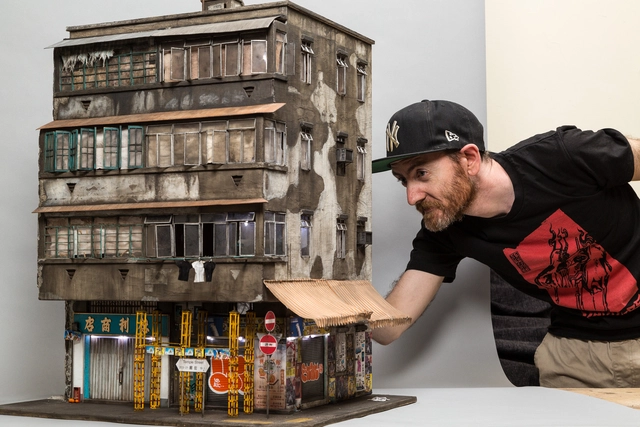
Joshua Smith, a miniaturist and former stencil artist based in South Australia, constructs tiny, intricate worlds for a living. His work, which exhibits astonishing observational and representational skills, focuses on the "overlooked aspects of the urban environment – such as grime, rust and decay to discarded cigarettes and graffiti," all recreated at a scale of 1:20. Smith, who has been making model kits for around a decade, only recently chose to move away from a 16-year-long career creating stencil art. With his creative talents now focused on model-making, and all those skills which accompany the craft, ArchDaily asks: how do you do it?
The Star Wars universe contains some impressive buildings. However, in the original trilogy, it's actually the Millennium Falcon, Han Solo's non-descript yet highly tuned ship, that provides the most important architectural setting for the story's events, acting as the de facto base for our heroes' scheming. While it's certainly not the largest or most complex floor plan in the universe, the interior of the Millennium Falcon is intriguing for the way it resolves the ship's circular shape.
With this model from Archilogic of the Millennium Falcon's main floor, Star Wars fans can get a sense of what it's like to tag along with Luke, Han, and the rest of the group—whether that's by hanging out in the living area, traversing the ship's curved corridors, or even sitting in the cockpit as an Imperial Star Destroyer approaches, the model has it all.
https://www.archdaily.com/867015/take-a-virtual-fly-through-of-the-star-wars-millennium-falcon-with-this-3d-modelAD Editorial Team
9 years ago today, ArchDaily launched with a challenging mission: to provide inspiration,knowledge and tools to the architects tasked with designing for the 3 billion people that will move into cities in the next 40 years. Over these 9 years, as we have developed innovative approaches to help architects tackle the urban challenges facing our world, our work has brought us into contact with some of the most creative and respected architects in the world. To help us celebrate our 9th birthday, we asked 9 architects who are renowned for their creative and imaginative abilities to create drawings inspired by our logo, to show the world what ArchDaily means to them.
https://www.archdaily.com/866860/9-drawings-to-celebrate-our-9th-birthdayAD Editorial Team
We're hiring! Our team works with the most prestigious and influential architectural practices around the world in order to deliver specific and valuable content to a premium readership of architects. ArchDaily quickly established itself as one of the leading architectural websites in the world due to our editorial staff’s meticulous understanding of what our audience is really looking for: the best architecture around the world, as soon as possible. And now, we're looking for another bright, enthusiastic and motivated member to join us.
The editor we're looking for is passionate about producing content about local, emerging practices and publishing the work of China's talented architects. This proactive, vocal and articulate individual will help shape the space for debate around important topics. If you're fluent in Chinese and have excellent writing skills in both English and Chinese, this is the opportunity for you!
https://www.archdaily.com/866833/were-looking-for-archdaily-chinas-next-content-editorAD Editorial Team
Photographer Laurian Ghinitoiuhas visited Herzog & de Meuron's Elbphilharmonie Hamburg, Germany – a 2017 winner of the ArchDaily Building of the Year award. The striking silhouette of this cultural centre and concert hall, which is identical in ground plan to the brick block of the older building upon which it sits, is often photographed as an isolated object. In this photo-essay, the context of the port around the project is often foregrounded – and unusual views offer new perspectives onto its iconic design.
The first edition of ArchDaily China's Building of the Year Awards has now come to a close. Like our global Building of the Year Awards, the awards given by ArchDaily China rely on the collective intelligence of an audience of informed and engaged readers to select the winners.
Once again, ArchDaily readers demonstrated their collective influence, with over 7,000 votes cast over 3 weeks to filter over 300 projects published on ArchDaily China in 2016 to find the 3 best works that mainland China and Hong Kong have to offer. Read on to see the winners.
https://www.archdaily.com/806691/winners-of-the-2017-archdaily-china-building-of-the-year-awardsAD Editorial Team
Earlier this month, Hong Kong-owned developer Knight Dragonrevealed plans for an billion-dollar urban-development scheme that will completely transform London’s Greenwich Peninsula. In this edition of Section D, Monocle 24's weekly review of design, architecture and craft, the team speak to Santiago Calatrava—who will be designing the core of this grand new project—about this and his public-spirited design philosophy. Why, they ask, has he’s always wanted to leave a mark on the "Big Smoke?"
https://www.archdaily.com/806495/santiago-calatrava-ground-zero-design-philosophy-greenwich-peninsula-project-monocleAD Editorial Team
It's common knowledge that China has "at least 10 White Houses, four Arcs de Triomphe, a couple of Great Sphinxes and at least one Eiffel Tower," report the New York Times. But now photographs of a copy of London’s famous Tower Bridge (a Victorian riparian gateway to the city) in the Chinese city of Suzhou have emerged – and it's been adapted to suit a five-lane highway. Almost identical—from a distance, at least—to its British counterpart the new structure, which was completed in 2012, has been doubled – a feat which has also required some spectacular architectural additions.
https://www.archdaily.com/806431/twice-as-nice-suzhou-china-architectural-homage-copies-copy-london-tower-bridgeAD Editorial Team












.jpg?1488821716&format=webp&width=640&height=580)
.jpg?1488821999&format=webp&width=230&height=230&crop=true)
.jpg?1488822128&format=webp&width=230&height=230&crop=true)
.jpg?1488821802&format=webp&width=230&height=230&crop=true)
.jpg?1488821732&format=webp&width=230&height=230&crop=true)
.jpg?1488821716)